
The parrot-beak face is the whole giveaway
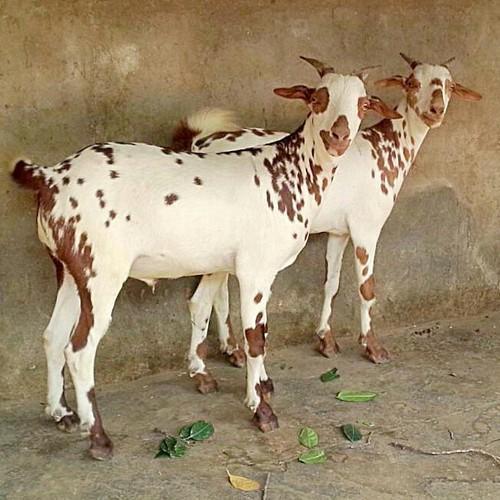
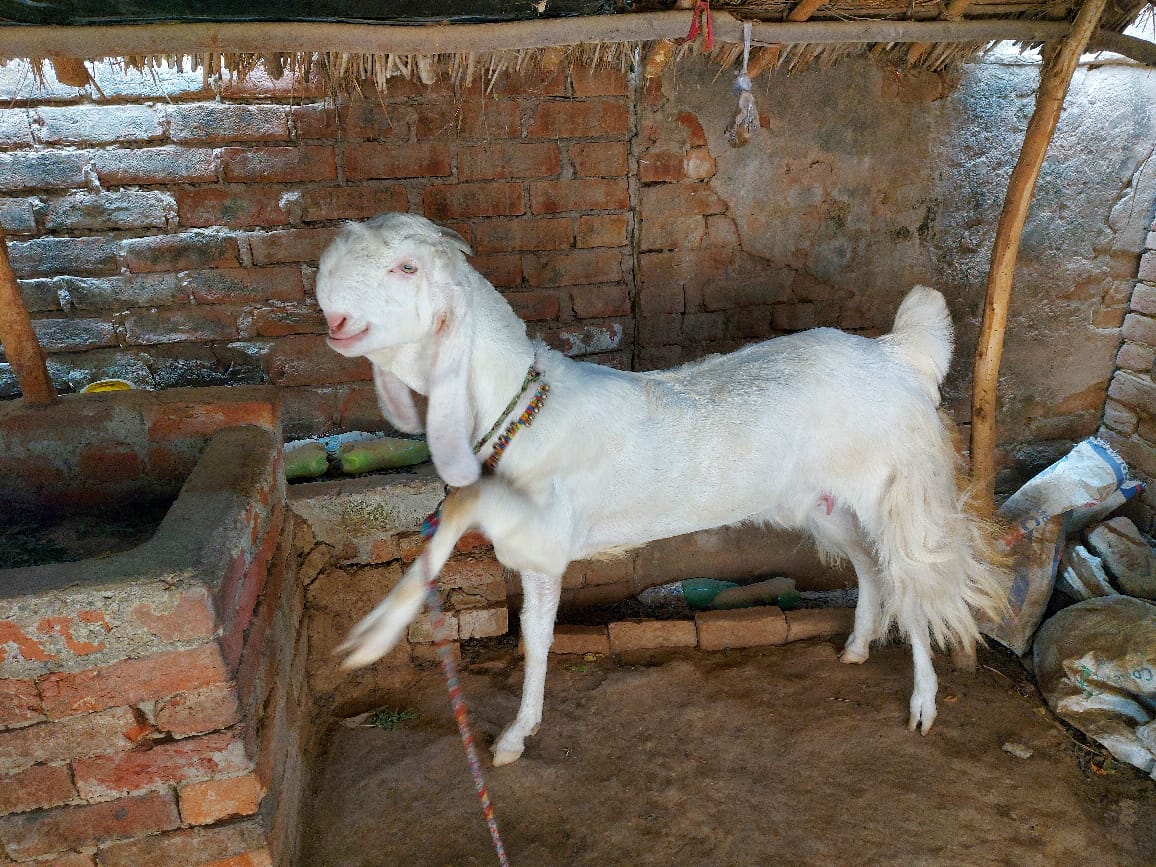
If a goat looks like it has a parrot's beak fixed to the front of its head, you are almost certainly looking at a Totapuri. The name comes from tota, the Hindi word for parrot, and the fit is exact: a strongly convex "Roman nose," an upper muzzle and nostrils that curve inward, and a raised forehead that together give the face that hooked, beaky look. Add the large ears hanging down along the jaw and it is one of the easier Indian goats to pick out of a mixed pen. The coat is usually white, often carrying small brown flecks or a pale reddish wash over the head, neck and ears, and bucks grow a long beard above medium horns that sweep backward.

That face is worth learning properly, because it is also how you separate a real one from a lookalike, which matters when money changes hands.
Where it actually comes from
You will see Totapuri described online as a South Indian goat. Treat that carefully. The one detailed field study of the breed, published in ICAR's Journal of Livestock Biodiversity, records its home tract as the Alwar and Bharatpur districts of Rajasthan, the Mewat belt, where farmers also call it the Alwari or Mewati goat. That same study calls it the second-largest goat breed in India after the Jamunapari. So the honest version is a big north-Indian goat of the Rajasthan Mewat country, not a southern breed. (The "Totapuri" that is genuinely South Indian is a mango, not a goat.)

What it is for: meat first, milk second
Totapuri is kept mainly as a meat and sacrifice-market animal, and its selling point is simple: size. The field study recorded bucks climbing towards 90 kg and does into the mid-60s in kilograms by around 18 months, which is a lot of frame to sell by weight. Does milk as well, but here is where you should stay sceptical: farming pages routinely claim two to three litres a day, while the study that actually measured yield put the average closer to one litre a day. Buy it as a meat goat that also milks reasonably, not as a dairy breed.

Why keepers choose it
The draw is that big frame paired with a tolerance for dry country. The breed is documented in the arid and semi-arid tract of eastern Rajasthan, so it is used to thin grazing rather than lush pasture. On the breeding side the study found an average litter size of almost two, meaning twins are normal, with roughly one kidding a year and a long productive life of about nine kiddings per doe. For a smallholder that is a steady supply of kids from an animal that finishes heavy.

What to check before you buy
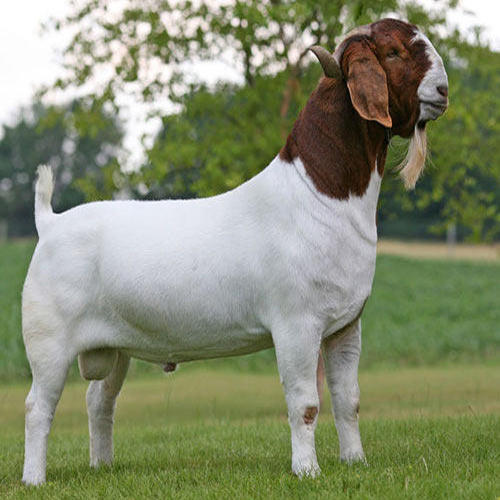
Start with the mouth. A goat's permanent incisors come in over its first few years, so the teeth tell you the age far more honestly than the seller does; be wary of an animal with badly worn or broken teeth sold as "young." Look for a bright coat, clear eyes and easy breathing. On a doe, handle the udder for lumps or hard patches; on a buck, check that both testicles are present and evenly sized. If you are paying purebred money, insist on the parrot-beak face and a genuinely large frame, and see the parents if you can. A flat-faced or undersized goat passed off as Totapuri, or a cross sold as pure, is the commonest way a buyer overpays. And discount any big milk promise until you have watched the doe actually milked.
On price, the box at the top of this page shows what sellers on Animalsss have actually been asking for Totapuri goats, which is a better guide than any single quoted rate.

Breed facts here draw on Bhateshwar et al., "Evaluation of morphometric characteristics and performance of Totapari goats in their native habitat," ICAR Journal of Livestock Biodiversity; the figures at the top are seller-listed on Animalsss, not a fixed rate.

 Menu
Menu
💬 Comments
Login to comment
No comments yet. Be the first to share your experience!