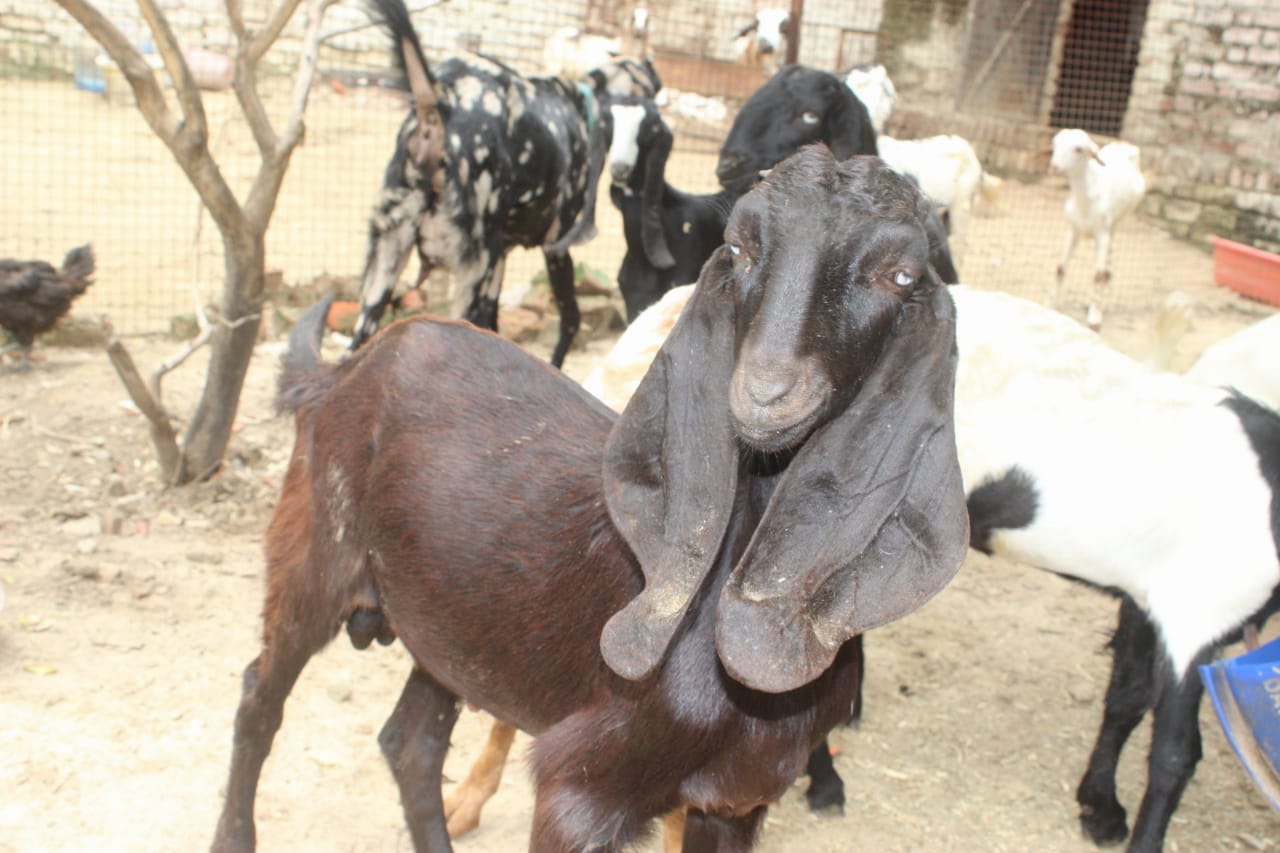
A Punjab goat, right up to the border
The Beetal is the big dairy goat of the Punjab plains. Its stronghold sits in the districts along the India–Pakistan border: the FAO's survey of Indian goat breeds notes that genuinely pure animals turn up in only a handful of Punjab districts — Gurdaspur, Amritsar and Ferozepur — with the wider population spread across Punjab and Haryana. It is the same breed on both sides of the line (Pakistani farmers often call it the Lahori goat), which is why you will hear it described as a border breed. If someone is selling a "Beetal" a thousand kilometres from that tract, that is not by itself a reason to walk away — the breed travels and stall-feeds well — but it is a reason to judge the animal in front of you rather than the label on it.
What a real Beetal looks like
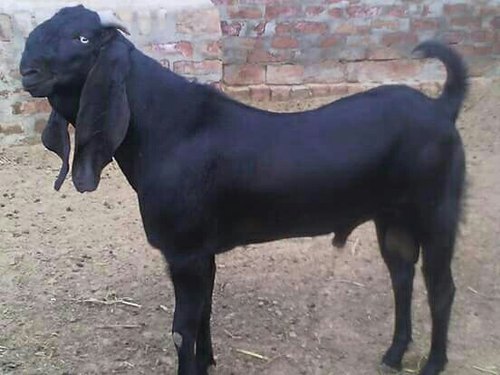
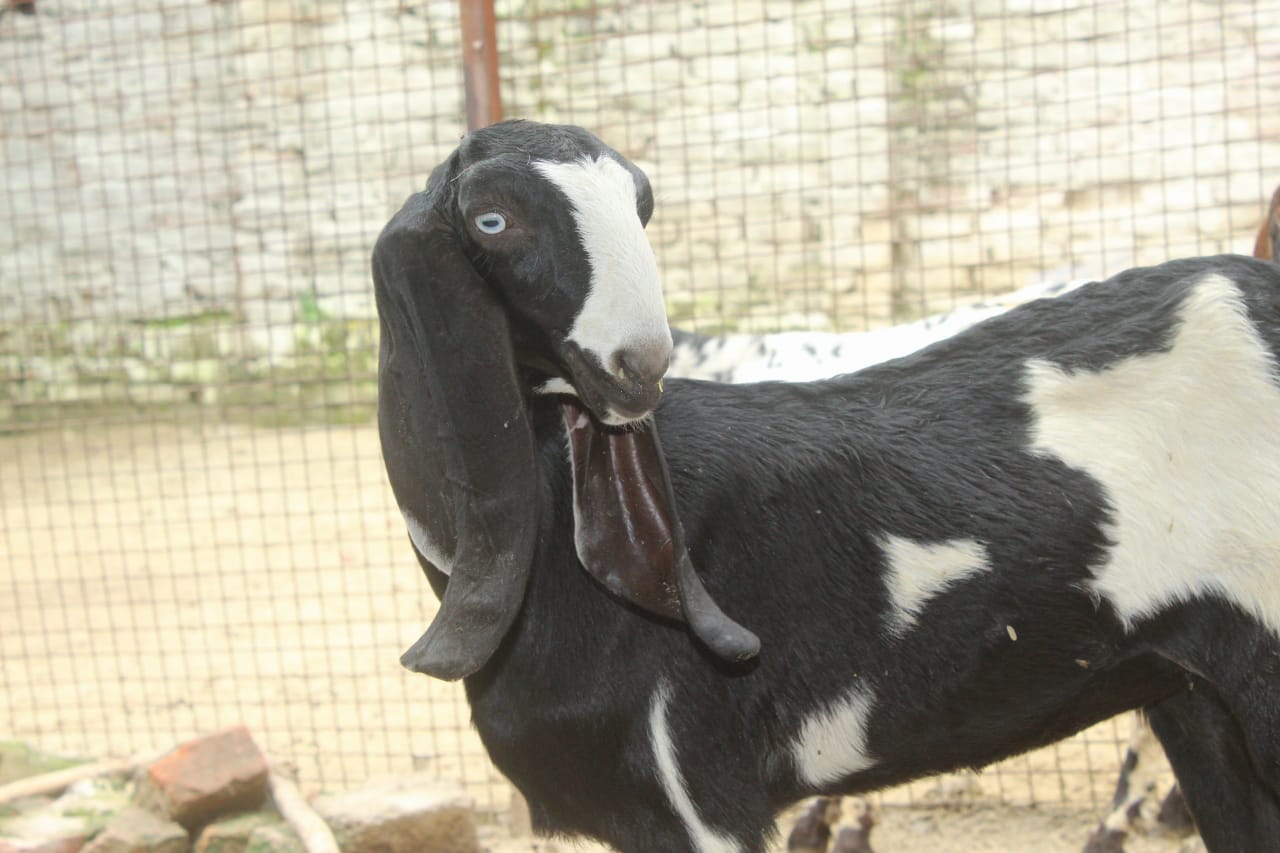
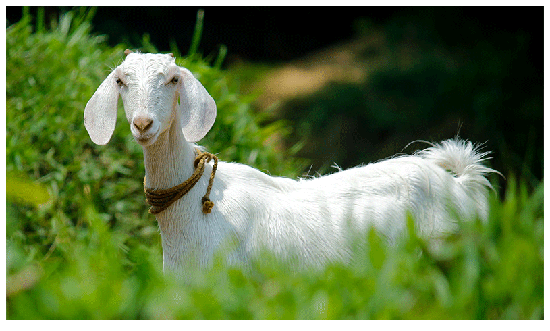
Beetals are big. In the FAO's measured herds, bucks averaged around 59 kg and does around 35 kg, with adult males standing a little over 90 cm at the shoulder — a tall, deep-bodied goat, not a compact one. The giveaways are the ears and the head: ears that are long, flat and drooping (close to 25 cm in the surveyed animals), and a convex "Roman" nose. Most are black — a survey in the home tract found roughly 93% black and the rest brown — usually carrying white flecks or patches, over a short, glossy coat. Both sexes have medium, backward-twisting horns. Put together it is a striking, upstanding animal, which is exactly why it photographs well and why sellers lean on the look.

Beetal or Jamunapari? Don't pay for the wrong one
This is the mix-up worth getting straight before you spend money. The Beetal is close kin to the Jamunapari and the two get muddled constantly, but they are not the same goat. The FAO is blunt about the difference: the Beetal is second to the Jamunapari in sheer size, and its Roman nose, while clearly there, is not as pronounced as the Jamunapari's dramatic bulging profile. Where the Beetal actually comes out ahead is prolificacy — it throws more twins and adapts more readily to different conditions. So if a seller is quoting you a Jamunapari premium for an animal with only a modest nose and an all-black coat, there is a fair chance you are looking at a good Beetal, not a Jamunapari at all. Judge the animal, not the name on the tag.

Milk and meat: what the records actually say
Beetal earns its keep as a genuine dual-purpose goat, and this is where honest numbers matter. The FAO records put the average lactation at about 177 kg of milk over roughly 187 days, with a doe's later lactations running higher than her first. Averaged across a full lactation that works out to a bit under a litre a day — a good doe at her peak will beat that comfortably, but it is a long way from the "two or three litres a day" you sometimes hear shouted at a sale. Treat those bigger figures as best-day peaks, not lactation averages. On the meat side the breed grows into real size and dresses out at roughly 50%, which is respectable for a dairy-type animal and is what makes it useful to a farmer who wants milk in the pail and a saleable male kid at the end of the season.
Why farmers keep coming back to it
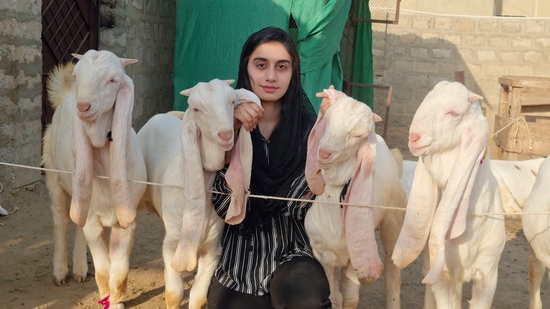
Two reasons, mostly. Size and milk together mean a Beetal doe can pay her way in a mixed household dairy while her kids still hold meat value. And the breed takes readily to stall feeding — it does not need open range to do well, which suits the small cut-and-carry farms across north India and makes it a common choice for grading up scrubby local stock. It is a productive, adaptable goat rather than a delicate exotic, and that dependability is most of its reputation.

What to check before you hand over money
Buy the animal, not the story. Open the mouth and read the teeth to check the age matches what you are told. Look for a bright, glossy coat, clear eyes and clean, even breathing — a dull coat or a runny nose is a reason to pause. On a doe, feel the udder for a soft, even bag with no hard lumps; on a buck, check that both testicles are present and matched. If you are paying a purebred price, ask to see the parents and be honest with yourself about the Jamunapari question above — a cross sold as pure is the commonest way a buyer overpays for this breed. The box at the top of this page shows what sellers on Animalsss have actually been asking for Beetal goats, which is a better guide than any single quoted rate.


Breed figures here are drawn from the FAO's survey of the sheep and goat breeds of India.


 Menu
Menu
💬 Comments
Login to comment
No comments yet. Be the first to share your experience!