
If you have spent time around the goat markets of western Rajasthan in the weeks before Bakrid, you have already met the Sojat: a tall, mostly white goat, often standing higher at the shoulder than the animals penned beside it, while a trader talks up its size. It is one of the newer names in the Indian goat trade, though the animal itself is not new. For a long time these goats were simply counted among the region's Marwar goats, and it is only recently that they have been studied and recognised as a breed in their own right by ICAR-NBAGR, the national body that characterises India's livestock. This page is about what the Sojat actually is, so you can tell the animal apart from the sales pitch.

Where it comes from
The Sojat belongs to the Marwar region of Rajasthan and takes its name from Sojat, a town in Pali district. Its home tract runs across a handful of tehsils in the dry heart of Marwar: Sojat and Jaitaran in Pali, Bilara and Pipar in Jodhpur, and Nagaur. This is arid, hard-grazing country, and the Sojat is a desert goat that does its growing on thin browse and scrub. Rajasthan carries the largest goat population of any Indian state, and the Sojat is one of the animals that trade steadily moves out of it.

How to spot one
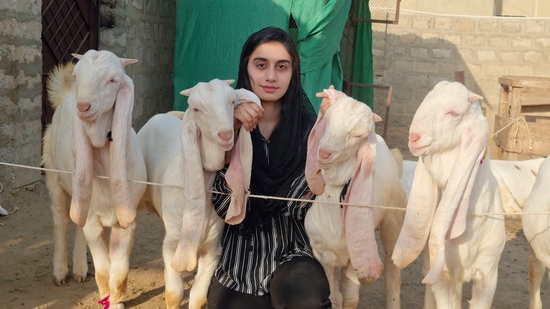
The Sojat is a large-framed goat, and that size is the first thing a seller will point to. The coat is predominantly white; you will occasionally see tan or black patches, but a clean white animal is the type. Most Sojats are polled, meaning naturally hornless, which sets them apart from many of the horned meat goats standing in the same market. The tail is short and thin, and the bucks are noticeably bigger and heavier-built than the does. Like the other Marwar goats, it typically carries flat, drooping, leaf-shaped ears. No single one of these points proves a purebred, but a big, white, hornless goat with those ears is the picture to keep in your head.
A meat goat, plainly
It is worth being clear about what the Sojat is for. The breed literature calls it "dual utility", but in practice it is a meat animal, raised and sold for chevon, with a skin that is valued for leather. It is not a dairy goat, and there is no reliable published milk figure for it. If someone is pricing a Sojat doe on the promise of a heavy milk yield, treat that with suspicion. The other claim to be sceptical of is weight. You will see Bakrid-season stories of Sojat bucks reaching well over 100 kg. Those are exceptional, heavily grain-fed animals groomed for a festival sale, not what an ordinary field-raised goat weighs, and the breed's everyday adult weight has not been pinned down the way older breeds' figures have. Buy the animal in front of you, not the headline.

Why traders keep coming back to it
The Sojat earns its place because it sells. The ICAR-NBAGR characterisation notes that these goats fetch a premium around the Eid, or Bakrid, festival, when large, good-looking bucks are in heavy demand, and they hold a ready year-round market as India's goat-meat business keeps growing. For the landless and small farmers of Marwar who keep them, that dependable demand is the whole point: a Sojat is close to cash on the hoof, needing little input to reach a saleable size. A large frame plus a reliable buyer is why the breed's name now travels well beyond Pali.

What to check before you buy
Read the age off the teeth, not off the seller. A goat shows eight milk incisors as a kid and replaces them in pairs as it matures; a full mouth of eight broad permanent teeth means an animal of roughly four years, and fewer permanent pairs means it is younger. Look for a bright eye, a clean coat, no scouring or crust around the tail, no discharge at the nose, and sound feet that carry the weight evenly. On a buck, check that both testicles are present and even; on a doe, run a hand over the udder for lumps or hard spots. And because "Sojat" has become a premium label around Bakrid, be blunt about breeding, since any tall white goat can be sold under the name. If you are paying purebred money, ask to see the parents and judge the animal on its frame and condition rather than the name chalked on the pen. For a sense of price, the box at the top of this page shows what sellers on Animalsss have actually been asking for Sojat goats, which is a better guide than any single quoted rate.
Breed facts here are drawn from the ICAR–NBAGR characterisation of the Sojat goat population published in the Indian Journal of Animal Sciences; the prices are asking prices posted by sellers on Animalsss, not an official market rate.


 Menu
Menu
💬 Comments
Login to comment
No comments yet. Be the first to share your experience!