Horse Price
Across 270 Horse listings, most sellers asked between ₹50,000 and ₹450,000. They were posted between April 2021 and November 2022. Browse Horse for sale.
Horse prices asked on Animalsss
Across 270 Horse listings, most sellers asked between ₹50,000 and ₹450,000. The middle price was ₹150,000. The cheapest asked ₹5,000 and the dearest ₹1,500,000. They were posted between April 2021 and November 2022.
These are the prices sellers asked when they posted. They are not a market rate and not today's price.
See the Horse profile: species facts and market prices from 15 countries → Estimate a Horse's price by breed, state and your currency →Horse prices by breed
Breed comes from how each seller titled their ad. These are asking prices from the same listings as above — not a market rate, and not today's price.
Horse prices by state
State is where the seller listed the animal, not necessarily where it is now. Asking prices from the same listings above — not a market rate, and not today's price.
Common questions about Horse prices
How much does a Horse cost?
Across 270 Horse listings, most sellers asked between ₹50,000 and ₹450,000. The middle price was ₹150,000. They were posted between April 2021 and November 2022. These are the prices sellers asked when they posted. They are not a market rate and not today's price.
Are these live Horse prices?
No. These are asking prices sellers posted, the newest in November 2022 — what a seller typed into the form, not a verified market rate or today's price.
How much do different Horse breeds cost?
By the breed each seller named: Marwari usually ₹190,000; Sindhi usually ₹175,000; Nukra usually ₹225,000. These are the prices sellers asked when they posted. They are not a market rate and not today's price.
How much is a Horse in different states?
By the state the seller listed from: Gujarat usually ₹130,000; Rajasthan usually ₹155,000; Punjab usually ₹190,000; Madhya Pradesh usually ₹145,000; Uttar Pradesh usually ₹175,000; Maharashtra usually ₹200,000. These are the prices sellers asked when they posted. They are not a market rate and not today's price.
Or post your Horse requirement on our buyer board — sellers come to you. See what buyers want →
How horses are priced in India
The band above is what sellers here actually asked when they posted — it is not a fixed rate. Two horses standing next to each other can be priced years of training apart, so it helps to know what you are paying for before you read any one number as high or low.
What moves the price
- Breed and papers. A registered Marwari or Kathiawari with breed-society papers sits well above an unpapered village horse of the same age. Papers are what let a buyer resell later, so they get priced in.
- Age and training. A green, unbroken colt is cheap and a project; a horse already schooled under saddle — walks, trots, canters, stands to be shod and loaded — costs more because someone has already put the hours in. Prime riding age is roughly four to twelve.
- Soundness. Clean legs, no lameness, and no stable vices — weaving, crib-biting, kicking — matter more to the price than colour or markings. That gap is where first-time buyers most often overpay.
- Height, sex and purpose. A tall riding gelding, a mare kept for breeding, and a Thoroughbred bought off the track are three different markets. Decide which one you are in before you compare prices across listings.
The breeds you will actually see
Most horses listed in India are one of a handful of breeds. The Marwari, from the Marwar region of Rajasthan, is the best known — you can pick it out by the ear tips that curve inward until they almost touch. The Kathiawari of Gujarat carries the same curved ear and a name for desert endurance; both are kept for riding, ceremony and dressage. Hill buyers meet the smaller mountain ponies instead — the Manipuri, one of the original polo ponies, and the Zanskari, Spiti and Bhutia of the high Himalaya. Thoroughbreds show up around the racecourses — Mumbai, Pune, Bengaluru, Hyderabad, Kolkata — and are priced on a racing or breeding record, not on looks.
What it costs to keep one — not just to buy
The asking price above is the one-time part. For most owners the bigger number is the keep, and over a single year it often adds up to more than a modestly priced horse cost in the first place — so budget for it before you buy, not after. None of this is a fixed rate either; it swings with your city and whether the horse lives in a stable or on grazing.
- Feed and fodder, every day. A horse eats roughly two to two-and-a-half per cent of its bodyweight a day — green and dry fodder plus a grain/concentrate ration for a working horse — so this is the steady monthly cost that never stops.
- The farrier, every six to eight weeks. Hooves grow whether the horse works or not; trimming (and shoeing, if it is ridden on hard ground) is a fixed recurring visit, not a one-off.
- Stabling and a syce. A stable, bedding and — as most Indian owners keep one — a groom (syce) to muck out, feed and exercise are often the largest line after feed if you are not doing it yourself.
- Routine vet care. Annual vaccination (tetanus and others on your vet's advice), deworming several times a year, and a yearly dental check are the predictable health costs; a colic or an injury is the unpredictable one, which is why some owners insure a higher-value horse.
- Tack and kit, up front. A saddle that fits, bridle, rugs, grooming kit and buckets are a real first-year outlay on top of the horse — a badly fitting saddle costs far more later in a sore back.
Add these up before you fall for a cheap horse: a low purchase price with a stable, a syce and a farrier behind it is still an expensive animal to run. A horse you can actually afford is one whose keep fits your month, not just whose asking price fits your pocket today.
Before you pay
- See the horse in person, and ride it or watch it ridden. Never send the full amount in advance to hold an animal you have not stood next to.
- Have an independent vet do a pre-purchase check — trot-up, flexion, heart and wind — rather than taking the seller's word on soundness.
- Read the age off the teeth, not off the story, and ask for vaccination and deworming records.
- If it is a registered breed, ask to see the papers. No papers is not a dealbreaker, but it should show up in the price.
The prices sellers ask move with the season, the region and the individual animal. Use the band at the top of this page as your starting point, then judge each listing on the horse in front of you.
Har border ke official import rules — documents, tests aur waiting period — ek jagah likhe hue. Apna route chuno aur Horse ke liye poora process dekho.
🐄 See animal movement rules →
Read about Horse
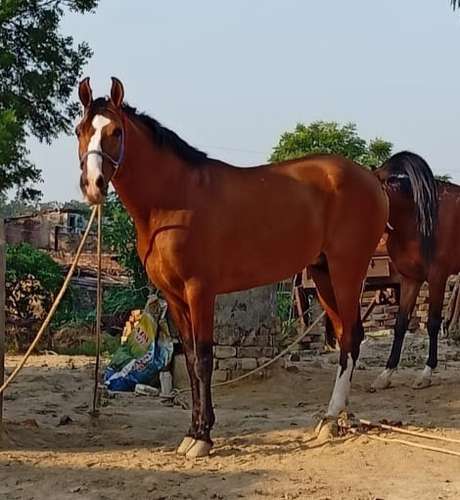 Sindhi Horse
 Horse Breeds With Long Hair: Fjords, Shires & What to Expect
 Horse Breeds With Feathered Feet: What Every Farmer Should Know
 Do Draft Horses Have the Biggest Hooves? What the Data Says
 Horse Care & Commodity Prices: Facts for Owners and Breeders
 Horse Breeds With Price: From Under $3,000 to $70 Million
Sell to Horse buyers? Advertise on this page →
 Menu