🍪 Cookie Consent
We use cookies to improve your experience, analyse how the site is used, and show relevant content. By choosing Accept you agree to that. See our
Privacy Policy.
Do Draft Horses Have the Biggest Hooves? What the Data Says
Horse breeds with notably large hooves are most commonly found among draft and heavy cold-blooded breeds. With over 300 breeds worldwide, hoof size varies widely — here is what research tells us about the link between body size and hoof size.
Do draft horses have the biggest hooves? Almost certainly yes — among all the more than 300 horse breeds in the world today, the cold-blooded draft types carry the most body mass, and bigger bodies mean bigger feet. What the available data does not give us, however, is precise hoof measurements for individual breeds. If you need exact figures for shoeing, breeding, or buying decisions, you will want to speak to a qualified farrier or contact a breed registry directly.
Why Hoof Size Tracks Body Size
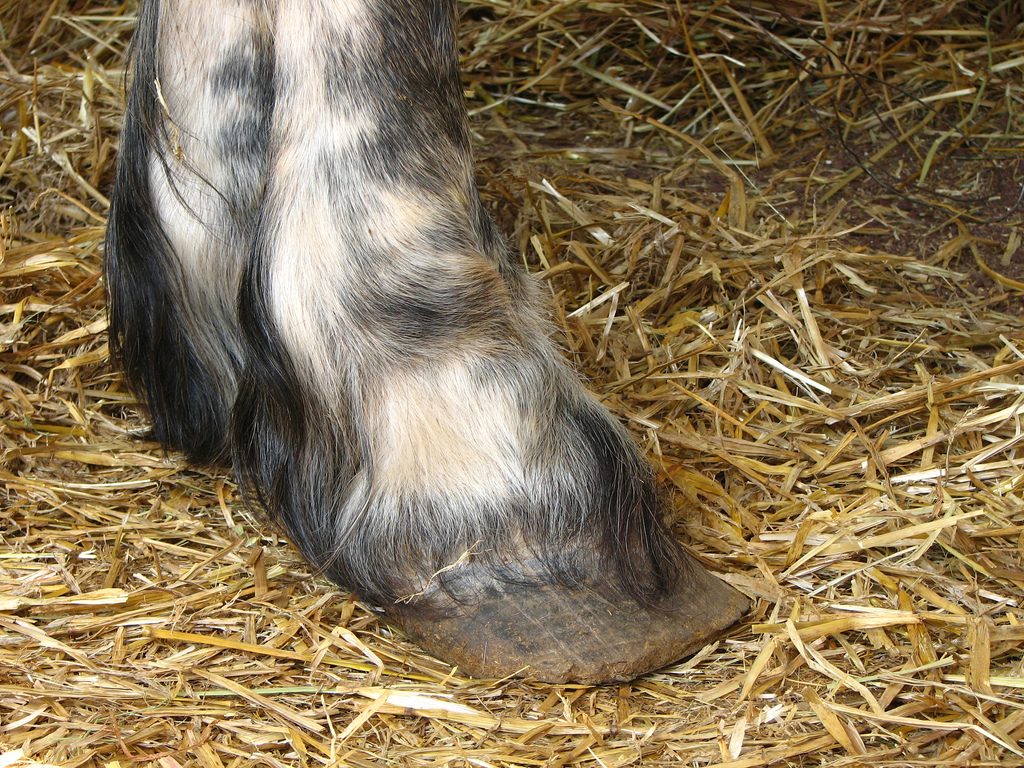
Percheron hoof by gato Azul (CC BY 2.0) · source
The horse — Equus ferus caballus — is a domesticated, one-toed, hoofed mammal. That single hoof is all that remains of a much richer toe count from the distant past. Horses evolved over the past 45 to 55 million years from a small multi-toed creature called Eohippus into the large single-toed animal of today. That evolutionary transition originally took place in North America, and the single-toed hoof was the solution nature settled on for supporting an animal that grew far heavier than its early ancestors.
When you think about it, that single hoof has to carry the full weight of the animal. A light-riding horse typically stands between 14 and 16 hands and weighs from 380 to 550 kilograms. A hand is an old unit of measurement still used widely in English-speaking countries: one hand equals 4 inches (101.6 mm), so a 16-hand horse stands 64 inches (163 cm) tall. Horse height is always measured at the withers — the highest point where the neck meets the back — because this is a stable anatomical reference that does not change whether the horse holds its head up or down.
Because a horse's entire body weight passes through one hoof per foot at any given step, hoof area scales with body mass. The heavier the horse, the larger the surface area needed to distribute that weight across the ground without damaging the sensitive structures inside. Draft horses, being the heaviest of the major horse types, are therefore the most logical candidates for the largest hooves — even though no source in the available data gives exact hoof measurements to confirm it.
The Three Horse Types and Where Draft Horses Fit
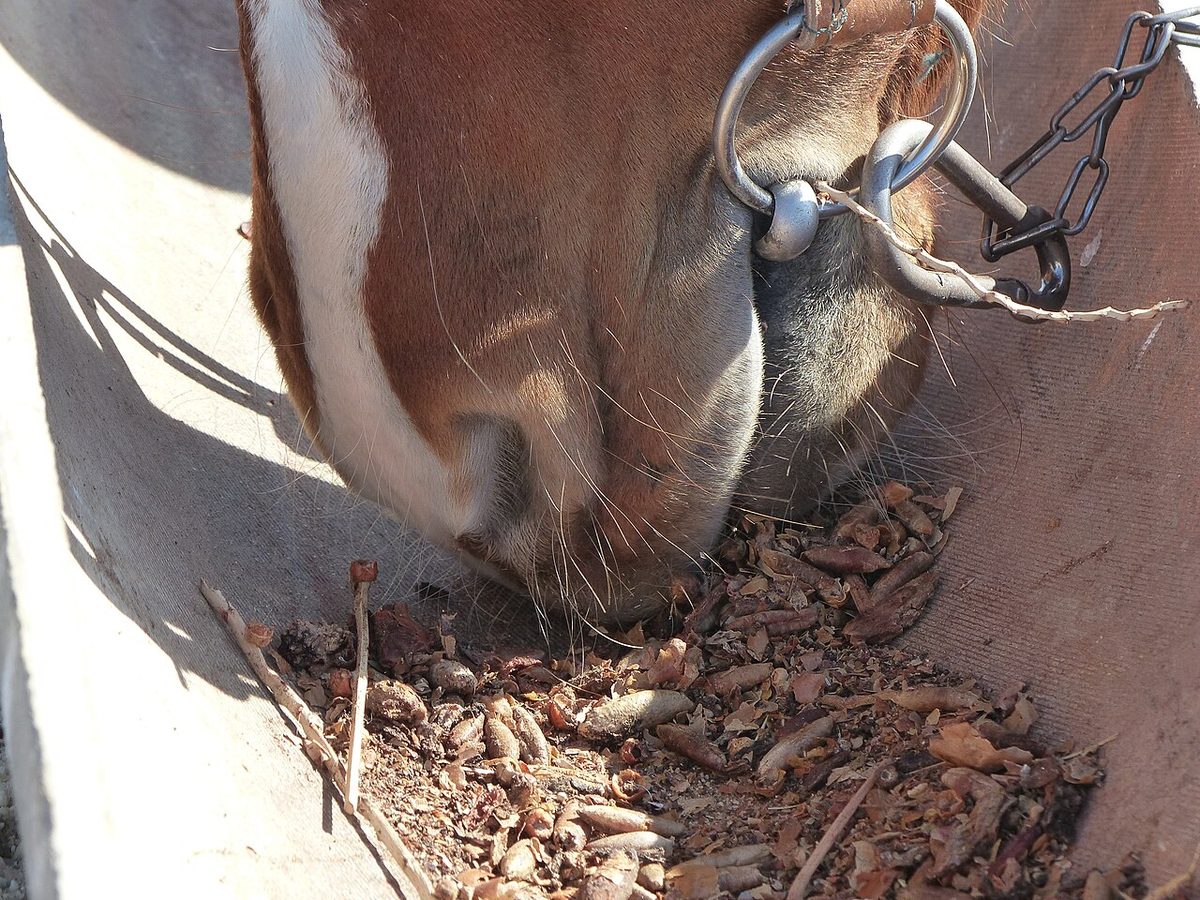
Arabe-barbe mangeant des dattes séchées by Tsaag Valren (CC BY-SA 4.0) · source
With more than 300 breeds of horse in the world today, developed for many different uses, the rough-and-ready classification system groups them into three types:
Hot bloods
Chlorotabanus crepuscularis, Green horse fly, Duck, NC 2016-01-07-14.51 by USGS Bee Inventory and Monitoring Lab from Beltsville, Maryland, USA (Public domain) · source
These are the spirited, fast horses — think Arabians and Thoroughbreds. They are built for speed and endurance, which means relatively lighter frames and proportionally smaller hooves compared to what a draft horse carries. A light-riding hot blood at the upper end of the weight range, say 550 kg, still has less mass pressing down on each hoof than a cold blood of twice that weight.
Warmbloods
13-04-19-Horses-and-Dreams-2013 (45 von 114) by Dieses Foto ist von Olaf Kosinsky
Achtung: Dieses Bild ist nicht gemeinfrei. Es ist zwar frei benutzbar aber gesetzlich geschützt.
This photo was created by Olaf Kosinsky
Note: this image is not in the Public Domain. It is free to use but protected by law.
Bitte benutzen Sie nach Möglichkeit als Bildbeschreibung:
Olaf Kosinsky / Wikipedia
in unmittelbarer Nähe beim Bild oder an einer Stelle in ihrer Publikation, wo dies üblich ist. Dabei muß der Zusammenhang zwischen Bild und Urhebernennung gewahrt bleiben.
I prefer the following credit:
Olaf Kosinsky / Wikipedia near to the photo or at a location that is common in your publication but preserving the association between image and credit.
Bitte lesen sie den vollen Lizenztext gründlich, bevor sie das Bild nutzen! Wenn sie Fragen zu den Lizenzvereinbarungen haben oder weniger restriktive kommerzielle Lizenzen wünschen, kontaktieren sie mich per Mail: kosinsky@web.de
Please review the full license requirements carefully before using this image. If you would like to clarify the terms of the license or negotiate less restrictive commercial licensing outside of the bounds of Licenses, please contact me by email: kosinsky@web.de (CC BY-SA 3.0) · source
Warmbloods were developed from crosses between hot bloods and cold bloods, aiming for a middle ground: more athletic than a draft, calmer than a pure hot blood. Breeds like the Hanoverian, Dutch Warmblood, and Trakehner fall into this group. Their hooves tend to sit somewhere between the compact feet of hot bloods and the massive feet of cold bloods, again reflecting their intermediate body size.
Cold bloods (draft horses)
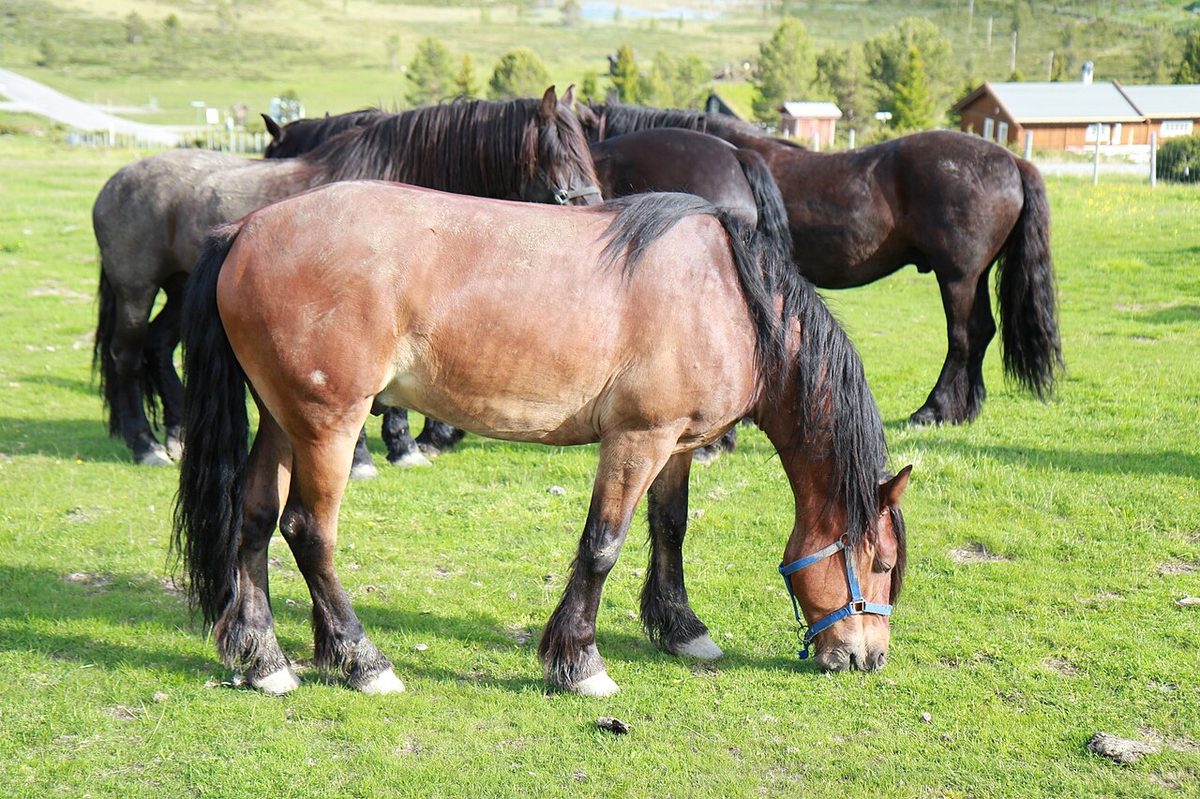
Cold blooded horses kaldblodshest in Rondane, Norway by Øyvind Holmstad (CC BY-SA 4.0) · source
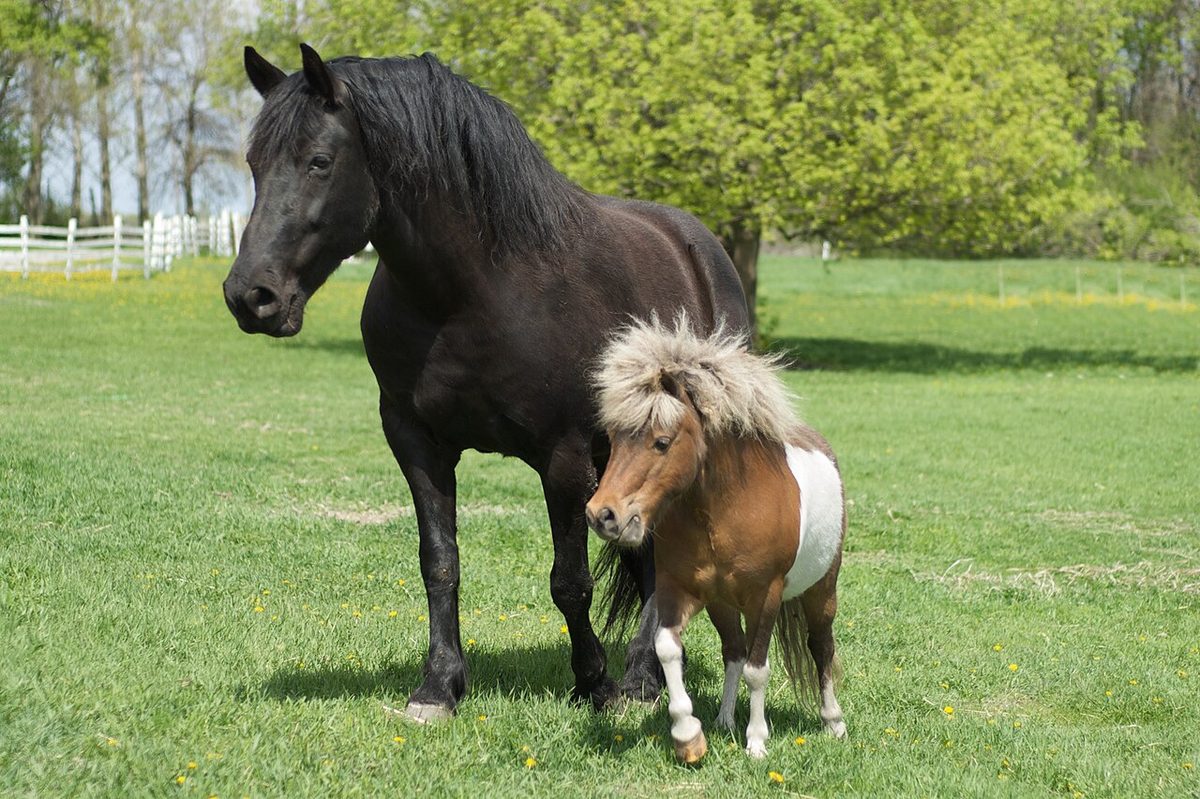
Draft horses are classified as cold bloods, suitable for slow, heavy work. They are typically larger and heavier than light-riding horses, and as cold-blooded breeds, are often associated with calmer temperaments. Their greater body mass would typically correspond with proportionally larger hooves. Drafts were bred to pull heavy loads, work in fields, and carry substantial weight — all tasks that benefit from a large, sturdy foot with plenty of surface area.
This is the core of the answer to the title question. If hoof size scales with body weight — and anatomy strongly suggests it does — then the heaviest horses have the biggest hooves, and draft horses are by far the heaviest type.
Understanding Horse Height and Weight Ranges
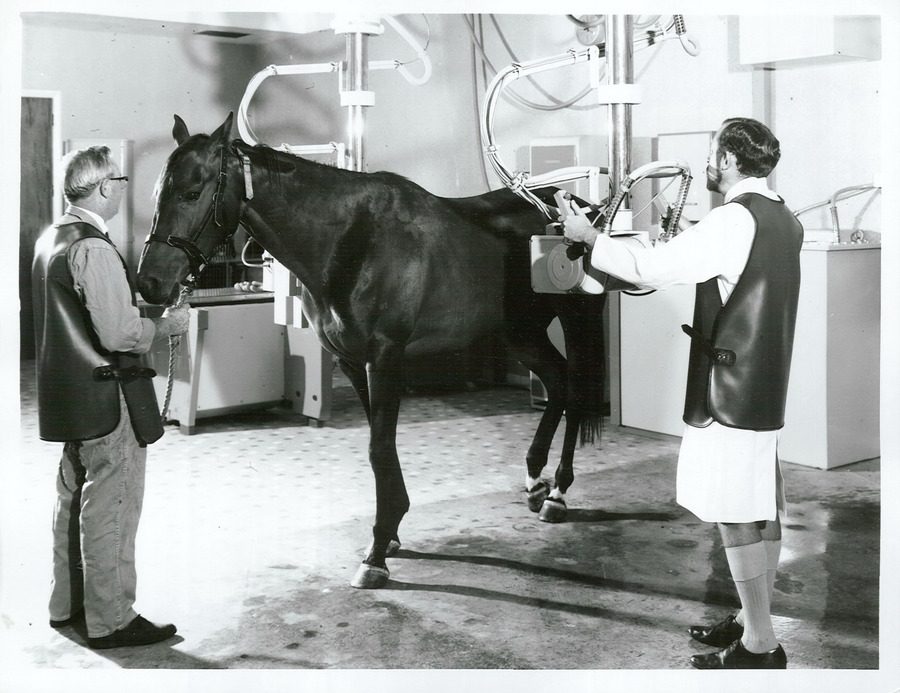
Radiologist examining a horse with X-Ray, 1969 by Archives New Zealand from New Zealand (CC BY 2.0) · source
Before you can compare breeds sensibly, it helps to know how horses are measured and what typical ranges look like.
Height: Measured in hands at the withers. One hand = 4 inches (101.6 mm). Light-riding horses range from 14 to 16 hands (56 to 64 inches, 142 to 163 cm). Larger-riding horses start from about 15.2 hands upward.
Weight (light-riding horses): 380 to 550 kg.
Horse lifespan: 25 to 30 years is typical for the modern domestic horse, depending on breed, management, and environment. The oldest verifiable record was a 19th-century horse called Old Billy, who lived to 62. Another notable long-lived horse was Sugar Puff, who died in 2007 at age 56.
Draft horses sit well above these figures. While the available data does not list specific weight ranges for draft breeds, they are consistently described as "larger and heavier than light-riding horses," which puts most draft individuals well above the 550 kg ceiling of the light-riding category. Some of the heaviest draft breeds — such as the Shire or the Suffolk Punch — can reach 900 kg or more for a mature stallion.
Why Large Hooves Matter for Hoof Health
'Haunted table' of The Black Horse Inn, Nuthurst, West Sussex by Acabashi (CC BY-SA 4.0) · source
A larger hoof is not just bigger — it spreads the horse's weight over a greater surface area. This matters for several reasons:
Ground pressure: A horse with a large hoof exerts less pounds-per-square-inch pressure on any given patch of ground. This reduces the risk of bruising, founder (laminitis), and ground-related injury, especially on soft or uneven terrain.
Traction: Big hooves can carry more frog (the rubbery, V-shaped structure on the underside), which contributes to grip on slippery or muddy ground — a real advantage for working horses in wet climates.
Trimming and shoeing demands: The larger the hoof, the more material a farrier must work with, and the heavier the shoes required. This translates into more time, more metal, and higher farriery costs. If you keep a draft horse, budget accordingly for regular professional hoof care.
Structural integrity: Large hooves tend to be associated with good bone quality throughout the limb — what horsemen call "good feet on good bone." A horse with small hooves relative to its body size is more prone to hoof problems regardless of breed.
For owners and handlers, the practical takeaway is this: draft horses need competent, experienced farriers who are used to working on large feet. Not every farrier has the tools or the stamina for a full-sized Shire or Clydesdale trim.
What the Research Actually Tells Us — and What It Leaves Out
Zulu Parade, New Orleans Mardi Gras 2013-02-12 - 38 by Miguel Discart (CC BY-SA 2.0) · source
It is worth being clear about the limits of the available data. The sources consulted for this article do not contain specific hoof measurements for any breed. They describe the general classification of horses, the weight ranges of light-riding horses, and the characteristics of draft horses as a group — but no source lists hoof length, hoof width, or the surface area of the hoof wall for any particular breed.
This means:
No source in the research identifies which specific breed has the "largest" hooves in absolute measurements.
No source defines what qualifies as a "big hoof" in measurable terms.
No source covers hoof care requirements, nutritional effects on hoof growth, genetic basis for hoof size, or veterinary considerations for oversized hooves.
These are genuine gaps. The conclusion that draft horses have the biggest hooves is a logical inference from their body mass and the basic anatomy of how horses are built — not a claim backed up by published measurements in the sources reviewed. If you are making decisions based on actual hoof dimensions — choosing a breed, fitting shoes, or assessing conformation — you should consult a farrier, a veterinary surgeon, or the relevant breed registry.
Breeds to Look At If Hoof Size Is a Priority
Although the available data does not rank breeds by hoof size, the cold-blooded draft group is where you will find the heaviest horses and therefore — by reasonable anatomical extension — the largest feet. Commonly recognised draft and heavy cold-blooded breeds include:
Shire
Clydesdale
Suffolk Punch
Belgian (Brabant)
Percheron
Irish Draught
Cob-type breeds such as the Gypsy Vanner
Each of these breeds carries substantially more weight than a light-riding horse, and breeders and handlers consistently describe them as having large, well-formed feet. For exact breed dimensions, contact the relevant national or international breed registry.
Beyond the Hoof: Other Things the Data Reveals About Horses
While hoof size is the focus of this article, the same data set that covers horse breeds also surfaces some interesting figures on horse-related markets and products — worth knowing about if you are involved in the equine industry more broadly.
Horse meat markets
Horse meat prices around the world vary enormously. Our own recorded data, covering 168 price observations as of January 2025, shows a global range from EUR124 per tonne at the low end to EUR26,577 per tonne at the high end, with an average of EUR2,159 per tonne. Individual countries show much narrower ranges: Kazakhstan recorded between KZT822,714 and KZT1,249,834 per tonne (49 observations), Poland between PLN11,064 and PLN15,607 per tonne (49 observations), and Uzbekistan between UZS29,053,922 and UZS36,893,884 per tonne (37 observations). The highest absolute prices appeared in smaller markets with fewer data points — for example, Vietnam showed VND157,523,089 per tonne, but on only 4 observations, which means that figure may not be representative.
Horse gram (Kulthi) in India
Horse gram — a legume known as Kulthi — is an entirely different matter from horse meat. In India, our own recorded data as of September 2026 shows whole horse gram prices ranging from INR15 to INR65 per kg across 66 observations, averaging INR52 per kg. FAQ-grade horse gram commands a slightly higher price, from INR56 to INR61 per kg, averaging INR59 per kg across 9 observations. This is a useful reference point if you are involved in livestock feed or legume trading in South Asian markets.
Practical Advice for Anyone Choosing a Breed
If you are selecting a horse and hoof size is one of your considerations — whether for working on hard ground, for a rider concerned about concussion, or simply because you want a horse with naturally sound feet — here is what the reasoning from the available data suggests:
Prioritise cold-blooded or heavy breeds if you want the largest hooves. The anatomical logic is straightforward: more body mass means more weight per hoof, which means natural selection and selective breeding have produced proportionally larger feet.
Look at the whole conformation, not just the hoof. A large hoof on a poorly Conformed horse is still a problem. Good feet grow on good bones.
Get a farrier's assessment before you buy. A professional can measure the hoof, evaluate the hoof-pastern axis, and tell you whether the feet are appropriately proportioned to the horse's body.
Budget for professional care. Larger hooves need larger shoes, more material, and more farriery time. This is especially true of draft horses.
Remember that management matters as much as genetics. The modern domestic horse has a life expectancy of 25 to 30 years, and hoof health within that lifespan depends heavily on trimming schedule, footing, and diet. No breed has "perfect" hooves by default.
The Bottom Line
Do draft horses always have the biggest hooves?
Generally, yes — but there are always exceptions. A Shire or Clydesdale will usually have a larger hoof than a Thoroughbred or Arabian. Yet within any breed, individual horses vary. A large, heavy Thoroughbred can have bigger feet than a small, light-framed draft. Genetics, feeding, and exercise all play a part.
Are bigger hooves better?
Bigger is not automatically better. A hoof needs to be the right size for the horse's body. Too large and the horse can have a clumsy gait and stress on its joints. Too small and the horse can develop navicular disease or laminitis over time. Balance and proportion are what matter most.
Practical Conclusion
Draft horses do tend to have the largest hooves of any breed, and that comes with real consequences for care, cost, and handling. But hoof size is only part of the picture. Trimming, feeding, footing, and regular farrier attention matter just as much. Before investing in a draft horse, talk to a farrier, check the hooves in person, and plan for the ongoing cost of care. An informed buyer makes a better owner — and a well-cared-for horse, whatever its breed, is a pleasure to work with.
Frequently Asked Questions
What is the average hoof size of a draft horse?
Most draft horses wear shoes sized between size 2 and size 5 (roughly 26 to 32 cm across the hoof). That compares to riding horses, which usually fit between size 0 and size 2.
How often do draft horses need new horseshoes?
Most draft horses need trimming and re-shoeing every six to eight weeks, the same as other breeds. Their hooves grow fast, though, so missing an appointment can cause problems more quickly.
Can a farrier refuse to shoe a draft horse?
Yes — some farriers specialise in draft horses for good reason. The weight of the animal, the size of the hoof, and the amount of material needed all demand skill and strength. Always confirm your farrier has experience with heavy horses before booking.
❓ Frequently asked questions
Which horse breeds are known for having the largest hooves?
Research sources do not identify specific breeds by hoof size or provide actual hoof measurements. Draft horses are classified as cold-blooded breeds suitable for slow, heavy work, and they are typically larger and heavier than light-riding horses, but no source explicitly states that draft horses have the largest hooves or gives comparative hoof dimensions. For precise information, consult a breed registry or veterinary farriery resource.
How does hoof size relate to horse body size across breeds?
Sources do not provide specific hoof measurements for any breed. However, they note that light-riding horses typically weigh between 380 and 550 kilograms and range from 14 to 16 hands in height. Draft horses are described as typically larger and heavier than light-riding horses, which would typically correspond with proportionally larger hooves — though this is not stated explicitly by the sources. Actual hoof dimensions depend on the individual horse and should be assessed by a qualified farrier or veterinarian.
What are the most and least expensive horse meat markets?
Our own figures show horse meat prices ranging from EUR124 per tonne at the lowest to EUR26,577 per tonne at the highest, based on 168 price observations recorded as of 2025-01-31. The global average price across all observations is EUR2,159 per tonne. Other recorded ranges include KZT822,714 to KZT1,249,834 per tonne in Kazakhstan (49 observations), PLN11,064 to PLN15,607 per tonne in Poland (49 observations), and UZS29,053,922 to UZS36,893,884 per tonne in Uzbekistan (37 observations). The highest absolute prices tend to appear in smaller markets with fewer recorded observations, such as Vietnam at VND157,523,089 per tonne (4 observations).
How long do horses live on average?
The modern domestic horse has a life expectancy of 25 to 30 years, depending on breed, management, and environment. The oldest verifiable record is held by 'Old Billy', a 19th-century horse that lived to 62 years. Another notable case is Sugar Puff, who died in 2007 at age 56.
How are horse heights measured?
Horse height is measured at the highest point of the withers, where the neck meets the back, as a stable anatomical reference point. In English-speaking countries, height is expressed in hands and inches: one hand equals 4 inches (101.6 mm). For example, a horse listed as 15.2 hands high stands 62 inches, or approximately 157.5 centimetres.
How many horse breeds are there in the world?
There are more than 300 breeds of horse in the world today, developed for many different uses. They are loosely divided into three categories: spirited hot bloods selected for speed and endurance; cold bloods such as draft horses and some ponies bred for slow, heavy work; and warmbloods, developed from crosses between hot bloods and cold bloods.
📚 Where the figures in this guide come from
We read what has already been published on the subject, take out the figures and rules it actually states, and write it up in plain, everyday language.
Every number and name here traces back to a source listed below — nothing in this guide is invented.
Our own records
Price observations recorded by this site (worldwide)
Prices, rules and animal health advice change and vary by area. Check anything important with a local vet, dealer or agriculture office before you spend money.
Spotted a mistake? Tell us in the comments and we will correct it.



 Menu
Menu
💬 Comments
Login to comment
No comments yet. Be the first to share your experience!