🍪 Cookie Consent
We use cookies to improve your experience, analyse how the site is used, and show relevant content. By choosing Accept you agree to that. See our
Privacy Policy.
Horse Breeds With Long Hair: Fjords, Shires & What to Expect
Some horse breeds are famous for their thick manes, heavy winter coats, and distinctive leg feathering. Here is what sets breeds like the Fjord and the Shire apart, from colour and conformation to the world records they hold.
Fjord horses and Shire horses stand out among horse breeds for their noticeably long, thick, or heavy hair. These two breeds express that extra coat in very different ways, but both turn heads wherever they go.
Fjord Horses: Norway's Ancient Long-Maned Breed
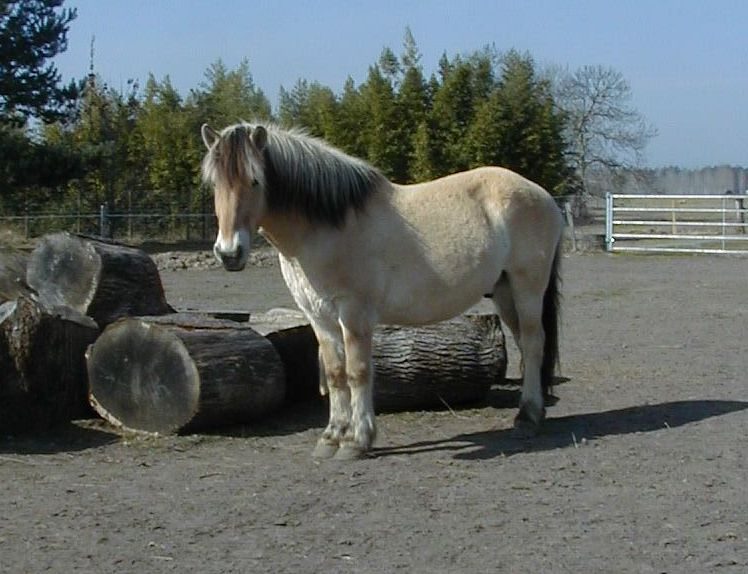
Cheval fjord 00001 by Plasma333 at English Wikipedia (Public domain) · source
The Fjord horse is one of the world's oldest horse breeds, originating from the mountainous regions of western Norway. For hundreds of years, Norwegian farmers relied on these sturdy animals for everything from plowing rocky fields to riding across difficult mountain terrain. What grabs your attention first is the mane. It grows naturally long, thick, and heavy. Breeders traditionally clip it to between 5 and 10 cm so it stands straight up in a neat, roached crescent shape. This trim highlights the clean, strong line of the neck and the dark dorsal stripe that runs down the centre of the horse's back — a hallmark marking of the breed. The mane and tail also carry lighter hairs along their outer edges, giving them a soft two-toned appearance that breeders prize. The darker centre stripe of the mane is called midtstol, and the darker centre of the tail is halefjær — both words come straight from Norwegian and are still used by breeders today.
A Thick Winter Coat and Moderate Feathering
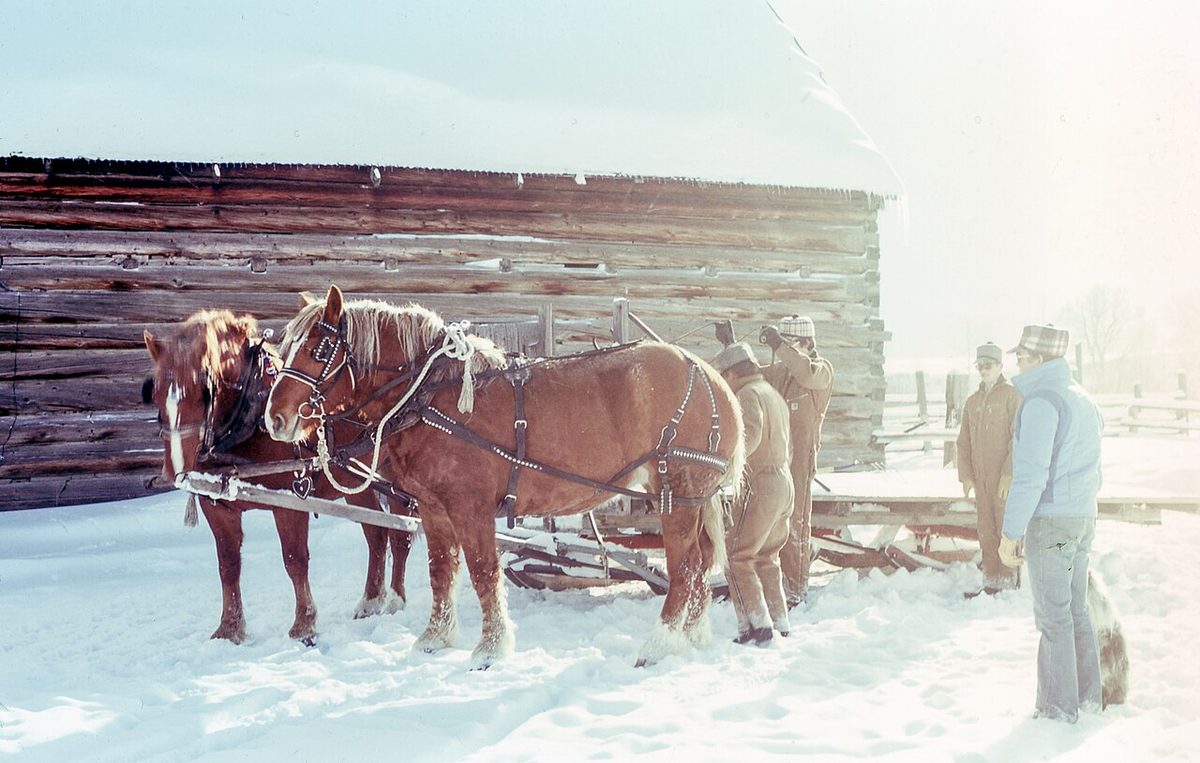
Horse-drawn sled during a harsh winter (Unsplash) by Les Anderson lesanderson (CC0) · source
When winter sets in, the Fjord's coat changes noticeably. The hair becomes especially heavy and thick during the cold months, a natural adaptation to the mountain climate where the breed developed. The same Fjord that looks trim and tidy in summer will carry a dense, fluffy coat by December, and that is exactly what breeders expect. Along the lower legs, Fjords carry some feathering — that longer hair that hangs below the knees and hocks. The breed standard, though, actively discourages heavy or profuse feathering. A moderate amount is preferred, keeping the legs looking neat and clean rather than overloaded with hair. If you are showing a Fjord, excessive feathering would count against you in the judging ring.
Five Shades of Dun
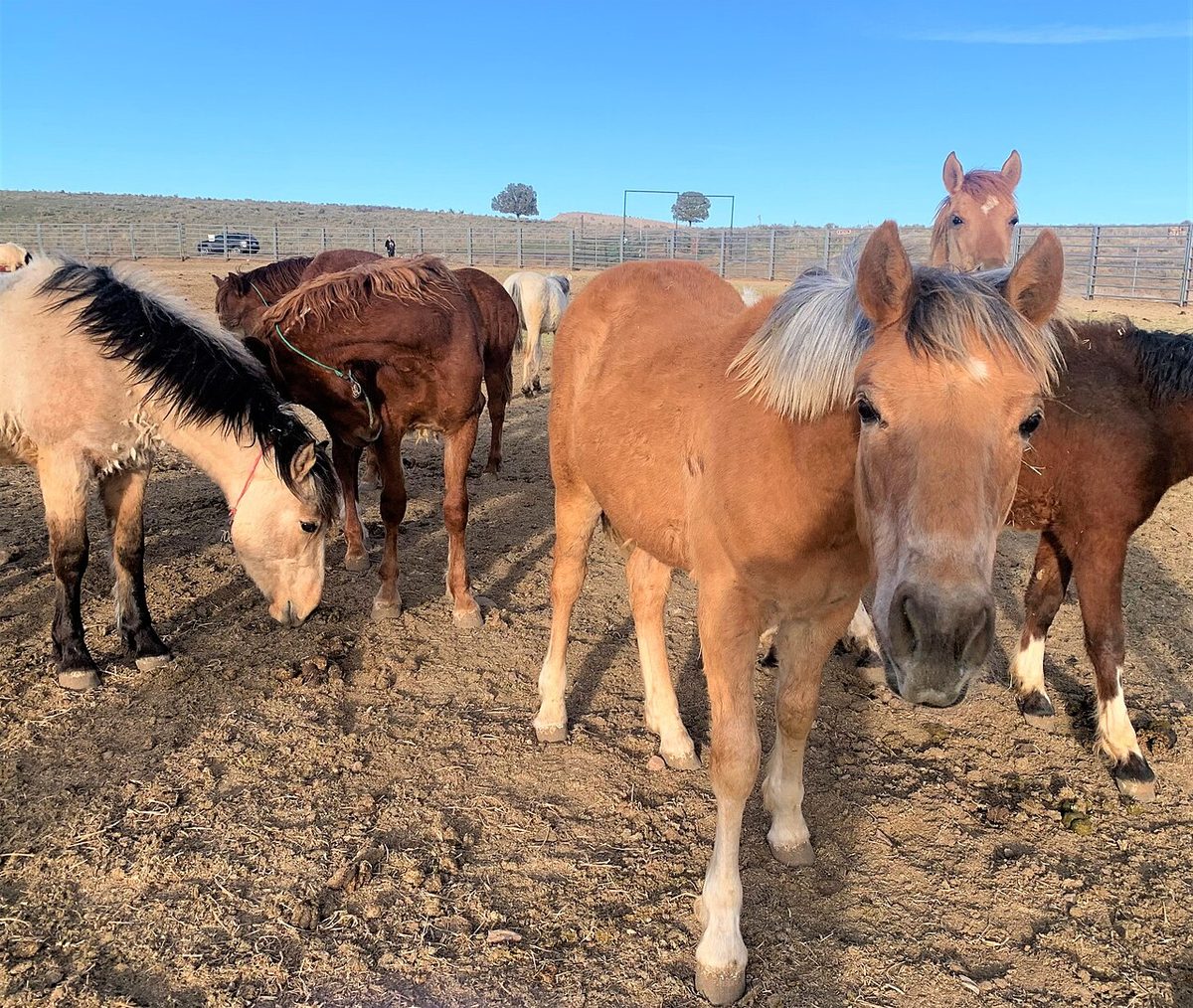
Meet the horses of our Oregon Wild Horse Corral Facility by BLM Oregon & Washington (Public domain) · source
Every Fjord horse is dun in colour, without exception. The breed standard in Norway officially recognises five dun shades, a rule that has been in place since 1922. Brown dun is the most common by far, making up roughly 90 percent of all Fjord horses. The remaining 10 percent are spread across red dun, grey dun (also called mouse dun), white dun (called uls dun), and yellow dun. This strict colour standard is unusual among horse breeds and gives Fjord herds a remarkably consistent look. White markings on the face or legs are uncommon and strictly regulated by breeders. In 1982, the Norwegian Fjord Horse Association, known as Norges Fjordhestlag, decided that stallions with any white marking beyond a small star cannot be accepted for breeding. An adult Fjord typically stands between 135 cm and 150 cm (13.1 to 14.3 hands) at the withers and weighs between 400 kg and 500 kg. That puts them in the mid-size range — smaller than most draft horses but far sturdier than a typical riding horse.
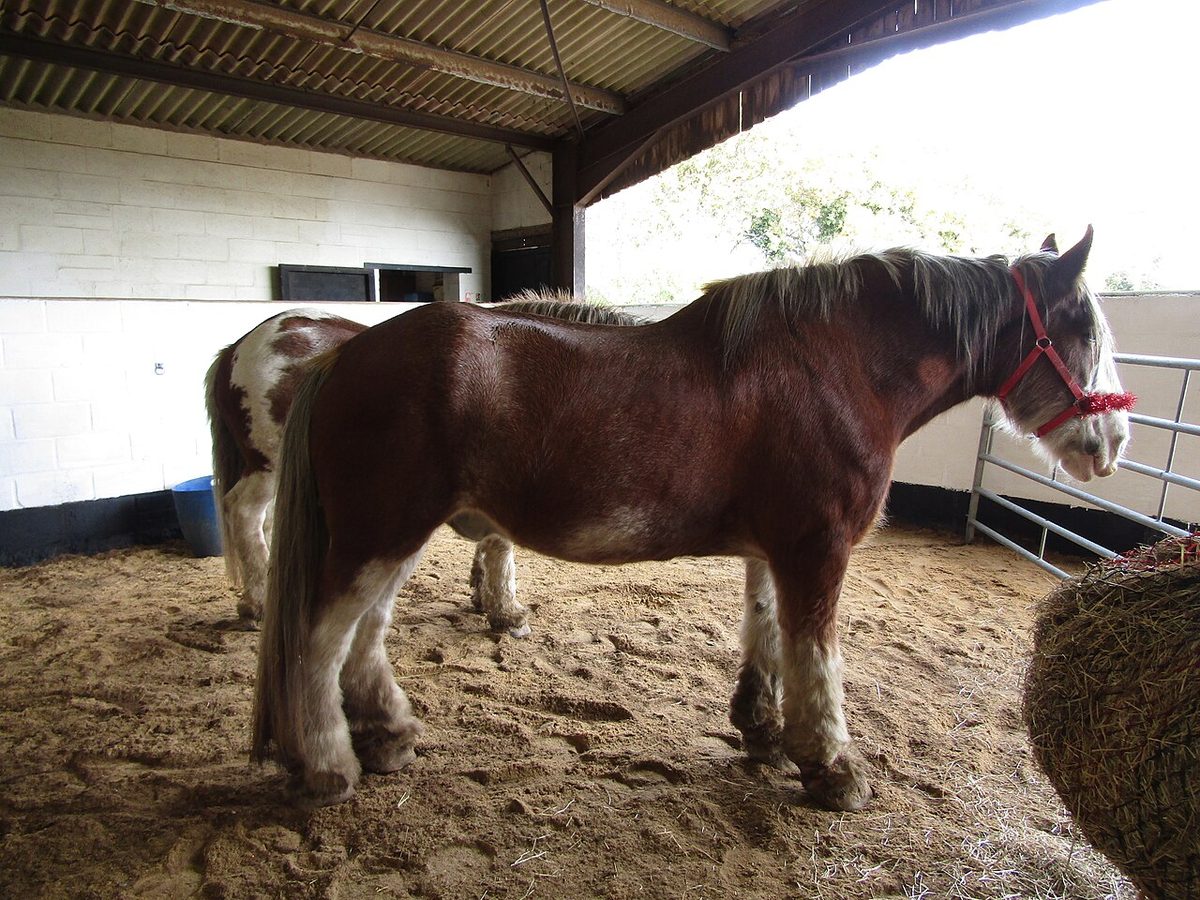
2019-11-16 Two Clydesdales, Hillside Norfolk Shire Horse Centre, West Runton (3) by Kolforn (Kolforn)
I'd appreciate if you could mail me (Kolforn@gmail.com) if you want to use this picture out of the Wikimedia project scope.
This file is licensed under the Creative Commons Attribution-Share Alike 4.0 International license.
You are free:
to share – to copy, distribute and transmit the work
to remix – to adapt the work
Under the following conditions:
attribution – You must give appropriate credit, provide a link to the license, and indicate if changes were made. You may do so in any reasonable manner, but not in any way that suggests the licensor endorses you or your use.
share alike – If you remix, transform, or build upon the material, you must distribute your contributions under the same or compatible license as the original.https://creativecommons.org/licenses/by-sa/4.0CC BY-SA 4.0 Creative Commons Attribution-Share Alike 4.0 truetrue (CC BY-SA 4.0) · source
The Shire horse comes from England and carries a very different kind of long hair. Where the Fjord shows a dramatic, upright mane, the Shire's extra coat appears as fine, straight, and silky hair on the legs. The breed standard says the feathering should not be too heavy. Some breeders aim for more, others for less, and both approaches can meet the standard, so you will see real variation from horse to horse. Historically, the Fen type of Shire from the eastern, marshy regions of England tended to have more bone and more hair than the Midlands type, though that regional distinction matters far less in modern breeding.
Silky Feathering on a Giant Frame
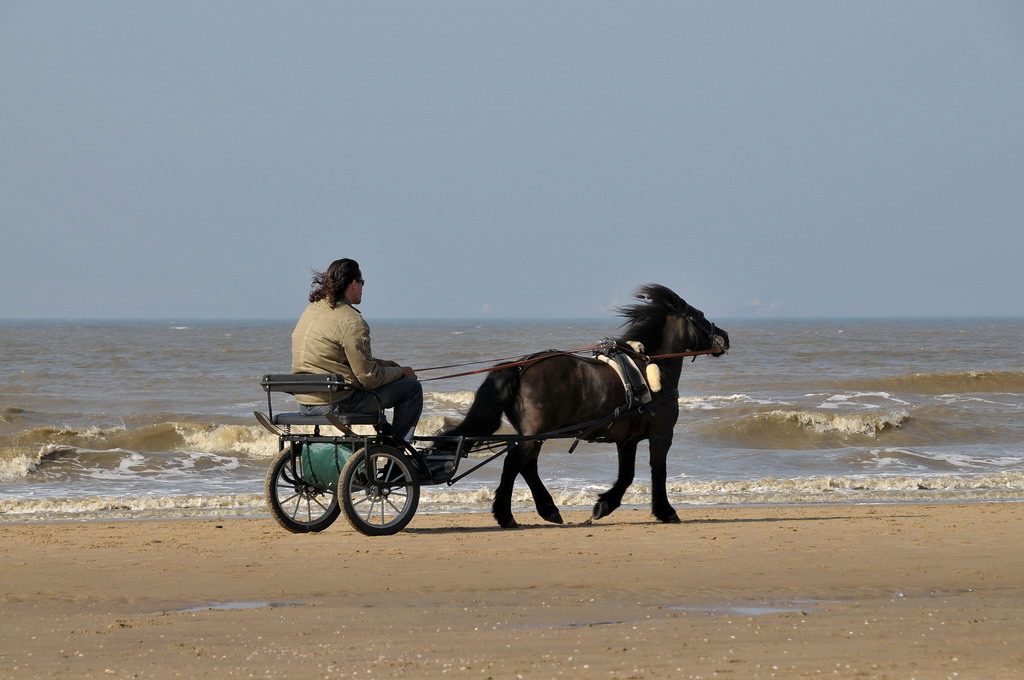
An Afternoon At The Beach by FaceMePLS from The Hague, The Netherlands (CC BY 2.0) · source
Shires are famous for their sheer size. The breed has held world records for both the largest and the tallest horse ever recorded. The current record-holder was a Shire gelding named Sampson, also known as Mammoth, foaled in the UK back in 1846. He stood over 219.7 cm (21.2 hands) at the withers and weighed an estimated 1,524 kg — a truly extraordinary animal by any measure. Today's Shires are still very large, even if nothing approaches Sampson's dimensions. A grown stallion averages about 178 cm (17.2 hands), with the breed standard requiring at least 173 cm (17.0 hands). Geldings must stand no shorter than 168 cm (16.2 hands), and mares at least 163 cm (16.0 hands). Stallions and geldings typically weigh between 850 kg and 1,100 kg — roughly double the weight of an adult Fjord horse.
Colour Rules That Vary by Country
Cheeseboard platter at Black Horse Inn, Nuthurst, West Sussex, England by Acabashi (CC BY-SA 4.0) · source
Breed associations for the Shire exist in the UK, Australia, the United States, and Canada, helping maintain consistent standards across continents. However, standards do differ slightly between countries. In the UK, Shire stallions may not be chestnut in colour, while the US association allows chestnut. You will want to check the specific rules of the association relevant to you if you are considering buying or breeding a Shire. The Rare Breeds Survival Trust considers the Shire breed "at risk" in the UK, which means dedicated breeders are working hard to keep the population stable and healthy.
Both breeds carry long or heavy hair, but the differences run far deeper than their coats. Here is a side-by-side look at what sets them apart.
Origin: Fjords come from the mountainous regions of western Norway. Shires originated in England and now have breed associations across the UK, Australia, the United States, and Canada.
Height: Fjords stand between 135 cm and 150 cm (13.1 to 14.3 hands). Shire stallions average about 178 cm (17.2 hands) with a minimum of 173 cm (17.0 hands), geldings at least 168 cm (16.2 hands), and mares at least 163 cm (16.0 hands).
Weight: Fjords weigh 400 to 500 kg. Shire stallions and geldings range from 850 kg to 1,100 kg.
Hair type: Fjords have a long, thick, heavy mane that is typically clipped short. Shires have fine, straight, silky leg hair with moderate feathering.
Colour: Every Fjord is dun, with five recognised shades. Shires come in a wider range, though chestnut is restricted for stallions in the UK.
Temperament group: Both are cold-blooded breeds, known for calm, steady temperaments suited to patient work.
Where Long-Haired Breeds Fit in the Horse World
Assemblage (FindID 1013510-1120692) by The Portable Antiquities Scheme, Amy Downes, 2020-11-01 16:08:38 (CC BY 2.0) · source
With over 300 horse breeds found around the world, it helps to understand where long-haired breeds like the Fjord and the Shire fit in the bigger picture. Breeders and experts loosely divide horses into three temperament categories. Hot bloods are spirited horses built for speed and endurance — think Arabians and Thoroughbreds, bred for racing and fast work. Cold bloods include draft horses and ponies, bred for slow, steady, heavy work like pulling carts and plowing fields. Both the Fjord and the Shire belong to this cold-blood group. Warmbloods are crosses between hot and cold bloods, developed largely in Europe for riding and sport disciplines. Knowing that both your long-haired breeds are cold bloods sets the right expectation from the start: they tend to be calmer and more patient than hot-blooded horses, though every individual horse has its own personality and you should spend time with any animal before deciding.
The Deep Roots of Horse Domestication
Humans have lived alongside horses for thousands of years, and the exact story of how that partnership began is still being pieced together. Some researchers believe domestication began around 4000 BCE in Central Asia, associated with the Botai culture. Others estimate horses were first ridden closer to 3500 BC. Modern genetic evidence points to the Western Eurasian steppes in the lower Volga-Don region as the homeland of today's domestic horses, with those populations largely replacing earlier local groups from around 2000 BCE. It is a complex history, and new discoveries continue to refine the picture.
Choosing the Right Long-Haired Breed for You
Choosing the Right Long-Haired Breed for You
There is no single "best" long-haired breed — it depends on what you need and what you can provide. Start by honestly assessing your land, budget, and time. A Shire horse needs more pasture, more feed, and more daily grooming than a Fjord. If you have limited space, a smaller long-haired breed may be a better fit.
Think carefully about why you want a horse with long hair. Are you breeding for sale, showing, or riding? Each goal points toward a different breed. If grooming time is limited, a breed with a naturally simpler coat — like the Fjord — will be far less work than a heavy-feathered Shire or Gypsy Vanner, whose leg hair needs daily attention to prevent mud fever and matting.
Practical Care Considerations
Long-haired horses live in every climate, but they need tailored care. In hot, humid regions, thick coats can cause overheating — consider summer clipping and always provide shade and clean water. In cold, wet climates, feathering on the legs needs drying and regular inspection for rain scald. Hooves in feathered breeds collect more moisture and debris, so pick a farrier experienced with the breed.
A Few Final Thoughts
Long-haired horses are a joy to own, but they ask more of their keepers than short-coated horses. Choose a breed that matches your lifestyle, not just your idea of how a horse should look. Visit breeders, ask questions of owners, and spend time with the breed before committing. The right horse for you is the one whose needs you can meet every single day, year after year.
❓ Frequently asked questions
Which horse breeds are known for having long manes or heavy feathering?
The Fjord horse has a naturally long, thick, heavy mane and some feathering on the lower legs, though the breed standard discourages profuse feathering. The Shire horse has fine, straight, silky leg hair, and the breed standard specifies that too much feathering should not occur. Over 300 horse breeds exist worldwide across three temperament categories: spirited hot bloods, cold bloods such as draft horses and ponies, and warmbloods developed from crosses between hot and cold bloods.
What is the tallest horse ever recorded?
The tallest horse in recorded history was a Shire gelding named Sampson, also known as Mammoth, foaled in the UK in 1846. He stood over 219.7 cm (21.2 hands) and weighed an estimated 1,524 kg. The Shire breed has held world records for both the largest and the tallest horse.
What coat colours do Fjord horses come in?
All Fjord horses are dun in colour. Five shade variations are officially recognised in Norway: brown dun, which makes up about 90% of the breed; red dun; grey, also called grey dun or mouse dun; white dun, also called uls dun; and yellow dun. The breed standard was set in Norway in 1922. White markings are rare — in 1982 the Norwegian Fjord Horse Association decided that stallions with white markings other than a small star cannot be accepted for breeding.
How much does horse meat cost in different countries?
Horse meat prices vary significantly by country. In European markets, recorded prices range from EUR 124 to EUR 26,577 per tonne, with an average of EUR 2,159 per tonne. In Kazakhstan the average is KZT 1,028,109 per tonne, in Poland PLN 13,625 per tonne, and in Uzbekistan UZS 33,533,031 per tonne. Horse gram, also called Kulthi, averages INR 53/kg in India, with prices ranging from INR 15 to INR 262/kg across recorded observations.
How were horses originally domesticated?
Humans began domesticating horses around 4000 BCE in Central Asia, primarily associated with the Botai culture. However, modern genetic evidence indicates that the homeland of today's domestic horses was the Western Eurasian steppes in the lower Volga-Don region, and that these horses replaced local populations from around 2000 BCE. Horses were first ridden approximately 3500 BC.
📚 Where the figures in this guide come from
We read what has already been published on the subject, take out the figures and rules it actually states, and write it up in plain, everyday language.
Every number and name here traces back to a source listed below — nothing in this guide is invented.
Our own records
Price observations recorded by this site (worldwide)
Prices, rules and animal health advice change and vary by area. Check anything important with a local vet, dealer or agriculture office before you spend money.
Spotted a mistake? Tell us in the comments and we will correct it.
🍪 Cookie Consent
We use cookies to improve your experience, analyse how the site is used, and show relevant content. By choosing Accept you agree to that. See our
Privacy Policy.
📬 Get more like this — free
New calculators, breed guides and animal shorts — straight to your inbox.
No spam, unsubscribe anytime.
 Menu
Menu
💬 Comments
Login to comment
No comments yet. Be the first to share your experience!