🍪 Cookie Consent
We use cookies to improve your experience, analyse how the site is used, and show relevant content. By choosing Accept you agree to that. See our
Privacy Policy.
Horse Breeds With Feathered Feet: What Every Farmer Should Know
Not all horse breeds carry the same amount of feathering on their lower legs. From the heavily feathered Clydesdale to the clean-legged Andalusian and Suffolk Punch, understanding these differences matters for health, grooming, and breed selection.
Not every horse breed grows heavy hair on its lower legs. If you want a horse with feathered feet, the Clydesdale is the breed that truly delivers — with extensive feathering that is one of its most defining features. The Fjord horse grows some feathering, though its breed standard discourages profuse growth. The Andalusian and the Suffolk Punch, meanwhile, have little or no feathering at all.
Which Breeds Have Feathered Feet?
Here is how the four breeds compare on the trait that matters most to you:
Breed
Feathering
Height
Weight
Typical Colour
Clydesdale
Extensive
162 to 183 cm (16.0 to 18.0 h)
820 to 910 kg (1800 to 2000 lb); mature males up to 1000 kg (2200 lb)
Bay or brown most common; roans common; black, grey, chestnut also occur; white markings on face, feet, and legs usual
Fjord
Some — moderate
135 to 150 cm (13.1 to 14.3 h; 53 to 59 inches)
400 to 500 kg (880 to 1100 lb)
Always dun; five shade variations recognised
Suffolk Punch
Little to none
165 to 178 cm (16.1 to 17.2 h)
900 to 1000 kg (2000 to 2200 lb)
Always chestnut
Andalusian
None
15.1½ hands (156 cm) average
Stallions and geldings: 512 kg; mares: 412 kg
Not specified in available findings — check with a breed society near you
The table tells the story clearly. If you want a heavily feathered horse, the Clydesdale stands alone. The Fjord offers a touch of feathering in moderation. The other two breeds keep their legs clean.
The Clydesdale: Heavy Feathering and Serious Size
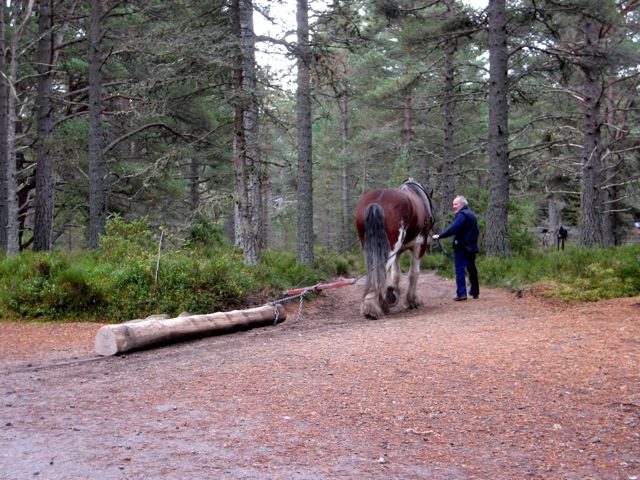
Carrbridge, heavy working horse at the Landmark Forest Theme Park by Martyn Gorman (CC BY-SA 2.0) · source
Size and Appearance
Horse mushroom, size 10 by Leanmeanmo (CC BY-SA 2.0) · source
The Clydesdale is a big horse, and the feathering on its lower legs is one of its most recognisable traits. The breed stands 162 to 183 cm (16.0 to 18.0 hands) high and weighs 820 to 910 kg (1800 to 2000 lb). Some mature males grow even larger, reaching 1000 kg (2200 lb). Their heads show a straight or slight Roman nose, a broad forehead, and a wide muzzle. This is a horse that needs strong stabling, robust fencing, and plenty of good feed. You are not keeping a Clydesdale on a small paddock without planning ahead.
Clydesdales most often come in bay or brown. Roan is also common across the breed. Black, grey, and chestnut do appear as well. Nearly all Clydesdales carry white markings on the face, feet, and legs. So while the feathering is consistent, the coat itself shows real variety.
Health Considerations
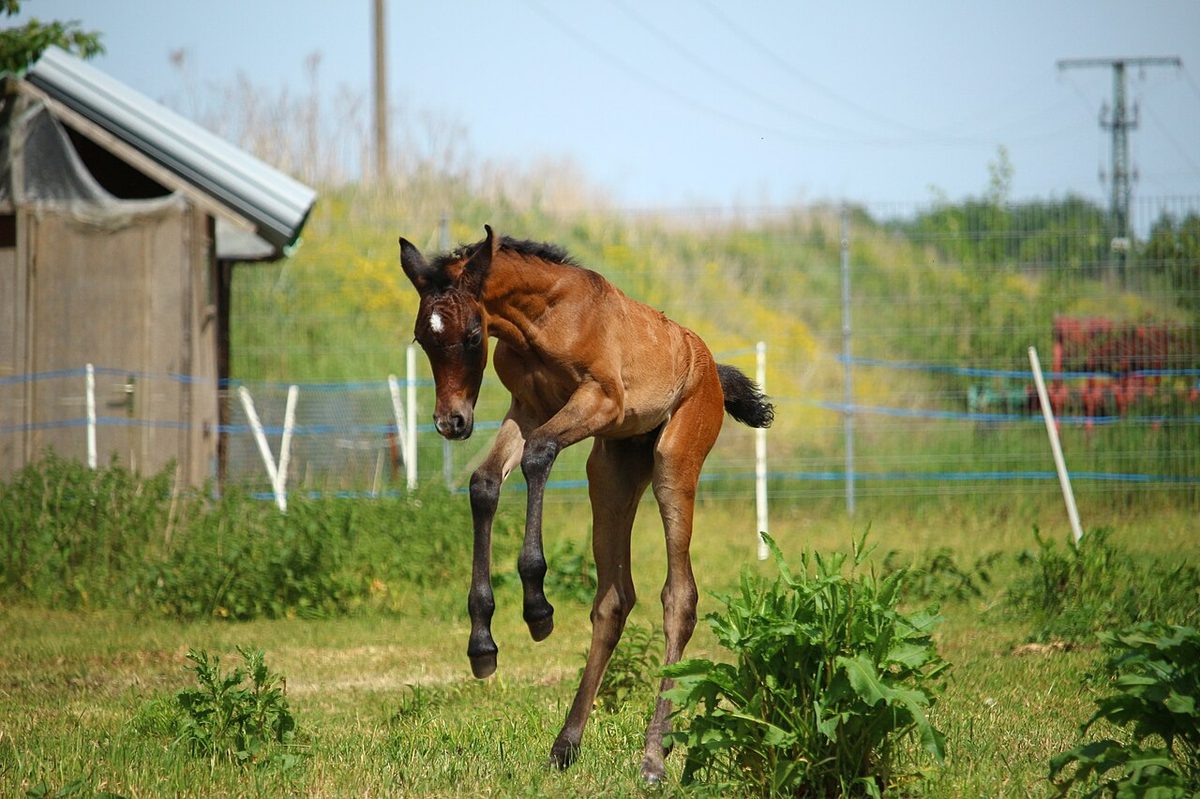
Horse-1411469 by https://pixabay.com/ru/users/rihaij-2145/ (CC0) · source
That heavy feathering does bring health concerns you should know about. Clydesdales with heavy feathering are prone to a skin condition on the lower legs known as 'Clyde's itch'. It is thought to be caused by a type of mange and affects the very areas where the feathering grows thickest. Keeping the lower legs clean and checking them regularly matters more for this breed than for most others. How often and with what products depends on your local conditions, so talk to a vet who knows the breed.
More seriously, the Clydesdale is at risk for chronic progressive lymphedema. This disease causes progressive swelling, hyperkeratosis, and fibrosis of the distal limbs — the same lower-leg regions where the heavy feathering grows thickest. The condition worsens over time, similar to chronic lymphedema in humans. There is no quick cure, which means spotting the early signs through regular leg inspection is your best defence. The feathering itself can hide swelling and skin changes, so you need to look closely and feel the legs as well as seeing them.
The Fjord and Suffolk Punch: Different Approaches to Feathering
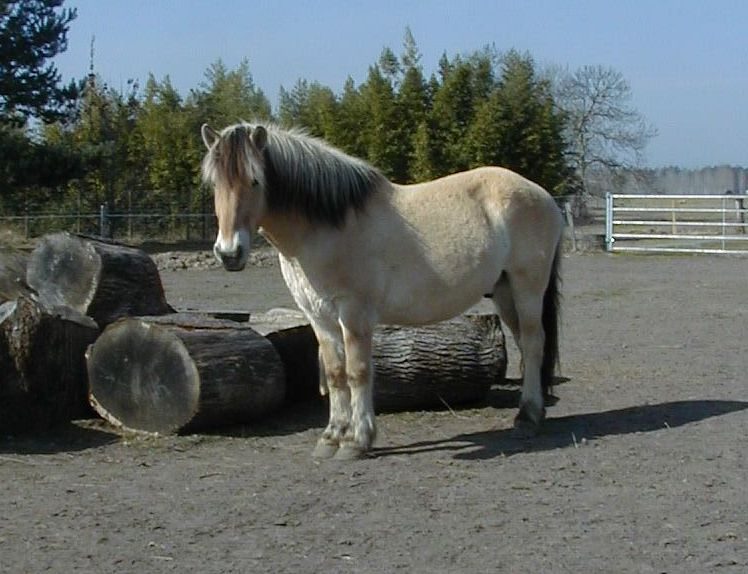
Cheval fjord 00001 by Plasma333 at English Wikipedia (Public domain) · source
The Fjord Horse
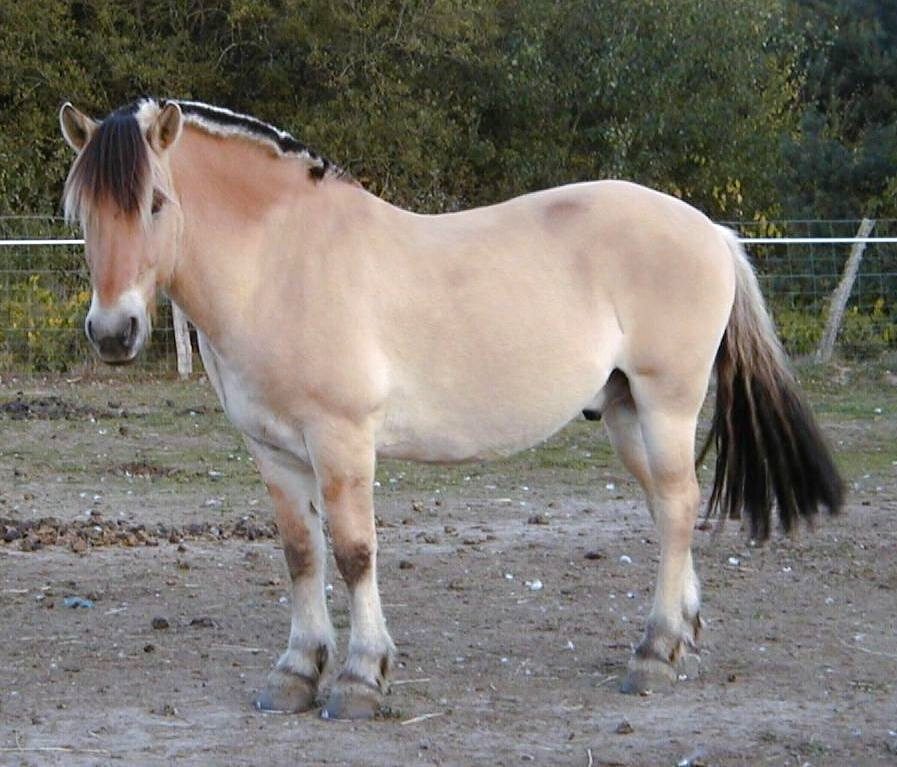
Cheval fjord 00003 by Plasma at French Wikipedia (Public domain) · source
The Fjord horse keeps feathering moderate by design. It does have some hair on the lower legs, but the breed standard explicitly discourages profuse feathering. What you see is a neat, manageable amount — nothing like the heavy fringe on a Clydesdale. This makes Fjords easier to care for around the legs than heavily feathered draught breeds.
Fjords are also much smaller and more versatile than the heavy breeds. They stand 135 to 150 cm (13.1 to 14.3 hands, or 53 to 59 inches) at the withers and weigh 400 to 500 kg (880 to 1100 lb). Despite that compact frame, they carry an adult rider comfortably and pull heavy loads without strain. They are a good all-rounder for a smallholding or a family farm.
All Fjord horses are dun. The breed standard recognises five dun shade variations, so there is visual variety even within that single colour family. You will not find a Fjord outside the dun range.
The Suffolk Punch
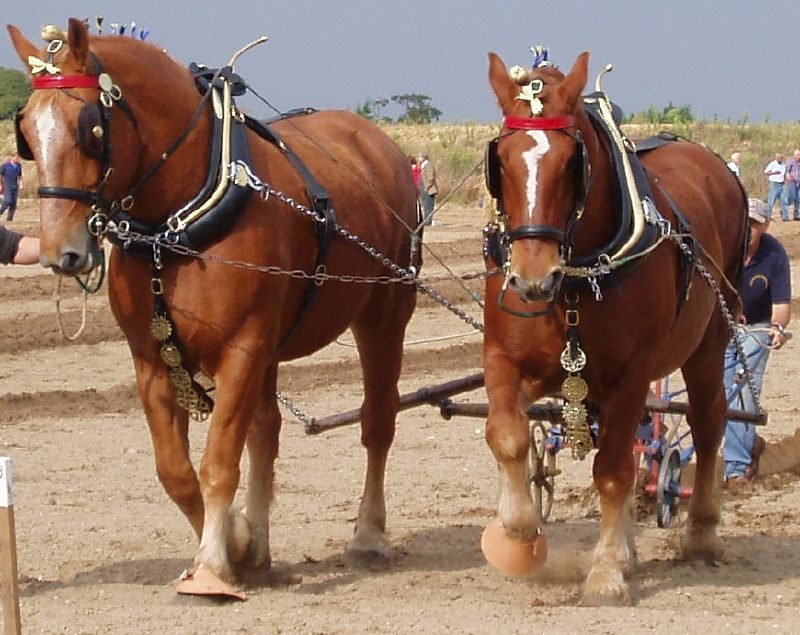
Suffolk Plow Team by Amanda Slater from Coventry, England (CC BY-SA 2.0) · source
The Suffolk Punch takes a different path entirely. The breed standard characterises legs as short and strong with broad joints, sound hooves, and — crucially — little or no feathering on the fetlocks. This minimal feathering is one of the features that sets the Suffolk apart from other British heavy draught horses like the Clydesdale or the Shire.
Suffolk Punches stand 165 to 178 cm (16.1 to 17.2 hands) and weigh 900 to 1000 kg (2000 to 2200 lb). They are shorter but more massively built than other British heavy draught breeds, packing serious bulk into a relatively compact frame. Every Suffolk Punch is chestnut in colour. Always.
Unfortunately, the breed is in real trouble. The Suffolk Horse Society, formed in 1877, publishes the oldest English breed stud book — a remarkable piece of farming history. But the breed's status is listed as critical by both the UK Rare Breeds Survival Trust and The Livestock Conservancy. Agricultural mechanisation in the mid-twentieth century nearly wiped them out. If you find a Suffolk Punch, you have found something rare and worth caring for properly.
The Andalusian: Elegance Without Feathering
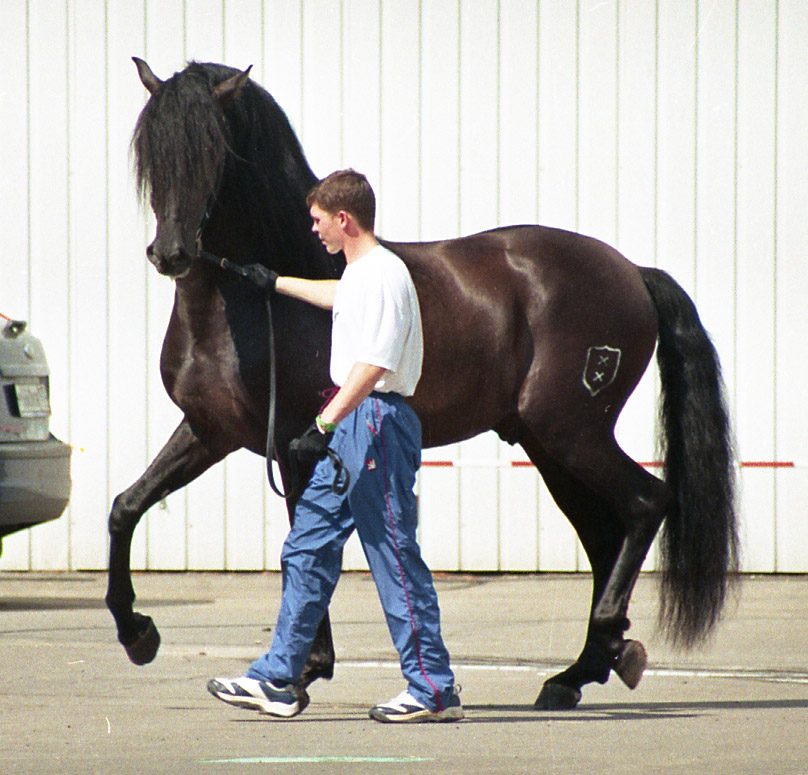
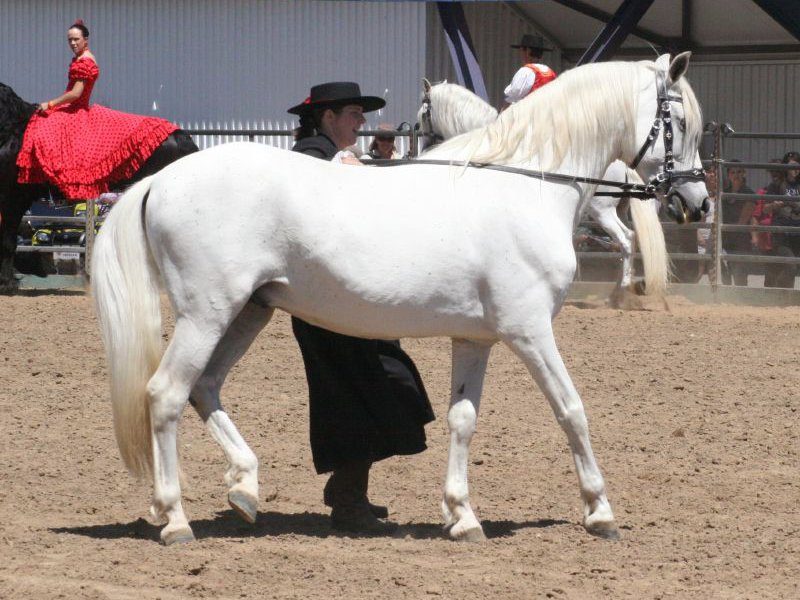
Andalusian by Just chaos (CC BY 2.0) · source
The Andalusian is built for movement and presence — not for heavy feathering. The breed is known for clean legs with no propensity for blemishes or injuries, and the legs carry no excess feathering. The overall impression is of an elegant, athletic horse with smooth, energetic gaits. This is a riding horse first and a work horse second, and it shows in the way it moves.
Andalusians average 15.1½ hands (61.5 inches, or 156 cm) at the withers. Stallions and geldings typically weigh 512 kg (1129 lb), while mares average 412 kg (908 lb). The Spanish government requires a minimum height of 15.0 hands for males and 14.3 hands for mares before they can be registered. That level of official involvement shows how seriously Spain takes this native breed. If you want a horse with feathered feet, the Andalusian is not the one — but if you want an elegant, clean-legged riding horse with presence, it is hard to beat.
What Breed Standards Say About Feathering
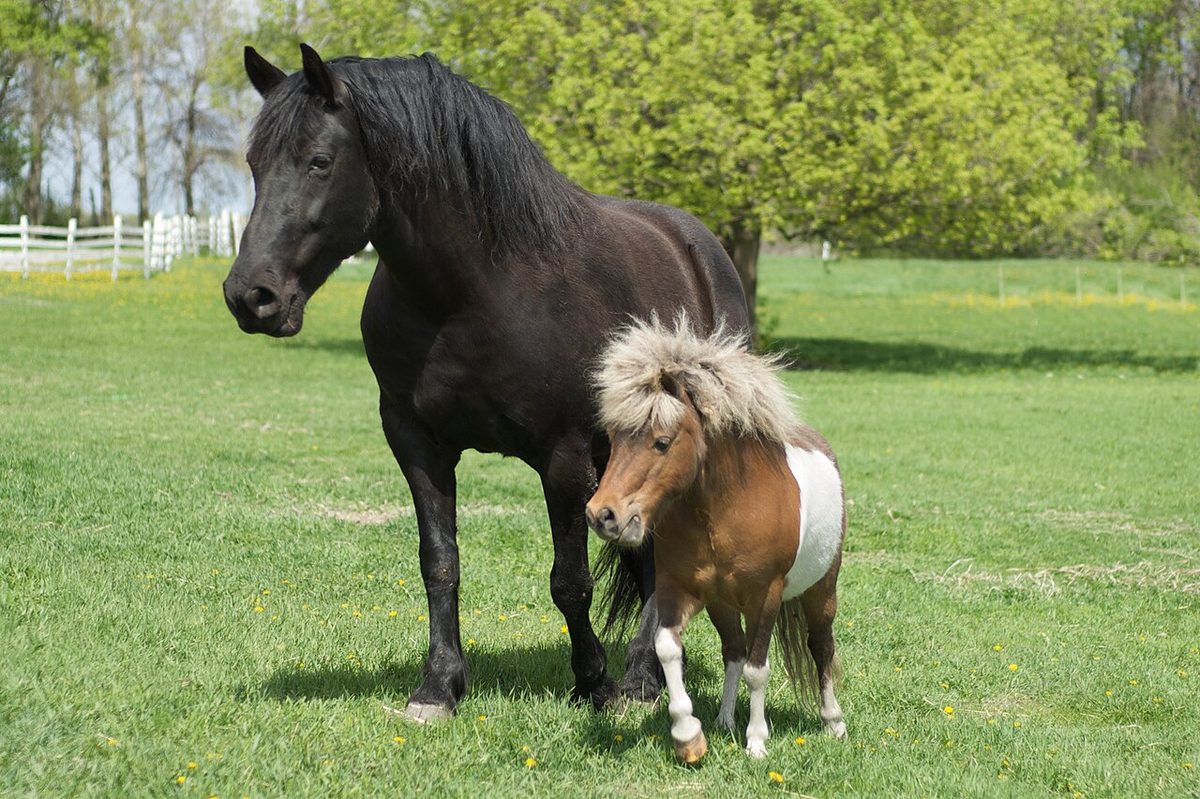
Big horse and little horse by Pete Markham from Loretto, USA (CC BY-SA 2.0) · source
Breed standards shape what breeders select for and what judges reward in the show ring. On the question of feathering, each of these four standards takes a very different position.
Clydesdale: The breed association actively celebrates extensive feathering as a defining characteristic. Hoof quality, leg structure, and overall movement all receive close attention during judging.
Fjord: The breed standard explicitly discourages profuse feathering. A moderate amount is accepted; heavy growth on the lower legs is not what judges want to see.
Suffolk Punch: The standard describes legs with little or no feathering on the fetlocks. Clean, strong legs are the ideal the breed aims for.
Andalusian: Clean legs without excess feathering match the breed's elegant, athletic type and are part of the breed standard ideal.
As a buyer, understanding these standards helps you know what to expect from breeders and what judges will reward in the show ring. The Clydesdale is the only one of the four that actively selects for heavy feathering. The other three either limit it or reject it entirely.
Conservation Status and Choosing Your Horse
Conservation Concerns
Availability varies dramatically across these breeds, and that matters if you are planning to buy. The Clydesdale came close to extinction by the 1970s. Wartime losses and the spread of agricultural mechanisation cut numbers sharply, and the Rare Breeds Survival Trust considered the breed vulnerable to extinction. Since then, numbers have climbed a little, but the Clydesdale is still not a horse you stumble across at every yard. You will likely need to travel and wait to find one.
The Suffolk Punch is in an even more fragile position. It is listed as critical by both the UK Rare Breeds Survival Trust and The Livestock Conservancy in the United States. Both organisations use that word to signal a breed at real risk of disappearing from farms entirely. Finding a Suffolk Punch takes real effort, patience, and often a waiting list. But if you secure one, you are working with a genuinely rare animal.
The Fjord and Andalusian are better placed in terms of availability. Both have active stud books and dedicated breeding populations across multiple countries. You will generally find it easier to locate horses of these breeds, though what is available in your area depends on local conditions. Check with breed societies and dealers near you for the current picture.
Making the Right Choice for Your Farm
Making the Right Choice for Your Farm
Start with what you actually need the horse to do. Are you looking for a working animal that pulls carts or works the land? Or do you want a horse for riding, showing, or leisure time? Some of the feathered breeds shine at heavy work. Others are better suited to light riding or companionship. Matching the horse's natural strengths to your daily routine saves you both frustration and money.
Think about where you live. Some breeds handle cold, wet weather far better than others. If your farm sits in a damp, cool region, the natural insulation a feathered coat provides could be a real bonus. But in a hot or dry climate, that same feathering needs more frequent cleaning to avoid skin problems. Consider the conditions your horse will live in before you commit.
Budget matters more than you might expect. Rarer breeds cost more to buy and often more to keep. Feeding, shoeing, and general care add up, and feathered feet demand extra grooming time each week. A horse with thick hair around its hooves collects mud, matted grass, and stones. If you cannot spare the time or money for regular care, choose a breed with lighter feathering.
Key Takeaway
Feathered feet are beautiful and practical for certain conditions, but they come with real responsibility. Pick a breed that fits your farm, your climate, and your budget. Visit the horses in person, speak to owners, and ask breed societies plenty of questions. A well-chosen horse becomes a valued partner. A poorly chosen one becomes an expensive lesson.
❓ Frequently asked questions
Which horse breeds have feathered feet?
The Clydesdale has extensive feathering on the lower legs, making it one of the most heavily feathered breeds. The Fjord horse has some feathering on the lower legs, though its breed standard discourages profuse feathering. The Andalusian does not have excess feathering on its legs, and the Suffolk Punch has little or no feathering on the fetlocks.
What health problems come with heavy feathering?
Clydesdales with heavy feathering are prone to a skin condition on the lower legs called 'Clyde's itch', thought to be caused by a type of mange. The breed is also at risk for chronic progressive lymphedema, a disease that causes progressive swelling, hyperkeratosis, and fibrosis of the distal limbs — the same areas where heavy feathering grows.
How big are horses with feathered feet?
Clydesdales stand 162 to 183 cm (16.0 to 18.0 h) and weigh 820 to 910 kg (1800 to 2000 lb). Fjord horses stand 135 to 150 cm (13.1 to 14.3 h) and weigh 400 to 500 kg (880 to 1100 lb). Suffolk Punches stand 165 to 178 cm (16.1 to 17.2 h) and weigh 900 to 1000 kg (2000 to 2200 lb). Andalusians average 15.1½ hands (156 cm) at the withers.
Do breed standards reward or penalise feathering?
The Fjord horse breed standard explicitly discourages profuse feathering. The Suffolk Punch standard expects little or no feathering on the fetlocks. Only the Clydesdale actively selects for and celebrates extensive feathering as a defining breed characteristic, with breed associations paying close attention to the quality of the hooves and legs.
What colours are typical for heavily feathered horse breeds?
Clydesdales are usually bay or brown, with roans common and black, grey, and chestnut also occurring. Most have white markings on the face, feet, and legs. Suffolk Punches are always chestnut. Fjord horses are always dun, with five shade variations recognised in the breed standard.
Are feathered horse breeds at risk of dying out?
Clydesdale numbers fell during the early twentieth century due to wartime losses and agricultural mechanisation. By the 1970s the Rare Breeds Survival Trust considered the breed vulnerable to extinction, though numbers have since increased slightly. The Suffolk Punch is listed as critical by both the UK Rare Breeds Survival Trust and The Livestock Conservancy, reflecting near-disappearance during mid-20th-century agricultural mechanisation.
📚 Where the figures in this guide come from
We read what has already been published on the subject, take out the figures and rules it actually states, and write it up in plain, everyday language.
Every number and name here traces back to a source listed below — nothing in this guide is invented.
Our own records
Price observations recorded by this site (worldwide)
Prices, rules and animal health advice change and vary by area. Check anything important with a local vet, dealer or agriculture office before you spend money.
Spotted a mistake? Tell us in the comments and we will correct it.
 Menu
Menu
💬 Comments
Login to comment
No comments yet. Be the first to share your experience!