You raise fish, or you are thinking about it, and you keep hearing the same thing: Nigeria buys fish, lots of it, and it pays. Then you sit down to plan the thing and the ground gives way. Our own United States price records do not even carry a fish line. The rules on what you may legally hold in a tank change from state to state. And when you search for fish for sale in Nigeria, you get a lot of noise and very few straight answers about grades, paperwork or price.
This guide sticks to what is solid. Where the picture is genuinely unsettled, it says so instead of handing you a number to lean on. Selling fish to Nigeria can work, but only if you build the plan on facts you have checked yourself.
Why Nigeria keeps coming up when farmers talk fish
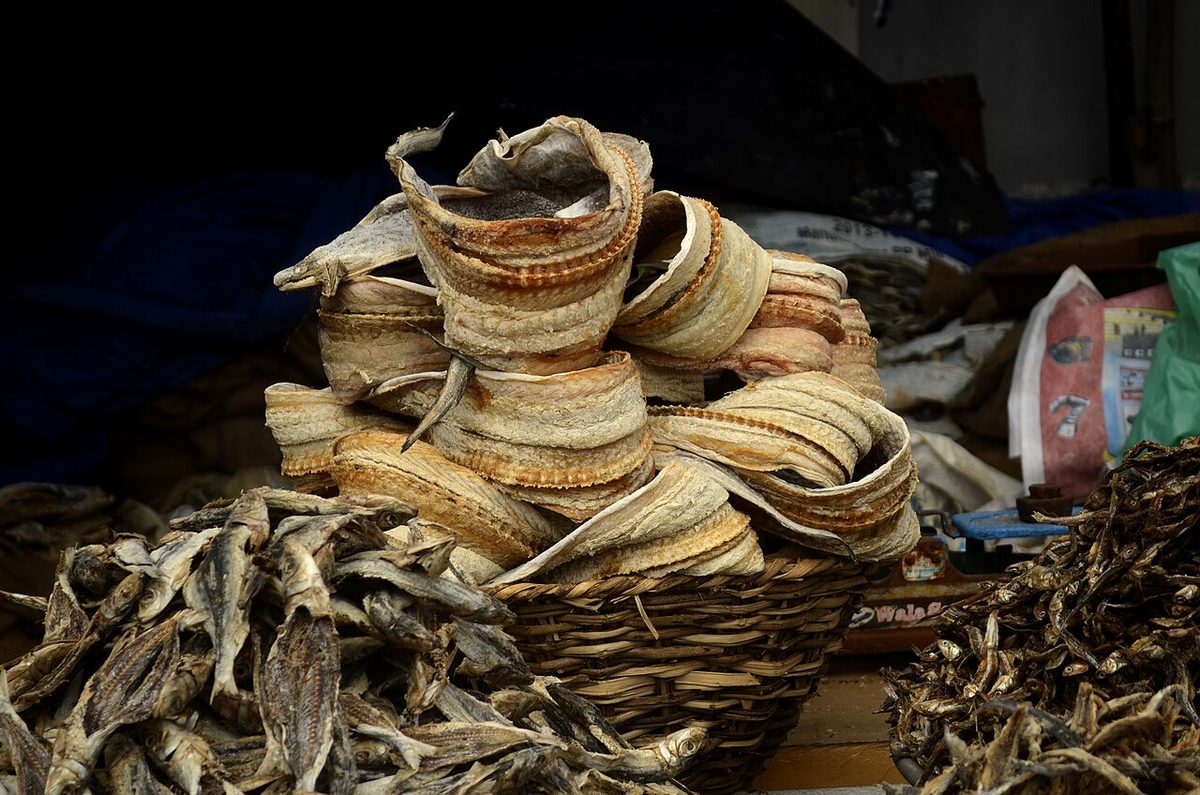
The clearest sign is a fish from the other end of the world. Skreið is an Icelandic wind-dried fish, dried with the head still on. Icelanders do not eat it at home in modern times. It is sold mostly to Nigeria, where it goes into soup. (Their own word for dried fish, or stockfish, is harðfiskur, eaten as is or usually with butter.)
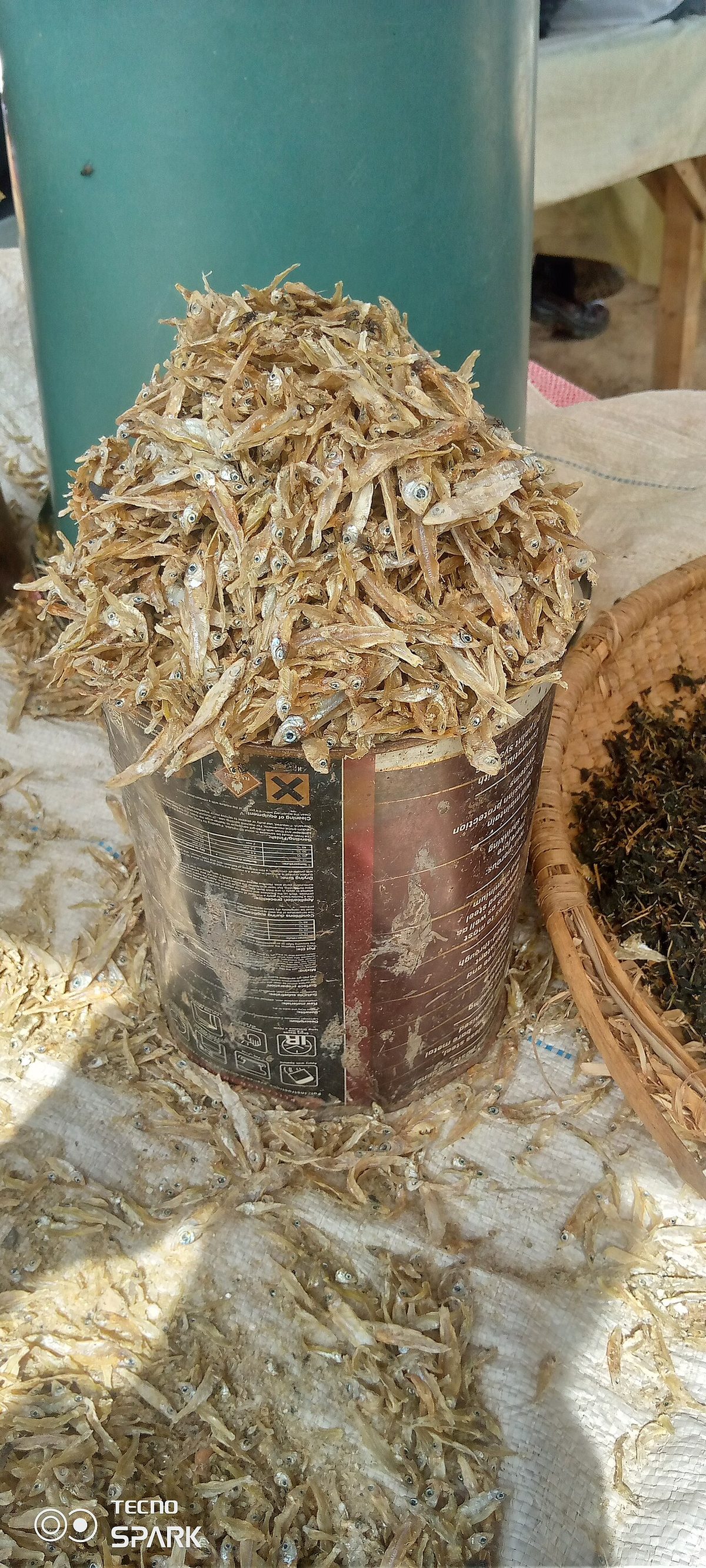
Dried fish is not a novelty in a Nigerian kitchen either. Eja kika is a Yoruba smoked dried fish, made from several types of fish, sometimes combining smoking with sun-drying. The point of those techniques is not only a longer shelf life — it is flavour, so the fish does more work in the finished dish.
The wider economy is a mixed picture, and it is worth knowing both halves:
- Nigeria is a lower-middle-income, mixed economy and emerging market — 52nd-largest in the world by nominal GDP, second largest in Africa by purchasing power parity, and 19th-largest in purchasing power parity terms.
- The National Bureau of Statistics reported GDP growth of 3.19% in Q2 2024, with the non-oil sector expanding 4.13% while the oil sector contracted -3.83%. Oil revenues make up two-thirds of state revenues, but oil is only about 9% of GDP, and Nigeria produces about 2.7% of world oil supply. Debt-to-GDP was 36.63% in 2021, according to the IMF.
- Manufacturing became the largest on the continent in 2013 and supplies a large share of goods and services for West Africa. In February 2011, Citigroup projected Nigeria would have the highest average GDP growth in the world between 2010 and 2050.
- Against that: an ongoing supply crisis in the power sector, with residents facing power difficulties often, despite Nigeria being Africa's largest oil producer. Non-energy infrastructure is described as inadequate. Nigeria ranked 161 out of 189 on the UN Development Index in 2019 and 154 out of 180 in Transparency International's 2021 Corruption Perceptions Index.
On how long the import demand lasts, you will hear it both ways, and nothing settles it. Some accounts say the largely subsistence farming sector has not kept up with fast population growth, and that Nigeria, once a large net exporter of food, now imports some of its food products. Others say mechanisation has brought a manufacturing resurgence and food export, and a move towards food sufficiency. Plan for a market that can change, not one that owes you anything.
Start with the hard part: nobody here can quote you a fish price
Our United States price records hold 254 price observation rows, excluding samples and manually entered rows, all fed from faostat. They cover seven things: chicken meat, cattle meat, hen eggs, cow milk, turkey meat, pig meat and honey. There is no fish or aquaculture commodity in that set. So there is no US fish price benchmark to give you, and we are not going to invent one.
For a feel of how other protein prices sit, all in USD per tonne:
- Chicken meat: average USD1581, from USD919 to USD2357, across 49 rows
- Cattle meat: average USD3448, from USD2425 to USD4387, across 49 rows
- Hen eggs: average USD3363, from USD1374 to USD8789, across 38 rows
- Cow milk: average USD499, from USD381 to USD600, across 38 rows
- Turkey meat: average USD1860, from USD1038 to USD2800, across 38 rows
- Pig meat: average USD1451, from USD1107 to USD1892, across 38 rows
- Honey: average USD5947, from USD5600 to USD6636, across 4 rows
The most recent observations are dated 2025-01-31, except honey at 2024-12-31. None of that is fish. Treat it as background only. For a real number — farm gate, wholesale, fresh or dried — you have to ask around locally: nearby fish markets, dealers, and the buyer you actually intend to sell to. It varies by place and by season.
Pick a product form that can survive the trip
Fresh fish goes off fast unless it is preserved. The traditional methods are drying, smoking and salting. Water is taken out by air-drying, sun-drying, smoking or wind-drying, or by freeze-drying, where the fish is frozen first and the water then removed by sublimation. Drying works because it takes away the water that bacteria, yeasts and molds need to grow.
Two things about dried fish should interest you. It keeps for several years. And the method is described as cheap and effective in suitable climates, the work can be done by the fisherman and family, and the finished product is easily transported to market. Given Nigeria's power supply crisis, a product that does not depend on a cold chain deserves a serious look. Whether a chilled or frozen chain holds up at the far end is a question for your buyer and your freight agent, not something to assume.
Stockfish: unsalted
Stockfish, especially cod, is dried by cold air and wind on wooden racks on the foreshore. The racks are called fish flakes. It cures by fermentation, with cold-adapted bacteria maturing the fish, much like cheese matures.
Clipfish: salted, then dried
Here the fish is salted first. After 2–3 weeks in salt it has saltmatured, and drying then turns wet salted fish into clipfish. That is a chemical curing, closer to the way Parma ham matures. Salted, dried cod is bacalhau. The Portuguese developed the method: they mined salt near the brackish water of Aveiro and brought it to Newfoundland, where cod was abundant. Salting only became economically feasible in the 17th century, when cheap salt from southern Europe reached northern Europe.
Smoked, and mixed methods
Smoking can be combined with sun-drying, as with Eja kika. It is worth knowing how your fish gets used in the kitchen too: baccalà is sun-dried stockfish and is soaked for several days to soften, while salt cod, already soft, is soaked to draw out excess salt. How hard-dried or how salty your product should be depends on the cook at the other end.
One honest gap: what you are allowed to produce and sell from your own place — licences, moisture and salt limits, safety controls for smoked fish — is not something to guess at. Standards differ by jurisdiction. Check with your local food-safety office before you sell a single pack. The same goes for whether outdoor drying suits your weather; the traditional method leans on cold air and wind, and only you and someone local can judge your site.
Which fish actually get dried and smoked
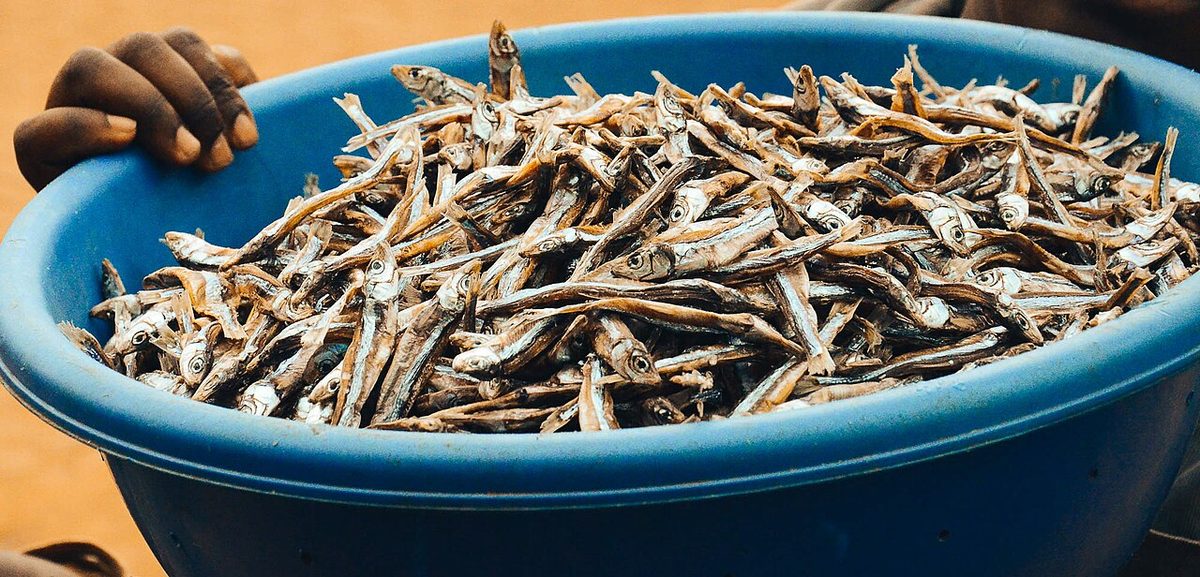
Cod is the most common fish used for stockfish, but other whitefish such as pollock, haddock, ling and cusk are used too. Around the world, the tradition is flexible about species:
- Bugeo and hwangtae both mean dried Alaska pollock.
- Balyk is the Russian term for the salted and dried soft parts of large valuable species such as sturgeon or salmon, and now covers smoked fish of those species too.
- Gwamegi is made from Pacific herring or Pacific saury, frozen at -10 degrees Celsius and left outdoors in December to freeze at night and thaw by day, until water content reaches about 40%.
- Fesikh uses gray mullet of the mugil family.
- Daing, in the Philippines, is most commonly rabbitfish (danggit), though almost any fish is used, and cuttlefish and squid may also be dried.
- Eja kika involves several types of fish.
Which species, size and grade a Nigerian buyer will actually order is not something anyone can tell you from a desk. Ask the buyer, and get it in writing before you cut or dry anything.
Snakehead: tempting on paper, and illegal to hold live in many states
Sooner or later someone will suggest snakehead. In parts of Asia and Africa it is a valuable food fish, the flesh is described as very tender, and it is produced in aquacultures for fisheries reasons. The family Channidae has two living genera — Channa in Asia and Parachanna in Africa — with more than 50 species.
In the United States it is treated as a destructive invasive species, and since 2002 it has been illegal to possess a live snakehead in many U.S. states. Virginia has criminalized the "introduction" of snakeheads without specific authorization, but the statute does not explain whether merely importing them counts as introduction, or whether the fish has to be released. So the law on importation reads as unsettled: some read it one way, others the other. Do not build a business on your own reading of it. Get a clear answer, in writing, from your state office first.
It helps to understand why regulators are so firm:
- They breathe air, can survive on land for up to four days if they stay wet, and are known to move up to 400 m (1/4 mi) over wet land between water bodies.
- Most reach between 30 and 90 cm (12 and 35 in). Five species — C. argus, C. barca, C. marulius, C. micropeltes and C. striata — can reach 1.0 m (3 ft 3 in) or more, while dwarf species such as Channa orientalis stay under 25 cm (10 in).
- Northern snakehead is sexually mature by age two or three. A spawning-age female can release up to 15,000 eggs at once and mate as often as five times a year — up to 150,000 eggs in two years, according to National Geographic Channel.
- Adults eat mostly other fish, such as carp, plus frogs and rarely small rodents. The family suits high-rainfall climates with mean temperatures around 20 °C (68 °F).
They are already loose. Northern snakehead first made US news spawning in a pond in Crofton, Maryland in 2002, became permanently established in the Potomac River around 2004 with a population surpassing 21,000 individuals in about 120 mi (190 km) of river, and may be established in Florida. Complete eradication in the Delaware River is not considered feasible. The EPA records them in California, Delaware, Florida, Georgia, Hawaii, Maine, Maryland, Massachusetts, Virginia, Louisiana and Rhode Island, while New York State's Department of Environmental Conservation and the New Jersey Department of Environmental Protection each report on their own waters — New Jersey since at least 2008, where the population appears to be growing and spreading. Channa maculata was introduced to Hawaii around the end of the 19th century and can still be found there.
There is no reliable state-by-state ban list to hand you here, and nothing on whether permits exist for aquaculture, research, or for handling dead or frozen fish. Ask your state office directly.
Where the fish comes from, and who sells it at the far end
Food fish reach the market by two routes. Commercial and subsistence fishers harvest from wild fisheries, or they farm fish in ponds or in breeding cages in the ocean. Beyond food, fish are also caught for recreation and raised by fishkeepers as ornaments for private and public display in aquaria and garden ponds — small outlets, but real ones.
On the production side, stocking, feeding, grow-out time, water quality and disease handling all depend on your site, your water and your species. Those numbers vary too much to be copied off a screen, so get them from a nearby hatchery, dealer, extension office or your vet.
At the selling end, the recognised channels are supermarkets, grocery stores, butcher shops, fish markets and slaughterhouses, or working for yourself. The cuts and parts that sell depend on the foods the customers prepare — which is exactly why a head-on wind-dried fish for soup is a completely different product from a boneless, trimmed retail pack. Let the buyer's kitchen set your spec.
Rough form or finished pack?
The trade splits the work in two. Primary work is selecting carcasses and separating and trimming primal cuts with minimum waste. Secondary work is boning, trimming and value-adding those cuts ready for sale. The two used to happen under one roof, but vacuum packing and low-cost transportation have largely separated them. Where refrigeration is less common, the person at the counter often does all of it. So both models exist: ship a rough form and let someone finish it, or finish it yourself and ship a retail-ready pack.
Certificates
Since the 20th century, many countries and local jurisdictions have offered trade certifications to protect quality, safety and health standards, though not everyone in the trade holds formal certification or training, and standards and practices differ between countries, regions and ethnic groups. In English-speaking countries the qualification often comes through an apprenticeship, and some training organisations certify their students. Ask your buyer which standard or certificate they need — it genuinely varies.
Fill these gaps before you commit money
Some of the most important pieces are simply not answerable from here, and a made-up figure would cost you more than an honest blank. Go and get these yourself:
- Nigerian import rules: duties, licences, permits, foreign-exchange access and inspections. Ask your buyer, a freight forwarder and the relevant office.
- US export requirements: which agency signs off, health paperwork and labelling. Confirm before you promise a shipment.
- Freight: routes, container type, transit time and cost. Get live quotes, and factor in the power situation when choosing between chilled, frozen and dry product.
- Payment and risk: terms, buyer vetting and what happens if a container is refused. Settle it before you load.
- Demand detail: volumes, sizes and grades, and who the buyers are. Only a buyer can tell you.
- The Nigerian-food market in your own area: walk into the shops that serve it, ask what they buy, in what form, and how often.
Start narrow. One buyer, one product form, one small trial shipment, and everything about legality answered in writing before you spend on stock or equipment. A dry, shelf-stable product is the friendliest place to begin, because a several-year shelf life and easy transport forgive a lot of small mistakes. Snakehead is the least friendly, and the law is not settled on it.
Then let the buyer's cooking, not your assumptions, decide whether the fish goes out whole with the head on, smoked, salted or trimmed. Price it from real conversations in your area, and write down every rule you confirm and who told you. That file will be worth more than any number you read online, including the ones you cannot find.


 Menu
Menu
💬 Comments
Login to comment
No comments yet. Be the first to share your experience!