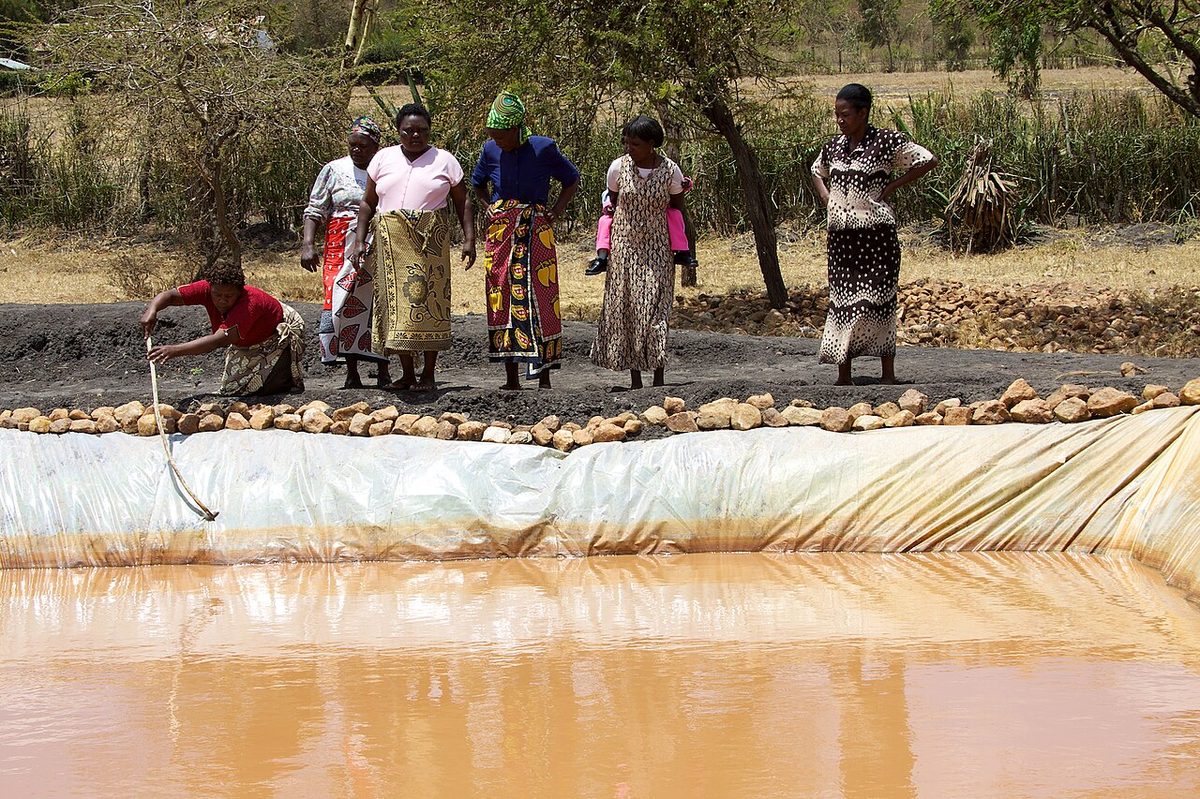
Walk into almost any supermarket, hotel kitchen or open-air market in Kenya and you'll notice the same thing: people want more fish than the country can supply. Wild catches from Lake Victoria and the Indian Ocean are shrinking, prices keep climbing, and imports are filling the gap. For a farmer, that story spells opportunity.
Fish farming — or aquaculture — is now one of Kenya's fastest-growing agricultural subsectors, and it suits everyone from a smallholder with a backyard pond to an entrepreneur planning a commercial operation. In this guide, we'll walk you through why the timing is right, which species to farm, how to set up your system, what it costs, how much you can earn, and the licensing and best practices that keep you on the right side of the law and in profit.
Why fish farming is booming in Kenya
The headline reason is simple: demand far outstrips supply. Kenya's annual fish demand has climbed past 500,000 metric tonnes, yet combined production from capture fisheries and fish farms sits at roughly 150,000 tonnes. In other words, local producers meet only about a third of what Kenyans want to eat, and the rest is covered by imports. That's a massive, ready-made market waiting to be filled.
Several forces are pushing this growth:
- Declining wild stocks. Overfishing in Lake Victoria and the Indian Ocean means natural catches can no longer keep up.
- A hunger for affordable protein. As beef and chicken get more expensive, fish remains an accessible protein for middle- and lower-income families, and urban buyers increasingly prefer fresh, farmed fish they see as cleaner than lake-caught varieties.
- Plenty of room to grow. Kenyans eat only about 4.5 kilograms of fish per person each year, well below the global average of around 20 kilograms. As incomes rise and diets shift toward healthier options, consumption is set to increase.
Strong and growing government support
Unlike many farming sectors, aquaculture enjoys real institutional backing. The Kenya Fisheries Service (KeFS), under the State Department for Fisheries, Aquaculture and the Blue Economy, regulates and promotes the industry. Government programmes such as the National Aquaculture Development Plan and Strategy (aiming to lift farmed production to 100,000 tonnes a year), the National Blue Economy Strategy 2025–2030, and the Aquaculture Business Development Programme (ABDP) offer subsidised fingerlings, technical training, infrastructure support and market linkages.
County governments and the Kenya Marine and Fisheries Research Institute (KMFRI) provide additional training and research support. In June 2026, Kenya also launched its first National Standard Operating Procedure (SOP) Manual for Fish Welfare in Aquaculture, developed with KMFRI and partners, to strengthen governance, digitisation, welfare standards and capacity building across the sector. This kind of coordinated support is rare in other agricultural areas — and it makes now an ideal time to get in.
Choosing the right fish for your region
Your climate, water source and local market should decide what you farm. Kenya's most commonly farmed species are Nile tilapia, African catfish, common carp and rainbow trout — each with its own sweet spot.
Nile tilapia (Oreochromis niloticus)
Tilapia is the king of Kenyan aquaculture, accounting for more than 75% of farmed production. It grows best in warm water of 25–30°C, tolerates a wide range of conditions, and reaches a market size of 300–500 grams in about 6–8 months. Consumers love it, and it commands premium prices. If you're starting out in most parts of the country, tilapia is the safe, marketable choice.
African catfish (Clarias gariepinus)
Catfish is a hardy survivor that thrives in warm, low-oxygen water where tilapia would struggle. It grows faster too, reaching 500 grams to 1 kilogram in about 6–9 months. It's especially popular in Western Kenya and is gaining ground in urban markets, and it suits intensive, high-density systems very well. Many farmers keep catfish alongside tilapia to spread risk and demand.
Common carp (Cyprinus carpio)
Carp is best grown in polyculture — that is, alongside tilapia in the same pond. It feeds on natural organisms and helps keep the water clean. Market demand is lower than for tilapia, so treat carp as a supplementary earner within an integrated system rather than your main crop.
Rainbow trout (Oncorhynchus mykiss)
If you farm in the cool highlands above 1,800 metres — around Mount Kenya, the Aberdares or the Mau ranges — trout is a lucrative niche. It needs cold, well-oxygenated water and targets premium buyers like hotels, restaurants and supermarkets, fetching KES 800 to KES 1,500 per kilogram. It's not for warm lowland areas, but where the climate suits it, the margins are attractive.
Fish farming systems: pick what fits your land and budget
Before you dig, decide how intensively you want to farm and which structure suits your site.
Three levels of intensity
- Extensive: Fish rely mostly on natural food in the pond, with little feeding or management. Low cost, but low yields.
- Semi-intensive: The most common approach in Kenya. You fertilise the pond to grow natural food and top up with supplementary feeds like wheat bran. A good balance of cost and output.
- Intensive: High stocking densities with regular formulated feed and constant water management in tanks, raceways or cages. It needs more investment but delivers far higher yields when managed well.
Earthen ponds
These are the most common and cost-effective option. Typically 300–1,000 square metres and dug into clay soil that holds water, an earthen pond costs roughly KES 100,000 to KES 500,000 to construct, depending on size and terrain. Under semi-intensive management with supplementary feeding, earthen ponds can yield 3,000–10,000 kilograms of tilapia per hectare per year.
Lined ponds
Where soils are sandy or rocky and won't hold water, a plastic (HDPE or PVC) liner solves the seepage problem. Expect to pay more than for a plain earthen pond — from around KES 200,000 upward — because of the liner, but you gain much better water retention.
Concrete tanks
Tanks work well in urban and peri-urban settings where land is tight, such as around Nairobi. They give you tight control over the environment and are ideal for intensive production, though the initial build cost is higher.
Cage farming
Cages are set in large existing water bodies and are popular in the Lake Victoria basin around Kisumu. They let you produce large volumes without owning land or building ponds, but they require careful management and good netting to protect stock.
Recirculating aquaculture systems (RAS)
At the high-tech end, RAS reuse and filter water in a closed loop, allowing very high production in a small footprint. They demand significant capital and technical skill, so they're best suited to well-capitalised commercial ventures.
Remember that climate shapes your setup: on the coast around Mombasa, managing heat matters, while in Eldoret and other highland areas, keeping temperatures stable is the priority. Aeration systems and quality netting help in almost every location.
How to start your fish farm: a step-by-step guide
Getting the basics right at the start saves you money and heartache later. Here's the practical sequence.
1. Choose the right site
- Pick a location with a reliable, clean water source.
- Favour well-draining soil — ideally clay for earthen ponds.
- Make sure the site is protected from flooding.
- Being close to your market and to electricity is a real bonus.
2. Register your business and get a KeFS licence
Every aquaculture operation in Kenya must be licensed by the Kenya Fisheries Service under the Fisheries Management and Development Act, 2016. Register your business first, then apply for a licence using Form KeFS/FS/A2. The application is evaluated by the Beach Management Unit (BMU), forwarded to the County Director of Fisheries and then to the KeFS Director-General. The committee assesses your financial and technical capability, the species you plan to farm, and your chosen method.
Note that new licensing rules introduced in early 2025 — including a proposed KES 50,000 operational fee for commercial enterprises and a 5% landing tax — were temporarily shelved for further consultation with stakeholders. The core requirement to be licensed by KeFS, however, still stands, so don't skip it.
3. Sort out environmental approvals
Larger operations need an Environmental Impact Assessment (EIA) approved by the National Environment Management Authority (NEMA), and you'll typically need a water use permit from the Water Resources Authority. Handle these early — they can take time.
4. Build your ponds or install tanks
Construct the system you chose in the planning stage. Whatever you build, install good-quality netting and, where needed, aerators from the start; retrofitting later is more disruptive and costly.
5. Stock quality fingerlings
Buy certified fingerlings from KeFS-approved hatcheries. Healthy stock with good genetics is the foundation of a productive, disease-free farm — cheap, unverified fingerlings are a false economy.
6. Feed and manage well
Feed is your single biggest running cost, typically 60–70% of total production expenses, so get it right. Use commercial feeds with the correct protein content — around 25–35% for tilapia and 35–40% for catfish — and supplement with affordable local materials where you can to trim costs without starving your fish.
Costs, profits and where to sell
What you can expect to earn
Here's a simple planning example many farmers use. A well-managed pond producing about 1,000 kg of tilapia, sold at a conservative farmgate price of roughly KES 250 per kilo, brings in around KES 250,000 in gross revenue. Subtract production costs of about KES 120,000–150,000, and you're left with a net profit of roughly KES 100,000–130,000 per six-month cycle.
Because tilapia matures in about six months and catfish in five to six, you can run two production cycles a year — potentially KES 200,000–260,000 per pond annually. In practice, returns of 40% to 100% per cycle are realistic with disciplined management. And if you sell direct to consumers, hotels or supermarkets rather than in bulk to middlemen, tilapia can fetch anywhere from KES 430 to KES 1,000 per kilo depending on size and freshness, lifting your margins further. Catfish typically sells for KES 300–700 per kilo.
Where to sell your fish
Line up your buyers before harvest so fish don't sit unsold. Reliable markets include:
- Fish traders and mongers for bulk sales.
- Hotels and restaurants, which pay premium prices for consistent supply.
- Supermarkets and retail chains with growing fresh-fish sections.
- Fish and chips outlets and open-air markets.
- Institutions such as schools and hospitals.
- Direct consumers, who give you the highest margins and cash sales.
Boost your income with value addition and diversification
Processing fish into fillets or smoked products extends shelf life and earns higher prices. You can also diversify by producing fingerlings for other farmers (a specialised, high-margin niche), or by offering consultancy and farm tours once you have a track record. These extra income streams can meaningfully improve your bottom line.
Best practices and mistakes to avoid
Good management is what separates a profitable farm from a disappointing one. Keep these fundamentals front of mind:
- Guard your water quality. Monitor oxygen and cleanliness constantly. Aerators are especially important in warm areas and intensive systems.
- Use quality netting. Good nets keep out birds and predators, block debris and contaminants, provide shade that stabilises temperature and reduces fish stress, and ultimately raise survival and yield.
- Don't over- or under-feed. Feed the right protein levels on a consistent schedule; wasted feed pollutes water and burns money.
- Follow fish welfare standards. The new National SOP Manual for Fish Welfare is a useful reference for healthier fish and more sustainable, marketable production.
- Keep good records and stay tax-compliant. Commercial operations increasingly need eTIMS compliance for tax reporting, so build proper financial records from day one.
- Start at a scale you can manage. A small, well-run pond beats a large, poorly managed one. Learn the ropes, then expand.
Frequently asked questions
Can I start fish farming with a small budget?
Yes. A small backyard pond or tank system is affordable and can be scaled up over time as you gain experience and cash flow. Begin with one well-managed pond, master the basics of water quality and feeding, then grow.
How long before my fish are ready to sell?
Most farmed species reach market size within about 6 months — tilapia in roughly 6–8 months and catfish in about 5–6 months, depending on feeding and conditions. That means you can realistically run two harvests a year.
Which fish is best for a beginner in Kenya?
Nile tilapia is the go-to choice for most beginners because it grows fast, tolerates a range of conditions and enjoys strong market demand. African catfish is a hardy second option, particularly in Western Kenya and for intensive systems. In cold highlands, consider rainbow trout.
Do I really need a licence to farm fish?
Yes. All aquaculture operations must be licensed by the Kenya Fisheries Service under the Fisheries Management and Development Act, 2016, using Form KeFS/FS/A2. Larger farms also need NEMA-approved environmental clearance and a water use permit. Getting these right protects your investment.
Getting started
Fish farming in Kenya sits at a rare intersection: huge unmet demand, rising prices, quick production cycles and genuine government support. Whether you dream of a single backyard pond feeding your family and earning extra shillings, or a commercial operation supplying hotels and supermarkets, the path is well trodden and the returns are real.
Start by studying your local climate and market, choose a species that fits, register with KeFS and secure your approvals, and build a system you can manage confidently. Source certified fingerlings, feed them well, guard your water quality, and keep clean records. Do those basics consistently, run two cycles a year, and you'll be well placed to turn Kenya's fish supply gap into a steady, profitable business — while helping feed your community with healthy, locally grown protein.
 Menu
Menu
💬 Comments
Login to comment
No comments yet. Be the first to share your experience!