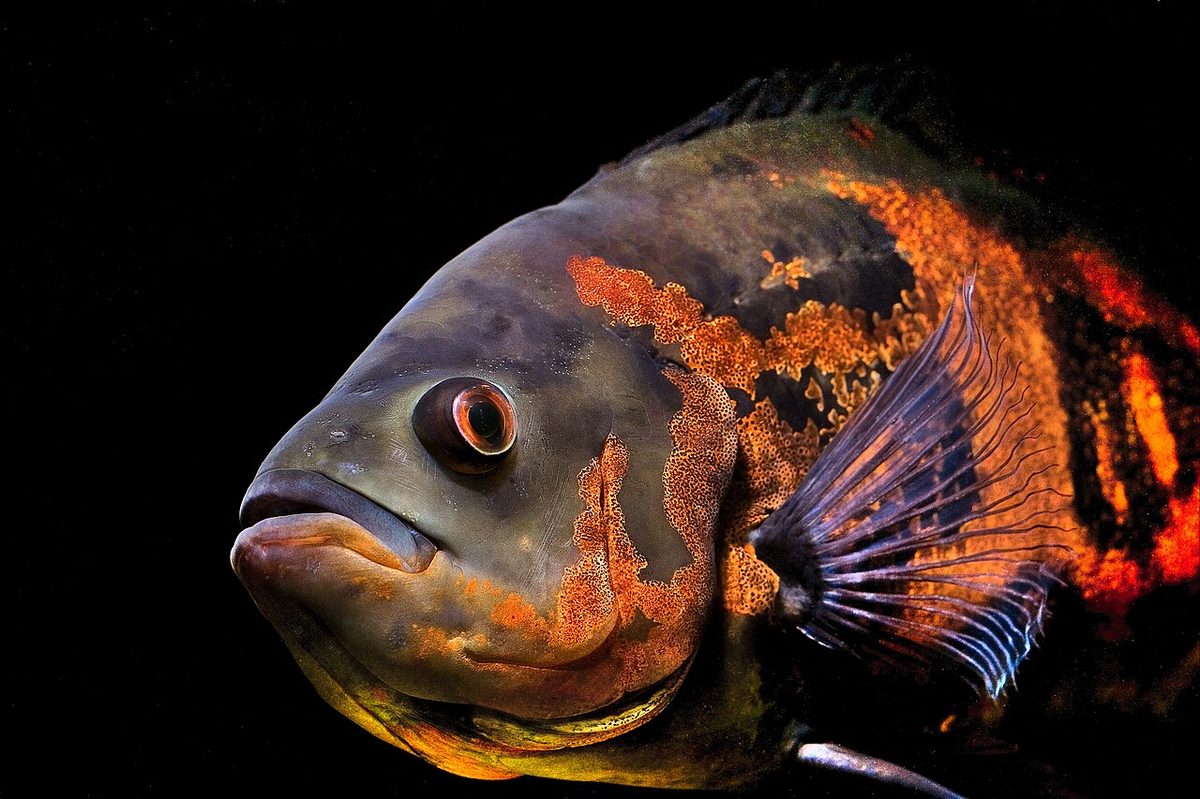
If you farm or trade in the United States, you have probably heard someone say there is money in shipping fish to Nigeria. Maybe you searched "fish for sale in Nigeria" and found plenty of noise but very little you could act on. That is a fair frustration. You want to know three plain things: what kind of fish Nigerians actually buy, what you are legally allowed to raise or ship from here, and whether the trade is worth your time compared with the cattle, hogs or poultry you already know.
This guide sticks to what can be said honestly. Where the answer depends on your state, your buyer or your freight forwarder, it says so instead of handing you a made-up number. That is more useful than a confident guess that costs you a container load.
What Nigeria Is Known to Buy
The clearest example of fish moving into Nigeria from abroad is Icelandic wind-dried fish. In Iceland, dried fish is called harðfiskur. One type, skreið, is wind-dried with the head still attached. Icelanders no longer eat it themselves in modern times. Almost all of it goes to Nigeria, where cooks use it in soup.
That single fact tells you a lot about the market. Nigerian buyers are not only looking for fresh fillets on ice. There is real, established demand for a hard, shelf-stable, strongly flavoured dried product — including the parts many Western markets throw away.
Dried and smoked fish is part of the cooking, not a substitute
Nigeria has its own dried fish tradition. Eja kika is a Yoruba smoked dried fish. It uses several kinds of fish, and the smoking is sometimes combined with sun-drying. Importantly, the drying and smoking are not just about shelf life. They change the flavour, and that flavour is what the finished dish depends on.
So if you are thinking of supplying this market, understand that you are selling an ingredient with a specific taste and texture, not a generic protein. A buyer who wants stockfish for soup is not going to accept something else that happens to be fish.
What nobody can tell you from here
You will want to know which species Nigerian buyers prefer, what sizes and grades they specify, and how they want it packed. Those details are not something to assume from a distance. They vary by buyer and by region, and the only reliable way to learn them is to ask a Nigerian importer or agent directly and get their specification in writing.
The Demand Picture, Honestly Told
Nigeria is a lower-middle-income mixed economy and an emerging market. It ranks as the 52nd-largest economy in the world by nominal GDP and the second largest in Africa by purchasing power parity. Its agricultural sector is largely subsistence, and it has not kept pace with fast population growth. Nigeria was once a big net exporter of food. Today it imports some of its food products, while mechanisation drives a manufacturing revival and a push towards feeding itself.
Recent growth figures back up the picture of a moving economy:
- GDP grew by 3.19% in Q2 2024, according to the National Bureau of Statistics.
- The non-oil sector expanded by 4.13% in the same period.
- The oil sector contracted by -3.83%.
- A February 2011 Citigroup report projected Nigeria would have the highest average GDP growth in the world between 2010 and 2050.
- Two-thirds of Nigerians expect living conditions to improve in the coming decades.
That is the encouraging half. Here is the other half, and you should weigh it just as heavily.
The friction is real
Nigeria has an ongoing supply crisis in its power sector. Despite some of the world's largest oil, coal and gas deposits, residents frequently experience power supply difficulties. Non-energy infrastructure is inadequate too. On top of that, economic development has been held back by government corruption; Nigeria ranked 154 out of 180 countries in Transparency International's 2021 Corruption Perceptions Index. Its debt-to-GDP ratio stood at 36.63% in 2021, per the IMF.
None of this means "don't trade." It means you plan for a market where refrigeration cannot be taken for granted and where doing business carefully matters.
Fresh, Frozen or Dried: Why Preservation Decides Everything
Fresh fish goes off fast unless you do something to it. Drying is the oldest fix and still one of the cheapest. Taking the water out means bacteria, yeasts and molds cannot grow. Dried fish keeps for several years.
Open-air sun and wind drying has some real advantages for a small operator:
- It is cheap and effective where the climate suits it.
- The fisher and their family can do the work themselves.
- The finished product is light and easy to move to market.
Freeze-drying is a different route: the food is frozen first, then the water is removed by sublimation.
Stockfish and clipfish are not the same thing
These two words get mixed up constantly, and the difference matters when you are quoting a buyer.
- Stockfish is unsalted. The fish — cod most often, but also pollock, haddock, ling and cusk — is dried by cold air and wind on wooden racks, called fish flakes, on the foreshore. It cures by fermentation, with cold-adapted bacteria maturing the fish, a bit like cheese.
- Clipfish is salted first. After 2–3 weeks in salt the fish saltmatures, and only then is it dried. That is a chemical cure, closer to how Parma ham is made.
There are half-dried styles too. Gwamegi, the Korean half-dried herring or saury, is frozen at -10 degrees Celsius until the water content drops to roughly 40%.
What this means for your shipping decision
Given the power situation on the receiving end, a shelf-stable dried product asks less of the cold chain than frozen does. But freight costs, container choice, shelf life in transit and the margins on each option are not things you should estimate from your kitchen table. Get real quotes from a freight forwarder and a customs broker who handle West African lanes, and let the numbers decide.
The Snakehead Trap: Read This Before You Stock a Pond
Snakeheads come up often in conversations about African and Asian food fish, and for good reason. The family Channidae has more than 50 species, in the genus Channa in Asia and Parachanna in Africa. They are native to parts of both continents, prized as food fish there, and farmed in aquaculture because the flesh is very tender and highly valued. The family is adapted to high-precipitation climates with mean temperatures around 20 °C (68 °F).
Now the part that matters to you as a US producer. Since 2002 it has been illegal to possess a live snakehead in many US states, where they are treated as a destructive invasive species. Virginia has criminalised the "introduction" of snakeheads into the state without specific authorisation — though the statute does not make clear whether simply importing one counts, or whether release into the environment is required.
Why regulators are so firm about it
The biology explains the rules:
- Northern snakehead reaches sexual maturity by age two or three.
- A spawning-age female can release up to 15,000 eggs at once.
- They can mate as often as five times a year, so one female can release up to 150,000 eggs in two years.
- They breathe air and can survive out of water for up to four days, as long as they stay wet.
- They migrate up to 400 m (1/4 mi) across wet land between water bodies.
They are already loose here
Northern snakehead spawned in a pond in Crofton, Maryland in 2002 and became permanently established in the Potomac River around 2004. In about 120 mi (190 km) of that river, the population has surpassed 21,000 individuals. Establishment in Florida is considered possible. The EPA has recorded sightings in California, Delaware, Florida, Georgia, Hawaii, Maine, Maryland, Massachusetts, Virginia, Louisiana and Rhode Island. New York State's Department of Environmental Conservation has recorded them too, and they have been in New Jersey since at least 2008, where the population appears to be growing and spreading. Complete eradication from the Delaware River is not considered feasible.
The bottom line: do not assume you can farm a high-value African or Asian food fish here just because there is demand for it overseas. Which states permit what, and what permits exist, is something you must confirm with your own state wildlife or agriculture agency before you spend a dollar.
How Fish Get Produced and Sold
Fish reach the market by two broad routes. Commercial and subsistence fishers harvest them from wild fisheries, or farmers raise them in ponds or in breeding cages set in the ocean. Fish have been an important food resource for humans since prehistoric times.
There is no shortage of choice, at least in theory. There are over 33,000 living fish species — the largest group of vertebrates. Most sit in the class Actinopterygii, the ray-finned fishes, which make up roughly half of all living vertebrates, and about 96% of living fish species are teleosts. As of 2016 there were over 32,000 described bony fish species, over 1,100 cartilaginous species, and over 100 hagfish and lampreys. Most fish are cold-blooded, so their body temperature follows the water around them — one reason water conditions dominate everything in aquaculture.
At the retail end
Fish markets are a recognised retail channel with skilled cutters. A butcher may work for supermarkets, grocery stores, butcher shops and fish markets, or slaughterhouses, or be self-employed. Since the 20th century, many countries and local jurisdictions have offered trade certifications to uphold quality, safety and health standards — but not every butcher has formal certification or training, and standards and practices differ between countries, regions and ethnic groups depending on what customers cook. If you are hiring or contracting handlers, check the certification rules that apply where you are.
Comparing It With What You Already Farm
Here is where honesty serves you best. There is no dependable fish price to quote you — not farmgate, not wholesale, not retail, in Nigeria or the United States. Our own recorded United States price observations run to 254 rows and cover livestock only:
- Chicken meat: USD919 to USD2357 per tonne, average USD1581
- Cattle meat: USD2425 to USD4387 per tonne, average USD3448
- Hen eggs: USD1374 to USD8789 per tonne, average USD3363
- Cow milk: USD381 to USD600 per tonne, average USD499
- Turkey meat: USD1038 to USD2800 per tonne, average USD1860
- Pig meat: USD1107 to USD1892 per tonne, average USD1451
- Honey: USD5600 to USD6636 per tonne, average USD5947
The most recent meat, egg and milk figures are dated 2025-01-31, and honey 2024-12-31. No fish or aquaculture line appears at all, so treat any fish margin you see quoted elsewhere as something to verify yourself with a real buyer and a real quote.
A Sensible Way to Test This Market
Nigeria is a big, growing market with a genuine appetite for preserved fish. That much is solid. What is not solid is anything you would need to guess. Before committing money, get these confirmed by people who are accountable for the answer:
- Species and legality — ask your state agriculture or wildlife office what you may farm and under what permit.
- Export paperwork — ask a customs broker or your state export assistance office what certification and documentation seafood shipments require.
- Buyer specification — ask the importer for the exact product, cure, size and packing they want, in writing.
- Freight and shelf life — ask a freight forwarder for costed options, dried versus frozen, on the route you would actually use.
- Payment terms — ask your bank how it handles payment and currency conversion with Nigerian buyers before you ship anything.
Start small. One trial shipment of a well-cured dried product, to one buyer who has told you exactly what they want, will teach you more than any amount of reading. If it works, scale. If it does not, you will have learned it cheaply — and you will still have the herd or the flock you already know how to run.


 Menu
Menu
💬 Comments
Login to comment
No comments yet. Be the first to share your experience!