If you are thinking about goats, you have probably already heard the pitch: they are cheap to start, they eat weeds nothing else will touch, and the demand is out there. Most of that is true. What trips up new US goat farmers is not the animals — it is starting without a plan. Beginners often buy a few goats first and figure out the rest later. That is where the losses come from: high mortality, escaped animals, and money spent on the wrong things. Goat farming is not simply buying a few goats and putting them on pasture.
The good news is that the decisions you need to make first are simple, and you can make them before you spend a dollar on livestock. Here is the order that works.
Decide on one purpose before you buy any goats
This is the first and most important decision. Pick a single clear purpose for your herd:
- Meat
- Milk
- Fiber
- Breeding stock
- Brush control
- Homestead use for your own family
It is very tempting to try all of them. Resist it. Running one herd for meat, milk and fiber at the same time pulls you in three directions and you end up good at none of them. Profitability comes from specialising.
A useful way to think about it is to choose your market first, then build fencing and shelter, then plan your feed and veterinary costs, and only then buy healthy goats from a reliable herd. In other words, work backwards from the buyer. Define your market focus and everything else — breed, land, infrastructure — gets easier to decide.
Meat or milk? Think about your time, too
Purpose is not only about money. Meat goats are generally hardier and less labour-intensive than dairy breeds, mainly because they do not need a daily, time-sensitive milking routine. Meat also tends to give quicker returns, because meat goats mature fast and need less feed than larger livestock. Dairy can be rewarding, but you are signing up for a schedule that does not move. Be honest with yourself about the hours you actually have.

Check your local rules before you buy land or livestock
Before anything else, confirm that goat farming is even allowed where you are. Some US states and cities restrict livestock in residential or suburban zones. Others allow goats but set rules on minimum lot size, how many goats you can keep, and even shelter specifications. This is county and municipal territory, so the answer genuinely depends on your address — check with your local office rather than assuming.
Then there is moving animals. Movement and health permits vary from state to state. As an example, goats entering California must have a Certificate of Veterinary Inspection and an Interstate Livestock Entry Permit. If you are buying out of state, sort this out before the trailer is loaded, not after.
Scrapie ID tags
Find out whether your state takes part in the National Scrapie Eradication Program. Where it applies, official ID tags are required for goats moved across state lines. Scrapie is a fatal, neurodegenerative disease that affects sheep and goats and can put your whole herd's health at risk, so the tagging requirement is worth understanding properly rather than skipping.
Who to ask
You do not have to work this out alone. Your County Agricultural Extension Office and the USDA Farm Service Agency (FSA) can guide you on regulations, financial assistance and farm registration. It is also worth reviewing USDA and state-level guidelines on livestock management and sales. A sensible first-steps list looks like this:
- Save enough capital for strong housing and fencing.
- Define your market and your purpose.
- Write a business plan.
- Obtain the permits you need.
- Then buy your goats.
Match your breed to your purpose, your climate and your local market
Once your purpose is settled, breed choice becomes straightforward. Choose animals suited to your climate, your purpose and what buyers near you actually want.
For meat
- Boer — the heavyweight of the meat industry. It originates in South Africa and is known for exceptional growth rates, deep muscular bodies and high dressing percentages.
- Spanish — another established meat option for US herds.
- Kalahari Red — resilient to intense heat and solar radiation, which makes it a good fit for arid climates.
For milk
- Saanen — a high-volume milker with a calm temperament, sometimes called the "Holsteins of the goat world."
- Alpine — adaptable and performs well in cooler climates.
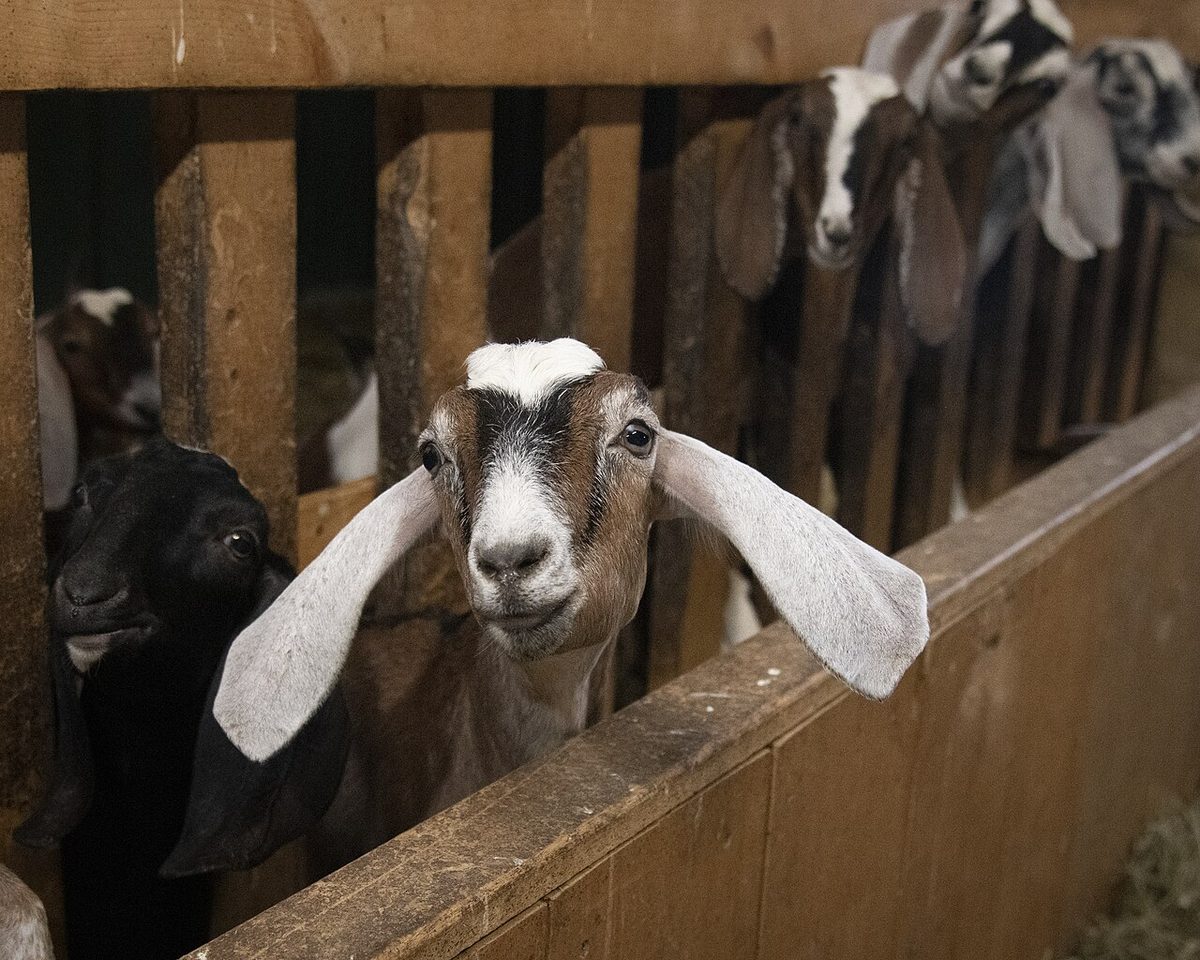
- Nubian (Anglo-Nubian) — exceptionally high butterfat milk, which is why artisanal cheesemakers and soap makers look for it.
For fiber
Angora goats produce mohair. Cashmere is not really a breed but a type of goat that grows an ultra-soft winter undercoat. Both fibers feed high-end garment and craft markets.
Climate matters here as much as market. Alpines suit cooler ground; Kalahari Reds suit hot, high-sun conditions. Goats in general are hardy and adaptable across the wide range of US climates and terrains, which is part of their appeal — but the closer you match the animal to your conditions, the less you fight nature.

Fencing, shelter and water: the part you cannot cut corners on
If there is one place to spend your money properly, it is fencing. Goats are clever, agile and active. Poor infrastructure leads to constant escapes, heavy predator losses and disease that spreads fast. There is an old saying worth remembering: if a fence can't hold water, it can't hold a goat.
A fence needs to be tall enough to keep goats in and predators out, and about five feet tall is usually suitable. Beyond height, the exact materials and layout that work best depend on your terrain and the predators in your area — a nearby dealer or your extension office will know local conditions better than any general guide.
Shelter
Shelter can be simple. Goats need somewhere to rest at night and protection from rain and excessive cold, and they will adapt to almost any shed or house — even a large dog house. Two things are not negotiable: it must be well ventilated, and it must be free from drafts. Straw works well for bedding. A concrete floor is very suitable and easy to maintain, but it is pretty expensive, so weigh that against your budget.
Land and water
Choose a location with adequate grazing space and access to clean water. How many goats your particular acreage will carry depends heavily on your soil, rainfall and the type of browse you have, so ask your extension office for guidance on local stocking rather than working from a number you read somewhere.
Feed, water and the supplements that matter
A healthy goat diet is hay plus concentrates such as oats, bran and barley. Feed efficiency and herd health both feed straight into your profit, so plan feed and veterinary costs before you buy animals, not after.
One rule saves a lot of grief: never feed off the ground. Feed on the ground gets mold in it and attracts insects and birds, and ground feeding can cause various goat diseases. Use purpose-made goat feeders, waterproof feeders, or even trash cans — anything that keeps feed elevated and clean.
Water should be permanently available, clean and fresh. Change it frequently and clean the container regularly.
Selenium
Provide a salt-lick block, preferably one containing selenium. This matters because in some areas the soil is low in selenium, which means the hay grown there is low in it too. On veterinary advice, a "BoSe" shot containing Vitamin E and Selenium supports bone, muscle and reproductive health. It is especially important for pregnant does and is given about a month prior to kidding, helping proper heart and muscular development in the kids and helping the doe avoid kidding complications. Talk to your own vet about whether your ground is selenium-deficient — that answer is genuinely local.
Understand where the money actually comes from
Goats have a real cost advantage: land, feed and housing requirements are low compared with larger livestock. Many breeds regularly produce twins or triplets, so a herd can double or triple in size within a single year. Goats also eat diverse vegetation other livestock refuse — one fair description is a "living biological converter" that turns weeds, shrubs and brush into milk and meat.
More than one income stream
- Meat (chevon) — demand is rising in ethnic and health-conscious markets. Goats make up more than 60% of the red meat consumed globally, and the global chevon market is robust and largely under-supplied.
- Dairy — sought after by lactose-sensitive consumers and by boutique and artisanal cheesemakers. The global goat milk derivatives market is projected to grow 7% annually in 2026.
- Fiber — mohair and cashmere for high-end garments and crafts.
- Breeding stock — registered or high-quality animals give consistent revenue if you focus on strong genetics.
- Brush clearing — many farmers rent herds out for eco-friendly vegetation control and targeted grazing.
- Agri-tourism — petting zoos, goat yoga and farm tours.
- Manure and compost — high-nitrogen manure sells to organic gardeners and improves soil fertility.
On margins: smaller farms often see net profit margins around 10–20%, while larger, more efficient operations with broader market access can reach 25–35%. Average pay for a goat farmer in the USA is $46,497. For scale, US goat sales across all grocery formats in 2024 came to $27 million across 3.5 million units. What decides where you land in that range is feed costs, herd health management, kid crop percentage, risk management, and market demand.
Demand is regional
Goat demand in the US is not evenly spread. Meat goat demand is strong in Texas, Georgia and California, while dairy goats are more popular in Wisconsin and Oregon. Before you commit, find out whether local markets or processors near you want meat, dairy or fiber. Visit farmers' markets, butcher shops and co-ops in your area and ask about pricing, seasonal trends and gaps nobody is filling. Prices move by region and season, so use those conversations to build your own numbers rather than borrowing someone else's.
Start small, but start deliberately
Moving from a casual backyard herd to a commercial operation takes structural planning, careful health management and a real understanding of livestock economics. That is what keeps mortality low. So before you shop for animals: pick one purpose, confirm your county allows goats, get your permits, build a fence about five feet tall, put up a ventilated draft-free shelter, sort your feeders and clean water, and line up your buyer.
Then buy healthy goats from a reliable herd — and only as many as your fencing, feed and time can genuinely handle. For the numbers this guide cannot give you, like startup costs in your area, stocking rates on your land, parasite control, breeding timelines and the rules on selling milk or slaughtering meat locally, sit down with a nearby vet, a goat farmer you trust, and your County Agricultural Extension Office. Getting those answers locally, before the animals arrive, is the difference between a herd that pays and a herd that costs.


 Menu
Menu
💬 Comments
Login to comment
No comments yet. Be the first to share your experience!