🍪 Cookie Consent
We use cookies to improve your experience, analyse how the site is used, and show relevant content. By choosing Accept you agree to that. See our
Privacy Policy.
Boer and Kiko goats are two of the most widely raised meat breeds globally. This guide covers their origins, growth rates, market prices, and the role of goat meat in cuisines around the world.
If you want goats built for meat, the Boer and the Kiko are the two breeds that most farmers and researchers point to. The Boer was developed in South Africa from around 1920 specifically for meat production and has since spread across the world. The Kiko, developed in New Zealand in the 1980s, was bred purely for fast growth and survival on rough hill country. These are the two breeds worth understanding if meat production is your goal.
Goat meat itself sits in a remarkable position globally. It is both an everyday staple and a festival delicacy across cuisines from Africa to the Caribbean, from South Asia to Latin America. In South Asian cooking, goat meat is called mutton — the same term used for meat from older goats generally — while meat from young goats is called kid meat. People have raised goats for roughly 10,000 years, ever since they were first domesticated in Iran from the wild bezoar ibex. Today there are more than 1.1 billion goats worldwide, including about 150 million in India alone. Understanding which breeds produce that meat best is the first step toward a productive herd.
The Breeds Built for Meat
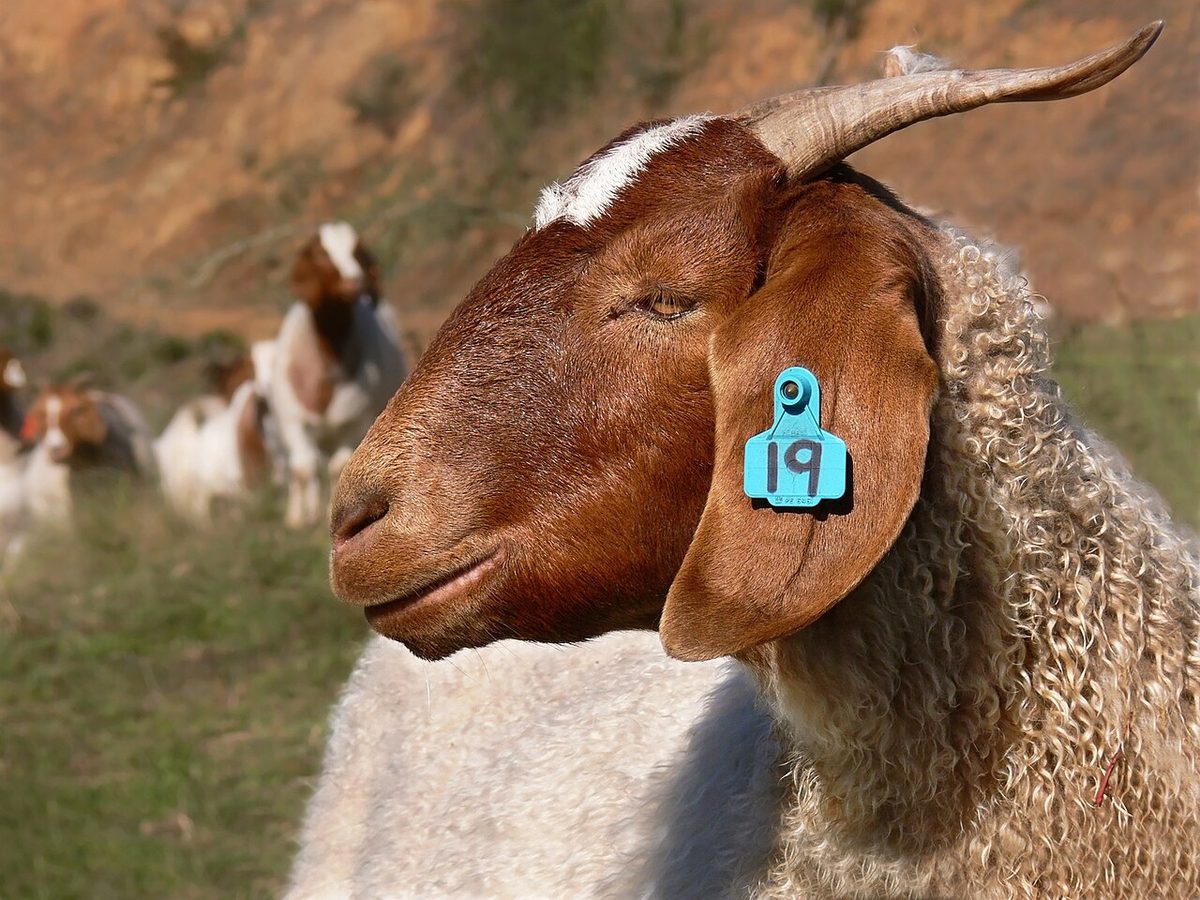
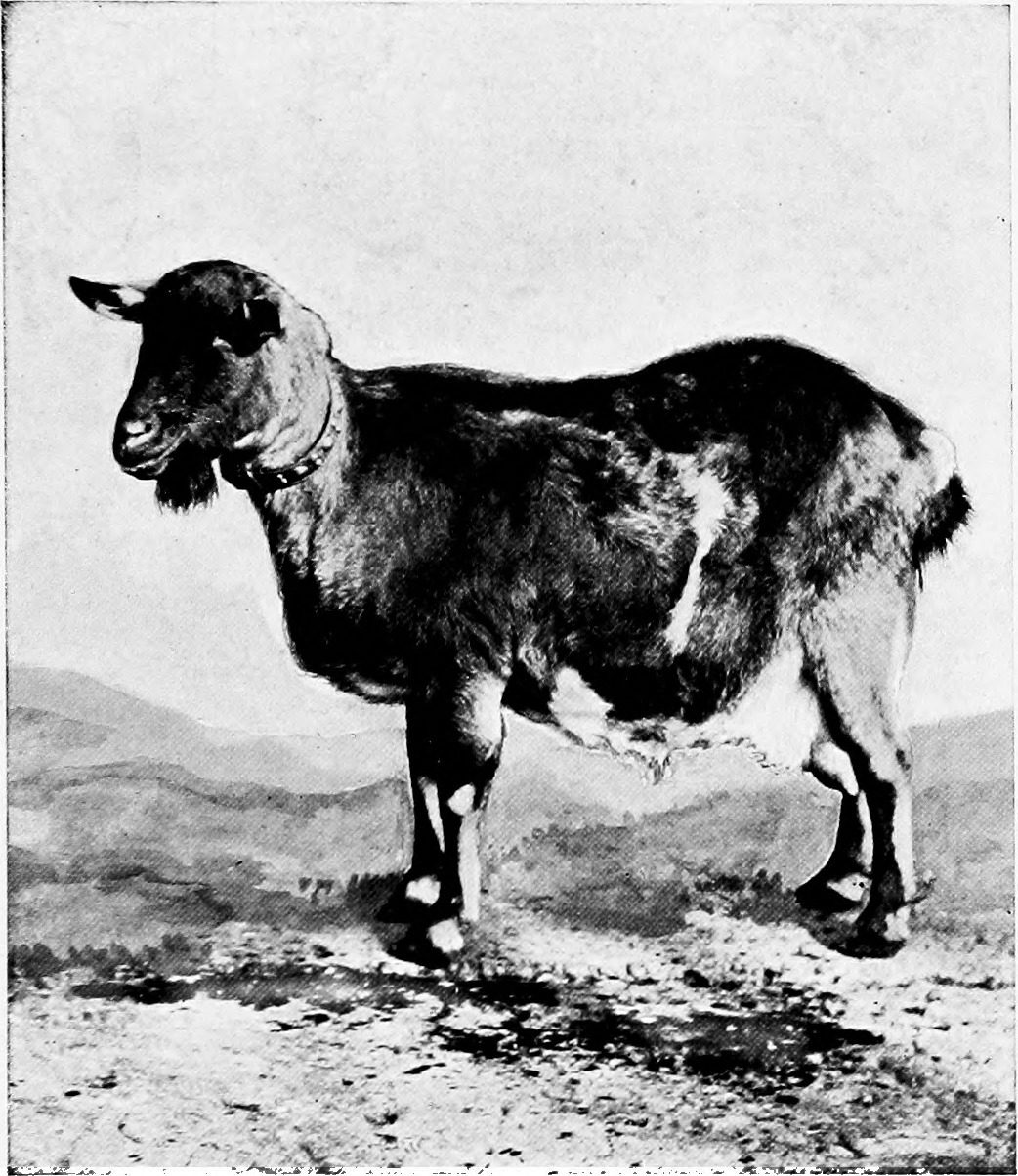
Boer goat444 by Benjamint444 (CC BY-SA 3.0) · source
Before diving into individual breeds, it helps to understand how goat breeds are classified. Goats are generally grouped by their primary use: meat, dairy, or wool and fibre. Several breeds are considered dual- or multi-purpose, meaning they serve more than one function. Meat goats tend to share certain traits — muscular build, fast growth, and the ability to convert feed into body mass. But the specific breed you choose will shape everything from your feeding costs to the market you can reach.
The Boer Goat — The World's Most Popular Meat Breed
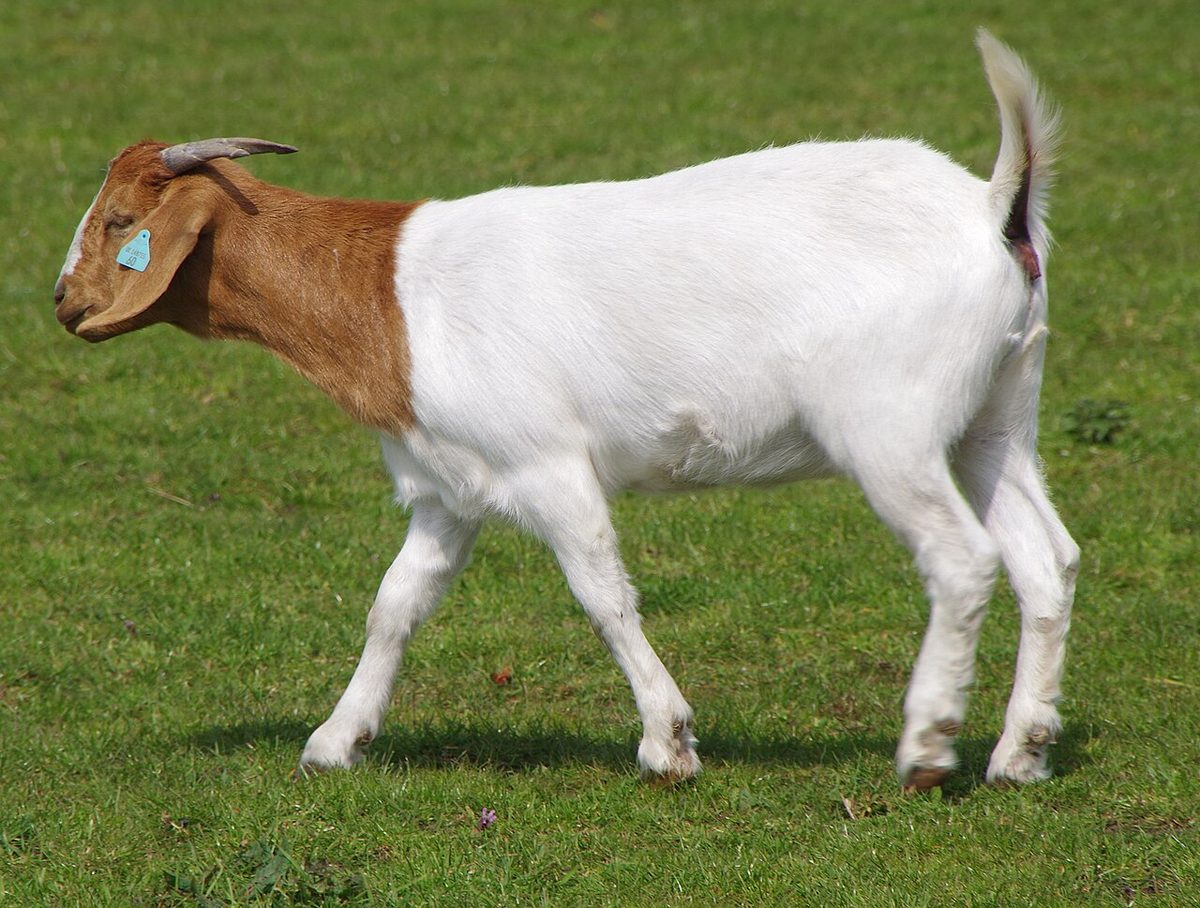
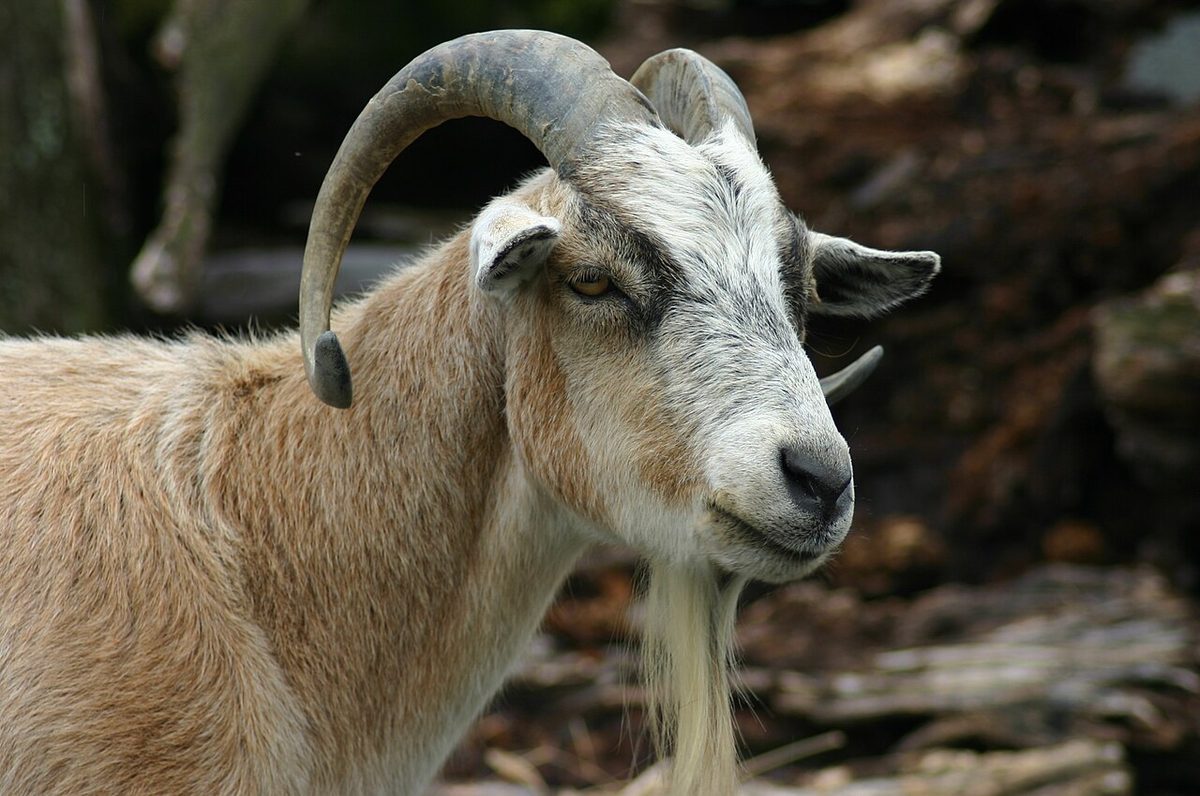
Boer Goat by Lil Shepherd from United Kingdom (CC BY 2.0) · source
The Boer goat traces back to the Eastern Cape in South Africa, where selective breeding for meat qualities began around 1920. Farmers there needed a goat that could produce good carcasses while surviving by grazing on thorn veldt — tough, scrubby land that less hardy animals could not handle. The result was a large, muscular animal with a fast growth rate, good carcass quality, and a remarkable ability to cope with hot, dry, semi-desert conditions. The Boer also shows good resistance to disease, which matters enormously when your goats are grazing on varied and challenging terrain.
Today the Boer is the most widely exported meat goat breed on the planet. In 2025, 72 countries reported Boer populations to DAD-IS, with 30 of those providing actual numbers. The global population was estimated at 182,863 animals. Countries reporting 5,000 or more Boers include Argentina, Australia, Brazil, Chile, Colombia, Namibia, and South Africa — a spread that reflects the breed's adaptability across continents and climates.
What makes the Boer productive in the herd? Growth rate is one clear advantage. Under extensive management in sub-tropical conditions, Boer goats gain approximately 175 g per day. Push them into intensive conditions with better nutrition and daily gains of more than 200 g are achievable. Adult males average about 115 kg in weight, with a mean height over 94 cm. That is a substantial animal that fills the market for larger carcasses.
The Boer's reproductive cycle is worth understanding if you are planning a breeding programme. The gestation period runs approximately 148 days, and the oestrous cycle is roughly 21 days, with oestrus lasting some 30 to 45 hours. Puberty weight in ewes varies with diet: on a low-energy diet, puberty occurs at 24 to 32 kg with a mean of about 28 kg, while on a higher-energy diet that range shifts to 24 to 38 kg with a mean of about 31 kg. Milk yield runs at some 1.5 to 2.5 kg per day, with milk that is roughly 7.7% fat and 4.3% protein — enough to support kid growth without requiring massive input from you.
The Kiko Goat — Bred for Survival and Speed
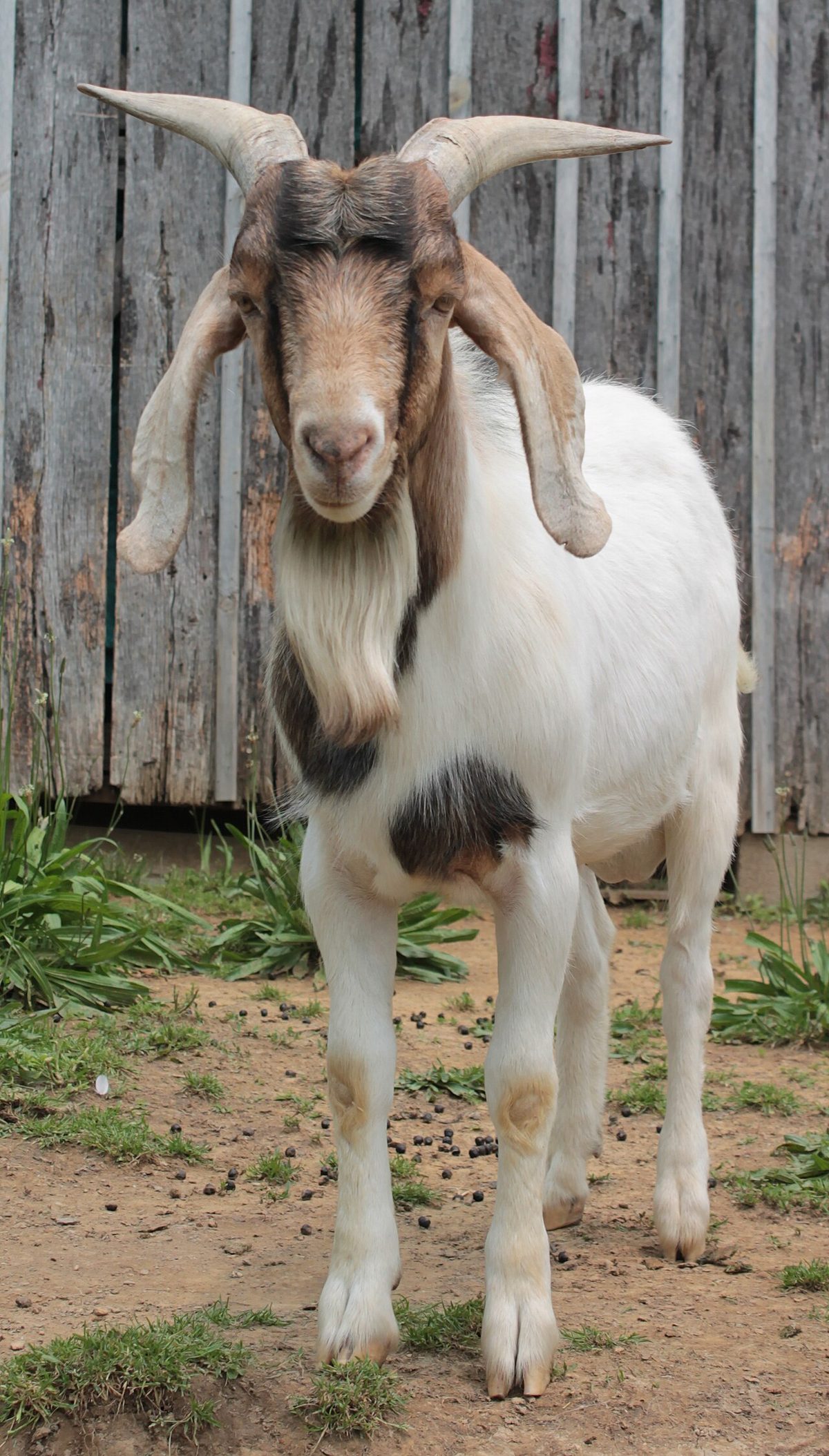
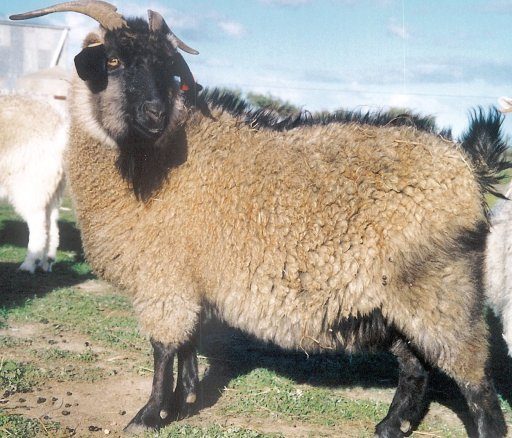
Boer Kiko Alpine mix billy goat by X5DragonFire (CC BY 4.0) · source
While the Boer was shaped deliberately in South Africa, the Kiko came out of a very different experiment in New Zealand. In the 1980s, Garrick and Anne Batten set out to create a meat goat from local feral goats crossed with imported dairy goat bucks. Their only breeding goals were fast growth rate and the ability to survive in the pastoral conditions of New Zealand hill country. No attention was paid to appearance or size. What they produced was a rugged, low-maintenance goat that can thrive where more refined breeds would struggle.
Kiko stock was exported to the United States in 1992, where the breed found a new role. In the US, Kikos are used principally for cross-breeding with stock of other meat breeds, most often the Boer. The idea is to combine the Boer's size and carcass quality with the Kiko's hardiness and efficient growth. If you are managing a herd in a challenging environment, a Kiko cross may be worth considering seriously.
Goat Meat in Global Markets
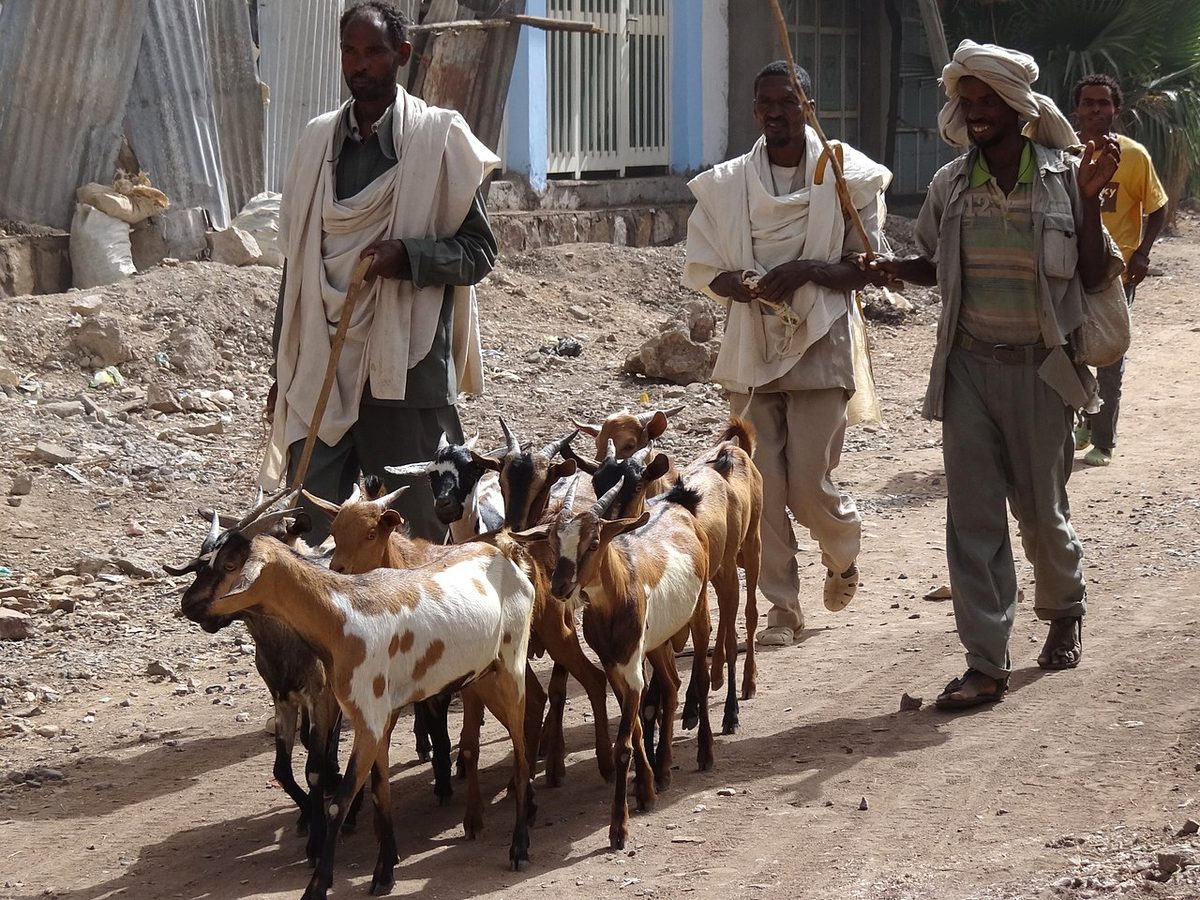
Goats to Market - Shire - Ethiopia by Adam Jones from Kelowna, BC, Canada (CC BY-SA 2.0) · source
Goat meat is far more than a niche product. It is a staple and a delicacy across African, Indian, Middle Eastern, Indonesian, Mediterranean, Nepali, Bangladeshi, Pakistani, Sri Lankan, Mexican, Caribbean, Haitian, Dominican, and Ecuadorian cuisines. It can be stewed, curried, baked, grilled, barbecued, minced, canned, fried, or made into sausage — a versatility that few meats match. In Nepal, goat meat is central to the Dashain festival, one of the biggest celebrations of the year. In Kenya, goat is more commonly slaughtered in households than cow or chicken, which says something about how deeply embedded it is in daily food culture.
Prices reflect that diversity of demand but also vary enormously:
Region / Currency
Lowest Price
Highest Price
Average Price
Observations
Date
Global — EUR per tonne
EUR 417
EUR 39,559
EUR 3,553
218
31 January 2025
Israel — ILS per tonne
ILS 20,106
ILS 43,623
ILS 29,452
76
31 January 2025
Ethiopia — ETB per animal
ETB 6,000
ETB 23,000
ETB 12,467
65
15 July 2026
That wide spread tells you that market conditions — breed, quality, country, season — matter a great deal. Your actual returns will depend heavily on what you can supply locally. There are some quirks worth knowing. In Australia as of 2025, the goat meat industry is still described as being in its infancy. Much of the supply comes from culled wild goats, which leads to inconsistent quality — something to keep in mind if you are targeting that market.
And on the taste question, opinions genuinely differ. One Australian butcher reports that some customers describe goat meat as gamey and not necessarily tastier than lamb, while a goat producer from western New South Wales says there is more to goat than curry and is creating goat salami to broaden its appeal. Some consumers love it, others need introducing to it. Your marketing may need to do some of that introduction work.
Practical Considerations for Your Farm
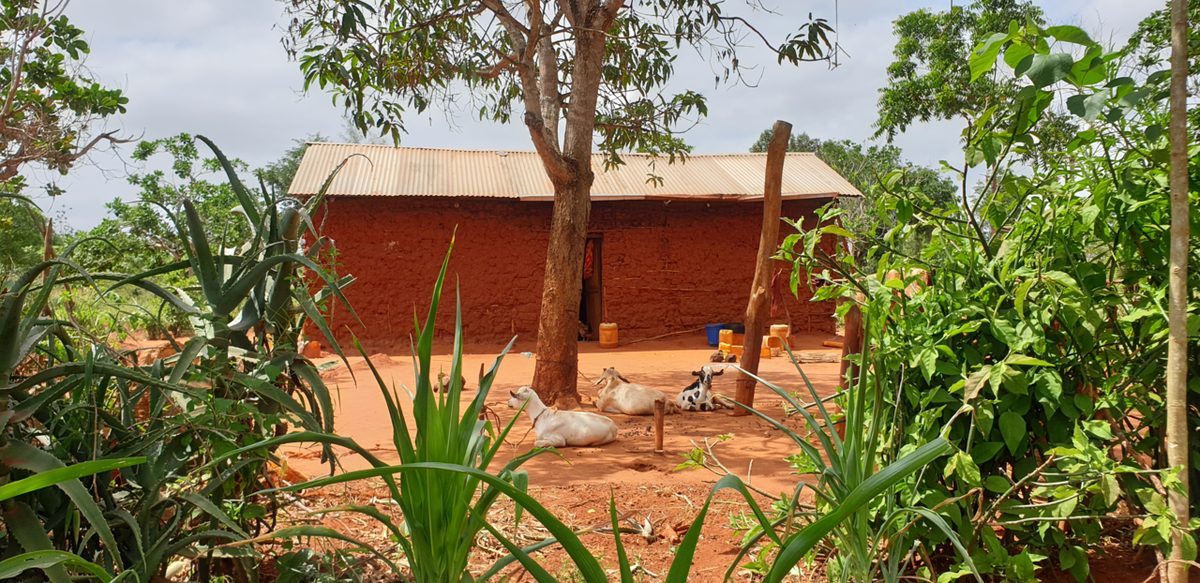
A glimpse into a Kilifi family homestead by Tall Black (CC BY-SA 4.0) · source
Start with your environment
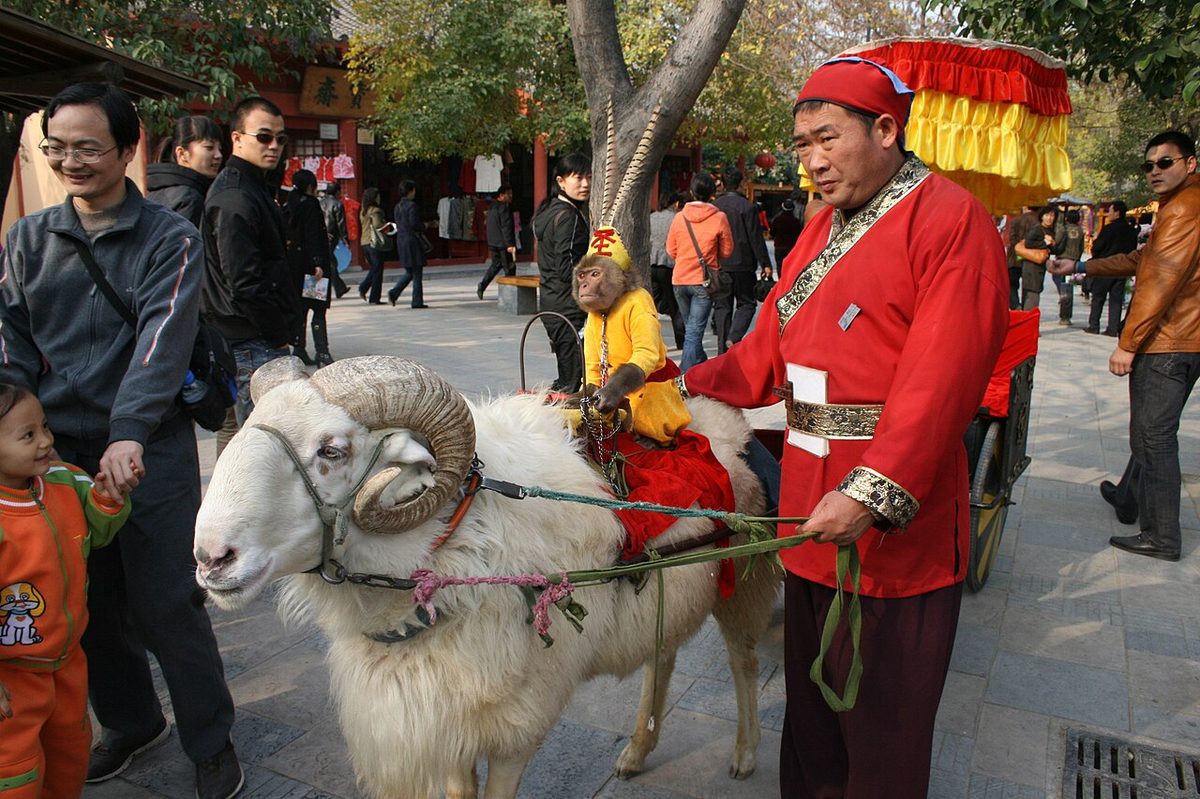
2008 Millennium City Park Goat Cart Ride with Monkey Driver by Gary Todd (CC0) · source
The Boer was bred for hot, dry, semi-desert conditions and thrives on thorn veldt and similar biomes. The Kiko was bred for rough hill country with pastoral conditions. If your land resembles either of those settings, the match is a good one. But breed suitability by climate zone and altitude beyond these general statements is not well documented in the research available, so it is worth talking to farmers and agricultural offices near you who know local conditions intimately.
Think about your management style
I think we're being watched! by Nadia Prigoda-Lee from Toronto, Canada (CC BY 2.0) · source
Boer goats respond well to intensive management, pushing past 200 g of daily weight gain with good nutrition. Under extensive conditions they still deliver around 175 g per day. Kikos, by contrast, were designed for low-input systems where survival and efficient growth matter more than maximum size. If you have the resources to feed intensively, a Boer or Boer cross may be your fastest route to market weight. If you are working with challenging terrain and limited inputs, the Kiko's hardiness could be the greater advantage.
Cross-breeding is a proven strategy
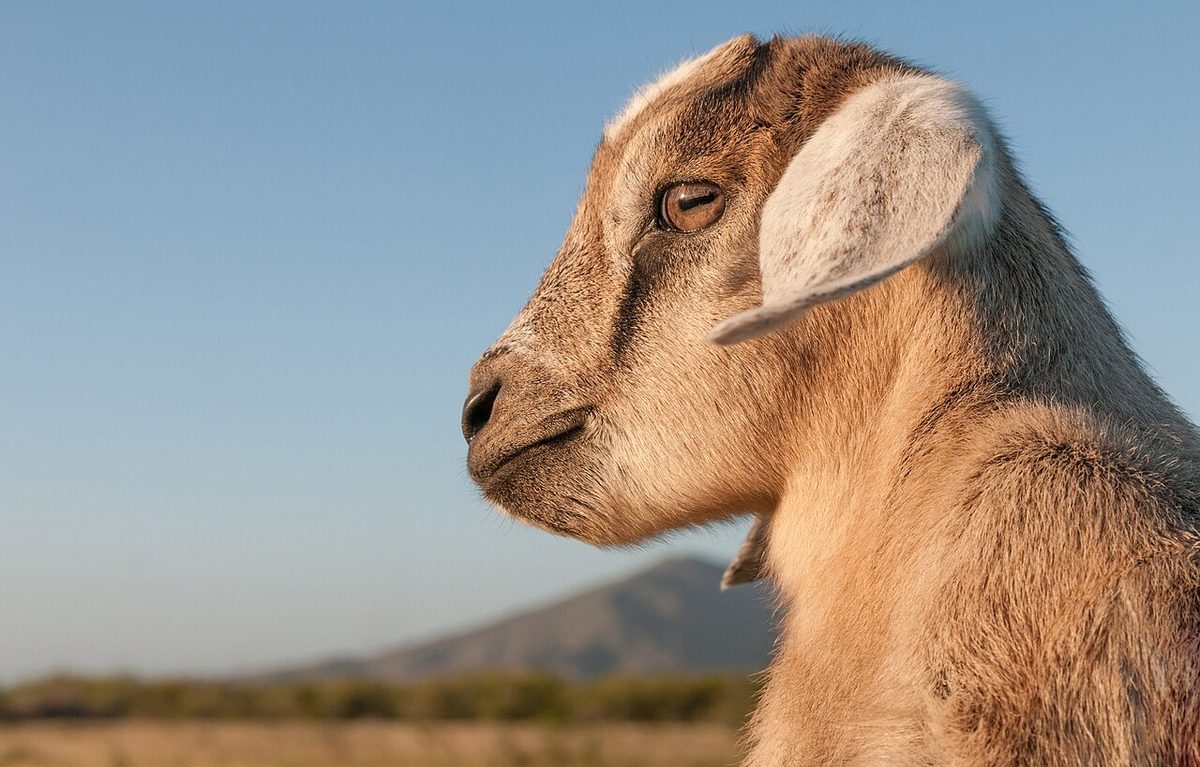
Baby Goat in Margarita Island, Venezuela by Béria Lima de Rodríguez (CC BY-SA 3.0) · source
Both breeds are used in cross-breeding programmes. The Boer has been exported to improve meat qualities in local populations across many countries. The Kiko is widely crossed with the Boer in the United States to blend size with hardiness. If a purebred programme is not your goal, a well-planned cross could give you the best of both.
Know the gaps in available research
We want to be straightforward about what the research does not cover. There are no side-by-side performance comparisons of Boer, Kiko, and other meat breeds on growth rate, feed conversion, or carcass yield in the sources reviewed. Specific feed requirements, stocking rates, and input costs are not documented for any meat goat breed. Reproductive performance beyond the Boer's basic cycle data is not available, and disease management guidance specific to meat goat breeds is not covered here. Guidance on selecting breeding stock, evaluating carcass quality, or grading meat goat carcasses is also absent. Each of these areas matters to your bottom line. Talk to local veterinarians, experienced breeders, or your nearest agricultural extension office to fill those gaps with practical, on-the-ground knowledge.
Goat size varies enormously across all breeds
Goat breed weights span a remarkable range. Larger breed bucks can exceed 140 kg, while smaller does run as low as 20 to 27 kg. At the bottom of the size range sit miniature breeds such as the African Pygmy. The Boer sits firmly in the large half of that spectrum, with adult males averaging about 115 kg. If you need a smaller animal — for limited handling facilities, a specific market, or personal preference — the Boer is not your only option, even within meat-focused herds.
A Few Final Thoughts
Match the breed to your situation
No single breed wins in every situation. Think about your climate, your feed supply, and your market before you buy. Hot, dry areas suit Kalahari Reds and Savannas very well. Cooler, wetter regions can challenge those same breeds. Small farms with basic fencing and shelter can still raise meat goats — choose a smaller, easier-handling breed if that sounds like you. Crossbreeding also has real value. A Boer sire on local does often produces fast-growing kids that are well-suited to local conditions.
Start with the right number. Don't overstock on day one. Three to five does with one buck gives you a manageable herd to learn with. Grow from there once you know what works on your land.
Know your market before you buy
Some buyers prefer live animals at auction. Others want properly slaughtered and dressed carcasses delivered. Prices vary a lot between these two channels. Ask local butchers, abattoirs, and fellow goat farmers what sells best in your area. Build those relationships before you have your first batch ready.
Raising meat goats can be a very satisfying business. Pick the right breed, feed them well, and get to know your buyers. The rest follows from there.
❓ Frequently asked questions
Which goat breeds are best for meat production?
The Boer goat was selectively bred in South Africa from about 1920 specifically for meat qualities and the ability to survive by grazing on thorn veldt. The Kiko is a New Zealand breed developed in the 1980s from feral goats crossed with dairy bucks, bred for fast growth and survival in pastoral conditions. Goat breeds are generally classified by their primary use — meat, dairy, or wool/fiber — and several breeds are considered dual- or multi-purpose.
How much does goat meat sell for?
Across 218 global price observations as of 31 January 2025, goat meat ranged from EUR417 to EUR39559 per tonne with an average of EUR3553 per tonne. In Israel, 76 observations showed prices ranging from ILS20106 to ILS43623 per tonne, averaging ILS29452 per tonne. Live goat prices in Ethiopia averaged ETB12467 per animal across 65 observations.
What is goat meat called and how is it used in cooking?
Goat meat is also known as mutton, especially the meat of older animals, while meat from young goats is called kid meat. In South Asian cuisine, all goat meat is referred to as mutton. It is a staple in cuisines across Africa, the Middle East, South Asia, Indonesia, the Mediterranean, the Caribbean, and Latin America.
How big do meat goats get?
Boer goats are a large meat breed, with adult males averaging about 115 kg in weight and a mean height over 94 cm. Goat breed weight ranges vary widely — larger breed bucks can exceed 140 kg, while smaller does may weigh only 20–27 kg. Miniature breeds such as the African Pygmy sit at the bottom of the size range.
Where do meat goats originate and how widely are they raised?
The domestic goat was domesticated around 10,000 years ago in Iran from the wild bezoar ibex. In 2022, there were more than 1.1 billion goats worldwide, including 150 million in India. The Boer goat was reported to DAD-IS by 72 countries in 2025 with a worldwide population estimated at 182,863. The Kiko was developed in New Zealand in the 1980s and stock was exported to the United States in 1992.
How fast do Boer goats grow?
Under extensive management in sub-tropical conditions, Boer goats may gain approximately 175 g per day. Under intensive conditions, daily gains of more than 200 g are possible. The Boer is well adapted to grazing on a wide variety of local biomes including sourveld, coastal veld, mixed veld, and thornveld, and shows good resistance to disease.
📚 Where the figures in this guide come from
We read what has already been published on the subject, take out the figures and rules it actually states, and write it up in plain, everyday language.
Every number and name here traces back to a source listed below — nothing in this guide is invented.
Our own records
Price observations recorded by this site (worldwide)
Prices, rules and animal health advice change and vary by area. Check anything important with a local vet, dealer or agriculture office before you spend money.
Spotted a mistake? Tell us in the comments and we will correct it.


 Menu
Menu
💬 Comments
Login to comment
No comments yet. Be the first to share your experience!