You have a few acres, a little capital and a strong feeling that goats might be the way in. Then the questions start. Meat or milk? Boer or Nubian? Does your county even allow livestock? How much fence do you need, and how many goats should you buy first? Most people answer those questions in the wrong order — they buy the goats, then work out the rest. That is where the money goes.
This guide walks you through the decisions in the order that protects your wallet: what you sell, who buys it, what the law says, which breeds fit your weather, what you build, and what you spend. Get these settled before the first goat steps off the trailer.
Why goats suit small American farms
Goats earn their place on small acreage for good reasons:
- They need much less land, feed and housing than cattle or other large livestock.
- They breed fast, so a small herd can grow into a working one quickly.
- They eat weeds, brush and rough vegetation that other livestock refuse, which helps control weeds naturally and improves soil fertility.
- They are hardy and do well across a wide range of U.S. climates and terrains.
- Meat goats mature fast on less feed than bigger animals, which means quicker returns.
Now the honest part. You will hear two very different stories about how easy this is. Some farmers describe goats as a low-cost, quick-turnaround venture with manageable care and healthy margins. Others, especially those who have pushed past a hobby herd, say goat farming is not simply buying a few animals and putting them on pasture — it takes structural planning, careful health management and a real understanding of livestock economics. Both camps are describing something true. A small backyard herd is genuinely cheap to start compared with cattle. A herd that pays you a living is a business, and it behaves like one.

Decide what you are selling before anything else
This is step one, and it comes before land, fencing or animals. Your product decides your breed, your buildings, your daily routine and your buyers. Write down which of these your farm earns from:
- Meat (chevon) — sold as lean protein with a low environmental footprint.
- Dairy — milk, cheese and yogurt.
- Fibre — mohair and cashmere.
- Breeding stock — registered or high-quality animals with strong genetics.
- Targeted grazing — renting your herd out for brush clearing and vegetation control.
- Agritourism — petting zoos, goat yoga, farm tours.
- By-products — manure and compost, leather, and goat milk sold into skincare.
Should you run one mixed herd or specialise? Practice splits here. Some farmers happily combine meat, dairy and fibre, or plan for mixed revenue from the start, and treat combined production as normal if local demand supports it. Others argue that trying to raise a single herd for meat, milk and fibre at once rarely works at commercial scale, and that real profit comes from specialising. If you are unsure, remember that even the farmers who allow for a mix still insist on one clear main purpose driving the farm.
Check demand where you actually live
Goat demand is not spread evenly across the country. Meat goat demand is strong in states like Texas, Georgia and California, while dairy goats are more popular in Wisconsin and Oregon. Goat farming is common in Pennsylvania, California and Texas. Your state's habits should shape your plan more than any national trend.
Who is buying
- Goat meat demand is rising fast in ethnic communities and among health-conscious buyers, and the global chevon market is described as robust and largely under-supplied.
- Goat milk, cheese and yogurt are gaining ground as lactose-friendly alternatives to cow's milk, helped by a lower allergen profile and smaller fat globules.
- Boutique and artisanal cheesemakers are a real customer base, especially for high-butterfat milk.
- Mohair and cashmere are prized in the fashion industry.
- Organic, halal and kosher niches are expanding.
How to check it yourself
Before you commit a dollar, visit your local farmers' markets, butcher shops and co-ops. Ask what they buy, when they buy it and what they cannot get. You are looking for pricing, seasonal patterns and gaps you could fill. Prices vary a lot by region, season and buyer, so build your plan on real local auction prices and quotes from real buyers near you — not on averages you read somewhere.

Sort out zoning, permits and scrapie ID first
Confirm that goat farming is allowed where you are before you buy land or livestock. Some states and cities restrict livestock in residential or suburban zones. Others allow goats but set rules on lot size, how many animals you may keep and even shelter specifications.
Then look at movement and health paperwork, which differs from state to state. As one example, goats entering California need a Certificate of Veterinary Inspection and an Interstate Livestock Entry Permit. Also check whether your state takes part in the National Scrapie Eradication Program, which requires official ID tags for goats moved across state lines. Scrapie is a fatal, neurodegenerative disease of sheep and goats, which is why the tagging matters.
If you plan to buy or sell across state lines, check each state's rules separately — they are not the same, and only local authorities can tell you what applies to you.
Two phone calls will save you weeks:
- Your County Agricultural Extension Office — local regulations and farm registration.
- The USDA Farm Service Agency (FSA) — regulations, farm registration and guidance on financial assistance.
It is also worth reading up on USDA and state-level guidelines for livestock management and sales, since those set the frame your local rules sit inside.
Match the breed to the job and to your climate
Choose breeds that suit your purpose, your climate and your local market demand — in that order. The right animal in the wrong weather will cost you.
Meat breeds
- Boer — South African in origin and the heavyweight of the meat industry, with exceptional growth rates, deep muscular bodies and high dressing percentages.
- Kalahari Red — rich red coats and very resilient to intense heat and solar radiation, which suits arid climates.
Dairy breeds
- Saanen — the Holsteins of the goat world: high-volume milk producers with calm temperaments.
- Alpine — highly adaptable heavy milkers that do exceptionally well in cooler climates.
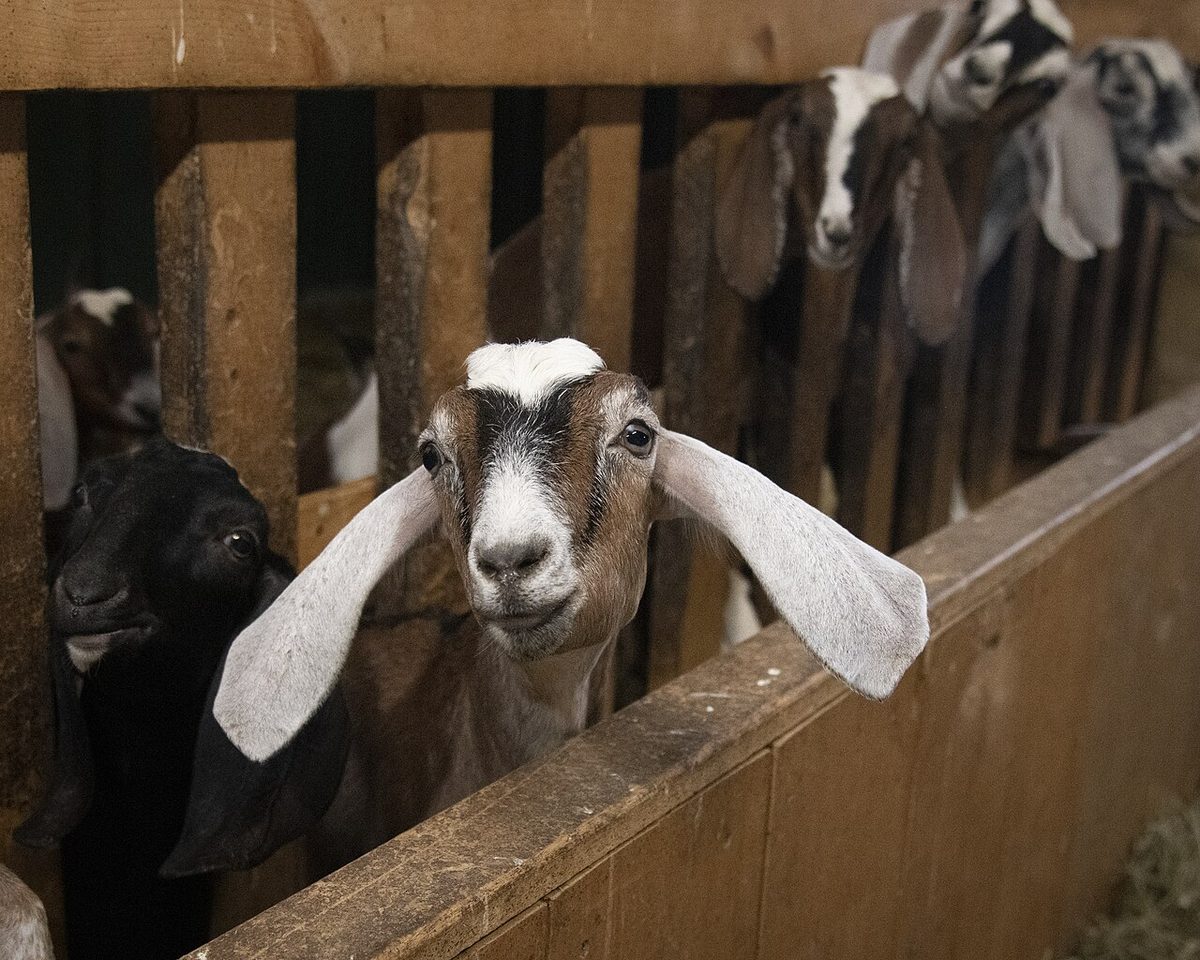
- Nubian (Anglo-Nubian) — long floppy ears and exceptionally high butterfat, the favourite for artisanal cheese and soap.
Fibre goats
Angora goats produce mohair, a silky, high-value fibre known for its durability and sheen. Cashmere is the ultra-soft winter undercoat, and here the language varies: some people talk about Cashmere as a breed, while others say cashmere is not a specific breed at all but a type of goat that grows that prized undercoat.
One practical note on workload: meat goats are generally hardier and less labour-intensive than dairy breeds, mainly because there is no daily, time-sensitive milking routine to keep. If your days are already full, that difference is bigger than it looks on paper.
Build fencing, shelter and water before you buy goats
Goats are clever, agile and physically active. There is an old line among goat keepers: if a fence can't hold water, it can't hold a goat. Poorly planned infrastructure leads to constant escapes, heavy predator losses and disease outbreaks that spread fast.
So before the animals arrive, you want:
- Strong fencing that keeps goats in and predators out.
- Secure, dry shelter — damp housing invites health problems.
- Enough grazing space on the site you choose.
- Clean water with reliable access.
Set aside real capital for this, not leftovers. What that fence should look like depends on your terrain, your predator pressure and your budget, and the right shelter size depends on your climate and herd. Walk a neighbour's farm, ask your extension office, and get quotes from a local fencing dealer before you settle on a design.
When you do buy, buy healthy animals from a reliable herd. As you scale up, careful health management is what keeps mortality down and the bottom line up. Your vaccination, parasite and hoof-care routine will depend on your region and your pasture, so build that plan with a vet near you rather than copying one off the internet.
Cost it out honestly, then start small
A thorough U.S. cost breakdown covers 14 important cost areas, and it is worth putting a number beside every one of them:
- Initial investment and breed choice
- Land acquisition and preparation
- Feed and nutrition
- Infrastructure
- Veterinary care and health management
- Labour
- Equipment and machinery
- Marketing and sales
- Insurance and risk management
- Water and utilities
- Transportation
- Processing and packaging
- Revenue streams and break-even
Costs vary greatly by farm size, breed choice, region and production goals, so use local quotes instead of rough guesses, and track both your variable and fixed costs. Grazing management matters too: one small-scale Ohio farm cut its expenses by moving to rotational grazing.
Then start small. A modest, well-budgeted herd with accurate records beats an ambitious one you cannot feed. Expand after your first production cycle proves the numbers work and you have reliable buyers and a clear cash-flow plan. How long it takes to recover your investment depends entirely on your costs, your prices and your market, so answer that question with your own figures.
What actually decides whether you profit
Owning goats does not make money. These things do: controlled feed costs, healthy breeding animals, a good kid crop with strong kid survival, sound risk management, and reliable buyers. Efficient kidding management is one of the biggest levers you have on herd growth and productivity.
For scale, goat farming is described as one of the most profitable U.S. livestock ventures after cattle. The average pay for a goat farmer in the USA is $46,497. In 2024, goat sales across all grocery formats reached $27 million with 3.5 million units sold, according to Nielsen. Smaller farms often see net profit margins of around 10–20%, while larger, more efficient operations with broader market access can reach 25–35%.
Your first steps
Keep it simple and take them in order:
- Pick your product and your main buyer.
- Visit local markets, butchers and co-ops to confirm demand and real prices.
- Call your county zoning office, your extension office and the FSA.
- Choose breeds that fit your purpose, climate and market.
- Build the fence, shelter and water supply.
- Buy a small number of healthy goats from a herd you trust.
- Keep records from day one, and grow only when the first cycle proves you can.
Goats are forgiving animals but an unforgiving business. Do the planning while it is still free, lean on your local vet and extension office for the details only they can answer, and let your first small herd teach you the rest.
 Menu
Menu
💬 Comments
Login to comment
No comments yet. Be the first to share your experience!