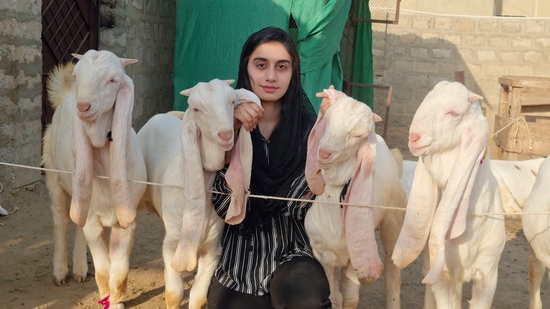
The Gulabi is one of the most eye-catching goats in South Asia — a tall, long-eared animal with soft pink skin, a pink nose and a Roman-nosed profile that show breeders prize almost like a pedigree. Its name says it all: gulabi means "pink" in Urdu. You'll also hear it called the Pateri.
What makes it unusual is that it isn't an ancient landrace at all — it's a modern composite, bred in the Sindh region of Pakistan by crossing four established goats: the Beetal, the Rajanpuri, the Pateri and the Kamori. The result is kept mainly for milk and meat, but the best-looking animals have become prized show and hobby goats that change hands for serious money.
Gulabi goat at a glance
| Trait | Detail |
|---|---|
| Also called | Pateri |
| Origin | Sindh, Pakistan |
| Bred from | Beetal × Rajanpuri × Pateri × Kamori |
| Kept for | Milk, meat — and increasingly, show |
| Colour | Mostly white coat; pink skin, nose and ears |
| Ears | Very long and drooping, roughly 25–30 inches |
| Weight | Around 60–100 kg when mature |
| Milk | Roughly 1.5–2.5 litres a day |
Where the Gulabi comes from
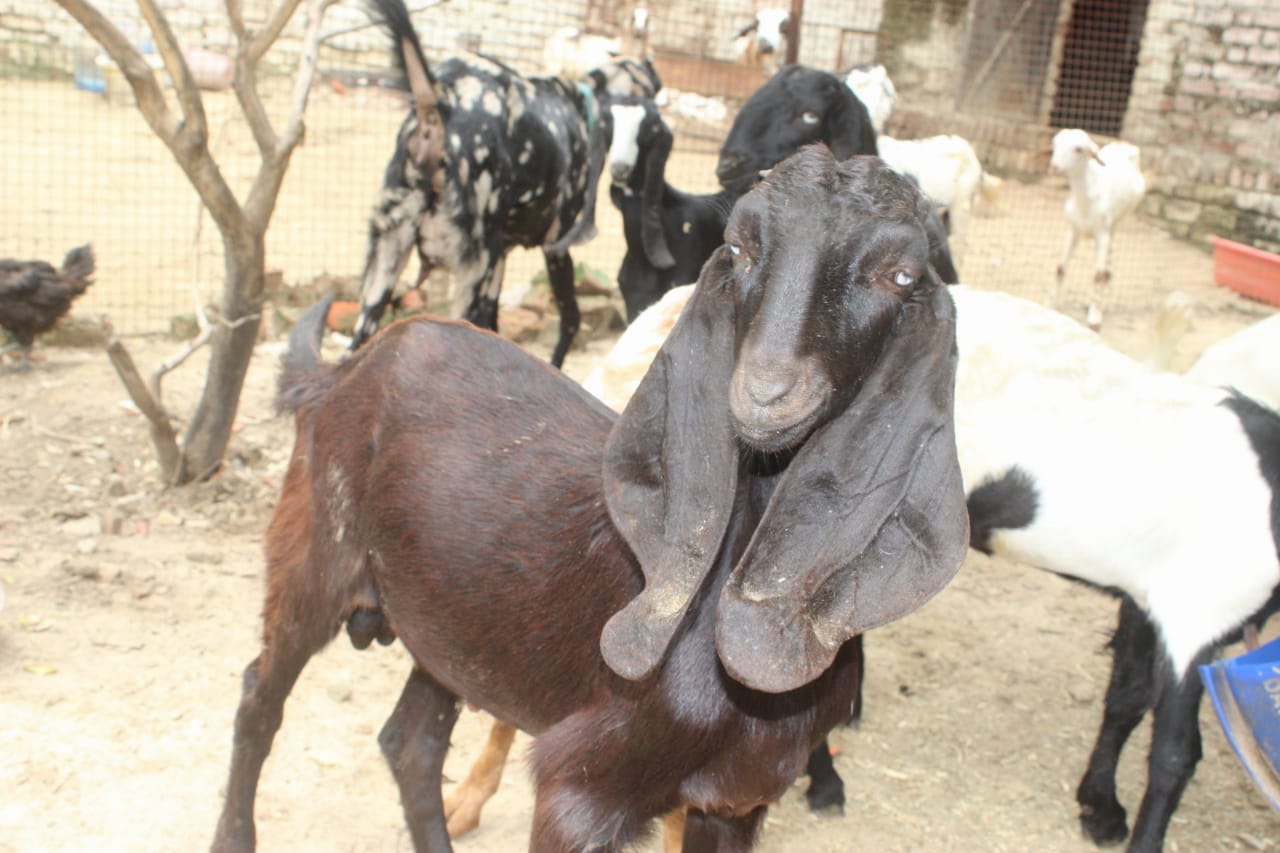
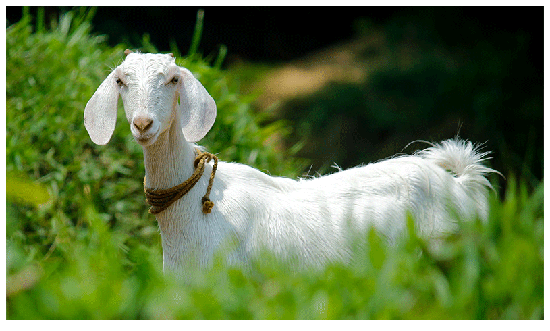
The Gulabi was developed in Sindh, in southern Pakistan, and has since spread to breeders in India, the Gulf, Malaysia and beyond. Because it's a four-way cross, it borrows something from each of its parents — the size and milk of the Beetal, the frame of the Rajanpuri, and the dark, long-eared Kamori and local Pateri stock. A note on the photos below: freely-licensed pictures of the Gulabi itself are genuinely hard to find, so the two images here show its parent breeds instead — a good way to see where its looks come from.

What a Gulabi looks like
This is a big, striking goat. The head is broad with a distinctive Roman (convex) nose, and the ears are the signature feature — long, soft and drooping, often 25 to 30 inches, so they hang well below the muzzle. The coat is usually milky white, but the giveaway is the skin: the nose, ears and bare skin carry the pink tone the breed is named for. A long fringe of hair runs down the neck, and the horns are typically small, pale or pinkish. Mature animals commonly reach 60–100 kg, and does often give birth twice a year, frequently to twins.

Milk, meat and keeping one
As a dairy animal the Gulabi is a solid milker, giving in the region of 1.5–2.5 litres a day, which is why it sits among the better South Asian milk goats — see our roundup of the top goat breeds for milk. Its size also makes it a capable meat animal. But at the top end, plenty of Gulabis are simply kept for love of the breed: as pets, as show animals, and as breeding stock whose kids sell on.
Looking after one is much like any other goat. Give it a dry, well-ventilated shelter and clean ground with room to move; damp, dirty pens are where most trouble starts. Keep only as many animals as you can properly care for, offer good green fodder along with dry roughage like groundnut or guar straw, and always have clean water. Stay on top of routine vaccination and deworming, since goats are prone to problems like diarrhoea and other infections — our guide to the major diseases in goats covers the ones to watch.
What does a Gulabi goat cost?
There's no single price, because with a Gulabi you're paying for looks as much as for milk or meat. Ordinary animals cost roughly what any good goat of that size would. But a well-marked, show-quality Gulabi is a different market entirely — the finest animals are reported to sell for lakhs of rupees in Pakistan and India, with the figure driven almost completely by the individual animal's colour, ears and overall form. Treat any headline "world's most expensive goat" price as a one-off for an exceptional show animal, not a going rate.
If it's everyday goat prices you're actually after, we track real, current rates from live listings on our goat price page — a far better guide to what you'll really pay than any single quoted number.
More goat guides
New to keeping goats? Start with choosing the right goat breed, read up on the Gulabi's parent the Beetal, or browse current prices on the goat price page.
Photos via Wikimedia Commons under free licences: Beetal goat — Marsmux (CC BY-SA 4.0); Kamori goat — LunaticFringe97 (CC BY-SA 4.0). Both are shown as parent breeds of the Gulabi.


 Menu
Menu
💬 Comments
Login to comment
No comments yet. Be the first to share your experience!