You are looking at a horse ad. It says something like "15.2 hh, rising four, warmblood type, quiet to handle." You want to know three things: what those words actually mean, whether the horse could do a real job on your place, and what it is worth. If the horse is standing in Pakistan, you have a fourth worry — you cannot drive over and put your hands on it.
So this post does two jobs. First, the plain truth about sourcing a horse from Pakistan and what you have to confirm yourself. Then the part that helps you wherever the horse stands: how to read the age words, the height in hands and the breed wording in any listing.
Sourcing from Pakistan: what you have to check yourself
Be careful with anyone who hands you confident detail about the Pakistani horse market from a distance. Which breeds are common there, who the honest sellers are, what a horse fetches in rupees, which months bring good stock to market — that is local knowledge, and it moves. Get it from people on the ground, not from the seller's own description.
The paperwork is the same story. Whatever rules apply to moving a horse from Pakistan into the United States, they are not something to guess at and not something to take on a seller's word. Ask directly and get the answers in writing before a deposit leaves your account.
- Price and market: ask a dealer or agent in-country whose reputation you can check independently, plus anyone in the US who has already bought and shipped from there.
- Rules, testing and paperwork: confirm with your own vet and your state's animal health office, in writing, before you pay anything.
- Transport: ask for written quotes, and ask exactly what each one covers — crating, agent's fees, insurance, and who meets the horse at both ends.
- Vet check: use a vet you chose and paid, never the seller's. What that exam should cover is a conversation between you and that vet.
None of that is meant to talk you out of it. It is simply cheaper to ask than to unwind a bad purchase from the far side of the world.
What the age and sex words in the ad mean
Sale-ad language is old language, and it is precise when the writer knows the trade:
- Foal — either sex, under one year. Still nursing it is a suckling; once weaned, a weanling.
- Yearling — between one and two.
- Colt — a male under four. Filly — a female under four.
- Mare — a female four years and older.
- Stallion — an uncastrated male four and older.
- Gelding — a castrated male, any age.
Calling any young horse a "colt" is a very common mistake, so do not assume the seller means a young male. Ask.
Two reasons an advertised age can mislead you
The words bend by jurisdiction. Some racing bodies count colts and fillies as under five — British Isles Thoroughbred racing does — while Australian Thoroughbred racing uses under four. So "colt" in one ad and "colt" in the next may not mean the same age.
Competition age is also not calendar age. For most competition purposes in the Northern Hemisphere, which includes the US, a horse gains a year every 1 January no matter when it was born (in the Southern Hemisphere it is 1 August). A "three-year-old" may not be three by the calendar. Endurance riding is the exception — it uses the animal's actual age. Whatever the ad says, ask for the real foaling date.
What age means for the work
Most horses begin training under saddle or in harness between the ages of two and four, and reach full adult development at five. A modern domestic horse usually lives 25 to 30 years depending on breed, management and environment, with a rare few going into their 40s or beyond — the oldest verified was Old Billy, a 19th-century horse who reached 62. Read that alongside the ad: a sound horse in its early teens still has plenty of working life left.
Hands, inches and the right size for the job
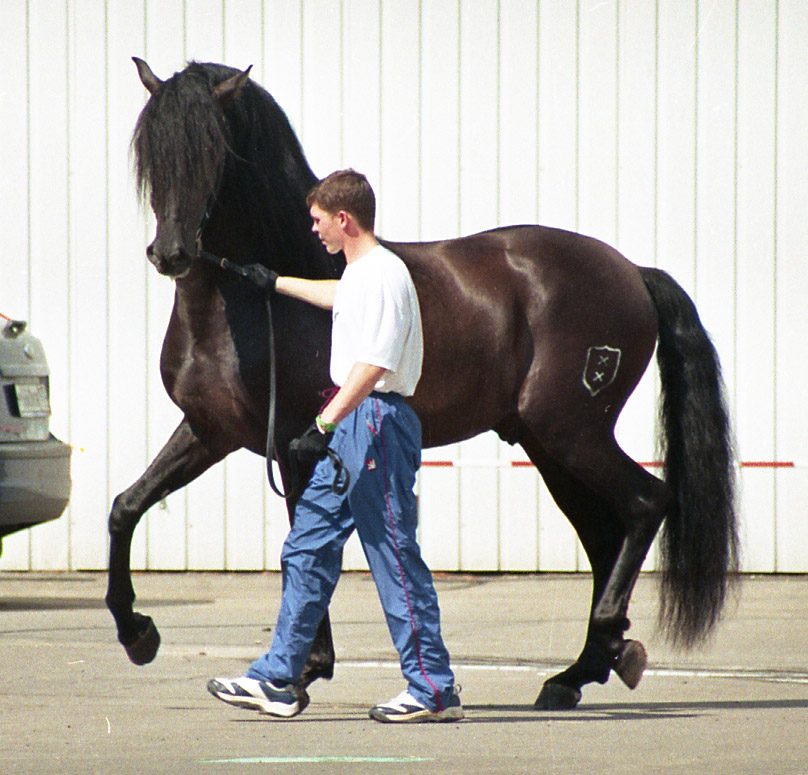
Height is measured at the withers, the highest point where the neck meets the back. That point is used because it sits still — a horse can lift or drop its head, but the withers stay put.
In the US and other English-speaking countries the figure comes in hands and inches, so ads read "15.2 h" rather than in centimetres. One hand is 4 inches (101.6 mm). You write full hands, a point, then the leftover inches, then "h" or "hh". So 15.2 h means 15 hands plus 2 inches — 62 inches, or 157.5 cm. It is not a decimal.
Now match the size class to the work:
- Light riding horses: 14 to 16 hands (56 to 64 inches, 142 to 163 cm), weighing 380 to 550 kilograms (840 to 1,210 lb).
- Larger riding horses: from about 15.2 hands (62 inches, 157 cm) and often up to 17 hands (68 inches, 173 cm), weighing 500 to 600 kilograms (1,100 to 1,320 lb).
- Heavy or draft horses: at least 16 hands (64 inches, 163 cm) and up to 18 hands (72 inches, 183 cm), weighing about 700 to 1,000 kilograms (1,540 to 2,200 lb).
Size follows breed, but nutrition shapes it too. A youngster that has been fed poorly may not finish where its breeding suggests — worth remembering when you are buying a weanling or yearling on the promise of what it will grow into.
Hot, cold and warmblood: what the breed wording hints at
There are more than 300 horse breeds in the world today, developed for many different uses. Ads often lean on an older, rougher grouping by temperament, and it is useful shorthand:
- Hot bloods — speed and endurance.
- Cold bloods — draft horses and some ponies, suited to slow, heavy work.
- Warmbloods — crosses of hot-blood and cold-blood lines, often bred for a specific riding purpose, particularly in Europe.
So "warmblood type" is a hint about temperament and purpose, not proof of papers. If you need a horse for a particular job in your particular climate — roping in summer heat, ranch work through a hard winter, driving a cart — ask breeders, trainers and vets near you who already do that job in that weather. No single breed answer travels well.
A little history, because it explains a lot
Horses first evolved in North America, developing from Eohippus over 45 to 55 million years. They died out on this continent at the end of the Ice Age, and only came back when European explorers brought them, beginning with Columbus's second voyage in 1493. Exactly how long ago people first domesticated and rode horses is still argued over, so treat any single date you see with caution. One more term: the free-roaming horses often called wild are feral — domesticated horses living out. True wild horses are those never domesticated at all.
What a horse can really do on your place
Horses still earn their keep at practical work, not just weekend riding:
- Controlling herd animals on a ranch.
- Police work, and both police and volunteer mounted patrols.
- Mounted search and rescue.
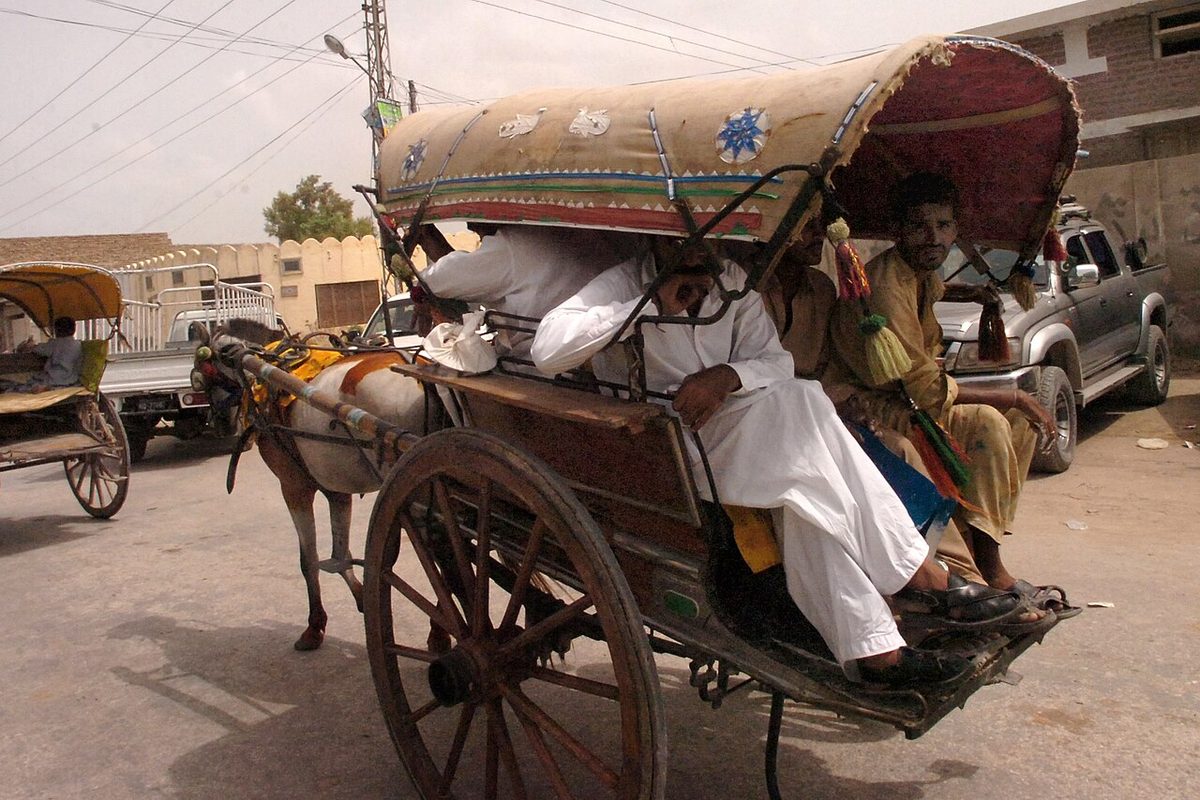
- Farming, still done with horses in some parts of the world.
- Parades, funerals and other ceremonial work.
- Therapy and entertainment.
If your job is mostly hauling or trail work, note that other equids such as mules are ridden recreationally too.
Handling and facilities
A horse is built to run from trouble. It has good balance and a strong fight-or-flight response, which is exactly why calm handling and safe, sensible fencing and pens matter. The right fencing, shelter and water setup depends on your ground, climate and budget, so copy what works on horse places near you and ask your vet what they see go wrong locally.
Horses sleep both standing up and lying down, and young horses sleep considerably more than adults — a youngster spending a lot of time down is often just being a youngster.
If you want to keep working in bad weather, a riding hall — an indoor arena or school — lets you train horse and rider whatever the sky is doing, and allows indoor competition too. Riding is only part of the picture: equestrian work also covers driving and vaulting, so if harness work is in your plans, the building has to suit that.
Where the demand is, if you want the horse to pay
Competition
- The three FEI and Olympic disciplines: dressage, show jumping and eventing. Equestrian events entered the Olympics in 1900, with all three disciplines in by 1912.
- Plenty more: endurance riding, reining, tent pegging, vaulting, polo, racing, driving and rodeo — many of them grouped together at horse shows.
- Endurance: top-level races usually run 50 to 100 miles (80 to 161 km) with scheduled vet stops, and limited-distance rides of about 20 to 25 miles (32 to 40 km) are offered to newcomers.
Racing
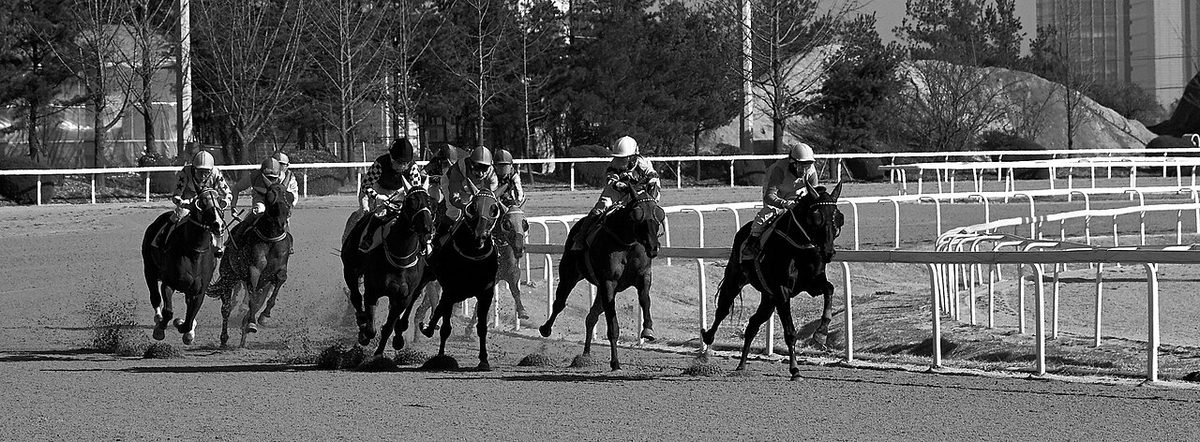
In the US, horse racing is governed by the Jockey Club and harness racing is organised by the United States Trotting Association. The Standardbred dominates harness racing in both its trotting and pacing forms, working in a sulky or racing bike, though light and heavy breeds and ponies are all raced in harness. Thoroughbred racing is the most popular form worldwide, and the Thoroughbred holds the pre-eminent reputation as a racing breed. Racing over obstacles — steeplechasing — is most common in the UK, where it is called National Hunt racing.
Recreation and therapy
Much of the demand never sees a rosette. Fox hunting, trail riding and hacking all pull riders, and horseback riding (horse riding, to Commonwealth riders) has public trails in almost every part of the world, with parks, ranches and public stables offering guided and independent rides. Horses are also used therapeutically, in para-equestrian competition, and in non-competitive riding aimed at people's health and emotional development.
What none of that tells you is what you can charge, or what liability and insurance cover a paid trail, lesson or therapeutic operation needs in your state. Ask your insurer and an operator near you before you count on the income.
The price question, answered honestly
There is no honest way to hand you a figure here — not a Pakistani price, not an American one, and not one broken down by breed, age, training or sex. A horse is priced as an individual, on the day, by the people in the ring.
It helps to see why. The price records we keep for the United States run to 254 rows, all quoted in USD per tonne, covering chicken meat, cattle meat, hen eggs, cow milk, turkey meat, pig meat and honey. Not one row is a horse. For a sense of what commodity pricing looks like where it does exist: cattle meat runs USD2425 to USD4387, averaging USD3448 per tonne, most recent at 2025-01-31; cow milk runs USD381 to USD600, averaging USD499 per tonne on the same date; honey, from just four rows, runs USD5600 to USD6636, averaging USD5947 per tonne, most recent at 2024-12-31. A beef animal can be priced by the tonne. A saddle horse cannot.
So build your own picture. Watch local sales, ask trainers and dealers near you what horses of that type and training are making, and get a second opinion from somebody with no stake in the deal.
Horses do yield products — meat, milk, hide, hair, bone, and pharmaceuticals extracted from the urine of pregnant mares. Do not build a business plan on any of them without first checking buyers, demand and the legal position where you live.
Then there is the cost of keeping the horse, which is what catches people out. Feed and hay, pasture, farrier, dental, routine vet, worming, insurance and boarding all vary by region and by year. Call your own farrier, your own vet and a local boarding barn for current rates before you commit.
Where to start
- Write down the job first — working cattle, guided trail rides, driving, competing — then the size class and temperament group that fits it.
- Translate the ad: real foaling date, height in hands at the withers, and a straight answer on sex and whether the horse is castrated.
- Ask what training it has had, remembering saddle or harness work usually starts between two and four, with full growth at five.
- Book your own vet, and ask that vet what to check for the job you have in mind.
- Get rules, paperwork and transport in writing before any money moves — especially if the horse is overseas.
A good horse can be with you for 25 to 30 years, so a few extra weeks of patient asking is cheap. Take your time on the ad, take your time on the vet, and buy the horse that suits your ground — whether it is three states away or on the other side of the world.
 Menu
Menu
💬 Comments
Login to comment
No comments yet. Be the first to share your experience!