🍪 Cookie Consent
We use cookies to improve your experience, analyse how the site is used, and show relevant content. By choosing Accept you agree to that. See our
Privacy Policy.
How Fast Can a Horse Run? What Every Farmer Needs to Know
How fast can a horse run? The answer depends on breed, purpose and training. Here is what the facts show about horse speed, from racing records to working endurance.
A horse can cover 1,600 metres in 1 minute and 36.17 seconds. The top recorded time for that distance is 1:36.17, set by the Thoroughbred Forever Young in the Saudi Derby in 2024. But that is just one mark on a wide spectrum. How fast a horse can run depends heavily on its breed, fitness, and what job it was raised to do.
What Top Race Times Tell Us
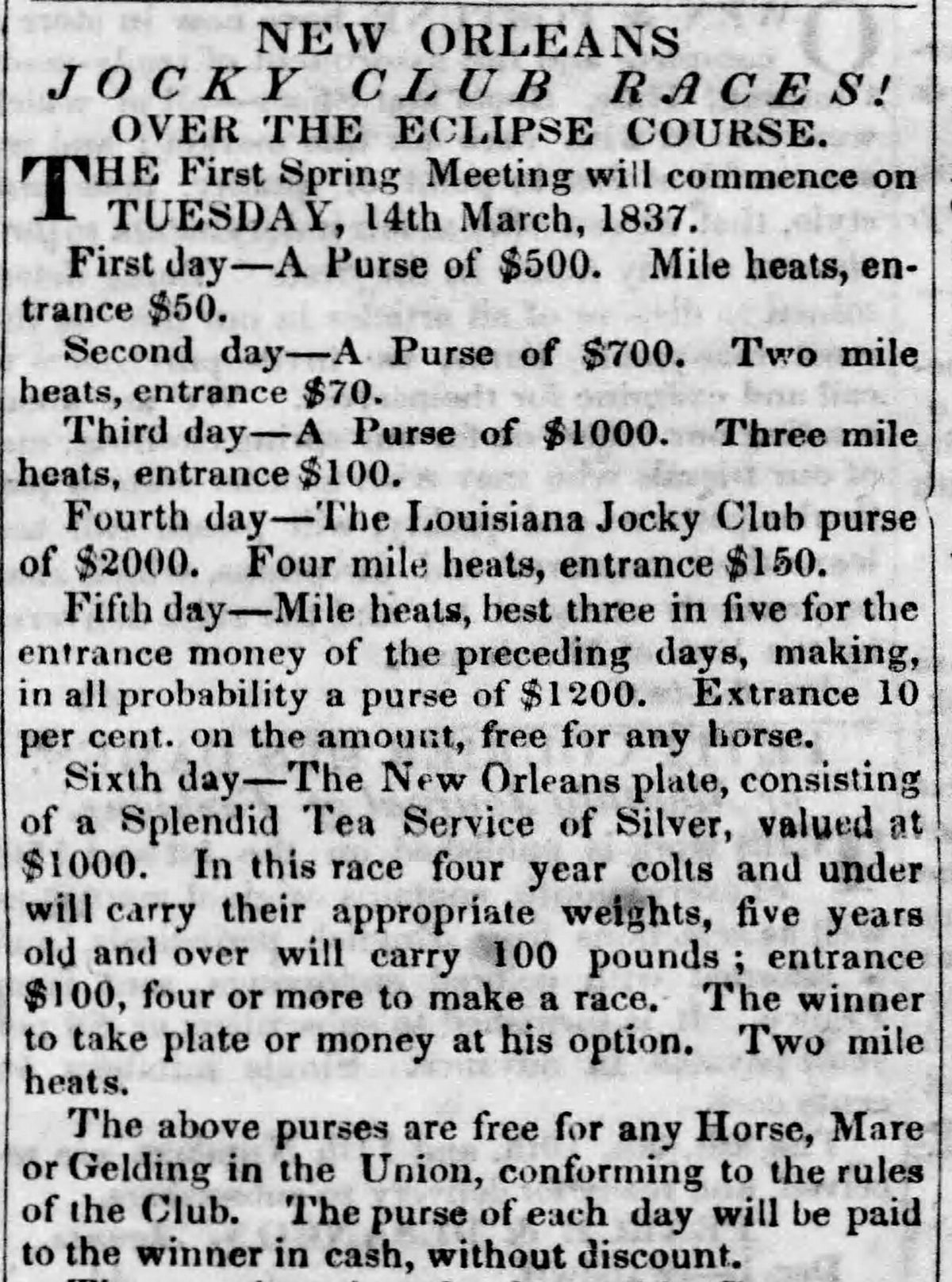
Eclipse Race Course Announcement The Mississippi Free Trader Tue Jan 17 1837 by Mississippi Free Trader (Public domain) · source
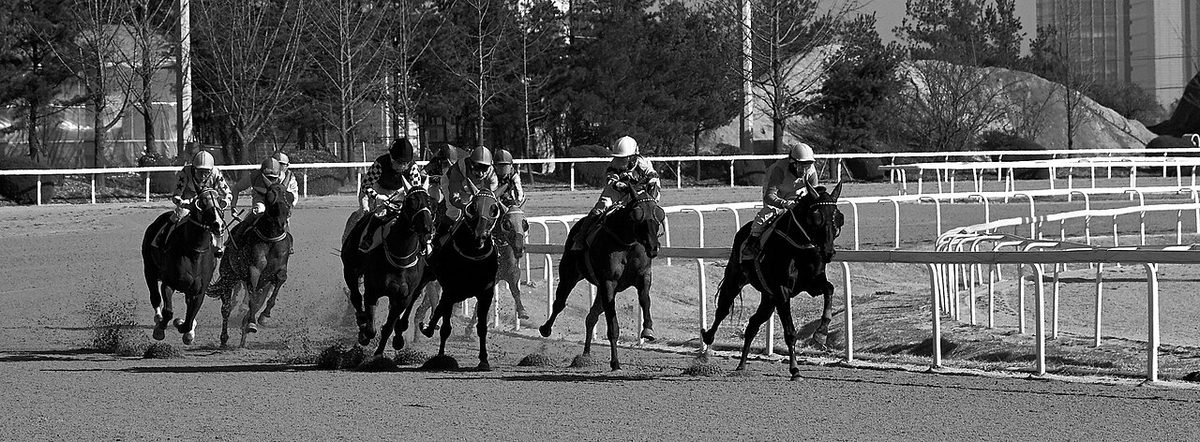
The clearest numbers we have come from race records. In the 2024 Saudi Derby, Forever Young covered 1,600 metres in 1:36.17 — described as about two seconds faster than the track record for that distance at that course. He won by a nose after making up a four-to-five-length deficit in the final straight.
A few months later at Meydan Racecourse in the UAE, the same horse ran 1,900 metres on dirt in 1:57.89, winning by two lengths. He went on to win the Breeders' Cup Classic in 2025 and two editions of the Saudi Cup in 2025 and 2026, which shows what sustained top-level race fitness looks like.
None of the sources convert those times into a kilometres-per-hour or miles-per-hour top speed figure. If you want that number for a specific race, you can work it out from the time and distance yourself.
How Breed Shapes Speed
Brand Berlin-Brandenburg by Berschah at de.wikipedia (Public domain) · source
Horse breeds generally fall into three groups, each with a different purpose and pace.
Hot bloods
Chlorotabanus crepuscularis, Green horse fly, Duck, NC 2016-01-07-14.51 by USGS Bee Inventory and Monitoring Lab from Beltsville, Maryland, USA (Public domain) · source
Hot bloods are the spirited breeds built for speed and endurance. Thoroughbreds and Arabians both belong to this group. They tend to be lighter in build and quicker to respond.
Cold bloods
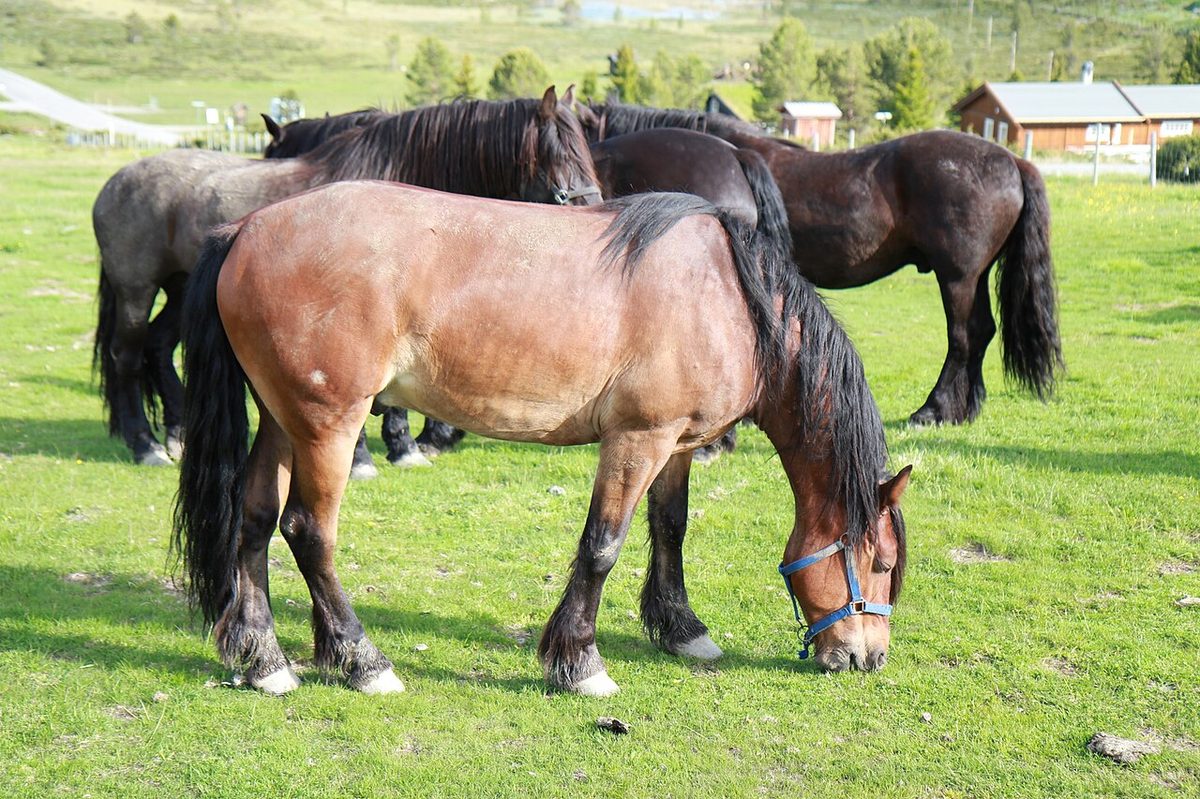
Cold blooded horses kaldblodshest in Rondane, Norway by Øyvind Holmstad (CC BY-SA 4.0) · source
Cold bloods include draft horses and some ponies. These horses are built for slow, heavy work — pulling heavy loads over long days rather than sprinting around a track.
Warmbloods
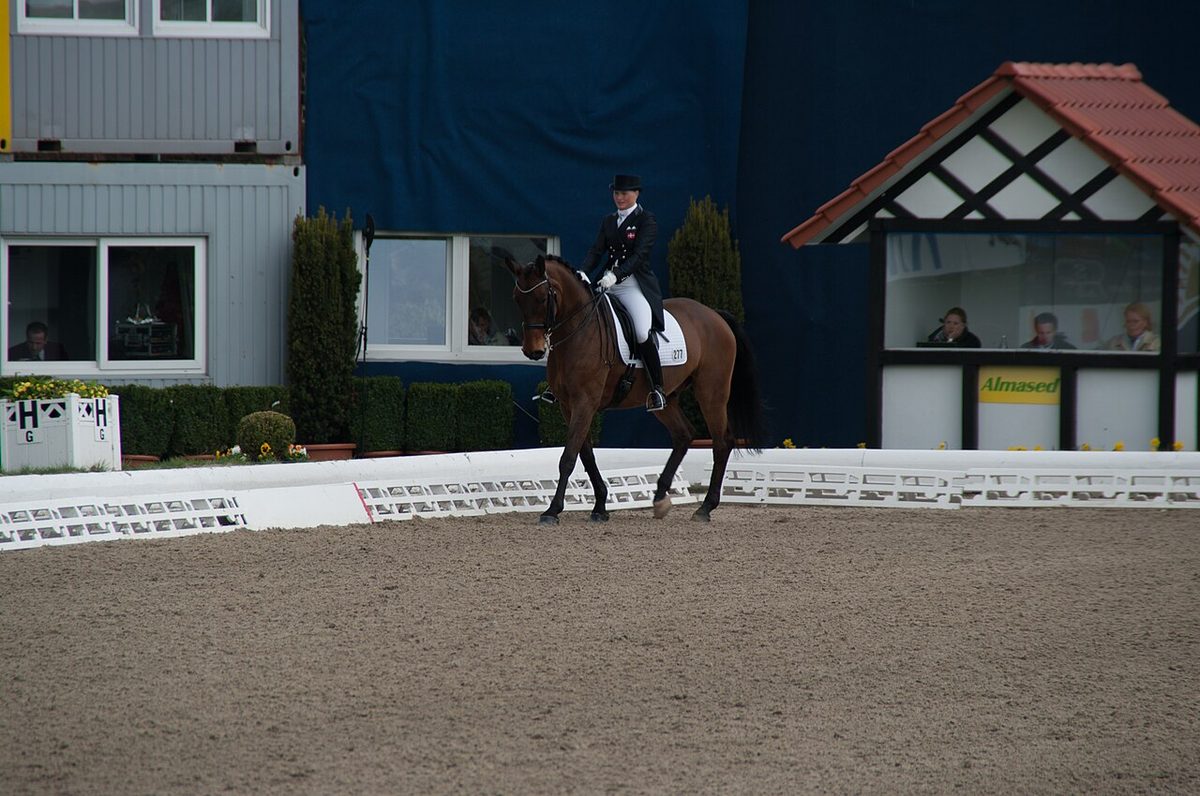
13-04-19-Horses-and-Dreams-2013 (44 von 114) by Dieses Foto ist von Olaf Kosinsky
Achtung: Dieses Bild ist nicht gemeinfrei. Es ist zwar frei benutzbar aber gesetzlich geschützt.
This photo was created by Olaf Kosinsky
Note: this image is not in the Public Domain. It is free to use but protected by law.
Bitte benutzen Sie nach Möglichkeit als Bildbeschreibung:
Olaf Kosinsky / Wikipedia
in unmittelbarer Nähe beim Bild oder an einer Stelle in ihrer Publikation, wo dies üblich ist. Dabei muß der Zusammenhang zwischen Bild und Urhebernennung gewahrt bleiben.
I prefer the following credit:
Olaf Kosinsky / Wikipedia near to the photo or at a location that is common in your publication but preserving the association between image and credit.
Bitte lesen sie den vollen Lizenztext gründlich, bevor sie das Bild nutzen! Wenn sie Fragen zu den Lizenzvereinbarungen haben oder weniger restriktive kommerzielle Lizenzen wünschen, kontaktieren sie mich per Mail: kosinsky@web.de
Please review the full license requirements carefully before using this image. If you would like to clarify the terms of the license or negotiate less restrictive commercial licensing outside of the bounds of Licenses, please contact me by email: kosinsky@web.de (CC BY-SA 3.0) · source
Warmbloods come from crosses between hot bloods and cold bloods. They were developed in Europe for specific riding purposes. They sit somewhere in the middle: capable and athletic, but not usually bred for flat-out racing speed.
There are more than 300 horse breeds in the world today, and each one reflects the conditions and work it was raised for.
The Thoroughbred's Racing Reputation
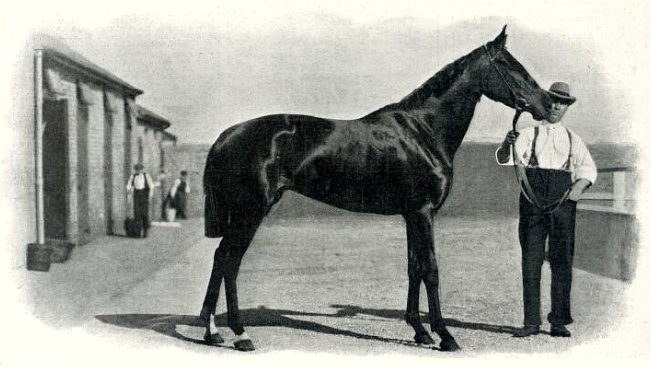
Aida (horse) by Uncredited photographer (Public domain) · source
Thoroughbreds have the pre-eminent reputation as a racing breed. Flat racing — the kind run on turf or dirt over measured distances — is the most popular form of horse racing worldwide. It is governed by the Jockey Club in the UK and by the Jockey Club in the US.
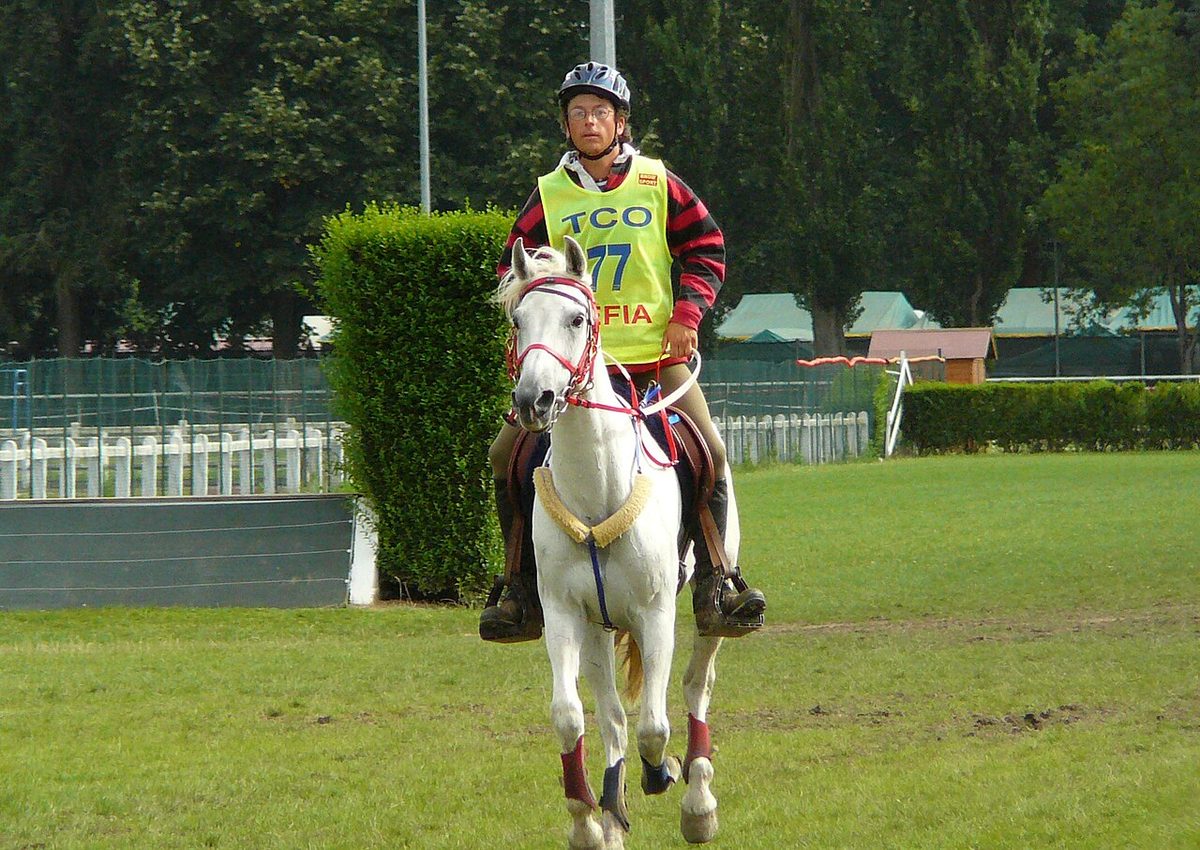
That does not mean other breeds never race. Arabian horses, for example, compete in endurance and speed events across the Middle East and beyond. But when people talk about track records and classic race times, the Thoroughbred is almost always the breed at the top of the list.
Endurance Over Distance: The Mongolian Horse
Endurance-shagya by Véronique Mestre Gibaud (Association française du Cheval Arabe-Shagya) (CC BY-SA 3.0) · source
Endurance Over Distance: The Mongolian Horse
Mongolian horses are small, tough, and built for extremes. They have survived for thousands of years on the windswept steppes of Mongolia, living through temperatures that swing from minus forty to well above thirty. Horses there must travel long distances to find food and water. They develop exceptional stamina as a result.
Riders on the Mongolian steppe often cover sixty to eighty kilometres in a single day across harsh terrain. That is not fast in the sprint sense, but it is fast enough — and the horses keep doing it day after day. Genetically, Mongolian horses are closely related to the original wild horses of the Eurasian steppe. Their physiology suits them for steady, efficient movement over many hours.
The Naadam festival in Mongolia includes a 30-kilometre horse race. Young riders guide their horses across open country at a full gallop. Winning times hover around fifty minutes. That pace is roughly 36 kilometres per hour — not much slower than a racehorse at top speed, but sustained over much greater distance.
The Quarter Horse: America's Sprint Specialist
American Quarter Horse - 01 by Oleg Yunakov (CC BY-SA 4.0) · source
If you need a horse that can outrun every other breed over a short distance, the American Quarter Horse is the answer. These horses were bred specifically to race at a quarter of a mile — hence the name. Over that distance, few horses can match them.
Quarter Horses can reach speeds of up to 88 kilometres per hour in a short burst. Their build helps: stocky, muscular hindquarters, a compact body, and a calm, responsive temperament. They accelerate faster than a Thoroughbred. Where a Thoroughbred takes longer to reach its top speed, a Quarter Horse hits its stride almost immediately.
Farmers across North America and Australia use Quarter Horses for cattle work, rodeo events, and casual riding. Their natural burst of speed is genuinely useful when you need to cut off a stray animal or cover ground quickly.
What Affects a Horse's Speed in Practice?
A horse's top speed on paper is one thing. Its real-world speed in the paddock, the arena, or the trail is another matter entirely. Several everyday factors make a difference:
Age: Most horses reach their speed peak between four and seven years old. Younger horses have not fully developed. Older horses lose muscle mass and joint mobility.
Fitness: A horse kept in a stall and ridden occasionally will not match the performance of a horse trained and exercised regularly. Fitness affects stamina as much as raw speed.
Terrain: Firm, flat ground is fastest. Soft mud, deep sand, steep hills, or rocky ground all slow a horse down and increase the effort required.
Weather: Heat, humidity, and wind all play a part. Horses cool themselves through sweating. Hot, humid conditions make it harder for them to regulate body temperature during hard work.
Weight carried: A heavier rider or loaded saddle means more effort for the horse. This matters more over distance than over a short sprint.
Shoeing and hoof health: Good hoof care and correctly fitted shoes make a real difference to comfort and traction. Poor hoof health limits performance and can lead to injury.
The Takeaway for Farmers and Horse Owners
Understanding how fast a horse can run — and what controls that speed — helps you make sensible decisions about breeding, training, and care. A Thoroughbred may be the fastest breed on earth over two furlongs, but it is not necessarily the best horse for everyday farm work. A crossbreed with good stamina, a calm temperament, and sturdy legs will often be the more practical choice for ploughing, mustering, or riding to the gate.
Investing in regular hoof care, consistent exercise, good nutrition, and appropriate shelter pays off in both the health and the performance of your horses. Speed, after all, is only useful when the horse can sustain it day after day.
Frequently Asked Questions
Can a horse outrun a car?
Yes, over a short distance on open ground, a fit horse can reach speeds that match or exceed a car travelling on a dirt track. Over any meaningful distance, a car will win easily.
What is the fastest horse ever recorded?
The Guinness World Record for the fastest horse run over 400 metres is held by Winning Brew, a Thoroughbred who covered the distance in 20.57 seconds at Penn National Race Course in the United States in 2008. That works out to roughly 70 kilometres per hour.
Do horses get faster over time?
Do horses get faster over time?
Breeding programmes have pushed racehorse speeds higher over the past century, but the gains are small. Modern Thoroughbreds are only marginally quicker than their predecessors. Most improvement comes from better training, nutrition and track conditions rather than any dramatic change in the animal itself.
Does a horse's build affect its top speed?
Absolutely. A horse with long, lean legs and a deep chest will almost always outrun a stocky, short-legged animal over flat ground. That is why breeds such as the Thoroughbred, Quarter Horse and Arabian dominate sprinting and middle-distance events. If you are choosing a horse for working cattle or covering large paddocks, think about the body shape that suits the job.
Putting Speed to Work on Your Farm
Knowing how fast your horse can go is useful, but it is only the starting point. A horse that hits top speed once and then needs a week to recover is of limited use on a busy farm. Focus instead on building steady fitness through regular work, varied terrain and a sensible diet. A sound, well-conditioned horse will outlast a fast but fragile one every single time.
Match your horse to the task. For short, sharp mustering or cattle work, a Quarter Horse may be your best choice. For long days in the saddle, consider a breed with more stamina. Whatever you ride, remember that the fastest horse is the one that stays sound, healthy and willing to work alongside you — year after year.
❓ Frequently asked questions
How fast can a horse actually run — in km/h or mph?
The available records do not include a horse's top speed in kilometres per hour or miles per hour, so you cannot convert the race times directly into a single top speed figure. The Thoroughbred Forever Young covered 1,600 metres in 1:36.17 in the 2024 Saudi Derby and 1,900 metres in 1:57.89 in the 2024 UAE Derby. Mongolian horses are described as able to gallop for 10 km without a break, but no source provides a speed in km/h or mph.
Which horse breed is the fastest?
Thoroughbreds have the pre-eminent reputation as a racing breed, and flat racing is the most popular form of racing worldwide. Broadly, hot bloods such as the Thoroughbred and Arabian are associated with speed and endurance, while cold bloods like draft horses are suited to slow, heavy work. Within Mongolia, steppe horses from the eastern Khentii and Sükhbaatar provinces are considered the fastest variety of Mongol horse.
How long can a horse keep galloping?
Mongolian horses can gallop for 10 km without a break. Top-level endurance races usually cover 50 to 100 miles (80 to 161 km) over natural terrain in a single day, with veterinary checkpoints throughout. In a working context, a team of four Mongolian horses can draw 4,400 lbs for 50–60 km a day.
Is a working horse like a cart horse slower than a racehorse?
Cold bloods such as draft horses are suited to slow, heavy work, while hot bloods like the Thoroughbred are built for speed and endurance. The working benchmark from Mongolia — 50–60 km a day pulling 4,400 lbs with a four-horse team — measures sustained pulling ability, not racing speed. Racing horses cover 1,600–1,900 metres in under two minutes, but the two contexts are measured in different ways and are not directly comparable.
When can a horse start running in its life?
A young horse, called a foal, can stand and run shortly following birth. Most domesticated horses begin training under saddle or in harness between the ages of two and four. They typically reach full adult development by around age five.
📚 Where the figures in this guide come from
We read what has already been published on the subject, take out the figures and rules it actually states, and write it up in plain, everyday language.
Every number and name here traces back to a source listed below — nothing in this guide is invented.
Our own records
Price observations recorded by this site (worldwide)
Prices, rules and animal health advice change and vary by area. Check anything important with a local vet, dealer or agriculture office before you spend money.
Spotted a mistake? Tell us in the comments and we will correct it.
 Menu
Menu
💬 Comments
Login to comment
No comments yet. Be the first to share your experience!