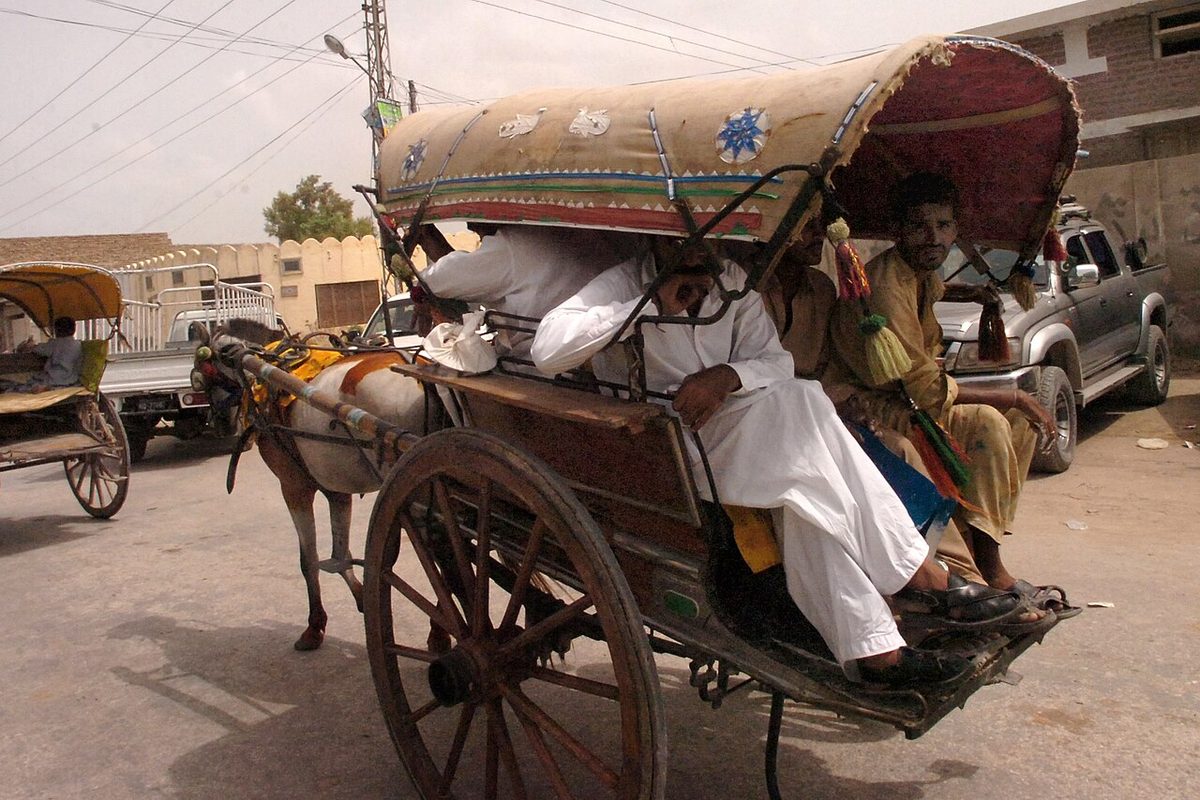
You typed "horse for sale in India" into a search bar, and now you have a screen full of listings. Some have good photos. Some have confident wording. And you are sitting on a farm in the United States trying to work out whether any of it is a real opportunity or a long, expensive detour.
Here is the honest position. A listing can tell you three useful things: the age word, the height, and sometimes a breed name. Learning to read those three things properly will save you a lot of grief. Almost everything else — the price, the paperwork, the shipping, the vet work, the running costs — depends on where you are and who you deal with, and you will have to get those answers from people near you rather than from an advert.
Worth remembering as you look: horses are not strangers to this continent. They evolved here over the past 45 to 55 million years, from a small multi-toed animal called Eohippus into the big single-toed animal we know. They died out in North America at the end of the Ice Age, and came back with European explorers, starting with Columbus's second voyage in 1493. As for when people first tamed and rode them, some researchers date domestication to around 4000 BCE in Central Asia with the Botai culture and say it was widespread by 3000 BCE; others say the exact dates are still argued over and put the first riding at roughly 3500 BC, with bit-wear evidence near the Dnieper and Don rivers about 3000 BC and chariot burials about 2500 BC.
Read the ad's words the way a horseman reads them
Horse sale words are not loose descriptions. They have set meanings, and mixing them up is the fastest way to buy the wrong animal.
- Foal — either sex, under one year. A foal still nursing is a suckling; once weaned it is a weanling.
- Yearling — either sex, between one and two years old.
- Colt — a male under four. Filly — a female under four. Calling any young horse a "colt" is a very common mistake.
- Mare — a female four years and older. Stallion — an uncastrated male four years and older.
- Gelding — a castrated male, at any age.
Paperwork age and real age can differ
For most competition purposes in the Northern Hemisphere, a horse gains a year every January 1 (it is August 1 in the Southern Hemisphere). So the age on a competition record is not always the age the animal has actually lived. Endurance riding is the exception — it uses the horse's real calendar age.
Even the colt and filly cut-off is not universal once you get into racing. The general rule puts colts and fillies under four, but practice varies between racing bodies: some count colts and fillies as under five, as Thoroughbred racing in the British Isles does, while others use under four, as Australian Thoroughbred racing does. If you are buying with a competition career in mind, check how the relevant body counts age before you assume anything.
Hands, withers, and matching size to the job
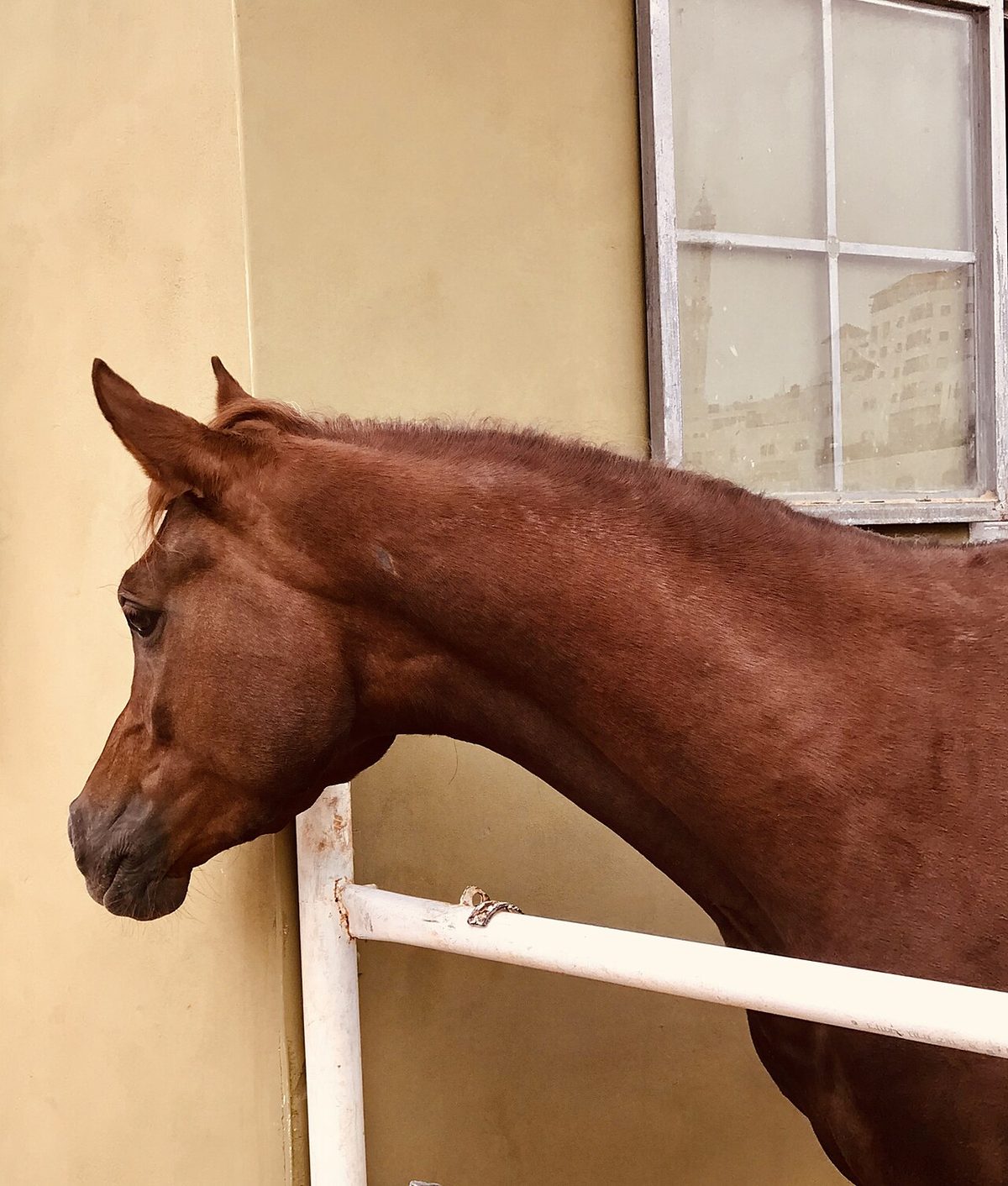
Height is measured at the highest point of the withers — where the neck meets the back. That point is used because it stays put, unlike a head or neck that the horse can raise and lower.
In English-speaking countries, including the US, height is written in hands and inches. One hand is 4 inches (101.6 mm). You write the full hands, then a point, then the extra inches, then "h" or "hh". So a horse advertised at 15.2 h is 15 hands plus 2 inches — that is 62 inches, or 157.5 cm. It is not "fifteen point two" hands.
The three practical size bands
- Light riding horses — usually 14 to 16 hands (56 to 64 inches, 142 to 163 cm), weighing 380 to 550 kilograms (840 to 1,210 lb).
- Larger riding horses — usually from about 15.2 hands (62 inches, 157 cm) up to 17 hands (68 inches, 173 cm), weighing 500 to 600 kilograms (1,100 to 1,320 lb).
- Heavy or draft horses — usually at least 16 hands (64 inches, 163 cm) and sometimes up to 18 hands (72 inches, 183 cm), weighing about 700 to 1,000 kilograms (1,540 to 2,200 lb).
Size comes from breed, but feeding affects it too, so two horses of the same breed will not always end up the same size.
Temperament type matters as much as inches
Breeds are loosely grouped by temperament. Hot bloods are spirited, with speed and endurance. Cold bloods — the draft horses and some ponies — are built for slow, heavy work. Warmbloods come from hot and cold crosses, many developed in Europe for particular riding jobs. There are more than 300 breeds in the world today, from the Shire, which produced the largest horse on record, Mammoth, to the Thoroughbred and the Standardbred. If a listing names a breed you have never heard of, treat that as a question for a horse person near you, not something to guess at.
Understand that this is a 25 to 30 year decision
Most domesticated horses start training under saddle or in harness between two and four years old, but they are not fully grown until five. A young horse is not a shortcut to a working animal.
At the other end, average life expectancy is 25 to 30 years, depending on breed, management and environment. A few live into their 40s. The oldest verifiable horse was Old Billy, a 19th-century animal that reached 62, and Sugar Puff, listed by Guinness as the world's oldest living pony, died in 2007 at 56. Buying a four-year-old is not a season's commitment. It is potentially a quarter of a century of feed, feet and vet care.
If you are thinking about breeding
A mare carries her foal for approximately 11 months, and the foal can stand and run shortly after birth. Most domesticated foals are weaned at five to seven months, although weaning at four months causes no adverse physical effects. That is slow maths compared with most other livestock — plan around it rather than against it.
What the animal needs from you day to day
Horses are built to run from danger. They have a good sense of balance and a strong fight-or-flight response, and your handling, fencing and shelter all have to respect that. They can sleep standing up as well as lying down, and younger horses sleep considerably more than adults. If your winters shut down outdoor work, a riding hall — an indoor arena or school — lets you keep training horse and rider in any weather, and can host indoor competition too. What that costs to build or rent where you are is a local question; get quotes nearby.
Be clear about the job before you buy
Horses still earn their keep in plenty of ways, and the useful exercise is to name yours before you shop.
- Working uses: controlling herd animals on a ranch, police work, volunteer mounted patrols, mounted search and rescue, public service, and ceremonies such as parades and funerals. In some parts of the world horses are still used for farming itself.
- Recreation and services: trail riding, hacking and fox hunting. There is public access to horse trails in almost every part of the world, and parks, ranches and public stables offer both guided and independent riding.
- Therapy: specialised para-equestrian competition, and non-competitive riding used to improve human health and emotional development.
- Competition: dressage, show jumping and eventing are the three internationally recognised forms, run under the rules of the International Federation for Equestrian Sports. Equestrian events first appeared at the Olympics in 1900 and all three were included by 1912. Beyond those there is endurance riding, reining, tent pegging, vaulting, polo, driving and rodeo, often grouped together at horse shows.
- Racing: in the US, horse racing is governed by the Jockey Club, and the United States Trotting Association organises harness racing. The Standardbred dominates harness racing in both trotting and pacing, while the Thoroughbred holds the pre-eminent reputation as a racing breed.
If endurance appeals, note the scale before you buy for it. Top-level races usually run 50 to 100 miles (80 to 161 km) over mountainous or other natural ground, with scheduled stops where vets take vital signs, check soundness and decide whether the horse is fit to carry on — the winner is the first horse to finish and be passed fit. Newcomers ride limited distance events of about 20–25 miles (32–40 km).
Horses also produce meat, milk, hide, hair, bone and pharmaceuticals extracted from the urine of pregnant mares. Whether any of those can legally be sold where you farm, and whether there is a buyer within reach, varies locally — check before you build a plan on it. And be aware that nobody can hand you reliable earnings figures for trail rides, lessons, therapy work or breeding. You will have to build those numbers from local quotes and local demand.
The money question the listing does not answer
There is no horse price here to give you, for India or for the United States. The price records we keep for the US come to 254 rows, and they cover seven commodities only — chicken meat, cattle meat, hen eggs, cow milk, turkey meat, pig meat and honey. There is no equine line at all, so any horse figure would be invention.
What we can show you is what other US livestock output is worth per tonne, for a sense of scale:
- Cattle meat: average USD3448 per tonne, ranging USD2425 to USD4387
- Pig meat: average USD1451 per tonne, ranging USD1107 to USD1892
- Chicken meat: average USD1581 per tonne, ranging USD919 to USD2357
- Turkey meat: average USD1860 per tonne, ranging USD1038 to USD2800
- Hen eggs: average USD3363 per tonne, ranging USD1374 to USD8789
- Cow milk: average USD499 per tonne, ranging USD381 to USD600
- Honey: average USD5947 per tonne, ranging USD5600 to USD6636
Most of those series run to 2025-01-31, with honey to 2024-12-31. They will not value a horse for you, because a horse's worth sits in the work it does, not in a commodity price. For the numbers that actually decide this — the asking price, hay and feed, pasture and fencing, stabling, farrier, dentistry, routine vet care, boarding and insurance — ring a local dealer, your vet and your farrier and get real quotes for your area. Do not budget from a figure you found online.
Rules and borders: assume nothing
India's livestock rules are worth understanding for one reason: they show how much can vary by state, and how fast things can change.
Preservation, protection and improvement of stock, prevention of animal diseases, and veterinary training and practice sit with state legislatures in India, under Entry 15 of the State List of the Seventh Schedule. So states legislate for themselves. On cattle, 20 out of 28 states had laws regulating slaughter, while Arunachal Pradesh, Goa, Kerala, Meghalaya, Mizoram, Nagaland, Tripura and West Bengal, plus the union territories of Dadra and Nagar Haveli and Daman and Diu, and Puducherry, have no restrictions. Some states require a "fit-for-slaughter" certificate based on things like age, sex and whether the animal is still economically viable; others ban slaughter outright. The Supreme Court upheld the constitutional validity of state anti-slaughter laws on 26 October 2005. On 26 May 2017 a federal ministry banned the sale and purchase of cattle for slaughter at animal markets nationwide, and the Supreme Court suspended that ban in July 2017.
Much of that reflects culture as well as law: cattle are revered in Hinduism, Jainism and Buddhism, and Ahimsa underpins opposition to slaughter. India's per capita beef consumption is the lowest among the countries surveyed, even though a 2016 review found India had grown into the world's largest beef exporter, at 20% of world beef trade, on the strength of its water buffalo meat industry. On the export side, meat on the bone and buffalo carcasses and half carcasses are prohibited; only the boneless meats of buffalo, goat, sheep and birds are permitted for export.
Every bit of that is about bovines and other meat animals. None of it sets out a rule, permit or market restriction for horses. So take this as the practical point rather than the answer: rules differ by state and can shift at short notice, and nothing above tells you whether a live horse can leave India or enter the United States.
What you must check yourself, before any money moves
- Whether live horses can be exported from India and imported into the US at all, and which offices issue the paperwork.
- Health testing, vaccination, quarantine and disease screening — for the border, and for moving the animal across US state lines afterwards.
- Freight, crating, insurance and who cares for the horse in transit.
- The seller. Buying an animal you have not touched, from a market you do not know, is where distance buyers get hurt. Have a vet acting for you — not for the seller — examine the horse and tell you what that examination covers.
Where that leaves you
Read the ad properly first: the age word, the height in hands measured at the withers, and whether the size class matches the job you have in mind. Then be realistic about time — training starts between two and four, full growth comes at five, and you may be feeding this animal for 25 to 30 years.
After that, stop reading and start phoning. Your nearest vet, farrier, feed supplier, dealer and state animal health office hold the numbers that decide whether a horse for sale in India is a genuine buy or an expensive photo. A good picture and a confident advert are not a plan. Local quotes, written paperwork and an independent vet's opinion are.
 Menu
Menu
💬 Comments
Login to comment
No comments yet. Be the first to share your experience!