You already know the sums on your vegetable plot. Sprays and fertiliser cost more every season. The buyer who turns up at your gate still names the price. And now you keep hearing that organic vegetables fetch more, that city shoppers are afraid of pesticide residues, and that organic farming is government policy.
So the question is fair: if you stop using chemicals, will the money follow? Some parts of this are clear, and some you will have to work out on your own land. Here is what is known — the size of the market, the support behind it, where farmers get stuck, and which questions only your soil, your labour and your buyers can answer.
The demand is real, and it is growing steadily rather than wildly
Organic vegetables in Thailand are no longer a small corner of the trade. The sector has moved from a niche market into a growing industry, and the produce appeals to shoppers at home as well as buyers overseas.
The scale looks like this:
- The Thailand organic vegetable farming market is put at USD 114 Million in 2025.
- It is expected to reach USD 131 Million by 2032.
- 2021 was a hard year — the market fell 3.5% as the pandemic broke supply chains and shoppers spent less.
- It recovered after that: 2.2% growth in 2022, then 2.8% in 2023.
Growth from here is expected, but modest, and the figures do not all agree. One reading gives a growth rate of 2.0% a year from 2026 to 2032; the other puts it at 3.0% to 3.4% over the same years. Either way, plan for steady demand, not a boom.
What is driving it is health. Shoppers are more aware of health and the environment, and they worry in particular about pesticide residues in their food. That worry becomes demand for chemical-free vegetables, and that demand changes what farmers plant.
Where you fit in the national picture
If you farm a small plot, you are not the exception in Thailand. You are the rule.
- Roughly 90 percent of the country's farm population hold small plots.
- Around 40 to 50 percent of Thailand's total land area is farmed.
- Thailand is the leading agricultural exporter in ASEAN, and ranks eighth in the world.
Other numbers depend on who is counting. Farming's share of the economy is given as nearly 10% of GDP by one count, around 9 percent by another, and 9% for 2023 by a third. The share of the workforce in farming is put at about a third by some counts and at roughly 37.5 percent by others. The shape is the same either way: agriculture carries a modest slice of the money and a large slice of the people. That is why smallholders sit at the centre of every plan for change, including organic.
Organic is official policy, not a passing fashion
Organic farming in Thailand did not start in a ministry. It started with farmers. In the 1980s, farmers and NGOs formed the Alternative Agriculture Network (AAN) to promote sustainable farming and share knowledge at the grassroots. The movement grew quietly for years before policy caught up.
Organic agriculture reached the national policy agenda in 2005. The cabinet then approved the First National Strategic Plan for Organic Agriculture Development (2008–2011), built on four strategies:
- Strengthening knowledge and innovation
- Developing traditional organic farming
- Building commercial organic agriculture
- Improving coordination between government agencies
A further national organic step followed in 2012. Today organic farming is one of five official sustainable farming systems, alongside integrated farming, natural farming, agroforestry and New Theory farming. The BCG economy model is named as the framework for transforming Thai agriculture, and there is a climate change strategy tied to food security. On the ground, government programmes push conservation tillage, buffer plantings and efficient fertiliser schemes, plus rural development, inclusive finance and digital tools. Supportive policy and better access to farm technology are both credited with part of the market's recent growth.
One caution. Policy still pulls two ways — incentives for conventional farming sit next to incentives for sustainable farming, and that tension has not been resolved. Credit, subsidies and tax measures are mentioned in the plans, but which scheme is open to you, and how to apply, varies by province and by year. Ask at your district or provincial agricultural office instead of assuming. Chanthaburi, for instance, works to its own Provincial Agricultural and Cooperative Development Plan (2023–2027); your province will have its own priorities written down too.
The two things that stop most farmers
Certification
Certification comes up again and again as one of the sector's biggest obstacles. A certificate is what turns "no chemicals, I promise" into something a supermarket buyer or an export agent will pay extra for. Certification programmes in Thailand are opening premium and export markets — but the momentum so far is in rice, rubber and palm oil, not vegetables.
Which standard to aim for, what the inspection involves, how long you must farm clean before you qualify, and what it all costs in baht: these depend on the standard and on your own situation, and they are not worth guessing at. Sit down with your provincial agricultural office, and talk to growers near you who already hold a certificate. Their paperwork is the most useful thing you will read this year.
Knowing what to do
Farmer education is the other obstacle named. Going organic is not one decision, it is a hundred small ones about soil, pests, weeds, timing and record-keeping. Which vegetable varieties hold up in your heat and humidity, which pest and disease treatments are allowed and actually work in the tropics, and how much compost or manure your land needs — those answers are local. Get them from organic growers nearby, from your provincial office, and from a dealer who knows what is permitted for certified production.
Getting paid properly: the chain from your field to the buyer
A study of the organic vegetable supply chain in Chanthaburi Province went looking for the weak links. It was small — three organic vegetable farmers, one collector, one transporter and 15 organic vegetable consumers — but the findings will look familiar. It examined planning, buying against purchase orders, delivery into storage and production for sale, and found four supporting areas needing work:
- Warehouse efficiency planning
- Procurement efficiency assessment
- Transportation management
- Production efficiency assessment
The advice to organic vegetable farmers was direct: coordinate the chain better and run it more efficiently, and you cut costs, hold quality and raise income. Notice that none of it is about growing more. It is about losing less between the field and the money.
Sell closer to the buyer
Digital platforms are now connecting Thai farmers directly to buyers. That shortens the chain and improves price transparency, which makes you more competitive. When you can see what your produce is worth, it is much harder for anyone to talk you down.
Post-harvest handling and storage matter for the same reason: better handling reduces quality loss and gives you a buffer when prices swing, so you are not forced to sell everything the day you cut it. Leafy vegetables are demanding here, and what packing and cooling your buyer expects will depend on that buyer. Agree it before you plant, not after.
The export angle
Thai agricultural exports are worth $49.2 billion, about 17.3% of total export value — but they are narrow. Fruit, rice, chicken, cassava and rubber make up 87.7% of agricultural exports, and 67.5% goes to just five countries. Officials want to widen that by adding value through future food, organic products and agricultural extracts, rather than leaning on lightly processed goods and a handful of markets. Diversification into high-value fruits, vegetables, medicinal herbs and other non-staple cash crops is being promoted for the same reason. Organic vegetables sit right where the country says it wants to grow.
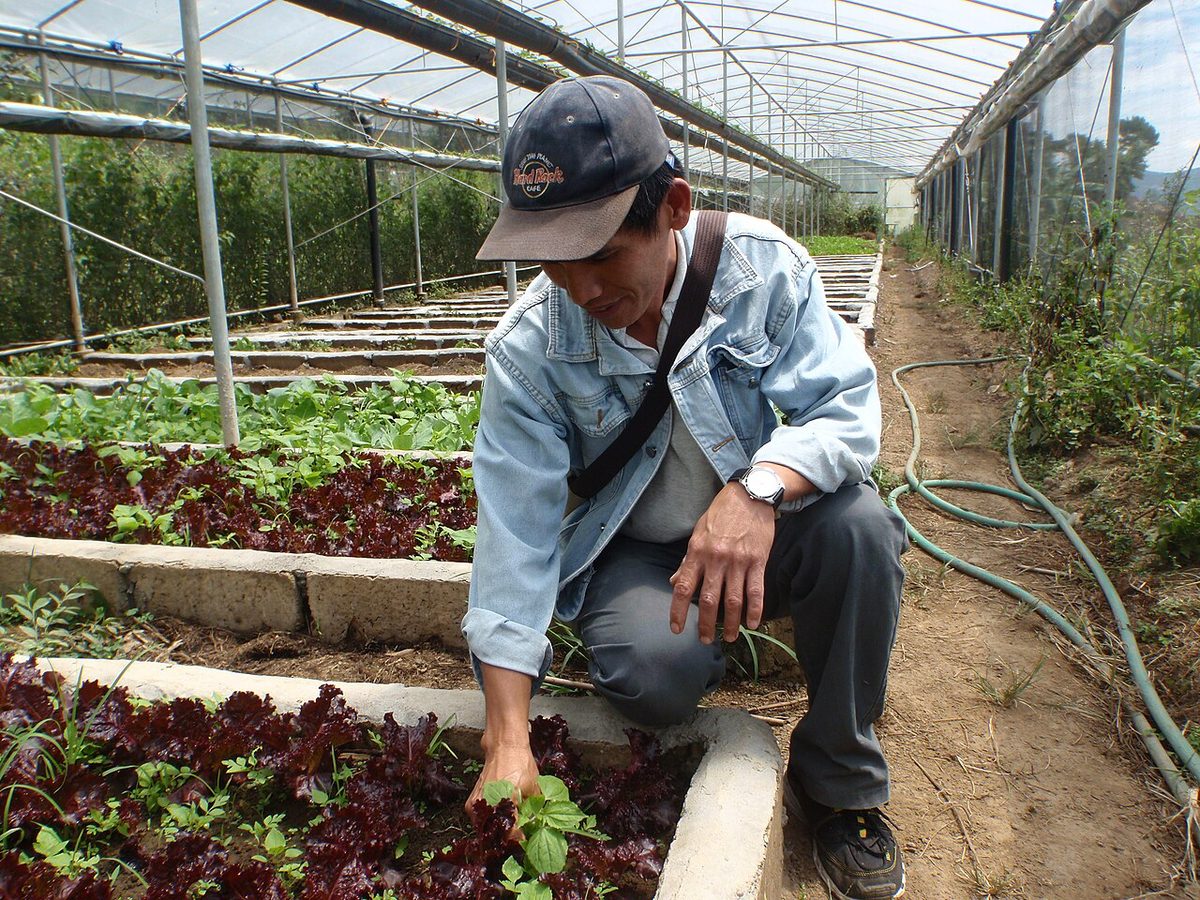
Can a small plot really pay?
Research on sustainable farming systems for small-scale Thai farmers found something worth holding onto: the sustainable alternatives were not only sound for the land, they were financially viable. That evidence helped push policy beyond conventional farming.
On a small plot, the usual route is mixing rather than specialising. Integrated farming means two or more activities on the same land — crops with livestock, crops with a fish pond, vegetables alongside both. It works because:
- One activity's waste feeds another, so you buy fewer chemical inputs
- Limited land gets used more fully
- Income comes from more than one direction, which matters when one crop fails
Agroforestry — mixing crops with tree species — is spreading on similar logic, improving soil, reducing erosion and spreading income.
What the right mix is on your land depends on your water, your labour and your market; there is no standard recipe to copy. The same goes for the money. Costs, yields, profit per rai, and what organic vegetables fetch per kilogram at your gate compared with a market stall or a modern supermarket all move with the crop, the season and the buyer. Collect those figures from growers and traders near you, and write your own budget before you convert the whole plot.
One last thing. Studies of small-scale Thai farmers who have switched to organic look at the link between farm soil, the nutritional quality of the food it grows and the health of the people eating it, along with how resilient those households feel. Many of those farmers describe their practices and their relationship with nature in careful, mindful terms — as something they grew up with, not something learned from a manual. If that sounds like you, you are further along than you think.
Rain, drought and soil: the risk side
Weather is the part nobody can promise you. Monsoon rains are less predictable than they were, and both drought and flooding are named as critical risks for Thai farming. Climate-smart practices are spreading in response: over 60% of Thai farms were expected to be using climate-smart and sustainable practices by 2025, and there is a target to lift sustainable crop production by 30% by 2026. Those figures cover sustainable practice broadly, not organic vegetables on their own.
Two tools get named: precision irrigation and smart weather data, used to time inputs better and bring down water and fertiliser costs. Resilient farm management and diversification are the wider trend. Nobody has compared how organic and conventional vegetables perform in a flood or drought year, so plan for the weather you actually get.
It is also worth remembering what the chemical decades left behind — degraded soil, contaminated groundwater, heavy pesticide use, pest resistance, and greenhouse gases from burning rice stubble. Bringing chemical inputs down is now a stated priority. Rebuilding soil is slow work, and it is the main asset organic farming hands you.
Where you farm changes the crop list. In northern Thailand, mountainous ground, cooler temperatures and sheltered valleys suit temperate crops such as strawberries, plums, persimmons, kiwis, peaches and passion fruit. What suits your own heat, humidity and rainy season is a local question, not a national rule.
So, does it pay?
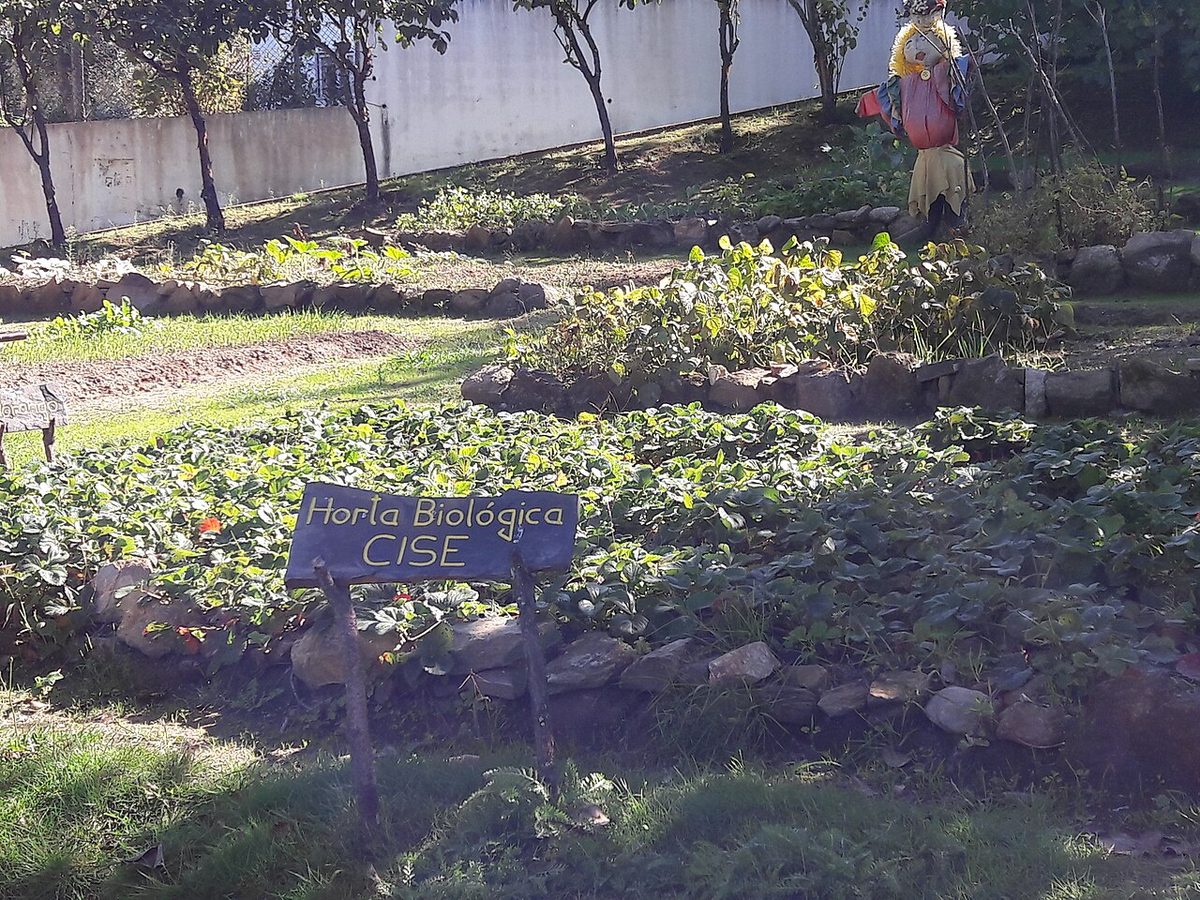
Demand is there and growing, slowly and steadily. Policy is on your side, at least on paper. Small plots like yours are exactly the ones the research says can make sustainable farming work. What decides it in your case is the unglamorous part: the certificate, the buyer, and the chain in between.
If you are going to try, try it like this:
- Start with part of your land, not all of it
- Ask your provincial agricultural office about certification and what support exists this year
- Find your buyer before you plant, and agree how the vegetables will be packed and delivered
- Visit certified growers nearby and copy what works
- Keep records from day one — what you spend, what you harvest, what you are paid
Organic vegetable farming in Thailand rewards the farmers who get the selling right as well as the growing. Get both, on a plot you can manage well, and it is a real business.


 Menu
Menu
💬 Comments
Login to comment
No comments yet. Be the first to share your experience!