🍪 Cookie Consent
We use cookies to improve your experience, analyse how the site is used, and show relevant content. By choosing Accept you agree to that. See our
Privacy Policy.
Cow Farming Economics: Real Global Prices and What They Mean for You
Before investing in cattle, understand the real numbers. Our analysis of over 5,000 global price observations reveals what live cattle and milk actually sell for across markets worldwide — and what it means for your bottom line.
Right now, live cattle are selling for somewhere between €2 and €8 per kg worldwide, averaging about €5 per kg. Milk prices are tracked in more than 20 currencies, averaging EUR464 per tonne and USD486 per tonne — and those raw numbers tell you something real about what a cattle operation can actually earn, if you know how to read them.
What the Market Actually Pays for Cattle Right Now
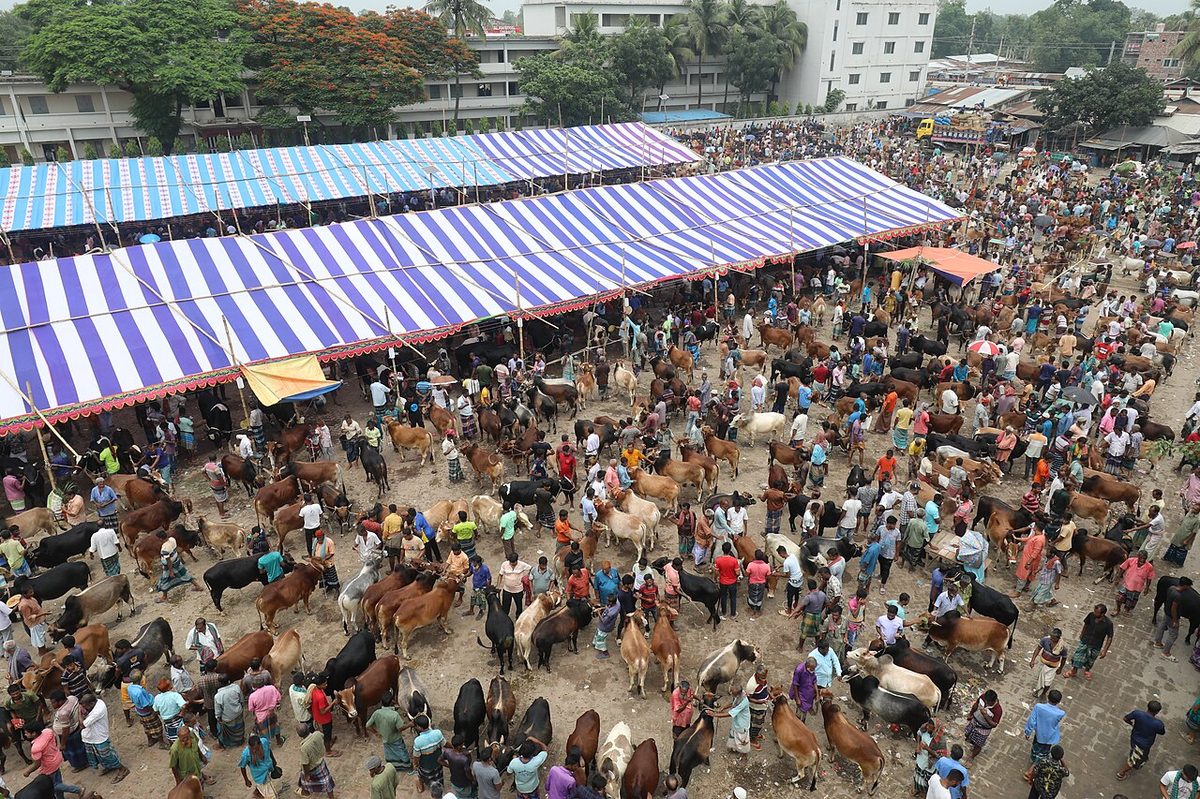
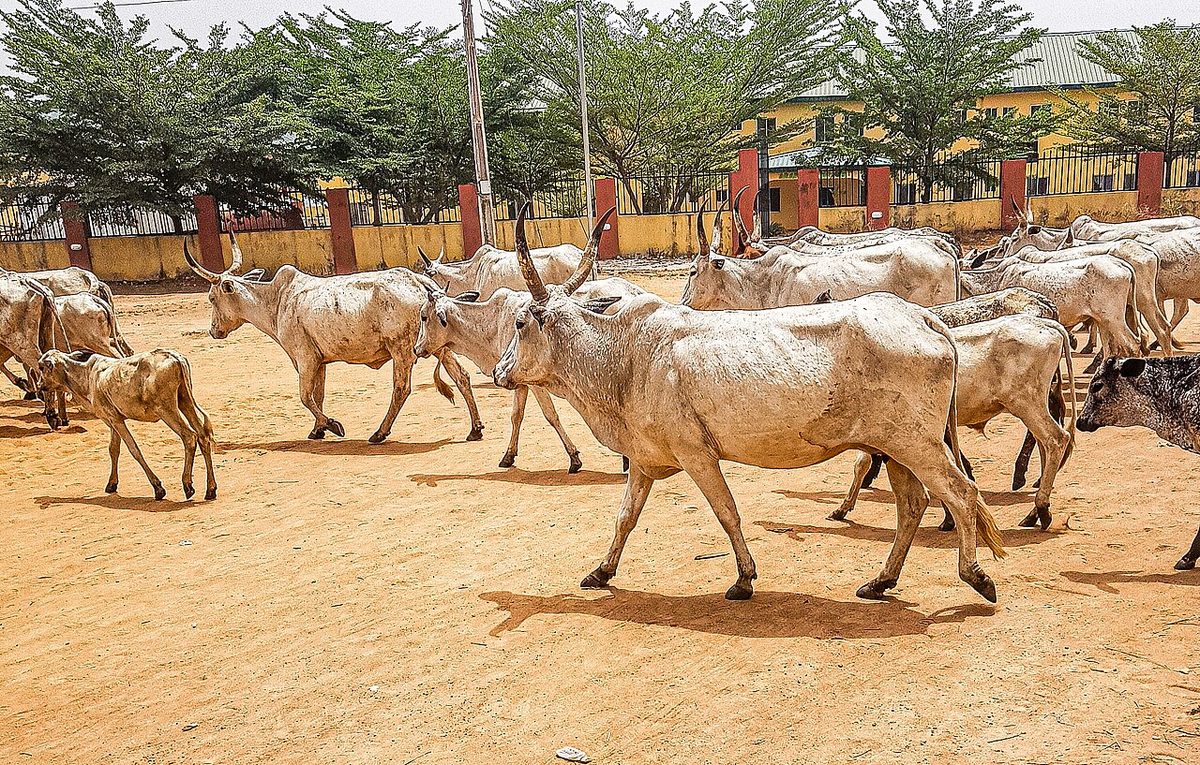
A cow market 01 by Zaheed Sarwer Khan (CC BY 4.0) · source
If you are thinking about buying or selling cattle, the single most useful thing you can know is the going rate in your currency and your region. Our own dataset — drawn from FAOSTAT and covering 5,397 rows of worldwide price records — gives you a concrete benchmark. Based on 1,962 live cattle price observations collected worldwide, live cattle prices range from €2 to €8 per kg, with an average of €5 per kg. That €5 figure is a global midpoint, not a guarantee. Prices in your area will be higher or lower depending on local supply, demand, breed quality, and how close you are to processing facilities.
The most recent observations in this dataset were recorded on 2026-09-27, so these numbers reflect the current market rather than outdated reports. That matters a great deal when you are making real investment decisions. Generic blog posts will tell you that "cattle prices vary" — and they do — but having a hard range and a real average lets you sanity-check any price a dealer quotes you.
Milk Prices Tracked Across 20+ Currencies
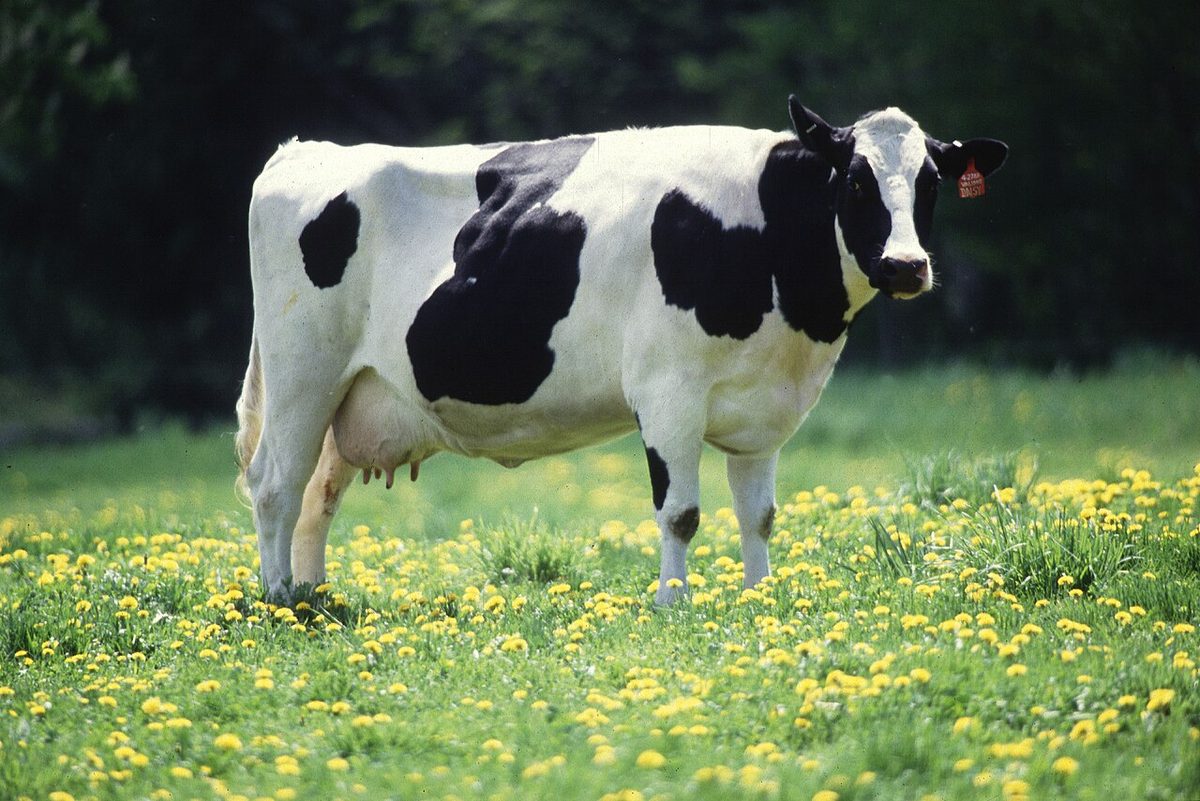
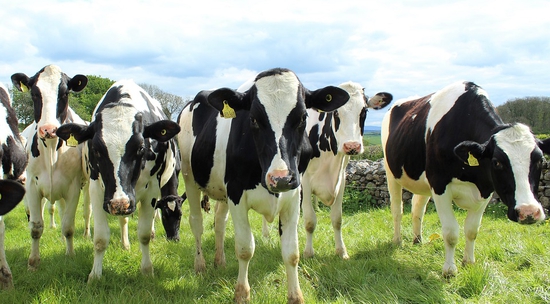
Cow female black white by Keith Weller/USDA (Public domain) · source
Cow milk is traded in an even wider range of currencies than live cattle. Our data tracks milk prices in more than 20 currencies, including EUR, USD, ILS (Israel), TRY (Turkey), PLN (Poland), SEK (Sweden), CAD (Canada), and many others across Asia, Africa, and Eastern Europe. The breadth of currencies here is itself a signal: FAOSTAT's coverage truly spans the globe, from the eurozone to Central Asia.
In euro terms, cow milk prices range from EUR35 to EUR3,795 per tonne, averaging EUR464 per tonne. In US dollars, the range is USD381 to USD627 per tonne, averaging USD486 per tonne. Those ranges are wide, and that width is informative. It tells you that local market conditions — subsidies, transport costs, seasonality, processing infrastructure — make an enormous difference to what a dairy farmer actually receives. A farmer in Western Europe and a farmer in parts of Asia may be selling the same product at prices that differ by a factor of ten or more.
If you are entering dairy, look up the price series for your own currency first. If your country appears in the dataset, you already have a benchmark. If it does not, compare with a neighboring country that shares similar climate and economic conditions.
The Biology That Drives Your Bottom Line
Cow Parsnip (CC BY-SA 3.0) · source
Prices are only half the picture. The other half is biology — how fast your animals grow, how often they reproduce, and how long they stay productive. These are the facts every cattle farmer works with, whether you run a one-cow dairy or a five-hundred-head feedlot.
Lifespan and the Production Cycle
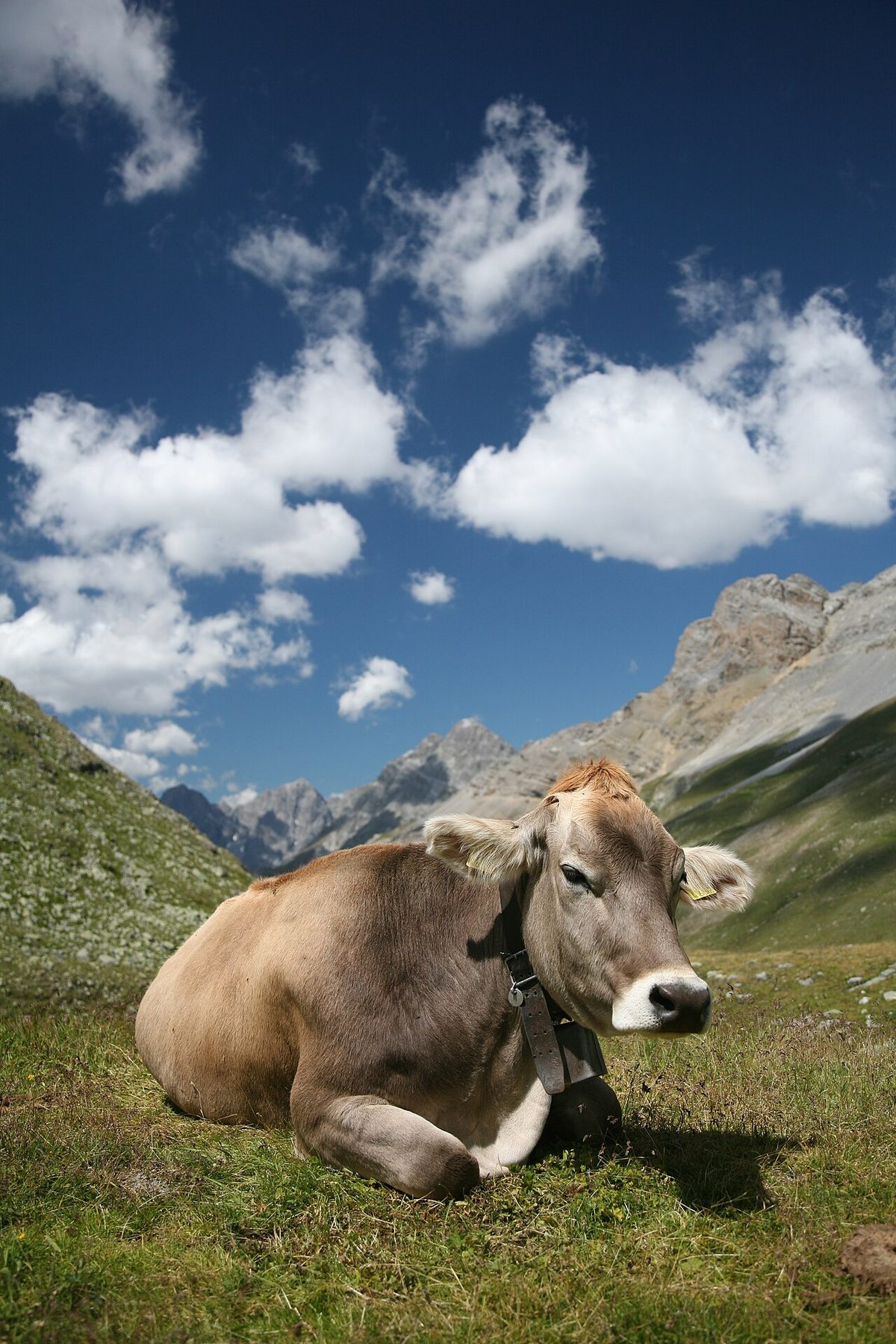
CH cow 2 by Daniel Schwen (CC BY-SA 3.0) · source
A cow's natural lifespan is 25 to 30 years. In the wild, or on a smallholder farm where animals are kept into old age, that is what you can expect. In commercial farming, the reality is far shorter — and understanding that gap is essential to your economics.
Beef cattle typically go to slaughter at around 18 months of age. Dairy cows are usually sent to slaughter at about five years old. In both cases, the animal is being harvested at a small fraction of its natural lifespan. From a business standpoint, this means your profit per animal is compressed into a narrow window. You need that animal to convert feed into weight or milk efficiently during that window, because you do not have years of slow returns to absorb losses.
Reproduction Basics
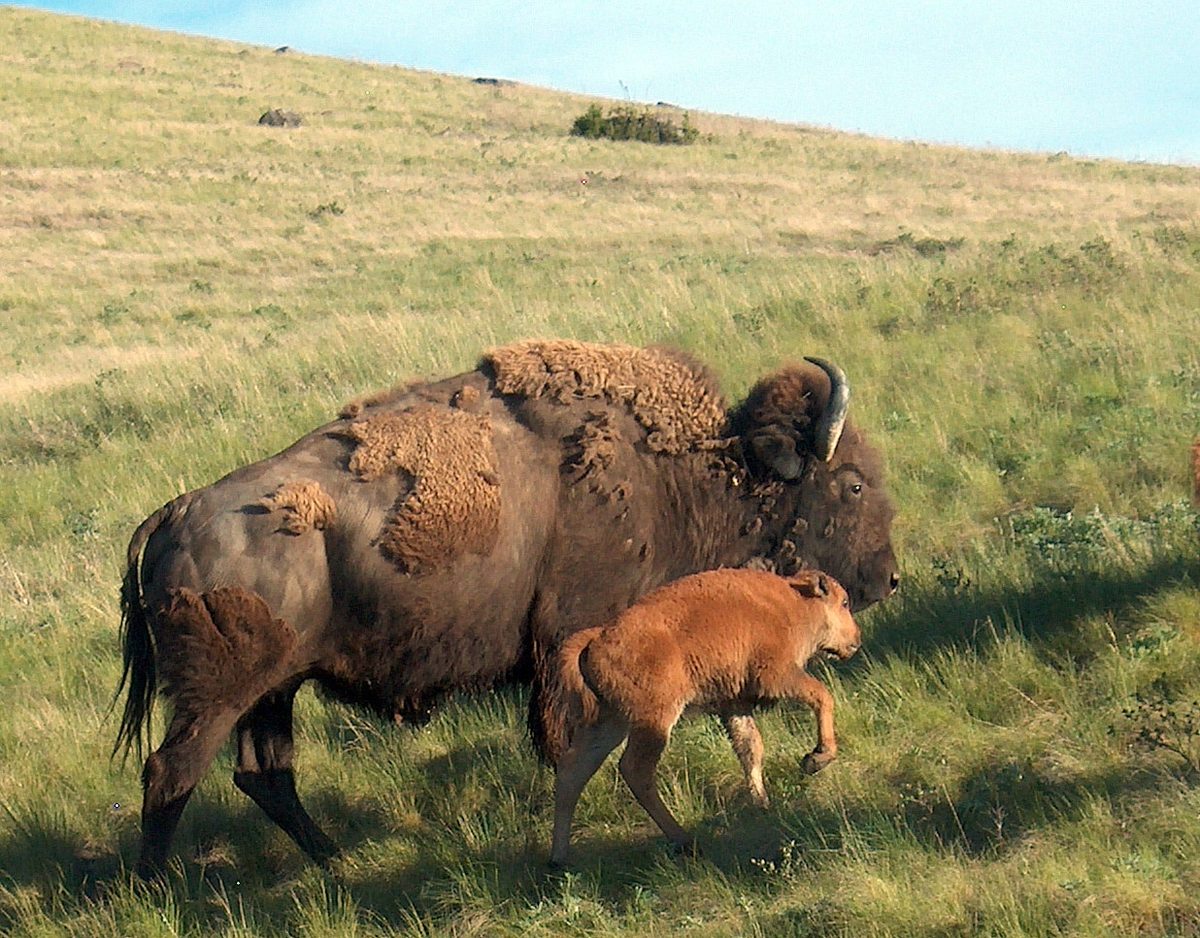
Bison Cow and Calf by USFWS Mountain Prairie (Public domain) · source
Cows have a gestation period of roughly nine months, and the average calving interval — the time between successive births — is about 391 days, or just over 13 months. That interval matters because it directly limits how many calves one cow can produce in her productive lifetime.
The sex ratio at birth is approximately 52 male to 48 female calves, meaning you will get slightly more bulls than heifers naturally. Calving mortality within the first year of life is about 5% — not huge, but enough to factor into your planning. If you are running a breeding herd, plan for a small loss and keep records so you can spot if your own mortality rate runs higher than the average.
Semi-wild Highland cattle heifers, for comparison, give birth for the first time at 2 to 3 years of age. That is a useful benchmark if you are working with hardy, low-input breeds suited to rough terrain and cold climates.
Cattle Breeds and Where They Belong
Hariana cattle by Philipola (CC0) · source
More than 1,000 recognized cattle breeds exist worldwide, grouped into three main types. Choosing among them is one of the most important decisions you will make, and the right choice depends heavily on your climate, your available feed, and what market you are selling into.
The Three Main Cattle Types
Cattle grid on Main Dale by Stuart Logan (CC BY-SA 2.0) · sourceTaurine cattle are distributed across Europe and temperate Asia, the Americas, and Australia. These are the classic European dairy and beef breeds — Holsteins, Angus, Herefords, and their many derivatives. They perform well in temperate climates with good pasture or access to concentrated feed.
Zebu cattle are found mainly in India and in tropical areas of Asia, the Americas, and Australia. They are heat-tolerant and resistant to many tropical diseases. If you are farming in a hot climate, a zebu or zebu cross is often the most practical choice. There is an important cultural note here: cattle are considered sacred in Hinduism, and it is illegal to kill them in some parts of the Indian subcontinent. This directly affects beef market availability and pricing in India and neighboring countries. Zebu cattle there are primarily kept for milk and as working animals, not for meat.
Sanga cattle are found primarily in sub-Saharan Africa. These are the cattle of the African savanna — medium-sized, heat-tolerant, and often well-adapted to seasonal feed scarcity.
These three types are sometimes classified as separate species or subspecies by different authorities, which reflects their genuinely distinct evolutionary paths. Each domestication event — one in central Anatolia, the Levant, and Western Iran giving rise to taurine cattle, and a separate one on the Indian subcontinent giving rise to zebu cattle — happened independently.
Size Matters: How Much Do They Weigh?
Cow Paddle 20201013 110634 by Irid Escent (CC BY-SA 2.0) · source
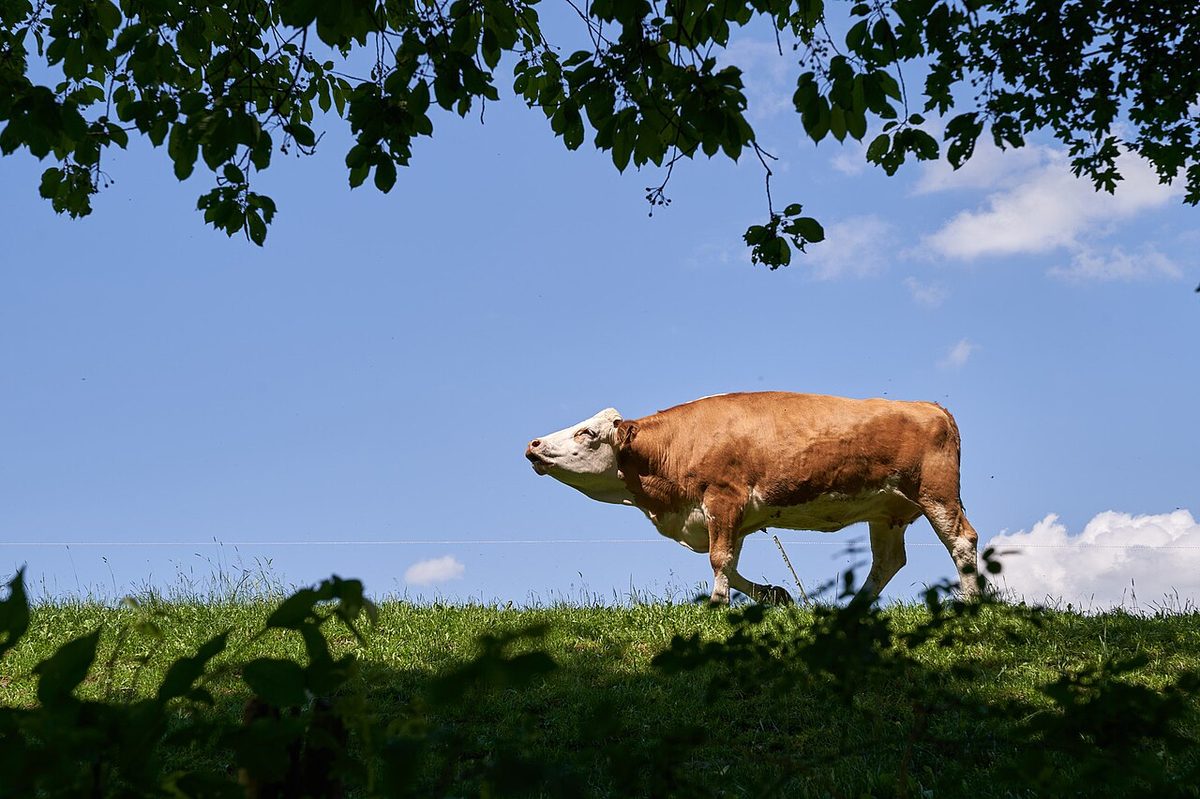
Breed size has a direct effect on how much meat or milk you get per animal and how much feed you need to put in. Hereford cows typically weigh 600 to 800 kg, while Hereford bulls reach 1,000 to 1,200 kg. The Chianina, by contrast, is the tallest and heaviest recognized breed — mature bulls can reach up to 1,280 kg and stand up to 1.8 metres at the shoulder. A Chianina bull is roughly the size of a small horse, and it will eat accordingly.
If you are starting small or have limited grazing land, a smaller breed will generally serve you better. If you have the feed resources and are aiming for large beef animals, a heavier breed makes more sense.
How Cattle Turn Grass Into Meat and Milk
Understanding how a cow digests its food helps you understand why it thrives on grass when other animals cannot — and why the quality of your pasture is so directly tied to the quality of your profit.
Cattle digest cellulose through a four-compartment stomach, the largest of which is the rumen. The rumen hosts a vast and essential community of microbes. Bacteria such as Fibrobacter succinogenes break down plant fibre that monogastric animals (including humans) cannot digest. Fungi including Neocallimastix species also play a role. The reticulum is sometimes called the honeycomb; the omasum absorbs water and nutrients; and the abomasum functions much like a human stomach, using acids and enzymes.
One behaviour that flows directly from this system is cud-chewing. Cattle regurgitate partially digested food and re-chew it before it passes to the later stomach compartments. This mechanical breakdown allows microbes to access more fibre and extract more nutrition from the same mouthful of grass. From a farmer's perspective, this is why cattle can convert pasture — which you cannot eat and which pigs cannot efficiently digest — into protein that you can sell. It is also why good pasture management is not optional; it is the foundation of the whole system.
A Quick Word on Diversification: Cowpea Crops in India
Not everything in this dataset is about livestock. Our price records also cover cowpea — the vegetable legume — at Indian markets, and the numbers may interest farmers who grow it alongside their cattle or as a complementary cash crop.
Cowpea prices in India, recorded in Indian Rupees, vary significantly by variety. 'Cowpea(Veg)' — our most widely recorded variety, with 514 observations — ranged from ₹10 to ₹110 per kg, averaging ₹47 per kg as of 2026-09-24. 'Cowpea(Veg)(FAQ)' — a certified or graded sub-variety with 54 observations — ranged from ₹24 to ₹75 per kg, averaging ₹48 per kg. 'Bean Barbati', a related entry with 43 observations, ranged from ₹8 to ₹80 per kg, averaging ₹35 per kg.
The key takeaway is that variety and quality grade make a real price difference. The average prices between the two main cowpea varieties are close — ₹47 and ₹48 — but their price ranges differ, and Bean Barbati sits noticeably lower. If you are growing cowpea, know which variety you are producing and what grade your buyers expect.
It is worth noting that cowpea prices were last updated on 2026-09-24, while cow milk prices in the same dataset reflect data from 2025-01-31 or 2024-12-31. Different commodities are updated on different schedules, so always check how recent the figures are before you make decisions based on them.
The Bigger Picture
Cattle farming is responsible for approximately 7% of global greenhouse gas emissions, making it a significant contributor to global emissions and a focus of environmental policy discussions worldwide. That figure does not mean cattle farming is inherently unsustainable — it means it is an industry that carries a real environmental cost, and that cost is increasingly reflected in regulations, consumer preferences, and market access rules in many countries.
If you are expanding or starting a new operation, think about emissions not just as an environmental issue but as a long-term business risk. Carbon pricing, methane reduction targets, and export-market requirements are all moving in the same direction. Farmers who take steps now — better herd management, rotational grazing, feed additives that reduce methane — may find themselves better positioned as rules tighten.
Conclusion
Cattle farming remains one of the most significant agricultural sectors worldwide, and prices will always reflect supply, demand, feed costs, and policy. The numbers in this article are a snapshot, not a prediction. What stays true is that farmers who know their true costs — not just feed and vet bills, but land, labour, and environmental impact — are the ones who survive market swings.
Keep a close eye on your local market reports, government announcements, and export trends. Talk to other farmers and your local agricultural co-op. Small details — a shift in grain prices, a new methane regulation, a change in consumer demand — can reshape your profit margins faster than you might expect.
At the end of the day, running a profitable cattle operation comes down to three things: knowing your real costs, keeping your herd healthy and productive, and planning ahead rather than simply reacting to whatever the market does next.
Frequently Asked Questions
What is the average profit per cow?
It varies widely by country and management style. In many regions, net profit per cow ranges from a small loss to several hundred dollars. The key factor is whether you can keep feed and overhead costs below your revenue per animal.
Are cattle prices going up or down in 2026?
Prices fluctuate constantly. Check your national agricultural ministry or livestock exchange for the most current figures. Long-term trends point to tighter supply in many regions, which can support stronger prices — but high input costs can offset that gain.
Is cattle farming still profitable?
Yes, for farmers who control costs and manage their herds well. It is less profitable than it once was in some regions, but it remains a solid livelihood for those who plan carefully and adapt to changing rules and market demands.
❓ Frequently asked questions
How much does a cow cost right now?
Our own data shows live cattle prices ranging from €2 to €8 per kg, with an average of €5 per kg, based on 1,962 worldwide price observations sourced from FAOSTAT. The most recent data was recorded on 2026-09-27.
How many cattle are there in the world?
There were over 940 million cattle worldwide by 2022. The types raised vary by region: taurine cattle dominate Europe and temperate zones, zebus are concentrated in India and tropical areas, and sanga cattle are found primarily in sub-Saharan Africa.
What is cow milk worth in different currencies?
Cow milk is traded in over 20 currencies worldwide. In euros, prices average EUR464 per tonne, ranging from EUR35 to 3,795 per tonne. In US dollars, the average is USD486 per tonne with a range of USD381–627 per tonne. Other tracked currencies include Israeli shekels (ILS), Turkish lira (TRY), Albanian lek (ALL), and many more, all from FAOSTAT.
How long do cows live and when are they sold?
The natural lifespan of cattle is 25–30 years. In practice, beef cattle typically go to slaughter at about 18 months of age, while dairy cows are usually sent to slaughter at about five years old — a major gap between natural and commercial life.
How often do cows have calves?
The gestation period is about nine months, and the average calving interval is 391 days. At birth, the male-to-female ratio is approximately 52:48, and about 5% of calves do not survive their first year. Semi-wild Highland cattle heifers first give birth at 2–3 years of age.
Are there different types of cattle I can raise?
There are over 1,000 recognized cattle breeds, grouped into three main types. Taurine cattle suit Europe and temperate regions, zebu cattle thrive in India and tropical zones, and sanga cattle are found in sub-Saharan Africa. The Chianina is the largest breed, with bulls reaching up to 1,280 kg and standing 1.8 m at the shoulder. British Hereford cows weigh 600–800 kg and bulls 1,000–1,200 kg.
📚 Where the figures in this guide come from
We read what has already been published on the subject, take out the figures and rules it actually states, and write it up in plain, everyday language.
Every number and name here traces back to a source listed below — nothing in this guide is invented.
Our own records
Price observations recorded by this site (worldwide)
Prices, rules and animal health advice change and vary by area. Check anything important with a local vet, dealer or agriculture office before you spend money.
Spotted a mistake? Tell us in the comments and we will correct it.



 Menu
Menu
💬 Comments
Login to comment
No comments yet. Be the first to share your experience!