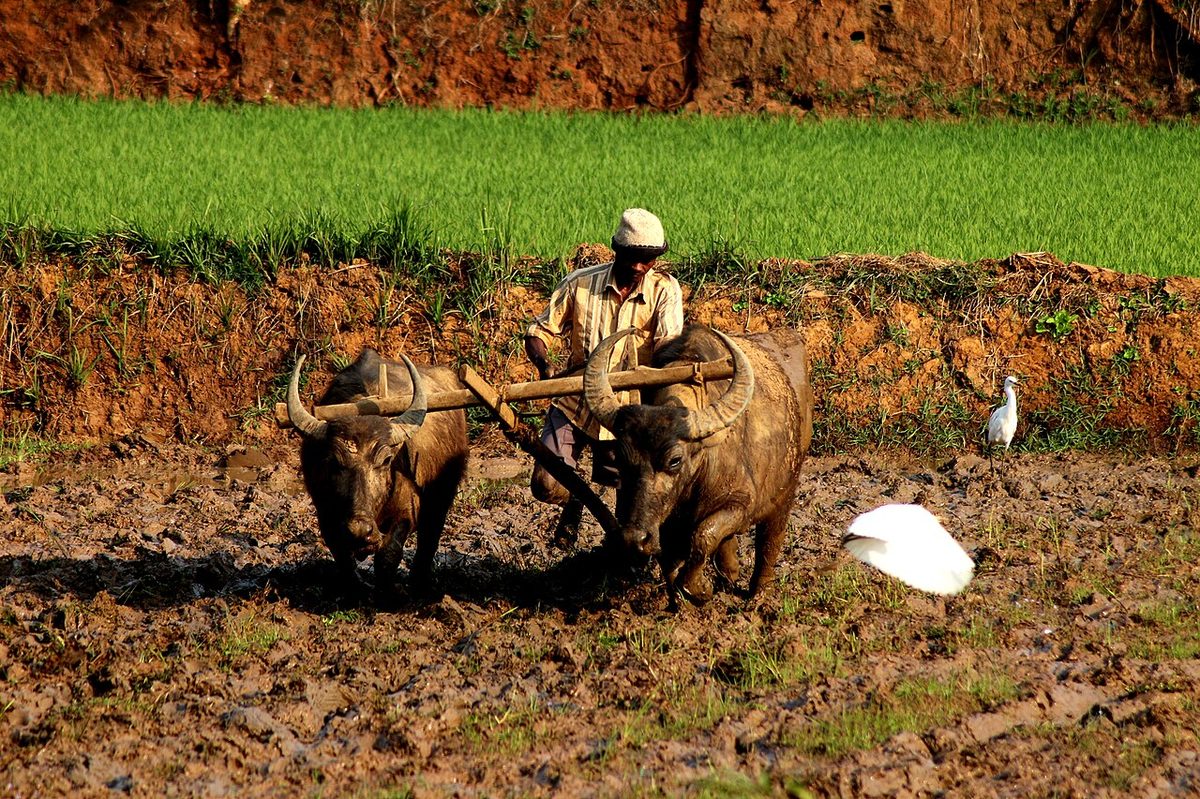
If you farm in the UK, you have probably looked at your grass, your rainfall and your milk cheque and wondered whether there is another way to use the ground you have. Water buffalo come up in that conversation more and more. They were never native to the British Isles, but interest in them grew through the late 20th and early 21st centuries, and they are now kept here for both milk and meat. The trouble is that most of what you read about buffalo was written for farmers in very different climates, with very different feed and very different rules. This guide sticks to what matters if you are keeping buffalo in Britain: the law, the animal, the grass, the milking and the market.
Start with the paperwork: in law, buffalo are cattle
This is the part people get wrong, and it is the part that can cost you. In England and Wales, buffalo sit inside the cattle keeping and traceability regime. A "cattle keeper" is anyone responsible for cattle, bison or buffalo, whether temporarily or permanently. That includes markets, showgrounds, calf assembly centres, slaughterhouses and lairage operators — so if buffalo pass through your hands at all, you are in scope. The rules exist so every animal can be traced at all times, which is how disease outbreaks get contained.
The order you do it in
- Get a CPH number. A county parish holding number covers the land or buildings you use. In England this comes from the Rural Payments Agency (RPA).
- Add temporary land if you need to. A temporary land association (TLA) or temporary CPH (tCPH) links extra land to your CPH — for example if you hold a 7000 series landless keeper number, or you rent an extra field or building for less than a year.
- Get a herd mark and register with BCMS. Once your land is registered, obtain a herd mark and register as a cattle keeper with the British Cattle Movement Service so you can report births, movements and deaths.
- Tag and record. Official ear tags, new or replacement, must come from approved suppliers. Keep a holding register (sometimes called a herd register) recording births, movements, deaths and any changes to ear tag numbers. When you register a birth, you use the official cattle breed codes.
- Keep your details current. Changes need reporting to the RPA or Rural Payments Wales, to APHA, and to BCMS.
Get this wrong and the consequences are real: movement restrictions on your herd, reduced subsidy payments, or prosecution. If you are unsure at any point, BCMS is the place to ask. You can email bcmsenquiries@rpa.gov.uk or call 0345 050 1234 in England and 0345 050 3456 in Wales, Monday to Friday, 8:30am to 5pm. Guidance is also published in Welsh. Rules elsewhere in the UK differ, so if you farm in Scotland or Northern Ireland, check the position with your own local office before you buy anything.
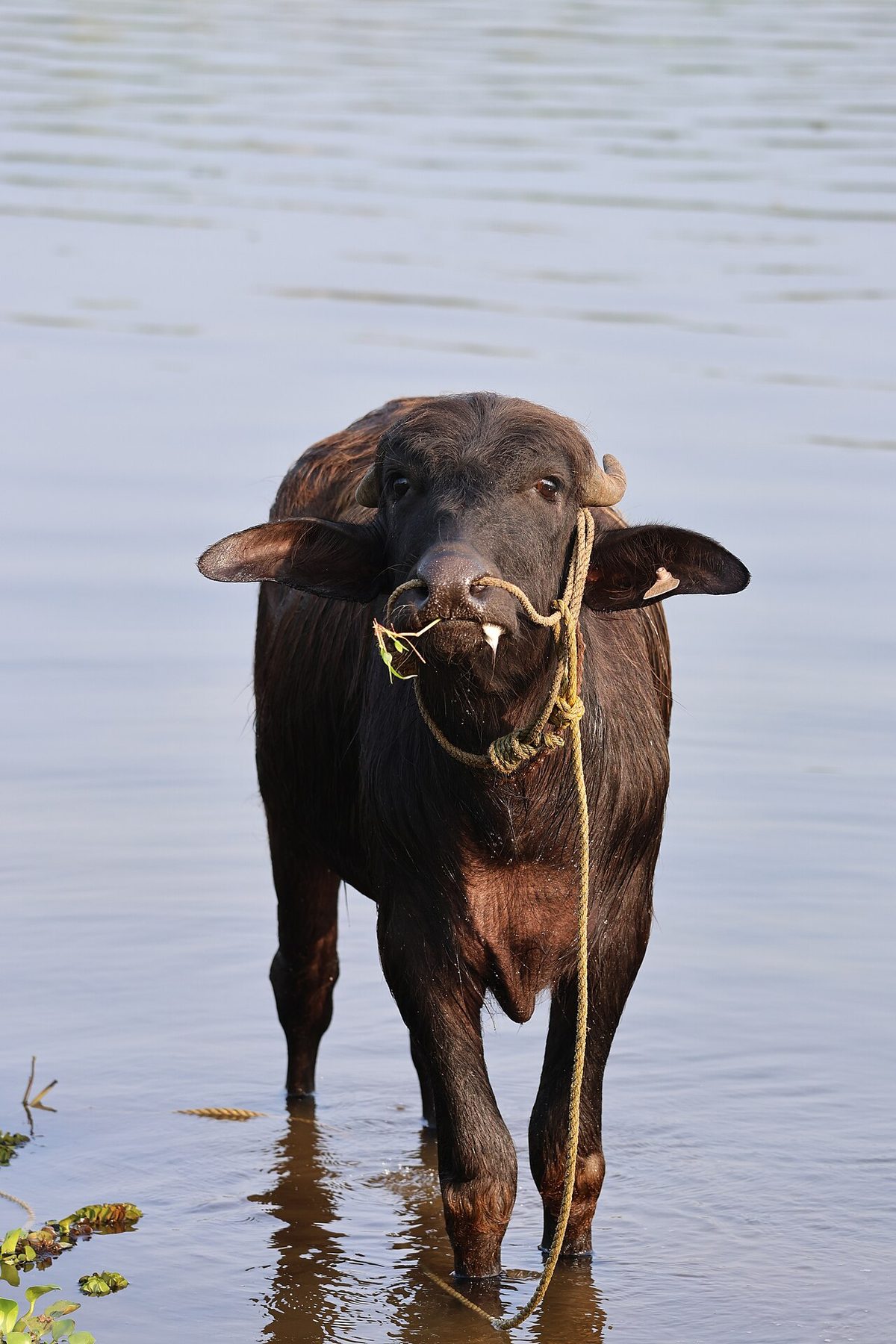
River or swamp — which type suits British weather?
Not all buffalo are the same animal, and the type you choose shapes what your enterprise can deliver.
River buffalo
European river buffalo (Bubalus bubalis subsp. river) are the milk animals. They are known for superior milk production, and their fatty acid profile is what makes buffalo milk so attractive for cheese and dairy products. This is the type famous for mozzarella in Italy. River buffalo currently supply 11% of the world's milk, and that volume is growing.
Swamp buffalo
Swamp buffalo are typically more rugged and adapt well to varied grazing, with strong resistance to heat stress. In cool, wet seasons they may need adequate bedding and careful disease monitoring.
What people actually do here
Practice varies. Some keepers point out that river types may need enhanced shelter and careful water management through our wetter months, while swamp types cope better outdoors but need bedding when it turns cold and wet. Others talk only about European river buffalo as the type kept in the UK for milk and meat, and note that buffalo prefer wet climates and grass diets anyway, which makes Britain a reasonable home for them. Some keepers pursue crossbreeding to combine milk yield with foraging efficiency and tolerance of British weather. What you cannot do is cross water buffalo with cattle or bison — that is simply not possible.
Because our rainfall, pasture and cooler summers are quite specific, it is worth talking to reputable breeders, regional agricultural advisers and welfare experts about which strains suit your ground before you commit.
Feeding and grazing: where buffalo genuinely shine
Buffalo are ruminant herbivores like cattle, but their digestion is not identical. They have a higher rumen pH and a larger population of rumen bacteria, especially cellulolytic bacteria. In plain terms, they can break down rougher forage than cattle can. Elsewhere in the world they are kept on coarse feed such as rice straw and crop residues, which is why they suit low-input and organic systems so well.
That matters here because it means buffalo can turn ordinary and even poor-quality grass efficiently into milk and muscle. They also do well at the other end of the scale — Italy runs them in high-input intensive systems.
What to expect from grass alone
Views differ on yield, and it is worth knowing that before you build a budget. Some UK farms run complex concentrate diets and get more than 12 litres/day, with growth rates over 1.5kg/day. Some report that those same results have been achieved on grass-based systems in established herds with good genetics. Figures from smallholder systems in Asia, Africa and emerging markets put daily potential at up to 15 liters of milk daily. In other words, there is a range, and where you land depends on your genetics, your grass and how long your herd has been established.
Grazing infrastructure
- Buffalo can be reared on more or less any grass system, including strip and rotational grazing.
- They respect an electric fence and move well with it.
- They are usually very quiet grazers and quiet in the shed. They are intelligent animals and communicate with grunts and snorts.
Stocking rates and forage requirements for buffalo on British ground vary a lot from farm to farm, so work them out with your own adviser rather than lifting numbers from elsewhere.
Breeding, calving and rearing
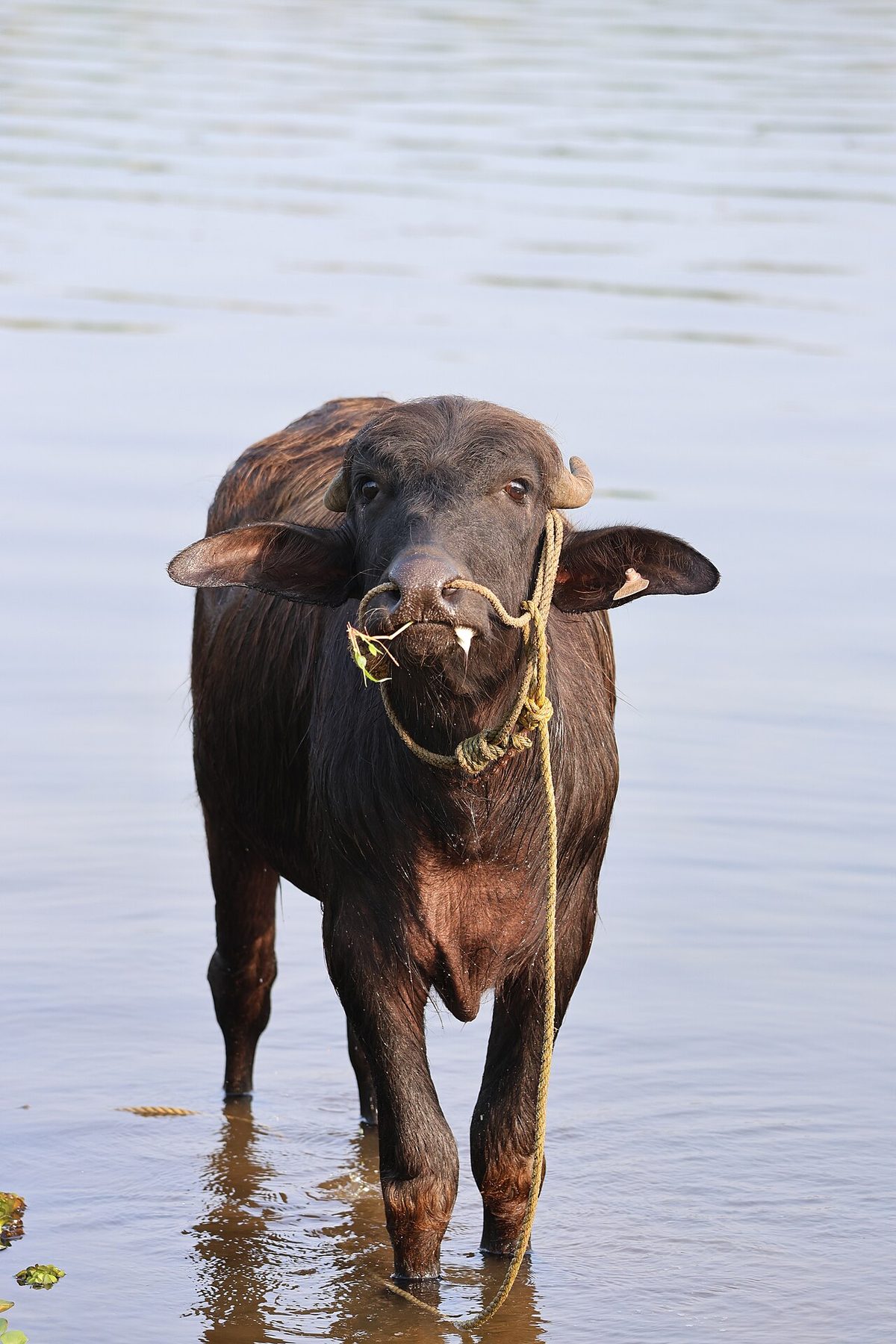
Breeding is one of the easier parts of a buffalo enterprise. They are naturally fertile and will usually conceive within the first or second cycle with the bull. Rotating bulls is normal practice in the UK, though AI is also used. Gestation runs around 310 days, buffalo calve themselves, and many herds achieve a 95-100 calving percentage.
Heifers mature early. Like beef and dairy heifers, they can be bulled successfully at around 13-14 months, at around 280kgs LW, to calve down at two years old. Mature cows reach 500-750 kg lwt and can live up to 25-30 years.
The dry period and transition
A dry period of 50-60 days lets udder tissue repair and gives the cow time to adjust physiologically, which lowers mastitis risk. For buffaloes, drying off should happen about two to three months before the expected calving date. Around calving, demand on the animal rises sharply: glucose demand nearly triples, amino acid requirements double and calcium needs rise fourfold.
Calcium is worth handling carefully to reduce milk fever risk:
- Keep dietary calcium below 50 g/day in the last two to three weeks of gestation.
- Raise it to around 100 g/day at least two days before the expected calving date.
Dry cows should get intramammary antibiotic treatment, plus vaccination against salmonella and mastitis around 12 weeks before calving. Discuss the timing and products with your own vet.
Around calving
Four or five days before she is due, move her to a separate, clean, well-ventilated area with dry bedding. Protect her from slippery floors, harsh weather, long-distance transport and aggressive herd mates. Pregnant animals should have a minimum of 75-80 litres of fresh water daily, and benchmarks from other systems allow 75-100 square feet per animal so she can stand and lie comfortably.
Calves: the first 24 hours decide everything
A newborn calf's immunity comes from the immunoglobulin antibodies in colostrum, and it can only absorb them within the first 24 hours of life. So:
- Feed half a litre of colostrum within two hours of birth.
- Then feed colostrum equal to one-tenth of body weight daily for the first five days.
- Feed milk at one-tenth of body weight, at body temperature around 39°C, twice daily, using clean sterilised utensils. Aim for 500 grams daily weight gain.
- Keep whole milk going for at least two weeks.
- A good calf starter contains 20% digestible crude protein and 70% total digestible nutrients.
Milking, and what makes the milk worth it
You can milk buffalo through robots, rotary, herringbone or tandem parlours, so your existing kit is probably usable. The harder part is the routine. Buffalo milking routines are not the same as cow routines, and getting a good one established takes time and expertise. Budget for a learning curve rather than assuming your cow routine will transfer.
The reward is in the milk. Buffalo milk can be 25% milk solids, driven by a fat content around twice that of a dairy cow's milk. The fat-to-protein ratio is about 2:1, with a higher casein-to-protein ratio. That composition is exactly why river-type buffalo milk suits cheese, and mozzarella-style products in particular.
Lactation runs around 270 days, and the highest yields usually come in the third lactation. Buffalo also last: they have greater longevity than dairy cows, and buffalo herds often contain cows with 15 consecutive lactations. For a small farm, diversification options include milk products and cheese, lean meat, and agritourism experiences aimed at gourmet producers and visitors.
On the commercial side — farmgate prices, dairy hygiene registration, on-farm processing, which abattoirs will take buffalo — these vary and are not something to guess at. Talk to your local authority, your vet and nearby processors before you plan on any particular outlet.
Health, heat and housing
Monitor buffalo for everything you monitor cattle for: BVD, TB, Johne's, IBR, Leptospirosis and Neospora. The good news is that buffalo are generally a more disease-resistant, worm-resistant species needing very little intervention. They are robust and less susceptible to common bovine illnesses, and unlike dairy cows they have very few feet issues. Clipping tails helps reduce mastitis risk. How TB testing and restrictions apply to a buffalo herd in practice is best confirmed with APHA and your own vet, as is any vaccination or worming programme suited to your local disease risk.
Heat and cooling
Buffalo skin is high in melanin, which gives them good protection against ultraviolet radiation, but they sweat poorly, so their evaporative cooling is less efficient than a cow's. Their black skin is rich in blood vessels, though, so it conducts and radiates heat well — meaning they actually cool off faster than cattle once they are in the shade. Shade is therefore your main tool on a hot day.
On wallows, opinions differ. Some keepers find from practical experience that wallowing areas are not essential, though buffalo will happily use a mud scrape or a water pool when it is hot. Others treat reliable access to water for cooling and comfort as part of good welfare in a British setting. Either way, shade and clean water are not optional.
Winter
Housing should be secure and well ventilated with clean bedding, protecting animals from extreme cold and wet. One handy detail: their built-in cooling system means you do not need to shave their backs when they are housed for winter, as you might with dairy cows. How long you house for, and at what space allowance, will depend on your ground and buildings — sort that out locally.
So, is it worth it?
Buffalo suit a certain kind of British farm: one with grass, plenty of rain, patience, and an appetite for a premium product rather than a commodity one. The animals themselves are undemanding — fertile, long-lived, hardy, easy on their feet, happy behind an electric fence and able to make good use of forage cattle would struggle with. The demanding parts are the paperwork, the milking routine and the route to market.
If you are seriously considering it, do three things before you buy a single animal. Sort your CPH, herd mark and BCMS registration so you are compliant from day one. Talk to established breeders and your regional adviser about which type or crossbred line suits your climate and your goals. And line up your outlet — cheese, milk, meat or visitors — because that, more than the animals, is what decides whether the enterprise pays.


 Menu
Menu
💬 Comments
Login to comment
No comments yet. Be the first to share your experience!