You have a pen of lambs ready to go, or a few old ewes you need off the place, and you want one thing: a number. So you search "sheep rate near me" and get a pile of pages that talk about lamb, hogget, mutton, prime, choice and spring lamb — and still no clear answer about your animals.
Part of that confusion is real, and it is not your fault. In the United States, the same animal can be described three different ways depending on who is buying, what age rule they use, and how the meat will be labelled at the far end. And the class your sheep are put into is exactly what decides the price you are offered.
So let's do the useful part. This post won't hand you a price — you'll see why in a moment — but it will make sure you walk into the sale knowing which class your animals belong to, and what to ask before you agree to anything.
Why "sheep rate near me" rarely gives you a number
Sheep and lamb prices move week to week and place to place. A rate that is true at one yard on one morning can be wrong forty miles away. That is why an honest answer to "what's the rate near me?" almost always ends with "ask locally".
It is worth being straight with you about our own price records too. For the United States we hold 254 price rows, and they cover only seven products:
- Chicken meat
- Cattle meat
- Hen eggs
- Cow milk
- Turkey meat
- Pig meat
- Honey
Most of those series run to 2025-01-31, with honey running to 2024-12-31. There is no sheep meat row, no lamb or mutton row, no sheep milk row and no wool row anywhere in that set. So we cannot quote you a US sheep price — not a national one, and certainly not a local one. For today's real figure, your nearest buyer, dealer, livestock market or local agriculture office is the place to go, and it pays to ask two or three of them rather than one.
There is a bigger reason sheep quotes can feel thin on the ground here. There were around 1.2 billion domestic sheep in the world as of 2019, and in the 21st century sheep production is most closely associated with Australia, New Zealand, the nations of southern and western South America, South Africa and the British Isles, while China and India hold among the largest flocks by count. The United States isn't on that list. Sheep raising only spread to the New World with European colonists from 1493 onwards.
Lamb, hogget and mutton: the three classes behind every quote
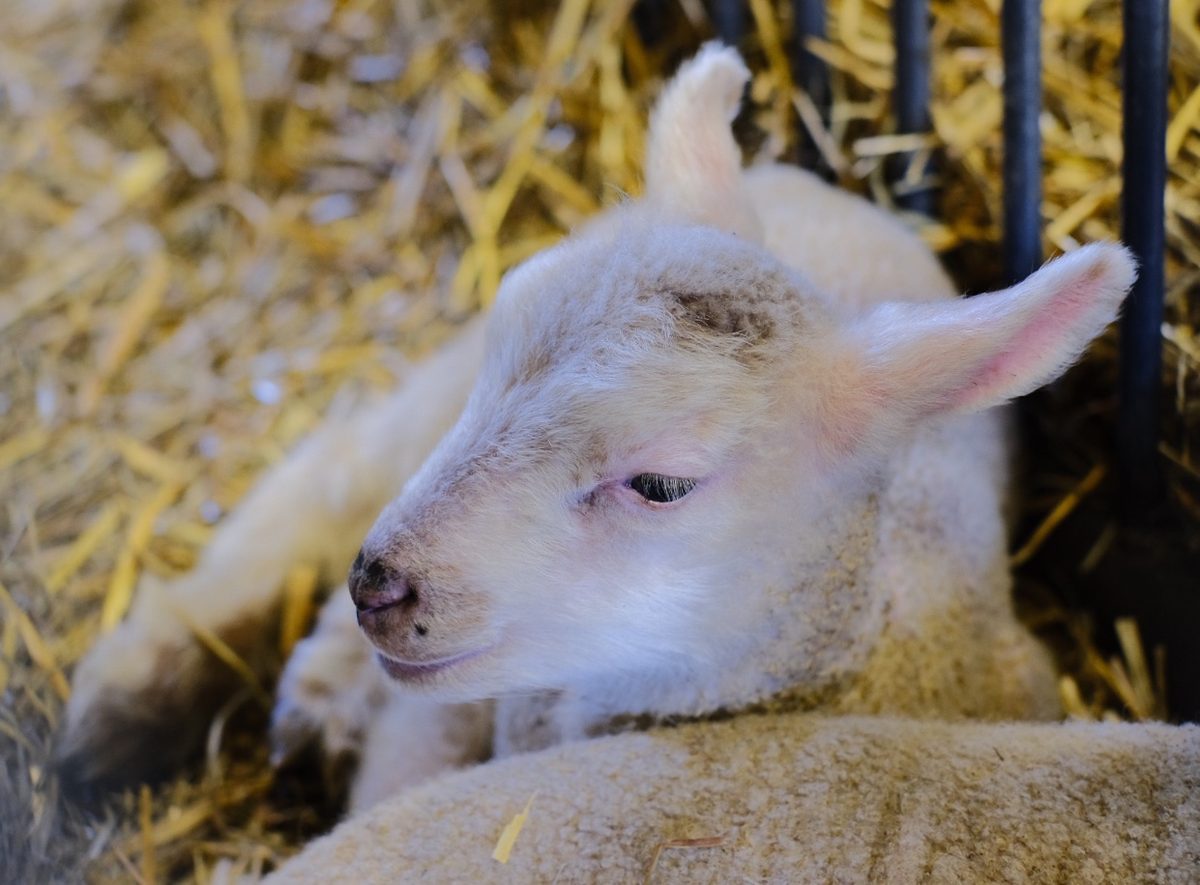
Sheep meat splits into three types, and the split is about age:
- Lamb — from sheep in their first year
- Hogget — from sheep in their second year
- Mutton — from older sheep
Lamb is the most expensive of the three. Younger lambs are smaller and more tender. Mutton has tougher flesh, and as a rough guide, the darker the colour of the meat, the older the animal. In recent decades sheep meat has increasingly been retailed only as "lamb", sometimes stretching the accepted distinctions between these classes.
The words market reports use
Get these straight and reports stop feeling like a foreign language:
- An adult female is a ewe
- An intact male is a ram, occasionally called a tup
- A castrated male is a wether
- A young sheep is a lamb
- A group of them is a flock
Sheep are ruminants, part of the order Artiodactyla — the even-toed ungulates. Sheep husbandry terms vary a lot by region and dialect, so US market vocabulary may not match British, Australian or New Zealand usage.
Two words that travel badly
"Hogget" is not used in the United States at all. Where it is used, the ages differ: UK butchers put hogget at 11 to 24 months old, while Australian butchers use 13 to 24 months.
"Mutton" is not settled either. Most definitions call it meat from older sheep, but in most countries of South Asia the word is applied to goat meat, and mutton curry is usually made from goat. If you are talking to a customer or reading an overseas report, it is fair to ask which one is meant.
Not every "sheep" near you is a sheep
If you are in the Southwest, some of the "sheep" on the range are Barbary sheep, also called aoudad, a caprine native to North and West Africa that was introduced here. During the winter of 1957-1958, 42 of them were released in the Palo Duro Canyon of Texas to attract hunters to the region. They stand 75 to 110 cm at the shoulder, weigh 30 to 145 kg, and their horns can pass 76 cm. They graze and browse grasses, bushes and lichens in dry mountain country and can get all their metabolic water from their food. Where they have been introduced they are described as a possible competitor to native hoofed animals — not stock you would price as sheep.
Why almost every US sheep is sold as "lamb"
Here is the piece that trips up most sellers. Federal food-labeling statutes and regulations in the United States permit all sheep products to be marketed as "lamb". And as of 2010, most sheep meat in the US came from animals between 12 and 14 months old and was called lamb.
Two practical consequences for you:
- A quote for "lamb" and a quote for "sheep meat" can be describing the very same product.
- Being called "lamb" on a label does not, by itself, tell you which age class the buyer is paying you on.
People also draw the upper edge of "lamb" in different places. Some stick to the original meaning — meat from a sheep in its first year, and in Britain the definition is still zero permanent incisor teeth. Others go by common US practice, where animals of 12 to 14 months are sold as lamb. Others lean on the labeling rule, which allows the term for any sheep product. And on quality grading, animals as old as 20 months can still make the top grade. So before you load, ask your buyer plainly: how are you classing these animals, and on what basis?

Teeth, age and USDA grades: how the class is judged
Teeth in wear
Away from the label, classification runs on permanent incisor teeth "in wear". A permanent incisor counts as in wear when it sticks out further than the milk teeth beside it. On that system:
- Hogget is a sheep of either sex with no more than two permanent incisors in wear.
- Mutton is meat from a ewe or a wether with more than two permanent incisors in wear, and from a sheep over two years old.
Other countries have written this into their rules. Australia's definition, effective from 1 July 2019, is an animal under 12 months of age or with no permanent incisor teeth in wear, following a similar change in New Zealand in 2018. The habit worth copying is simple: look in your own lambs' mouths and count before anyone else does.
USDA prime and USDA choice
USDA grades for lamb are only partly about age. Animals up to 20 months old may still meet the quality needed for USDA prime, depending on other factors. USDA choice lamb can be of any age. So age alone will not tell you your grade — the people doing the grading and buying are the ones to ask what else they are looking at.
The "spring lamb" muddle
"Spring lamb" gets used two ways. The USDA defines it as lamb slaughtered between March and October — a calendar window. Elsewhere the same term is described as a lamb usually three to five months old, born in late winter or early spring — an age. Some people mean the slaughter window, others mean the age of the animal. No premium figure is attached to the term either way, so if a buyer offers to take yours as spring lamb, ask straight out whether it changes the price.
Cull ewes, mutton and the premium trades the US mostly doesn't have
Mutton is the cheapest of the three classes, since lamb is the dearest. Mutton was widely eaten in the United States in the early 1900s, but consumption has fallen since the Second World War, and the stronger-tasting meat is now hard to find in many areas — even though the UK has run a Mutton Renaissance Campaign. What that means for your old ewes is honest and unglamorous: the market for them depends entirely on who near you wants them, so ask around your own area rather than assuming a price.
It is also worth knowing about the trade at the other end of the age scale, so you don't chase it. Suckling or milk-fed lamb is meat from an unweaned lamb, typically 4–6 weeks old and weighing 5.5–8 kg; "young lamb" is a milk-fed lamb between six and eight weeks old. Grilled or roasted, its flavour and texture are generally thought finer than older lamb, and it fetches higher prices — in northern Spain, in Asturias, Cantabria, Castile and León and La Rioja, with strong Easter demand in Greece. That trade is described as typically unavailable in the United States and the United Kingdom.
Your flock has more than one thing to sell
Sheep are raised for fleeces, for meat as lamb, hogget or mutton, and for sheep milk. They are also kept now and then for pelts, as dairy animals, or as model organisms for science.
Wool: value is about more than weight
Wool is the most widely used animal fibre and is usually harvested by shearing. A few things shape what a clip is worth:
- White wool suits the large commercial markets. Selection for easily dyeable white fleeces started early in domestication, helped by white being a dominant trait.
- Coloured fleeces have a niche market, mostly for handspinning.
- Fleece character varies widely between breeds, from dense and highly crimped to long and almost hairlike.
- Wool type and quality vary even between members of the same flock, which is why wool classing is a step in commercial processing.
We can't put a figure on white or coloured wool for you, or on shearing. That is a conversation for a wool buyer or classer near you.
What neighbouring enterprises earned
These are not sheep prices — there are none in our US records — but they show the shape of the market your flock sits beside. From our recorded US rows, in USD per tonne:
- Cattle meat: average USD3448, from USD2425 to USD4387, across 49 rows
- Chicken meat: average USD1581, from USD919 to USD2357, across 49 rows
- Hen eggs: average USD3363, from USD1374 to USD8789, across 38 rows
- Turkey meat: average USD1860, from USD1038 to USD2800, across 38 rows
- Pig meat: average USD1451, from USD1107 to USD1892, across 38 rows
- Cow milk: average USD499, from USD381 to USD600, across 38 rows
- Honey: average USD5947, from USD5600 to USD6636, from only 4 rows
Look at the eggs line — USD1374 at the bottom, USD8789 at the top. That spread is the real lesson. Averages hide a lot, which is exactly why a live local quote beats any published figure when you are selling sheep.
What to do before you sell
Five things, and none of them cost you anything:
- Open your lambs' mouths and count the permanent incisors in wear.
- Write down ages and birth dates, and flag anything past 20 months.
- Ask every buyer how they class and grade your animals, and what their quote actually covers.
- Get more than one quote near you, ideally on the same day.
- Ask locally about cull ewes and about your wool clip before you assume there is no market for either.
Nobody can honestly text you a sheep rate for your county from a distance. But if you know whether you are selling lamb, hogget or mutton, and you know how the buyer in front of you is judging that, you are far harder to underpay. That knowledge travels with you to every sale, in every year.
 Menu
Menu
💬 Comments
Login to comment
No comments yet. Be the first to share your experience!