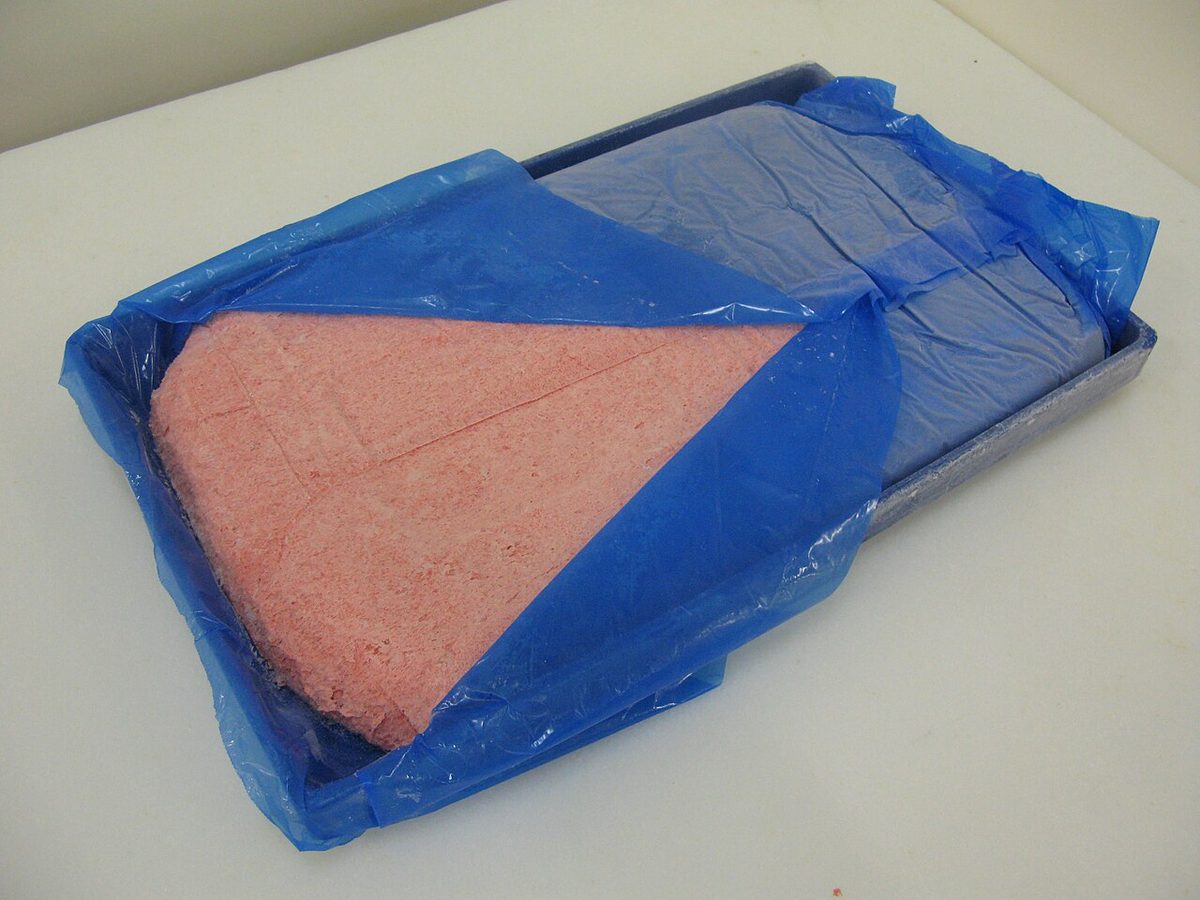
Chicken meat is one of the most widely traded meats in the world, and our own price records hold chicken quotes in more than twenty different currencies across dozens of markets. But here is the honest answer to the chicken-versus-mutton question: every one of our 2,923 recorded price rows is a chicken meat price — not a single row covers mutton, lamb or sheep meat, so nothing here can tell you whether chicken is cheaper than mutton where you live. That decision has to be settled with the prices on the board in your own local market.
What we can do — and what this page is built around — is give you a real, currency-by-currency picture of what chicken meat actually costs, straight from our own recorded data. That is useful to any farmer or buyer, because chicken is one of the few meats priced in so many markets at once that you can see the shape of the trade. It just does not come with a mutton column attached.
What our own records actually contain
Our commodity price table holds 2,923 rows, and all of them are chicken meat lines. Those rows are fed from faostat (FAO statistics) feeds. Sample rows and manually entered rows were left out of that 2,923-row total, so what you are looking at is the recorded series rather than a demonstration list.
The rows are spread across many currency lines — EUR and USD, but also ILS, PHP, RON, PEN, BGN, CZK, RSD, BYN, CAD, PLN, TRY, JPY, IDR, ALL, MYR, THB, HUF, GYD, UZS, XOF and XCD. Read those lines together and one thing is plain: chicken meat is a commodity priced in dozens of markets, not a single regional product.
There is no mutton price here — and that matters
No sheep meat, lamb or mutton commodity line appears anywhere in the list. That is not a gap we can fill from the chicken side, and we will not pretend otherwise. When you see a chicken figure below, treat it as exactly that: a chicken figure. The other half of the comparison is simply absent, and it is absent for every country, not just yours.
What chicken meat costs, currency by currency

Most of our lines are quoted per tonne. Here are the main ones, exactly as recorded:
- EUR (570 rows, the biggest single group): EUR735 – EUR10148 per tonne, average EUR1381 per tonne
- USD (87 rows): USD919 – USD5159 per tonne, average USD2181 per tonne
- ILS (101 rows): ILS6791 – ILS43508 per tonne, average ILS10229 per tonne
- Philippine peso (49 rows): PHP99690 – PHP196441 per tonne, average PHP134428 per tonne
- Turkish lira (48 rows): TRY24509 – TRY231421 per tonne, average TRY84407 per tonne
- Japanese yen (48 rows): JPY185100 – JPY210700 per tonne, average JPY197192 per tonne
- Rupiah, per tonne line (48 rows): IDR30540772 – IDR35650288 per tonne, average IDR33047943 per tonne
- Uzbek som (37 rows): UZS32425000 – UZS44549449 per tonne, average UZS37377839 per tonne
- East Caribbean dollar (33 rows): XCD990 – XCD15969 per tonne, average XCD5853 per tonne
- Canadian dollar: CAD2290 – CAD2940 per tonne, average CAD2726 per tonne
- Polish zloty: PLN3281 – PLN6702 per tonne, average PLN5088 per tonne
- Peruvian sol: PEN5202 – PEN7147 per tonne, average PEN6577 per tonne
The EUR line is the largest sample behind any single currency in the table at 570 rows, and the USD line at 87 rows is the clearest reference point for anyone comparing across borders. If you run poultry anywhere, the USD band — USD919 to USD5159 per tonne, averaging USD2181 — is the one worth keeping in your head as a rough international marker.
The two lines quoted per kilo
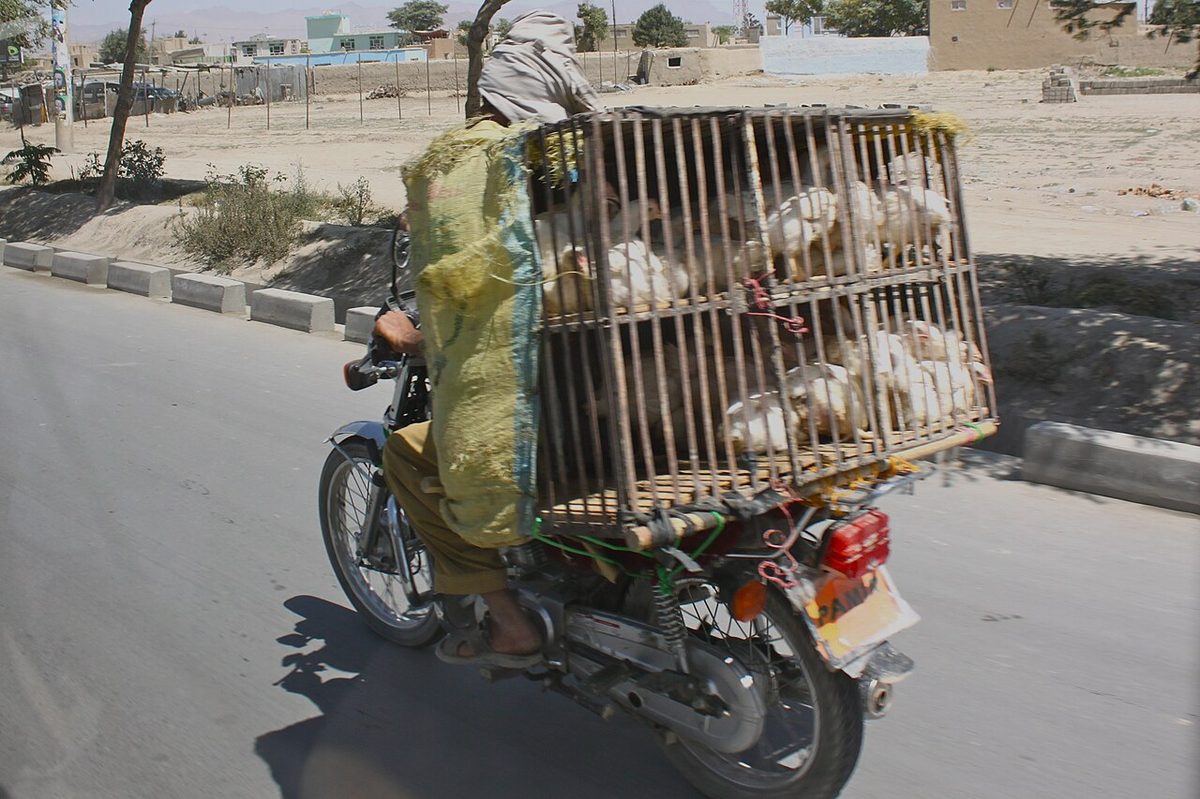
Only two lines in the whole table are quoted per kg rather than per tonne:
- Rupiah per kg (425 rows): Rp20500 – Rp70000 per kg, average Rp40661 per kg
- Philippine peso per kg, whole chicken (64 rows): ₱177 – ₱254 per kg, average ₱214 per kg
Note something important about that rupiah per-kg line: it is the second-biggest block in the table, 425 rows, and it sits alongside a separate rupiah per-tonne line. Two rupiah lines, two totally different units. That alone tells you how easy it is to misread a price table.
Per tonne or per kilo? The mistake that ruins your comparison
Before you compare any two chicken figures, check the unit column. Nearly every commodity line we hold is quoted per tonne — EUR, USD, ILS, RON, PEN, BGN, CZK, RSD, BYN, CAD, PHP, PLN, TRY, JPY, IDR, ALL, MYR, THB, HUF, GYD, UZS, XOF and XCD all appear per tonne. Only the rupiah per-kg line and the Philippine peso whole-chicken line are priced by the kilo.
A per-kg figure cannot be lined up against a per-tonne figure without converting one of them. Do that conversion yourself, carefully, with the unit written down beside the number — because a number that looks small apples-to-apples may be nothing of the sort once you notice it is per kilo and its neighbour is per tonne.
One more honest limitation: our records do not say whether these tonne and per-kg figures are farm-gate, wholesale or retail prices. So you cannot tell from this data alone what a shopper actually hands over at the counter. Treat them as market benchmark series, not shop receipts.
Why one currency's price band can be so wide

Within a single currency, the gap between the lowest and highest recorded chicken meat price can be enormous:
- TRY: TRY24509 to TRY231421 per tonne — average TRY84407
- XCD: XCD990 to XCD15969 per tonne — average XCD5853
- PEN: PEN5202 to PEN7147 per tonne — a much tighter band, average PEN6577
Our sources do not explain what drives those differences. Feed costs, tariffs, subsidies and seasonality are never mentioned, so we are not going to guess at them here. What the spread does tell you is practical: a single national or regional average hides a lot, and a price you hear quoted for "chicken" may sit at either end of a very long range.
How fresh are these chicken prices?

Freshness varies by market, and it is worth knowing which numbers are newer than others:
- The most recent observation anywhere in the data is 2026-09-15, on the rupiah per-kg line.
- The Philippine peso per-kg line (₱177 – ₱254) follows at 2026-08-15.
- The bulk of the per-tonne lines carry a most recent date of either 2025-01-31 or 2024-12-31 — including the EUR line at 2025-01-31 and the USD line at 2025-01-31.
There is no time series behind any of this — only one most-recent date per line. So you cannot read a trend or a seasonal pattern out of these figures, and you should treat the per-tonne lines as benchmark series rather than as today's market quotes. If you need a current price for a deal you are about to do, get it locally.
Why chicken is priced as a global commodity at all

Scale is the reason. As of 2023 the global chicken population exceeded 26.5 billion, and more than 50 billion birds are produced annually for consumption. Chickens are kept primarily for meat and eggs, though they are also kept as pets, and the species is one of the most common and widespread domesticated animals in the world. That is a lot of supply moving through a lot of markets — which is exactly why our table can carry 23 different currency lines and still be talking about one product.
The bird itself: fast growth, short life, no long flights

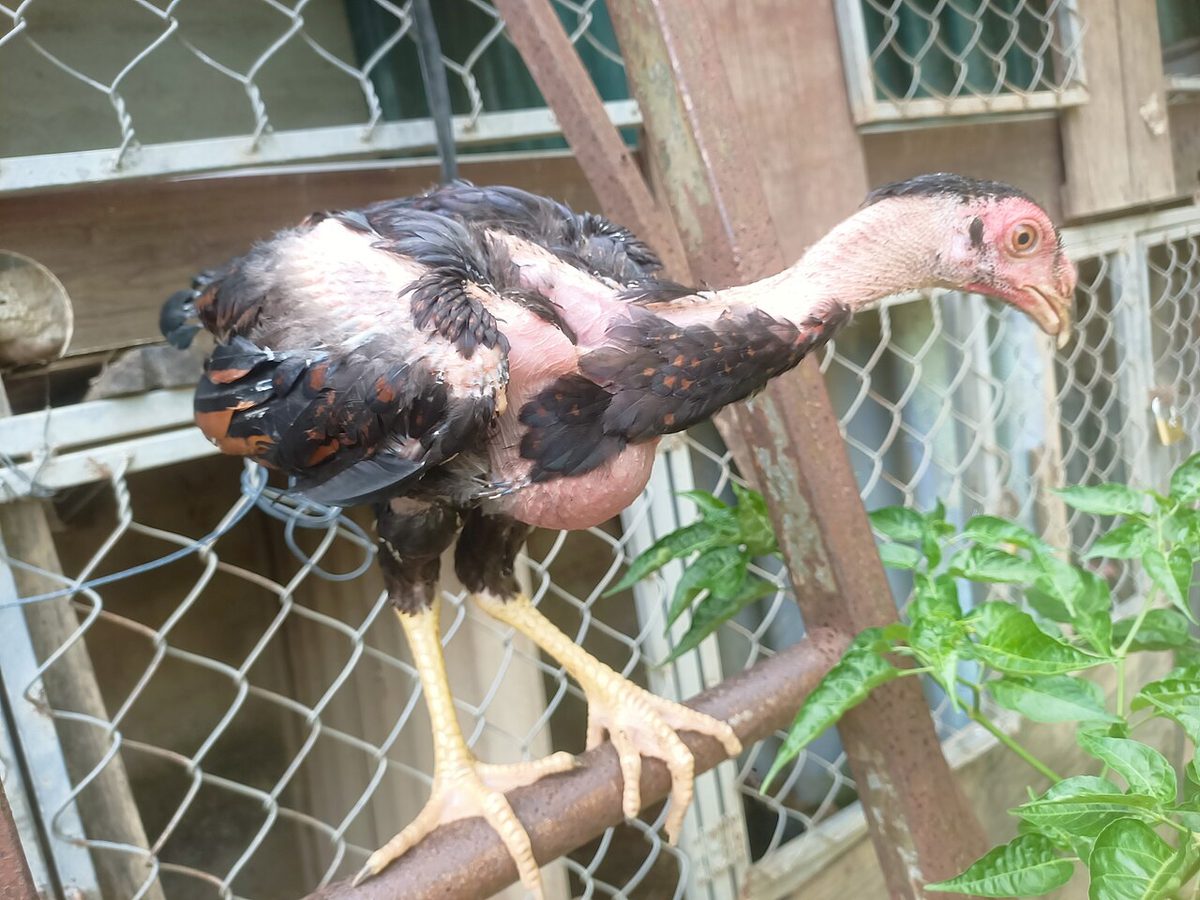
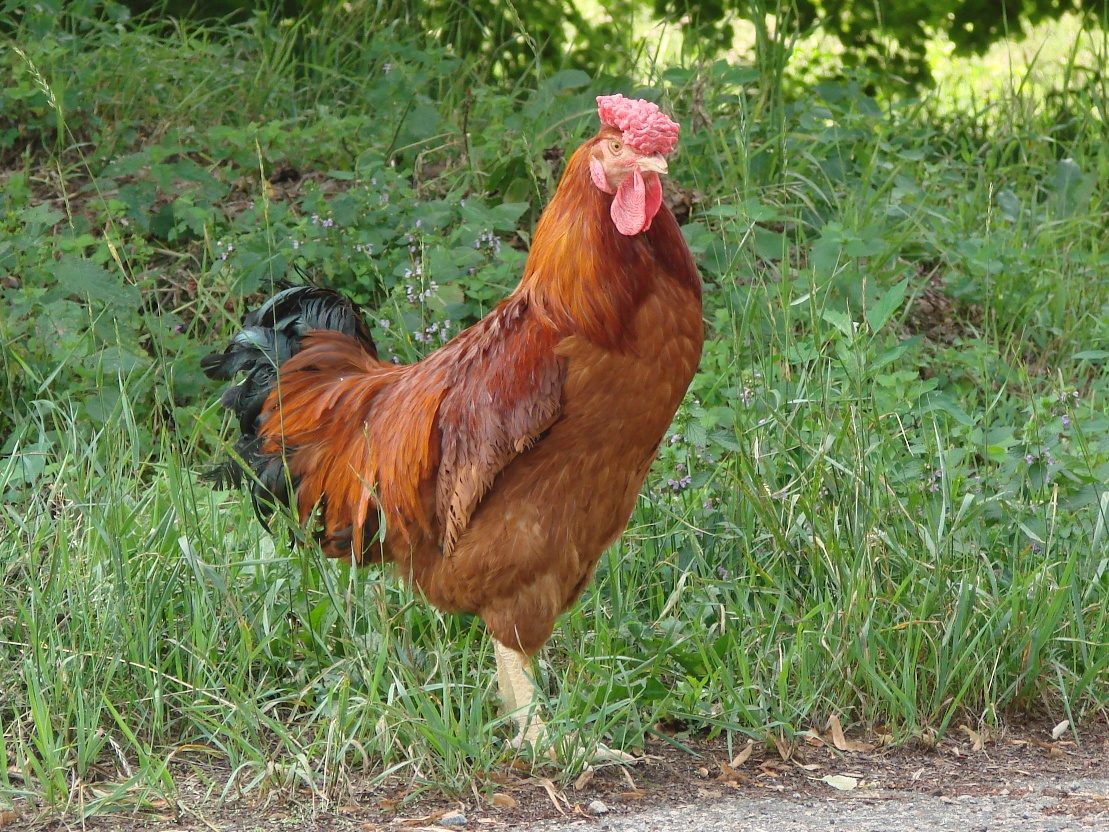
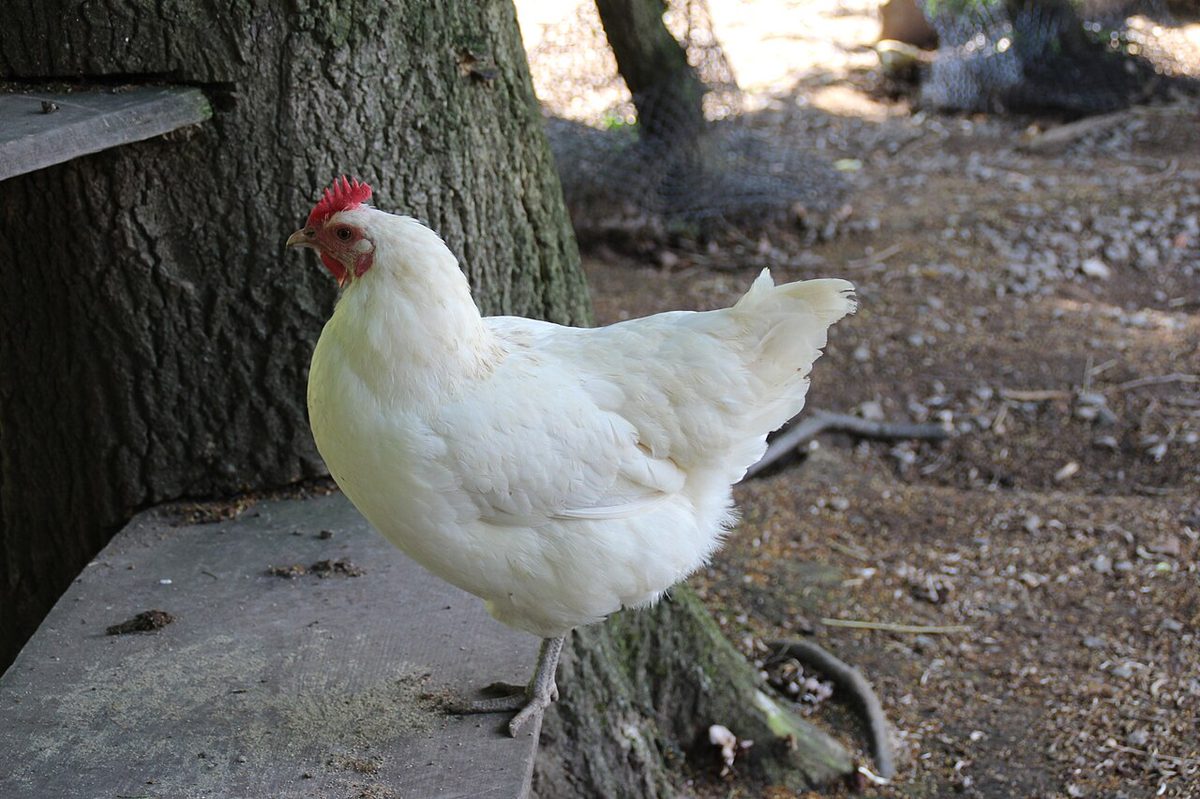
The chicken (Gallus gallus domesticus) is the domesticated form of the red junglefowl (Gallus gallus), originally native to Southeast Asia, and it was first domesticated around 8,000 years ago. It is a social animal with complex vocalisations and behaviours, and it turns up in folklore, religion and literature across many societies. In the wild it scratches for seeds, insects and animals as large as lizards, small snakes and young mice — it is an omnivore, not a grass eater.
Domestic chickens cannot fly more than a short distance, because their flight muscles are too heavy. A chicken typically lives 5–10 years depending on the breed, and the oldest known chicken lived to 16 years. Hens live in flocks, incubate eggs and raise young communally, and they establish a pecking order in which dominant birds get first call on food and nest sites. That dominance idea was first described in female chickens by Thorleif Schjelderup-Ebbe in 1921.
How fast a meat bird grows
Specialised breeds have been developed for meat and for eggs. Modern and heritage chicks both hatch at about 37 g (1.3 oz). By day 35, a Ross 708 broiler may weigh 1.8 kg (4.0 lb), against 1.05 kg (2.3 lb) for a heritage chicken of the same age. That difference in growth speed is the whole economics of a broiler shed in one comparison.
The layer's side of the business
A hen bred for laying can produce over 300 eggs per year. Laying hens and broilers are separate specialised types, bred for egg production and meat production respectively. In poultry-industry language, a pullet is a sexually immature chicken under 22 weeks of age, and a capon is a castrated or neutered male. If you keep birds for both eggs and meat, you are running two different genetic programmes under one roof — and they price differently.
So is chicken cheaper than mutton?
We cannot answer that from this data, and we are not going to invent a number to fill the gap. Our price table holds chicken meat rows only. There is no mutton, lamb or sheep meat commodity anywhere in it.
What we can say is that chicken appears in these records as a globally traded commodity, priced across many currencies in both per-tonne and per-kg units. The mutton side of the comparison is simply absent. So the only honest way to settle chicken versus mutton for your own kitchen, stall or contract is to price both meats where you actually buy and sell — and to check the same unit for each before you decide.
If cost of production or feed efficiency matters to your decision, be aware that no feed conversion ratio, feed cost per kg of live weight or production cost for either meat appears in our records. Nor is there any nutritional comparison between the two — no protein, fat, calorie or micronutrient figures per 100 g. Availability, festival demand and religious requirements often decide which meat a household buys, and none of that is covered here either. For those questions, your local vet, dealer or agriculture office is a better guide than any table, including ours.
The bottom line
Our 2,923 recorded rows give you a genuine benchmark for chicken meat: EUR735 – EUR10148 per tonne (average EUR1381), USD919 – USD5159 per tonne (average USD2181), Rp20500 – Rp70000 per kg (average Rp40661) and ₱177 – ₱254 per kg for whole chicken (average ₱214), among many others. Use the chicken side of this data with confidence — but check the unit column first, and expect wide bands inside a single currency.
For the mutton side, the answer is not in our records at all. Compare your own local prices, in the same unit, on the same day. Then you will know what chicken really costs you against mutton — not as a global average, but as a real number you can act on.
 Menu
💬 Comments
Login to comment
No comments yet. Be the first to share your experience!