🍪 Cookie Consent
We use cookies to improve your experience, analyse how the site is used, and show relevant content. By choosing Accept you agree to that. See our
Privacy Policy.
From the anatomy of the drumstick and thigh to worldwide pricing and the breeds that supply commercial markets, here is everything you need to know about chicken legs — and an honest look at where reliable breed information is still hard to find.
If you came here looking for a ranked list of chicken breeds with the longest legs, the honest answer is that the available research does not compare leg length across breeds. What you will find instead is a clear picture of chicken leg anatomy, current worldwide prices, and the commercial breeds that supply most of the leg meat sold today — all of which is genuinely useful whether you are a farmer, a buyer, or simply someone who cooks with chicken legs regularly.
What a Chicken Leg Actually Is
Before talking about prices or breeds, it helps to know what you are buying. A whole chicken leg is made up of two distinct parts, both of them dark meat. The drumstick is the lower section, the tapered piece that is familiar from fried chicken. Above it sits the thigh, which is rounder, meatier, and has more fat.
Both cuts come from muscles the chicken uses constantly for walking and standing. That constant use is why leg meat is darker than breast meat, and why it stays juicy during slow cooking — a point worth keeping in mind when you are deciding how to cook it. Understanding which piece you have also matters for pricing: thighs and drumsticks are sometimes sold separately, and their prices can differ depending on local demand.
How Much Chicken Legs Cost Worldwide
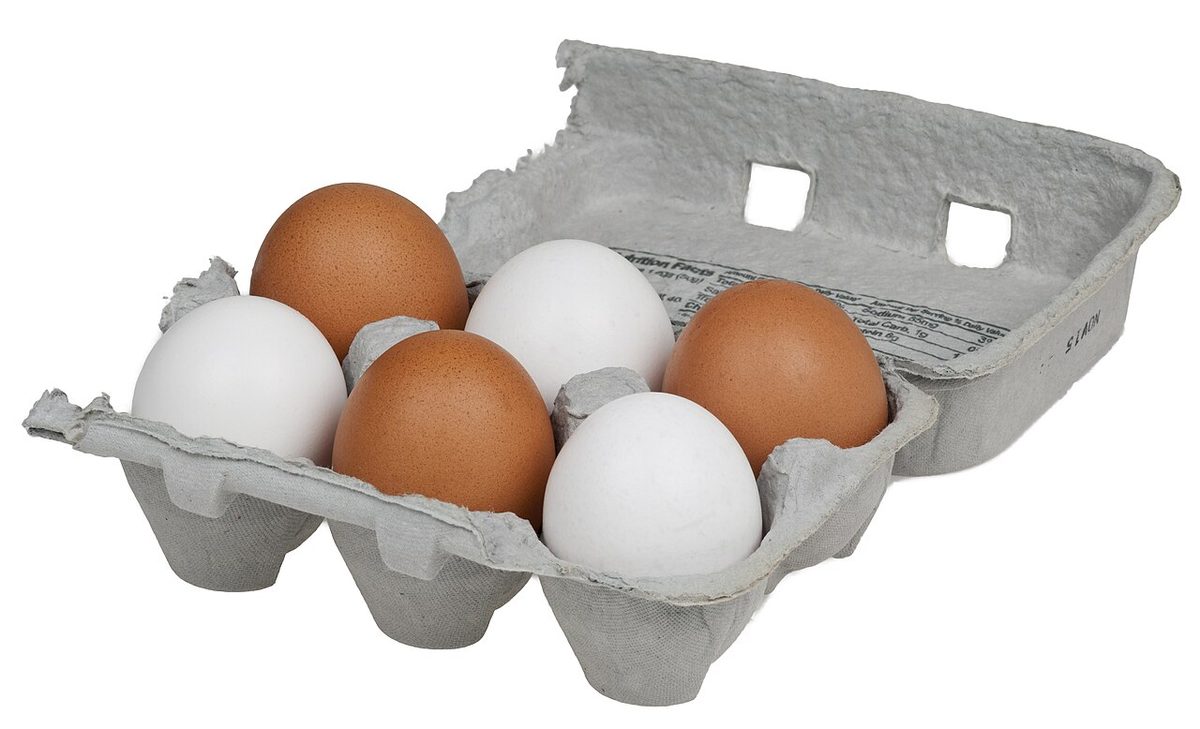
6-Pack-Chicken-Eggs by Evan-Amos (Public domain) · source
The site's own recorded price data gives a useful global benchmark. As of 27 September 2026, chicken legs have averaged €3 per kg across 282 price observations. The range runs from €2 per kg at the lower end to €5 per kg at the higher end.
Those three figures — €2, €3, and €5 per kg — are the numbers to keep in mind as you compare prices in your local market. The difference between the cheapest and most expensive recorded price is substantial, so it always pays to shop around. Prices vary by country, by whether the legs are sold whole, split into drumsticks and thighs, or processed further, and by the time of year. If you want prices in a specific currency such as USD, GBP, or any of the other currencies tracked, you will find those recorded separately for whole chicken in your region.
Why Chicken Is So Common Around the World
ASC Leiden - J. Th. Broekhuijse Collection - 01 - 043 - A chicken sacrifice. A pile of brown earth with chicken feathers on top, grass around it - Burkina Faso, 1970-1971 by Jan Broekhuijse (CC BY-SA 4.0) · source
Chicken is the second most consumed meat in the world, behind only pork. The main reason is practical: raising chickens costs far less and takes far less land than raising cattle or pigs. That economic advantage has driven enormous growth in production.
In 2021, global chicken meat production reached 357 million tonnes. That represented a 53% increase compared to the year 2000, and chicken production overtook pig production to become the single largest category of meat produced worldwide. More than half of the total global increase in meat production between 2000 and 2021 came from chicken alone. With an estimated global chicken population of around 19 billion birds in 2011, the scale of the industry is hard to overstate.
One notable example of a market shift happened in Europe, where chicken consumption overtook beef and veal in 1996. The change was directly linked to public concern about bovine spongiform encephalopathy, or mad cow disease. As consumers lost confidence in beef safety, many switched to poultry, and that preference has largely stuck.
The Breeds That Supply Most of the World's Leg Meat
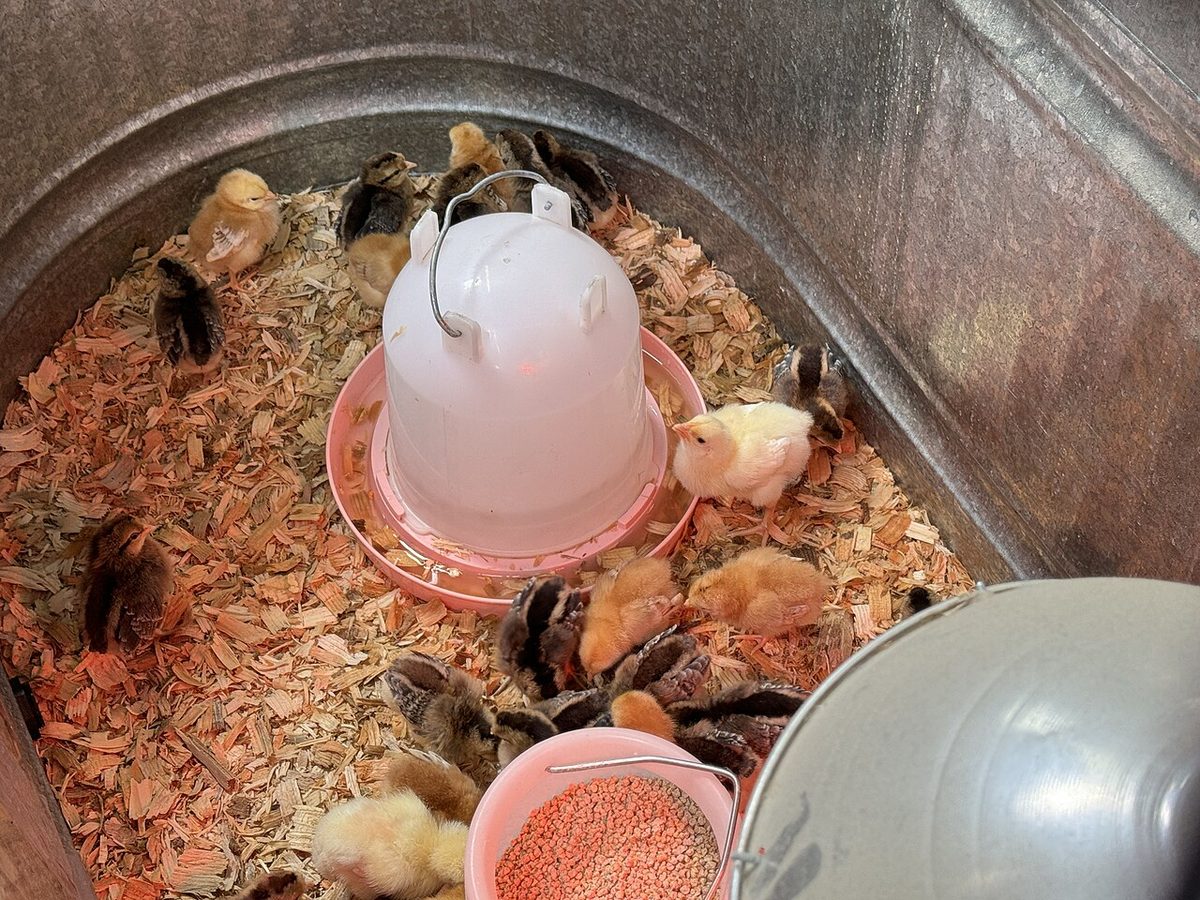
Chicks at Tractor Supply - March 2024 - Sarah Stierch by Missvain (CC BY 4.0) · source
The commercial breeds you encounter in shops today are the result of deliberate breeding programmes going back decades. The Cornish Rock Cross was developed in the late 1940s through a programme that involved the USDA and other partners. It was created for three specific goals: efficient feed conversion, rapid growth, and good meat quality. A documentary called The Chicken of Tomorrow was made about that development, and it captured a turning point in how the world thought about poultry production.
Modern industrial meat production is dominated by two fast-growing breeds in particular: Cobb 500 and Ross 308. These are used at global scale because they consistently deliver the fastest growth and the leanest feed-to-meat ratio. In the United States, the Cornish Cross hybrid remains very common, often crossed with White Rock birds. Broilers are typically sent for processing between 8 and 12 weeks of age, with fryers butchered around the 8-week mark and roasting birds closer to 12 weeks.
Some markets are beginning to move in a different direction. There is growing interest in slower-growing breeds such as the Hubbard JA787, driven partly by higher animal welfare standards and partly by consumer demand for a different eating experience. If you are sourcing birds for your operation, this is a trend worth watching — slower-growing breeds typically reach processing weight a few weeks later, which affects both your costs and your final product.
Chicken is often considered a healthier choice than red meat, with lower levels of cholesterol and saturated fat. That perception has helped sustain its popularity, especially in markets where consumers are actively reducing their red meat intake.
What Else You Will Find in the Poultry Aisle
Agriculture Minister Abdur Razzaque at International Poultry Show Opening Ceremony ICCB Bashundhara Convention City Kuril Dhaka 2023-03-16 (PID-0017187) by Press Information Department (Public domain) · source
Not every part of the chicken is used for the same purpose. Chicken feet are sold separately in many markets, especially across the Caribbean, China, and Vietnam, where they are commonly used in soups and braised dishes. They contain relatively little meat — diners eat them mainly for the skin and gelatinous cartilage. In Western cuisine, chicken feet are still seen as exotic, but if you serve a globally diverse community, it is worth knowing they are available.
When you buy chicken legs, you are buying dark meat from two different muscles. The drumstick and the thigh each have their own cooking strengths. Drumsticks are forgiving on the grill or in a fryer. Thighs shine in slow-cooked dishes, where their higher fat content keeps the meat moist. Neither piece needs the careful handling that breast meat often requires, which is one reason they have long been favourites for home cooks and budget-friendly menus.
Comparing the Main Meat-Producing Breeds at a Glance
SAPS analysis comparing human LIN-52 to chicken LIN-52 by SharnKB (CC BY 4.0) · source
For quick reference, here is a summary of the breeds and hybrids most commonly associated with commercial leg meat production, based on what the research covers.
Cornish Rock Cross — developed in the late 1940s with USDA involvement; bred for fast growth, efficient feed use, and good meat quality; remains common in the United States
Cobb 500 — one of the two breeds that currently dominate global industrial-scale meat production
Ross 308 — the other dominant global industrial breed; shares the fast-growth characteristics that make Cobb 500 so widespread
Hubbard JA787 — a slower-growing breed; increasingly used in markets moving toward higher welfare standards
Factors That Influence the Price You Pay
DRG Chicken e7 (CC BY-SA 2.5) · source
If you are tracking leg prices over time or comparing markets, a few broad factors consistently shape where the price sits within that €2 to €5 per kg range. Processing distance matters: legs that have been split and packaged close to the consumer tend to cost more than whole legs straight from the processor. Seasonality plays a role in some countries, with prices often rising during festive periods when demand for chicken surges. Local import policies, currency fluctuations, and the availability of competing meats all push prices up or down from one market to the next.
There is no single answer to which breed produces the best-priced leg meat, because that depends on your local supply chain, your market's preferences, and the production standards your customers expect. The fastest-growing breeds keep costs low for large-scale operations, while slower-growing alternatives may attract a premium from consumers willing to pay more for welfare-certified meat.
A Note on Leg Length and Breed Selection
Annie Spratt 2016-09-30 (Unsplash 0mElfGrF8EM) by Annie Spratt anniespratt (CC0) · source
It is worth being clear about one thing: the research available does not tell us which breeds are characterised by longer legs than others, whether leg length correlates with meat yield or growth rate, or whether long-legged breeds command different market prices. Breed selection in commercial production is driven by growth rate, feed efficiency, meat quality, and welfare considerations rather than leg length alone. If leg length is important to your breeding or buying decisions, your best approach is to consult local breed associations, agricultural extension services, or a trusted poultry dealer who knows your region's available stock. Climate, available feed, and local market preferences will shape which breeds perform best for you more than any universal rule about leg proportions.
Conclusion
Chicken Egg without Eggshell 5859 by Biswarup Ganguly (CC BY 3.0) · source
What This Means for Your Business
The global chicken leg market is shaped by far more than leg length. What matters most is choosing the right breed for your climate, feed costs, and customers. Fast-growing commercial broilers still dominate global volume, but heritage and dual-purpose breeds hold steady demand in specialty and local markets. Understanding anatomy — how birds walk, gain weight, and distribute muscle — can help you pick birds that stay healthy and profitable.
Whether you are raising chickens for family food, local sale, or large-scale contract production, focus on feed efficiency, disease resistance, and market fit. Talk to other farmers in your area. Visit breed shows. Watch auction prices. The best breed for your farm is the one that earns you the best return on your investment over time.
Frequently Asked Questions
Do long-legged chicken breeds taste different?
No. Taste depends on breed, diet, and how the bird was raised — not leg length.
Are leg length and meat yield linked?
Not directly. Some long-legged breeds are lighter meat birds, while commercial broilers have short legs and heavy breast and leg meat.
Which breed is best for small farms?
Dual-purpose breeds like Rhode Island Red, Sussex, or Plymouth Rock are reliable choices for eggs and meat on a small scale.
Do leg health problems affect meat prices?
Yes. Birds with leg disorders often have lower meat quality and reduced market value. Good housing, flooring, and nutrition help prevent problems.
Wrapping Up
Chicken leg breeds are a small but important part of poultry farming. Knowing which breeds exist, how their legs work, and what global prices look like helps you make smarter decisions. Focus on the facts, ignore myths, and choose birds that fit your farm and your market.
❓ Frequently asked questions
What breeds of chicken have the longest legs?
The research sources available name several production breeds used in commercial meat farming, including the Cornish Rock Cross, Cobb 500, Ross 308 and Hubbard JA787, but they do not compare or measure relative leg length between any of them. If leg length is important to your decision, you should speak directly with a local breeder, poultry supplier or agricultural extension officer, as leg length data by breed is not covered by these sources.
How much does chicken leg meat cost per kilogram?
Based on the site's own recorded price data, chicken legs average €3 per kg worldwide, with observed prices ranging from €2 to €5 per kg. This data is drawn from 282 price observations recorded as of September 2026. Local prices will differ depending on your country, season, supply chain and retail channel, so check current rates at nearby markets or suppliers for an accurate local figure.
What parts make up a chicken leg?
A whole chicken leg consists of two segments: the drumstick, which is the lower portion, and the thigh, which is the upper portion. Both the drumstick and the thigh are classified as dark meat. Chicken feet are also sold separately in some markets, particularly in Caribbean, Chinese and Vietnamese cuisines, where they are eaten mainly for their skin and cartilage.
Which chicken breeds are used for commercial meat production?
Fast-growing breeds such as Cobb 500 and Ross 308 dominate industrial-scale chicken meat production around the world. The Cornish Rock Cross, developed in the late 1940s through a program involving the USDA, was one of the first hybrids designed specifically for efficient feed conversion, rapid growth and good meat quality, and Cornish Cross hybrids remain common in the United States alongside White Rock birds. Some markets are also shifting toward slower-growing alternatives such as the Hubbard JA787 or adopting higher welfare standards.
Are chicken legs considered healthy meat?
Chicken is often cited as a healthier option compared to red meat due to lower concentrations of cholesterol and saturated fat. It is the second most consumed meat in the world after pork, partly because chickens are relatively easy and low-cost to raise compared to cattle or pigs. Global chicken meat production reached 357 million tonnes in 2021, representing a 53% increase over 2000 levels.
📚 Where the figures in this guide come from
We read what has already been published on the subject, take out the figures and rules it actually states, and write it up in plain, everyday language.
Every number and name here traces back to a source listed below — nothing in this guide is invented.
Our own records
Price observations recorded by this site (worldwide)
Prices, rules and animal health advice change and vary by area. Check anything important with a local vet, dealer or agriculture office before you spend money.
Spotted a mistake? Tell us in the comments and we will correct it.




 Menu
Menu
💬 Comments
Login to comment
No comments yet. Be the first to share your experience!