Current Cattle Price Benchmarks Across Three Categories
- Heifers: averaging €6 per kg, with a low of €2 per kg and a high of €10 per kg, based on 2,036 price observations
- Cows: averaging €5 per kg, ranging from €2 to €8 per kg, based on 1,935 price observations
- Young bulls: averaging €6 per kg, with a range of €2 to €8 per kg, based on 1,625 price observations
What these averages mean for you
Factors that shape your price

Using this data in your planning
The Hungarian Grey: A Breed Pulled Back from the Brink
Numbers that tell a worrying story
How the breed was saved
Recovery did not happen by accident. The Hungarian government recognised the urgency and launched a cryoconservation programme designed to preserve the breed's genetic material in frozen semen and embryo banks. This created a safety net: even if the living herds continued to shrink, the genetic information of the breed would not be lost. At the same time, the government introduced subsidies available to breeders who chose to keep and raise Hungarian Grey cattle. These two measures — cryoconservation and financial support — gave breeders a reason to stay in the game and a way to rebuild. The cryobank meant the genetics were protected, while the subsidies offset some of the cost of keeping a breed that grows more slowly and produces less than commercial alternatives. Without both, it is unlikely the recovery would have happened.Where Hungarian Grey cattle are today
Numbers are rebuilding, though they remain far below historic levels. The breed is distributed mainly in the Hungarian counties of Bács-Kiskun, Hajdú-Bihar and Veszprém, where it continues to be raised extensively on the grassland plains — the Hungarian puszta — where it has lived for centuries. In 2003, Hungarian Grey cattle accounted for approximately 12% of the beef consumed domestically in Hungary. That figure tells us two things. First, it shows the breed still plays a meaningful role in the national beef supply. Second, it reminds us that 12% leaves a long way to go before the breed's position is secure. Key herds are maintained in Hortobágy National Park and at Bocfölde in western Hungary, as well as in other national parks. These herds serve a dual purpose: they act as gene banks protecting the breed's genetics, and they draw visitors who come to see the long-horned, silver-grey cattle that have become a living symbol of the Hungarian countryside. The Hungarian Grey Cattle Breeders' Association, established in 1931, has also played a central role in coordinating breeder efforts and maintaining breed standards throughout the recovery period.A Legacy Written in Horn and Hoof
The great cattle drives of the Middle Ages
A trade that shaped a region
The scale of the trade grew steadily over centuries. During the 15th and 16th centuries, tens of thousands of cattle were exported annually. By the 17th century, that number may have exceeded 100,000 animals per year. These were not small figures. A trade of that size required infrastructure — watering points along the routes, markets to receive the cattle, and enough demand in destination cities to absorb the supply. Vienna became the heart of the trade, and its appetite for Hungarian beef was partly what made the Hungarian Grey such a commercially important breed for so long. The cattle were so familiar and so numerous that they became part of the identity of the region — both in Hungary and in the cities that received them.From trade routes to national treasure
The trade was eventually disrupted by Ottoman invasions and by a 1622 Vienna monopoly that changed the economics of the business. The great cattle drives gradually faded, and with them the commercial engine that had kept the Hungarian Grey so numerous. The breed survived into the modern era, but without the trade to sustain its numbers at scale, it became vulnerable to the same pressures that have wiped out many traditional livestock breeds around the world. That the Hungarian Grey is still here — grazing the puszta, driving tourism in national parks, contributing 12% of Hungary's domestic beef supply — is a testament to the conservation measures that kicked in when the numbers were still recoverable. The breed's history is inseparable from the trade routes that once defined it. What we see today is both a commercial livestock animal and a cultural artefact: a living piece of a trading history that moved over 100,000 cattle a year at its peak.What Makes Hungarian Grey Different
It is easy to see why this breed captured imaginations and a place in the Slow Food Foundation's Ark of Taste. The Hungarian Grey has a presence that commercial breeds simply do not.Appearance and build
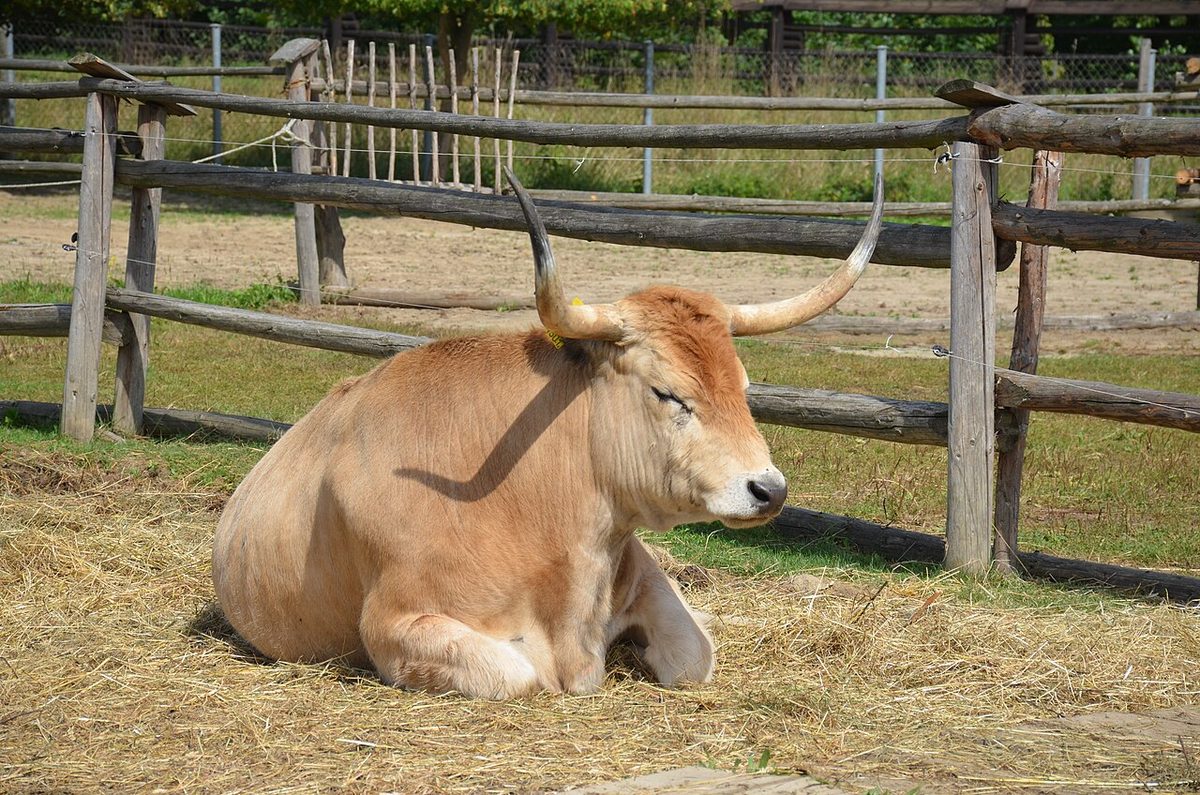
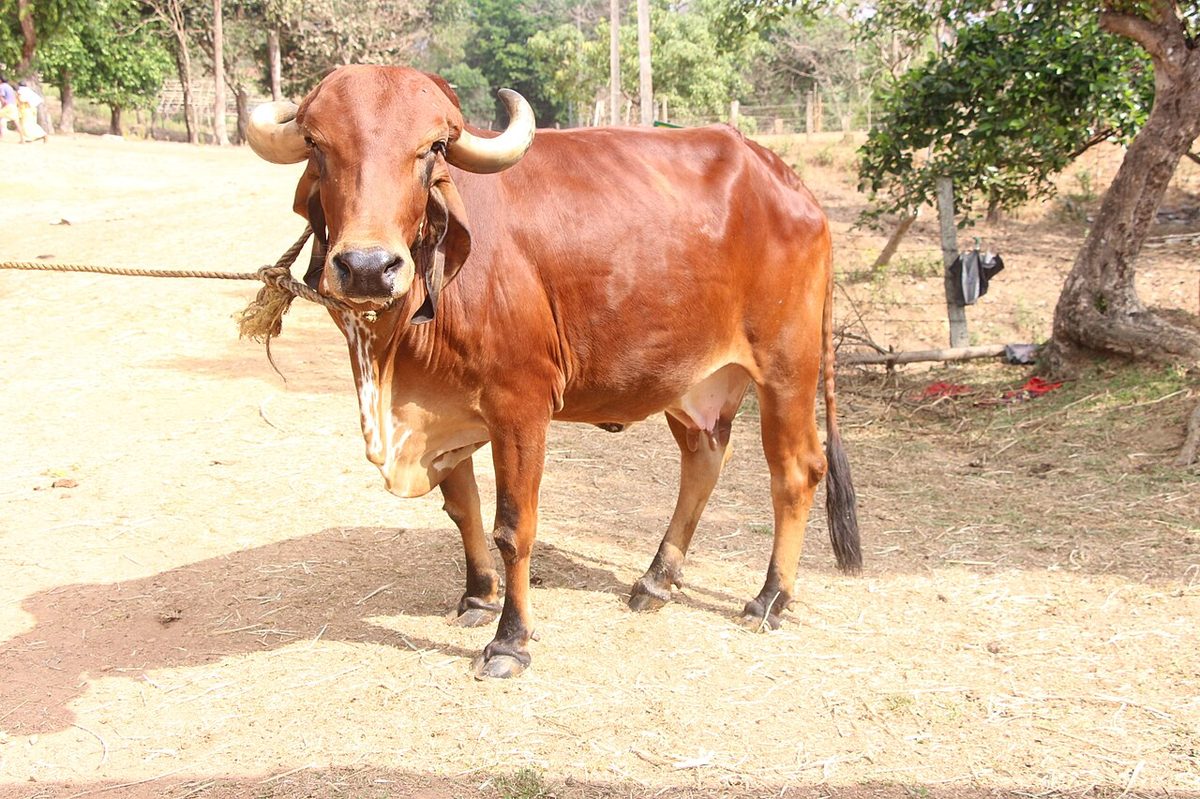
Hungarian Grey bulls stand about 150 cm at the withers and weigh some 800 kg. Cows average 135 cm in height and 525 kg in weight. Both sexes carry long, curved horns in a lyre shape, reaching some 70 to 80 cm in length. The coat ranges from silvery-white to ash-grey, with males typically darker than cows. The most striking feature is the coat colour — and the way it changes. As in other Podolic breeds, Hungarian Grey calves are born with a reddish coat. At about six months old, they begin to turn grey, and by adulthood they display the pale silver-grey that gives the breed its name. Watching a herd of these animals move across the puszta, with their long horns and pale coats against the grassland, is a reminder of what European farmland used to look like.The meat that caught Slow Food's eye
The Hungarian Grey is a slow developer. It takes longer to reach slaughter weight than a commercial beef breed, and on pure production efficiency terms, that makes it less competitive. But there is a payoff. The meat is low in fat, which is exactly what has drawn the attention of charcuterie producers and the Slow Food Foundation. Low-fat beef is well suited to the manufacture of beef salami and beef sausages — products where a lean, flavoursome meat is an advantage. The breed's inclusion in the Ark of Taste reflects an assessment that its meat has distinctive qualities worth preserving, and that the genetic diversity it represents has long-term value for food systems. For producers, this means there is a potential market niche. Salami and sausage makers looking for distinctive, heritage-breed beef may be willing to pay a premium for Hungarian Grey meat — though how much of a premium, and how reliable that demand is, will depend on the specific market you are operating in.Natural toughness and disease resistance
One of the most practically valuable traits the Hungarian Grey carries is reported resistance to cattle diseases that affect more highly bred, intensively managed cattle types. This is not a guarantee against any specific illness, and it is not a reason to skip proper herd management or veterinary care. What it does mean is that the breed's genetic stock may offer useful traits for breeders looking to improve resilience in commercial herds, or for farmers keeping Hungarian Grey cattle in extensive systems where veterinary intervention is harder to access. The breed's long adaptation to the Hungarian puszta — a harsh grassland environment with hot summers and cold winters — has produced animals that are good walkers, efficient converters of pasture and capable of thriving in conditions that would challenge more refined breeds. These are the qualities that gene banks are designed to protect.Government Support and Heritage Breed Conservation
The Hungarian Grey did not recover through market forces alone. It needed deliberate intervention — and that intervention offers lessons for anyone managing or considering a heritage or rare breed.Cryoconservation in action
The Hungarian government's cryoconservation programme is a practical demonstration of how genetic material can be banked against the risk of breed extinction. Semen and embryos from Hungarian Grey cattle have been frozen and stored, creating an insurance policy that means the breed's genetics can be reintroduced even if living populations were to fall again. Cryoconservation does not replace living herds, but it buys time — and in a conservation emergency, time is everything.Subsidies that keep breeders farming
Government subsidies available to Hungarian Grey breeders have provided the financial support that makes keeping a slow-growing, low-volume breed economically viable. Without that support, many breeders would face a simple arithmetic problem: the Hungarian Grey takes longer to reach market weight than a commercial alternative, produces fewer kilograms of meat per hectare of pasture and requires more land per animal. In a purely commercial calculation, those are disadvantages. Subsidies level the playing field by recognising that the breed provides value — genetic, cultural and environmental — that the market does not fully pay for.Herds as gene banks and tourist attractions
In Hortobágy National Park and at Bocfölde in western Hungary, Hungarian Grey herds serve both as gene banks and as a draw for visitors. The tourism dimension is worth noting: a well-managed heritage breed herd can generate income from visitors in a way that a commercial feedlot cannot. For farmers considering whether to invest in a rare breed, that dual income stream — conservation subsidy plus agri-tourism — is worth exploring.The Practical Picture: Heritage Breeds in a Modern Market
What does all of this mean for you as someone working with cattle, or thinking about it? The price data gives you a market baseline. Heifers and young bulls averaging €6 per kg, cows at €5 per kg — these are the figures that thousands of recorded transactions support. If you are buying or selling, start here and then adjust for your specific animal, your location and the current state of your local market. The Hungarian Grey story offers something harder to quantify but equally valuable: a case study in what it takes to keep a rare breed alive in a market dominated by high-production commercial animals. Government cryoconservation, breeder subsidies, a national breeders' association that has operated since 1931, and a product — low-fat, heritage-breed meat — that appeals to a specific market segment: these are the ingredients of recovery. They are not a blueprint that will work everywhere, but they are a set of tools worth understanding. If Hungarian Grey cattle are of particular interest to you, the breed's main distribution in Bács-Kiskun, Hajdú-Bihar and Veszprém counties in Hungary, and the presence of conservation herds in Hortobágy National Park and Bocfölde, give you places to look for stock and for expertise. The Hungarian Grey Cattle Breeders' Association is the right body to contact for standards, contacts and practical guidance on getting started. For everyone else, the message is simpler. Cattle prices fluctuate, breed markets rise and fall, and the right choice for your farm depends on your land, your climate, your target market and your capacity for management. What the numbers and the history together tell you is that diversity — in breeds, in markets and in conservation strategies — is a kind of insurance. The Hungarian Grey is proof that with the right support, a breed can come back from astonishingly low numbers. The cattle price benchmarks above are proof that markets continue to reward different animals in different ways. The question for any farmer is which combination fits.Frequently Asked Questions
Are Hungarian Grey cattle hard to manage?
Not really. They are one of the easiest beef breeds to keep. They calve easily on rough pasture, need almost no supplementary feeding, and handle Hungary's extremes of heat and cold without fuss. If you have reasonable fencing and some decent grazing, they will largely look after themselves.
Do they make money?
They can, but you have to think differently. You will not get the carcass weight of a modern terminal sire, and the market is smaller. What you do get is a low-input animal that produces quality meat at a premium price, plus the income from agri-tourism, breed associations and conservation grants. Many Hungarian Grey farms combine meat sales with on-farm experiences and rural tourism to build a more stable income.
Where can I buy them?
Start with the Hungarian Grey Cattle Breeders' Association. They keep a register of accredited breeders and can point you toward stock near your region. The national park directorates and the National Centre for Biodiversity also run conservation programmes that sometimes place animals with keepers. Always buy registered stock with papers — it protects your investment and supports the conservation effort.
The Hungarian Grey story is proof that heritage breeds still have a place in modern farming. With a growing market for quality, traceable, traditional food, and with support from conservation programmes, this ancient breed is building a genuine future. If you care about farming that works with nature rather than against it, it deserves a serious look.
 Menu
Menu
💬 Comments
Login to comment
No comments yet. Be the first to share your experience!