Cows wear bells so their keeper can find them. On a hillside, in a forest or out across a wide plain, a farmer cannot always see the herd — but a bell can still be heard long after the animals have slipped behind a ridge or a line of trees. Everything else a cowbell does — showing the animal is owned, marking out the top cow, carrying old blessings and good luck — sits on top of that one plain job.
In much of the world the bell is working equipment. In other places it has become mostly decoration. And whether the cow herself minds it is genuinely argued over, which we'll come to honestly further down.
The main reason: finding cows you cannot see

Grazing land is usually bigger than it looks. In mountain and forest country a single pasture can run to hundreds of acres, and a cow hunting for good grass can cover up to 10 miles in one day. Where there are no fences, and on large farms where hundreds of cows spread out over many acres, you can lose sight of the herd within minutes. A bell won't tell you the exact spot a cow is standing in. It tells you roughly where she is, and roughly is usually enough.
Sound goes where your eyes can't
That's the whole trick: the ringing carries much further than you can see. When fog settles, when trees block the view, when the ground folds into gullies and ridges, the sound is often the only clue you have about where the herd has gone. Across open mountain air it travels a long way.
Bad weather is when bells earn their keep
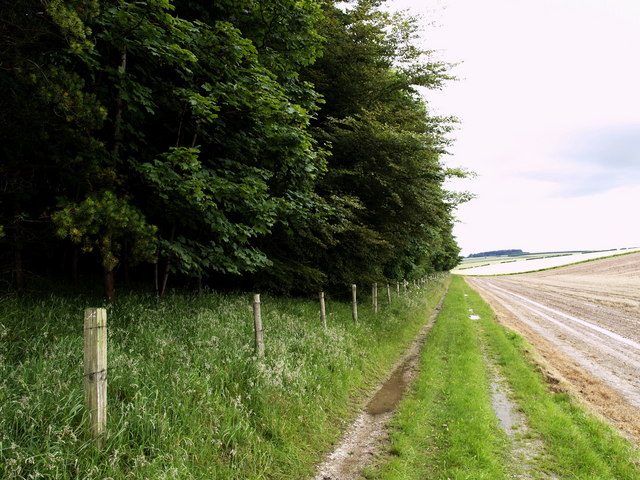
When a storm means the animals have to be brought back to the shelter of the farm, the owner simply follows the sound. In rough terrain a lost animal can be very hard to reach, and the bell makes finding and rescuing a stray far quicker.
When the bell goes quiet
Silence matters as much as noise. A bell rings while a cow grazes, walks or tosses her head, and stops when she lies down to rest. So a bell that has been quiet a long time might mean she is resting normally — or that she is stuck in a ditch, injured, or separated from the group. In the same way, a bell that drifts far from the others or stops moving altogether can be your first hint of injury or illness. It's a warning system dressed up as an ornament.
What the bell says about the cow wearing it
"This animal belongs to someone"
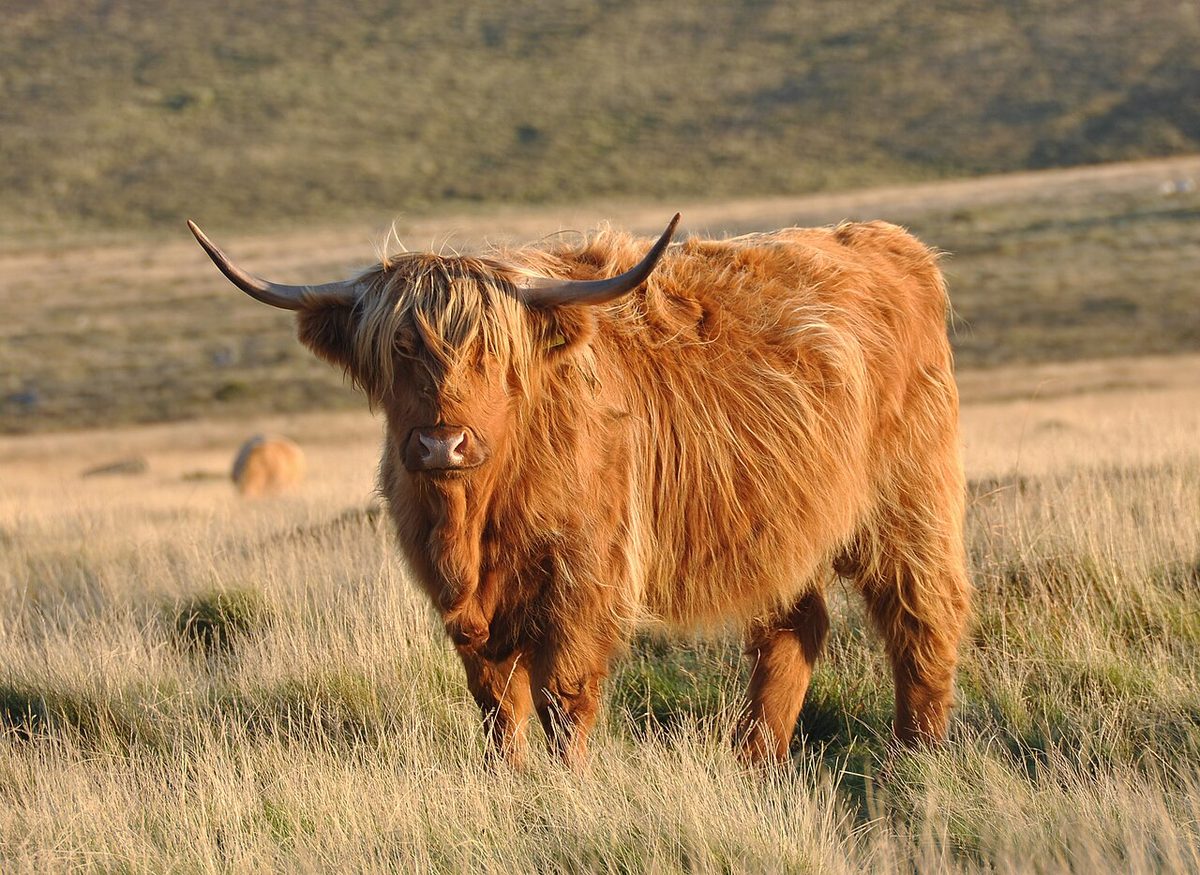
A bell tells anyone who meets the cow that she is domesticated, friendly and owned by a local farmer, not a stray. Some keepers call that the number one reason to use one; most others put locating the herd first and treat ownership as a useful bonus. Bells are usually plain, but in some regions they are ornate and carry a design showing which ranch the cow belongs to, so whoever finds her knows where to send her home. Collars are sometimes embroidered with details about the farmer and their family, though those elaborate versions tend to be kept for special use.
Every bell has its own voice
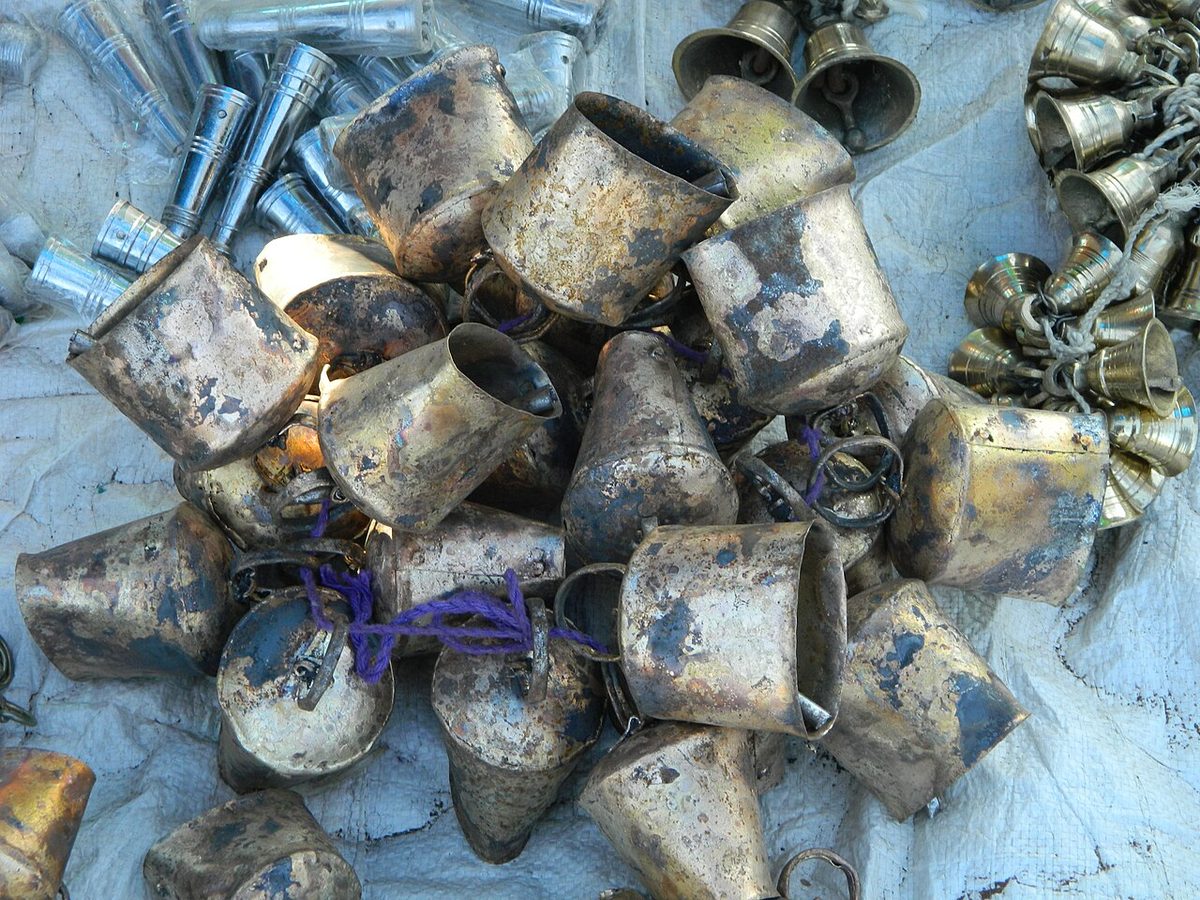
No two bells sound quite alike. Tone, pitch and resonance vary a little from bell to bell, and experienced farmers use that to tell one animal from another by ear instead of by sight — worth a great deal when your herd runs to hundreds of animals, or when two cows look identical. The size and sound of a bell say something about that particular cow. Older Swiss farmers are known to claim they can recognise every one of their cows by her bell alone. Where calves are belled, their smaller bells ring higher, which makes a wandering calf quicker to pick out.
The biggest bell goes to the top cow
Bell size isn't random. Bells are matched to the animal, so larger cows get heavier ones with a deeper tone. Beyond that, the largest bell is often a mark of rank — the highest-ranking cow, the farmer's prized animal, the dominant female some call the queen of the herd. In parts of Western Europe the bell has long been a status symbol of milk production, and the best milk producer leads the village procession at the end of summer.
One bell can cover a whole herd
You don't need a bell on every animal. Cows are deeply social and follow each other, so a bell on the lead cow — the dominant female, often called the boss cow — tells you about the whole group, because the rest stay near her. A Vermont dairy farmer named Doug, who has farmed for over 20 years and runs a 60-cow operation, does exactly this. He says he used to lose hours hunting stragglers, and now he listens for that one bell from his porch at dusk. It works from the herd's side too: the dominant cow's deeper, louder bell acts as a sound guide the others follow when the group moves.
A bell also warns people — and maybe predators
Hikers, cyclists and joggers
A cow weighs an average of 1,400 pounds and can run up to 25 miles per hour. Cows will charge if they feel threatened, if they are startled, or if they are protecting their young, and bulls in particular turn aggressive defending territory. On shared paths, a bell gives hikers, cyclists and joggers a few seconds' notice that something very large is about to cross in front of them. That is not a small thing.
Predators: farmers don't agree
Some farmers are certain bells keep predators off. The sound is loud, travels a long way and unsettles other animals, and against bobcats, coyotes, wolves and loose dogs, constant ringing hints that humans are nearby, which is thought to discourage attacks. Others point to research suggesting the opposite — that a bell may announce where the prey is and pull predators in. This one is not settled. What is clear is that many rural farmers still use bells as one part of a wider plan alongside measures like electric fencing, rather than trusting the noise on its own.
5,000 years of clanging
From pottery in China to forges in Germany
The oldest evidence is 5,000-year-old pottery cow bell remains found in China. Early bells were pottery or wood; metal came later. Metal cowbells appear in Europe in Germany in the 1300s, and by the 15th century the practice was well established across Alpine farming communities in Switzerland, Austria and France. Swiss cowbell-making grew into a specialised craft starting in the 18th century, and the cowbell is now one of the most recognisable symbols of Swiss identity. Traditional bells are still hand-forged by small craftspeople in Switzerland, Austria and parts of Germany, and a well-made one can last the lifetime of several cows.
Bells against evil, bells for luck
Bells were never only equipment. In the 15th century, people believed cowbells warded off sickness and evil and drew in goodness, and that a belled cow purified the land as she roamed. The ringing reminded them of church bells and stood for good luck. You can still see that history in the objects: Swiss bells often carry religious symbols and motifs, meant to protect the cattle with faith, and their straps are embroidered with dates that matter to the family behind the herd. In alpine Switzerland and Austria the bells stand for good luck and rural heritage, and in many communities folklore still holds that they keep evil away.
Where cowbells are still working equipment
Bells go on cows, goats, sheep and reindeer, and they are far more common in some regions than others.
- Europe and the Mediterranean: very common, and central to many festivals. Switzerland is the country most associated with cowbells.
- Latin America: widely used on working farms.
- Africa and Asia: very common on grazing livestock.
- The rest of the world: less frequent.
- United States: uncommon. The practice is treated as mostly outdated and generally ornamental there, with ear tags, GPS trackers and other technology doing the tracking instead — though some dairy owners do still use bells, as Doug does, and country like the Appalachian highlands can swallow a cow just as easily as an alpine slope.
The Alpine year: up in spring, home to a party
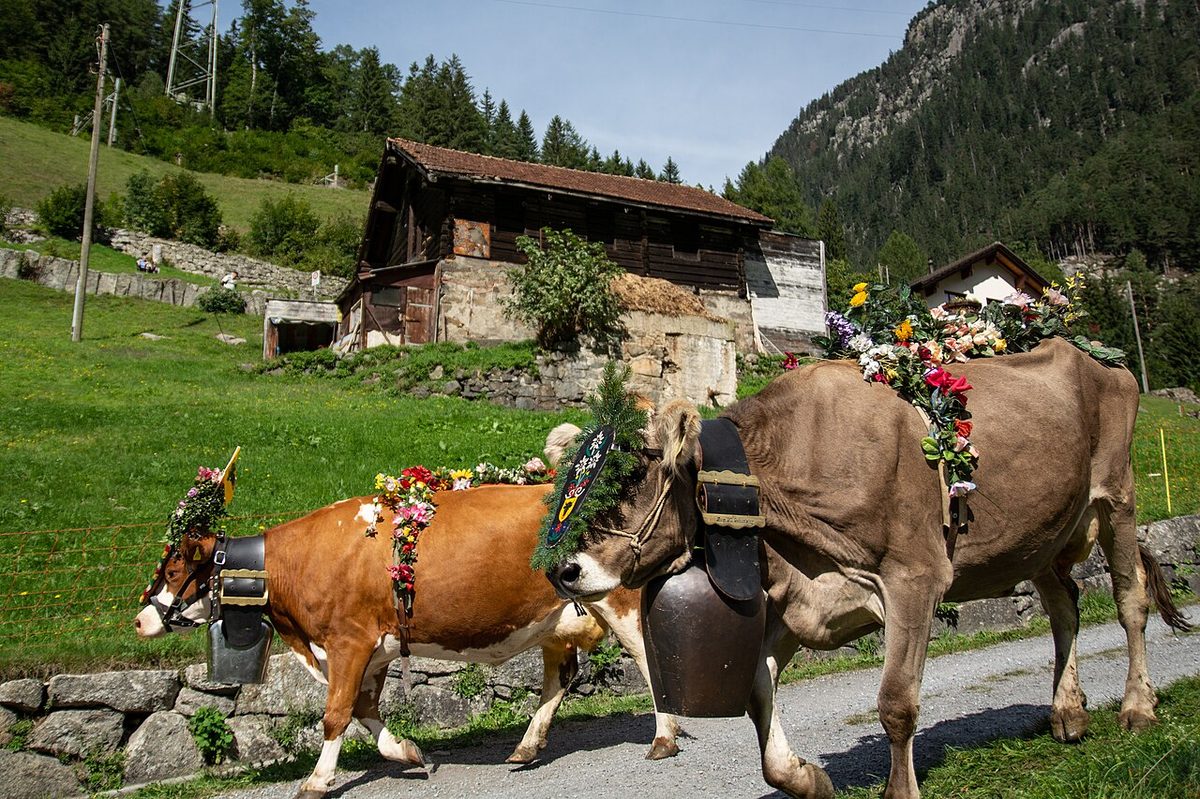
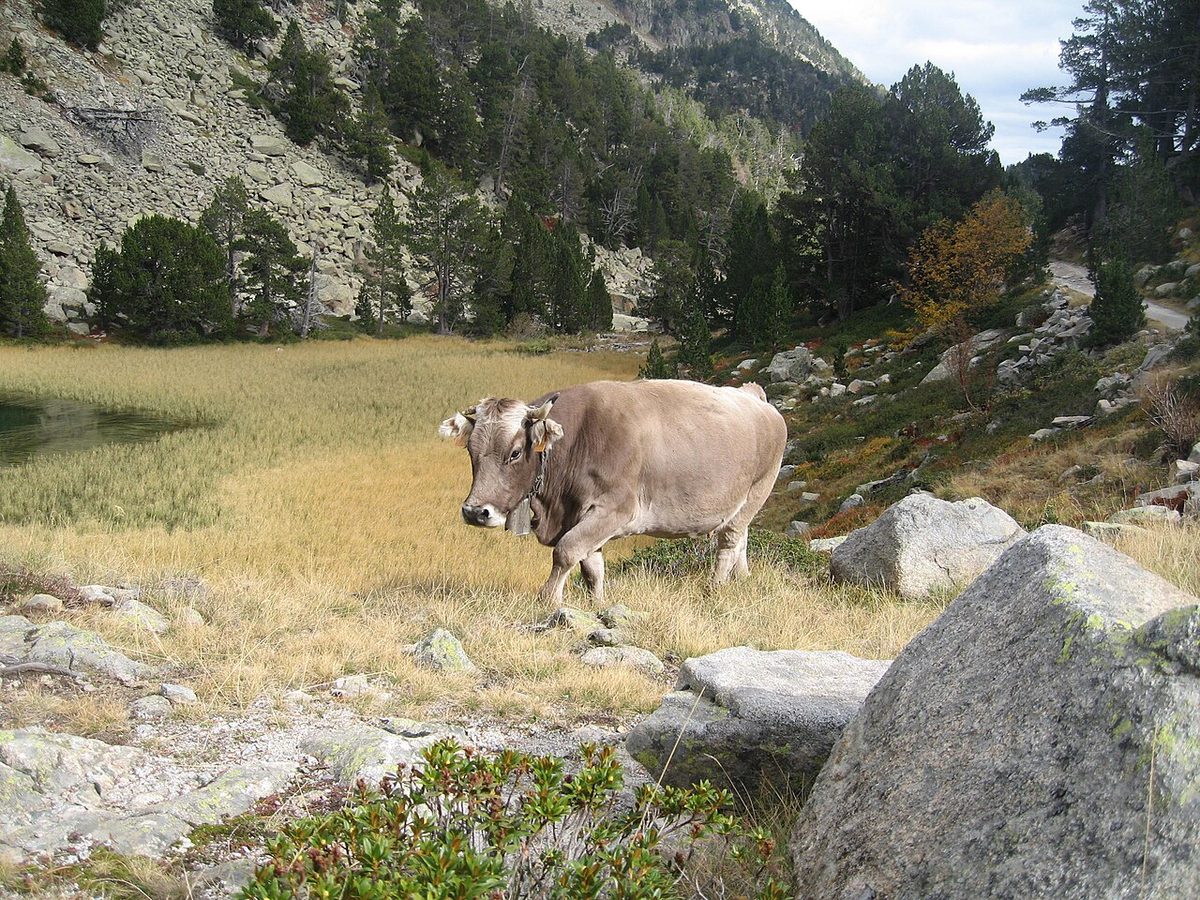
In Western Europe, once the snow melts in spring, the cows climb to the high alpine meadows and spend the summer months on the steep slopes. At the end of summer they come back down to the valleys for winter. In Switzerland, as many as 350,000 cows make that descent from the mountains each year, and villages meet them with processions, parades and large festivals: ornately decorated bells, flower garlands around horns and necks, floral crowns, religious symbols, and the best milk producer at the head of the line. If you have ever seen a Brown Swiss cow standing in an alpine meadow with a bell at her neck, you were looking at the working half of that same tradition. And if you have heard it said that Swiss cows must wear bells, treat it carefully — what's certain is the tradition, craft and religious custom behind it. Whether bells are expected, encouraged or restricted is a local matter, so check with a nearby agriculture office if it affects you.
Does the bell bother the cow?
Here honest people disagree, and it's worth hearing both sides.
- The concern: a typical bell weighs around five and a half pounds, a cow's hearing is more sensitive than a human's, and recent research has been reported to link bells with deafness and with animals grazing less. By this view cows dislike the sound, may lose weight, and the bulk and noise make it very hard for cows, goats, sheep or reindeer ever to settle to a bell. Those who object have recently suggested GPS devices instead.
- The reply from cattle owners: most reject these theories. They say cows get used to their bells, and that belled cattle carry on grazing, drinking, producing milk and thriving — and that they would stop using bells if the animals seemed troubled.
The research behind the criticisms isn't named, and no one puts a figure on how loud a bell is or how far the sound really reaches. So some farmers bell their cattle without a second thought, and others have moved to tags and trackers. Both camps are made up of people who care about their animals.
What the bell is made of, and how it hangs
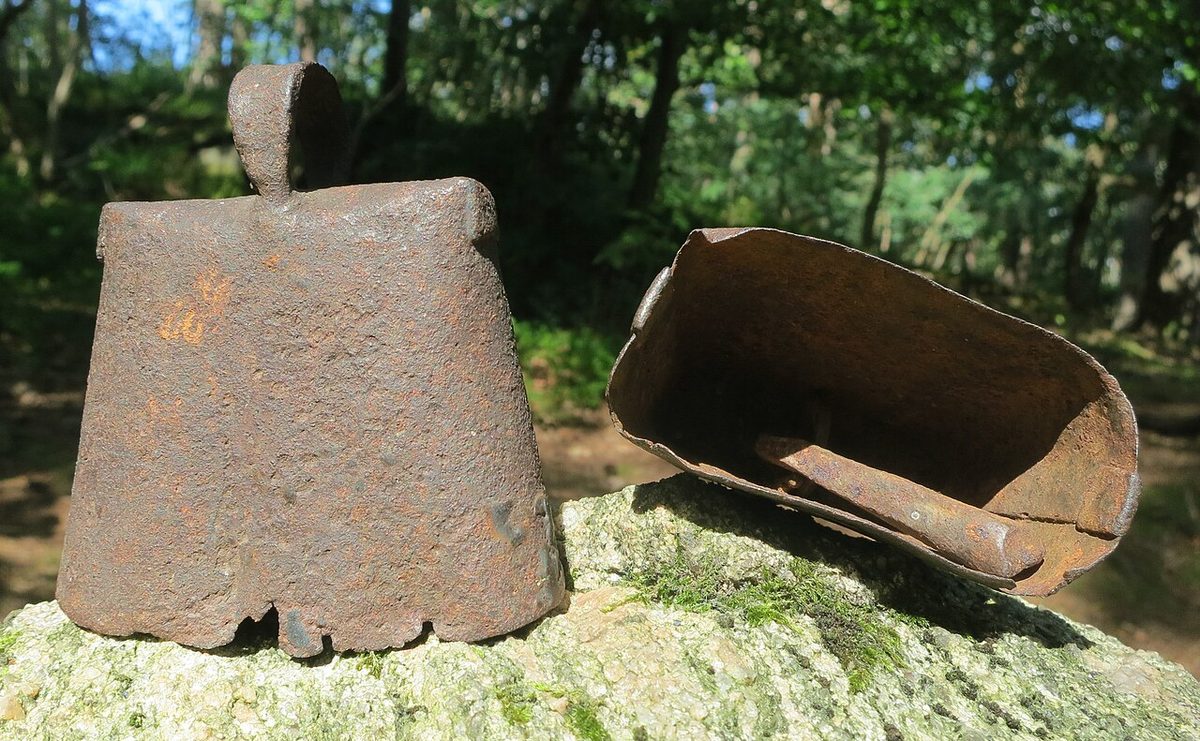
Bells are made of iron, brass, copper and bronze, and those are heavy — around five and a half pounds is typical. Lighter bells are made from thin flat pieces of plated sheet metal. The bell usually hangs from a large collar, and leather is the most common choice for safety. Size is matched to the animal, with bigger cows carrying heavier, deeper-toned bells. In Switzerland the strap itself can be a piece of craftwork, with intricate embroidery and family dates, while the bell may bear the ranch's own design.
The things nobody can answer from a distance
- What bell weight and size suit a particular animal, by age, breed or neck size.
- How to fit a collar so it doesn't rub or cause neck sores, and how often to check it.
- Whether to remove the bell at night, indoors, at milking, or over winter housing.
- Whether calves should be belled at all — some keepers leave calves bare because they stay close to their mothers, others fit small, higher-pitched bells so a stray calf is easy to find.
- Whether a tracker would serve you better than a bell, and what either costs where you live.
For all of those, ask someone who can see your animals and your ground: your local vet, a bell maker or livestock dealer, or your nearest agriculture office. Anyone handing you a firm number without seeing your herd is guessing.
So, why do cows wear bells?
Because a keeper needs to know where the herd is, and sound reaches where sight cannot. That's the working answer. Everything else is layered on top: proof that the animal is owned, a name badge you hear instead of read, a mark of rank for the best cow, a warning for people on the path, an argued-over defence against predators, and thousands of years of luck, faith and festival. Next time you hear that clang drifting down a hillside, you're hearing a tool that has been quietly doing its job since bells were made of clay.
 Menu
Menu
💬 Comments
Login to comment
No comments yet. Be the first to share your experience!