
Buffalo and bison are two different animals, and you can usually tell them apart in seconds: bison have a big muscular hump over the shoulders, a heavy beard and short sharp horns, while buffalo have no hump, no beard and long sweeping horns. The one that is actually farmed — for milk, for pulling and hauling, and for meat — is the Asian water buffalo; bison are not a domesticated animal, though large commercial herds are raised for meat in the United States.
That is the whole answer in two sentences. The rest of this post fills in the details: which four animals sit behind these two names, how to read the hump, horns, coat and continent, why the size figures you find never quite match, and what you would still need to ask locally before keeping either one.
Buffalo and bison are not the same animal
All of them belong to the same big family, the Bovidae — the same family as cattle. But bison and true buffalo sit in completely different genera. Here are the animals people are usually talking about:
- North American bison (Bison bison) — the animal most Americans call a buffalo.
- European bison or wisent (Bison bonasus) — a forest and woodland animal.
- African Cape buffalo (Syncerus caffer) — a true buffalo of sub-Saharan Africa.
- Asian water buffalo (Bubalus bubalis) — a true buffalo, and the farmed one.
The gap is bigger than most people expect. Bison are genetically closer to cattle than they are to true buffalo, and one account goes further and says true buffalo have no genetic relationship at all to the American bison. So why do they look so much alike? Because they evolved into a similar shape on continents separated by oceans, doing a similar job in similar grassland — a family resemblance that was never really family.
Why bison get called buffalo
The mix-up is old. Early European settlers and explorers arrived in North America, saw a huge shaggy grazing animal, and reached for a name they already knew from Africa and Asia: buffalo. The name stuck and never left everyday speech. You can still hear it in "buffalo soldiers" and "buffalo nickels", and in the song "Home on the Range" — even though buffalo never roamed the American West at all.
How many kinds are there? Counts differ
Do not be surprised if you see the species counted differently in different places. Some descriptions keep it simple: two kinds of bison (American and European) and two forms of buffalo (water and Cape). Others count one bison species in North America with two subspecies, plains and wood, one African buffalo species with the Cape buffalo as its most widespread subspecies, and two water buffalo in Asia — a wild one (Bubalus arnee) and a domesticated one (Bubalus bubalis). Another account lists three types of bison and three species of buffalo, placing plains bison on the American prairie, wood bison in the boreal forests of Canada and Alaska, and a smaller buffalo species in China and other parts of Asia.

Home, hump, horns — and a beard
If you only remember one thing from this post, make it the three H's: home, hump and horns. Then throw in a B for the beard, and you have a check you can run at a glance.
Home
- American bison: historically ranged from northern Mexico to Alaska, across the great plains and grasslands, in river valleys, prairies and plains. They can also graze hills and mountains that are not too steep. Wild herds survive in protected areas such as Yellowstone National Park and Wood Buffalo National Park in Alberta.
- European bison: European forests and woodland.
- Cape buffalo: the savannas, grasslands and forests of sub-Saharan Africa. Most accounts confine them to sub-Saharan Africa, while one says the Cape species is found all over the continent.
- Water buffalo: tropical and subtropical Asia. Wild water buffalo are listed in India, Nepal, Bhutan, Thailand and Cambodia. The majority of domestic water buffalo are across India, Pakistan, China and Southeast Asia, with other domestic breeds now in Central and South America, Europe and Australia.
Buffalo also stay near water. Cape buffalo are found within 20 km of water and prefer to be less than 1 km from it, and water buffalo spend a lot of their time in rivers or mudholes. One outlier account puts bison in South America too, and says they are now found in Asia and Africa as well; most place bison only in North America and parts of Europe.
The hump
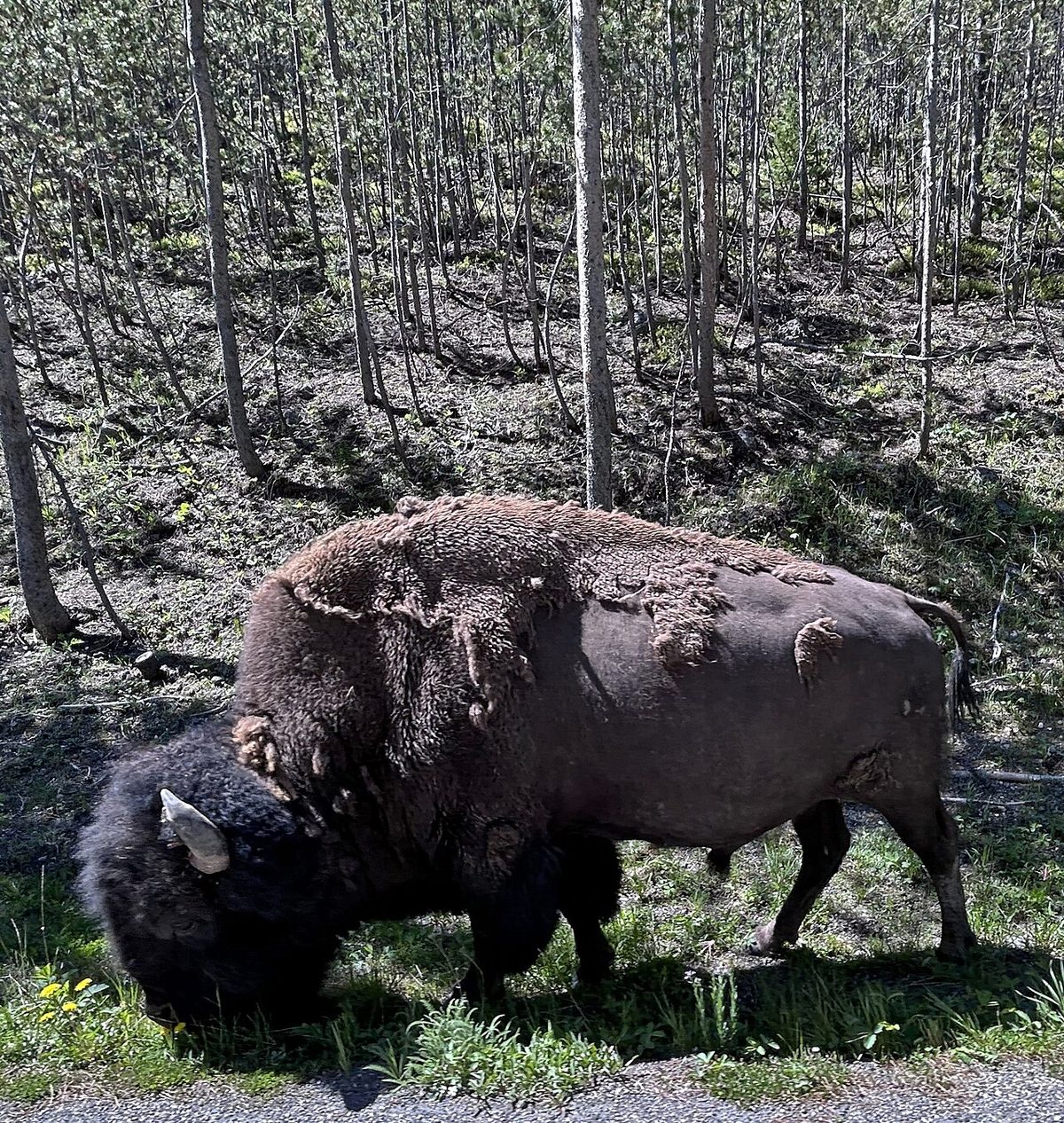
This is the single clearest sign. Only bison have it. The hump is built from long spines on the vertebrae, which anchor the heavy muscles that power the head. That gives the bison a working tool: it can swing its head like a plough and sweep winter snowdrifts aside to reach grass underneath. Buffalo — Cape and water alike — have no pronounced hump; the Cape buffalo's profile is often called more streamlined. Most descriptions put the bison hump squarely over the shoulders, though one describes it as a huge hump on the back.
The horns
- Bison: much shorter and sharper, averaging 1 foot 8 inches (0.5 meters) on American bison, and used for defence.
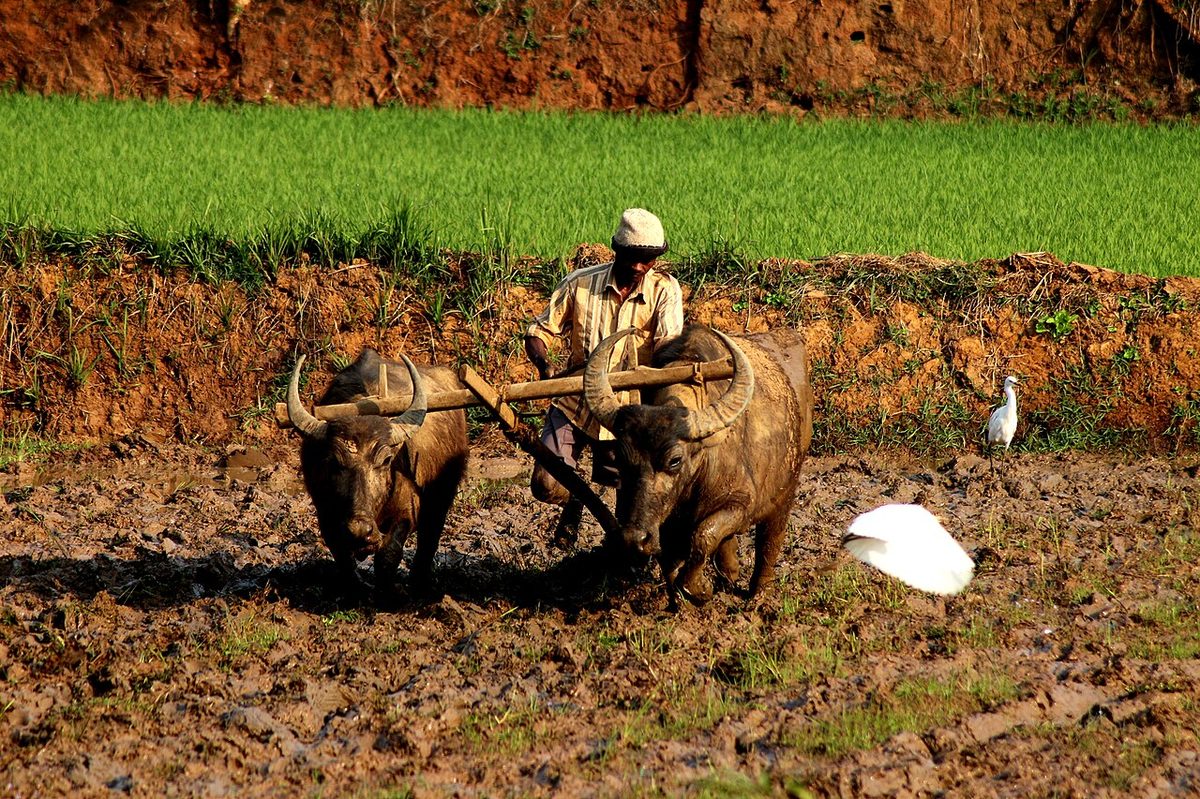
- Water buffalo: long crescents curving back, growing up to 2 meters (6 feet 6 inches).
- Cape buffalo: horns sweep outward, then up, and often meet in the middle to form a bony shield called a "boss" — one description likens the shape to a handlebar mustache, another to broad curling horns covering much of the top of the head.
- The record end of things: buffalo horns are large with very pronounced arcs, some reaching more than 6 feet (1.8 meters).
In short: long and arced means buffalo; short and sharp means bison.
Beard and coat
Bison are the hairier of the two. They carry a thick beard — one description compares it to a goat's — and a thick woolly coat that grows heavier in winter, especially around the head and neck, then sheds in spring and early summer. That coat is what carried them through harsh North American winters, and bison are described as able to survive extreme conditions. Buffalo are beardless and do not have thick fur, and are described as accustomed to mild temperatures. One account places the bison's thick beard as circling around the rib cage, but most put the beard on the chin, head and neck.
Head and body shape
A bison's head is massive, even oversized, and it hangs lower than the shoulder hump — that drooping, front-heavy silhouette is unmistakable once you have seen it. Buffalo look rounder and more even: comparatively larger, more rounded bodies with proportionally smaller heads and shoulders.
Size and weight: big either way, and the figures do not line up
Both animals are heavy. Which one is heavier depends on whose measurements you read, so here they are side by side rather than boiled down to one answer:
- American bison: up to 2 meters (6 feet 7 inches) tall, 3.5 meters (11 feet 6 inches) long, 1180 kilograms (2600 pounds).
- Wild water buffalo: up to 1.9 meters (6 feet 3 inches) tall, 3 meters (9 feet 10 inches) long, 1180 kilograms (2600 pounds).
- Domesticated water buffalo: up to 1.6 meters (5 feet 3 inches) tall, 3 meters (9 feet 10 inches) long, 550 kilograms (1212 pounds).
- African (Cape) buffalo: up to 1.7 meters (5 feet 6 inches) tall, 3.4 meters (11 feet 2 inches) long, 866 kilograms (1910 pounds).
Other accounts put it differently. One makes American bison slightly larger at up to 2,200 pounds (998 kg) against 1,900 pounds (862 kg) for African buffalo. Another gives buffalo 800-1200 kg and bison up to 1400 kg. A third says water buffalo are the heaviest of all at nearly 2700 pounds, with a typical bison at about 2200 pounds and around 12 feet from head to tail, water buffalo only about nine feet in length, and Cape buffalo 11 feet long but usually just under a ton. So some sets of figures make the bison the bigger animal, others hand that to the water buffalo, and one lists bison and wild water buffalo at exactly the same weight.
Height is more consistent. Bulls from both species of bison stand about six feet high, while buffalo of both types are closer to four or five feet; another set of figures says buffaloes grow up to 5 feet while bison may grow to 6 feet.

Which one is actually farmed, and what for
The water buffalo — milk, work and meat
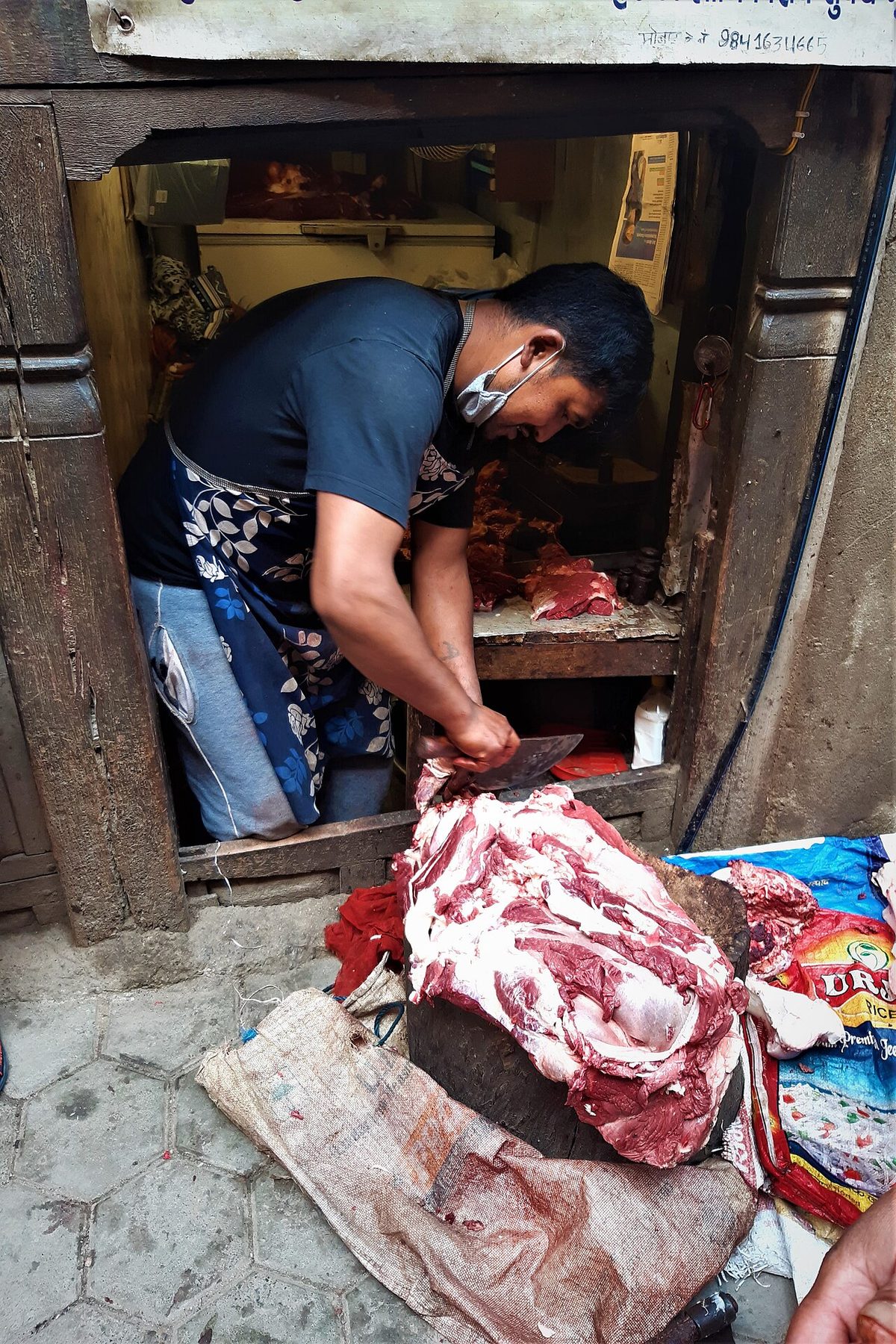
The Asian water buffalo is the farmed animal here. It has been domesticated for thousands of years and plays a crucial role in agriculture across Asia. Buffalo milk is consumed in Asia and Africa, buffalo are used extensively as work animals, and they are also raised for meat. Their peaceful temperament is given as the very reason they were domesticated in the first place. Domesticated buffalo live 25-30 years, and domestic breeds have spread well beyond Asia into Central and South America, Europe and Australia.
Bison — raised, but not domesticated
Bison are a different proposition. They are described as not domesticated, mostly wild, and not used for work, and they live only into their teenage years. They are still raised for meat: one count puts about 20,000 wild bison and about 400,000 commercial bison raised for meat in the United States. So bison meat is a real business — but it is not the same thing as keeping a domesticated dairy or draught animal.
What you still have to check where you are
Beyond the basics — both animals thrive on grass and drink gallons of water every day — the practical side of keeping either one varies far too much by place for anyone to hand you a number from a distance. Milk yields, which buffalo breed suits your climate, land per head, fencing and handling facilities, vaccination and parasite programmes, permits or licences, and what stock and produce actually cost: all of that depends on your country, your district and your market. Ask a nearby vet, a livestock office or a dealer you trust. That advice matters twice over for bison, since they are not a domesticated animal and containing and handling them safely is specialist work.
Temperament: which one deserves more respect
African buffalo have a fierce reputation. They are aggressive, with strong herd dynamics, forming groups of hundreds or even thousands, and they actively defend themselves against predators — they regularly face off against lions. They are counted among Africa's most dangerous animals, and one assessment says that in a direct confrontation a Cape buffalo would likely beat a bison, despite the bison's greater weight.
Bison typically form smaller herds and generally avoid human contact and confrontation — but they can be extremely dangerous if they feel threatened. On the ranking, opinions split: some accounts clearly put the Cape buffalo above the bison for aggression, while others describe bison as very aggressive when threatened and place the Cape buffalo alongside them rather than above. Everyone agrees on one point, though: the Asian water buffalo is the calm one, and that is exactly why it ended up in the farmyard.
How many are left
The American bison story is a genuine near-miss. Numbers fell to fewer than 1,000 individuals in the late 1800s, then recovered to about 500,000 today — though only about 30,000 of those sit in conservation herds, with wild bison surviving in protected areas such as Yellowstone National Park. A different estimate puts the bison population at around 2 million, and the world buffalo population at around 150 million. The two bison figures cannot be squared with each other, so treat both as estimates counted in different ways rather than settled facts.
On conservation status, African buffalo populations are described as relatively stable, while Asian water buffalo are considered endangered in their wild form — one account limits that to the wild population, another simply calls water buffalo, found primarily in India, endangered. European bison were once extinct in the wild, but they were bred in captivity and reintroduced across Europe in the late 20th century, successfully.
The short version
Keep these four points and you will never mix the two up again. Bison live in North America and Europe; buffalo live in Africa and Asia, always near water. Bison have the shoulder hump, the oversized low-hanging head, the beard and the shaggy winter coat; buffalo have none of those, and carry the long arcing horns instead. Bison and buffalo are not close relatives at all — bison are nearer to cattle. And when you are talking about farming, you are talking about the water buffalo: milk, work and meat from a calm animal people have kept for thousands of years, while bison remain a wild animal that some producers raise for meat.

 Menu
Menu
💬 Comments
Login to comment
No comments yet. Be the first to share your experience!