
Short answer: buffalo give the richer milk in the figures we hold, and they are the animal people traditionally put in front of a plough on wet, heavy ground, because they are strong and their wide hooves do not sink deep into soft soil. Cows are traded far more widely — cow milk shows up in more than twenty currencies in our price records while buffalo milk shows up in only two — and when it comes to dung, nobody separates the two animals at all.
That is the headline. Below is the detail, including the places where the honest answer is "it depends where you are", rather than a number.
First, "buffalo" means two different animals
Before you compare anything, work out which buffalo is being talked about. Two very different animals carry the name, on two different sides of the world.
The water buffalo
This is the dairy and draught buffalo. It is indigenous to South Asia, where wild populations lived long before anyone tamed them. By the time of the Indus Valley Civilisation (c. 3300 – c. 1300 BCE) it had been domesticated and was already used for ploughing and for milk. Italy's dairy buffalo, the Italian Mediterranean breed, is a water buffalo too.
The bison
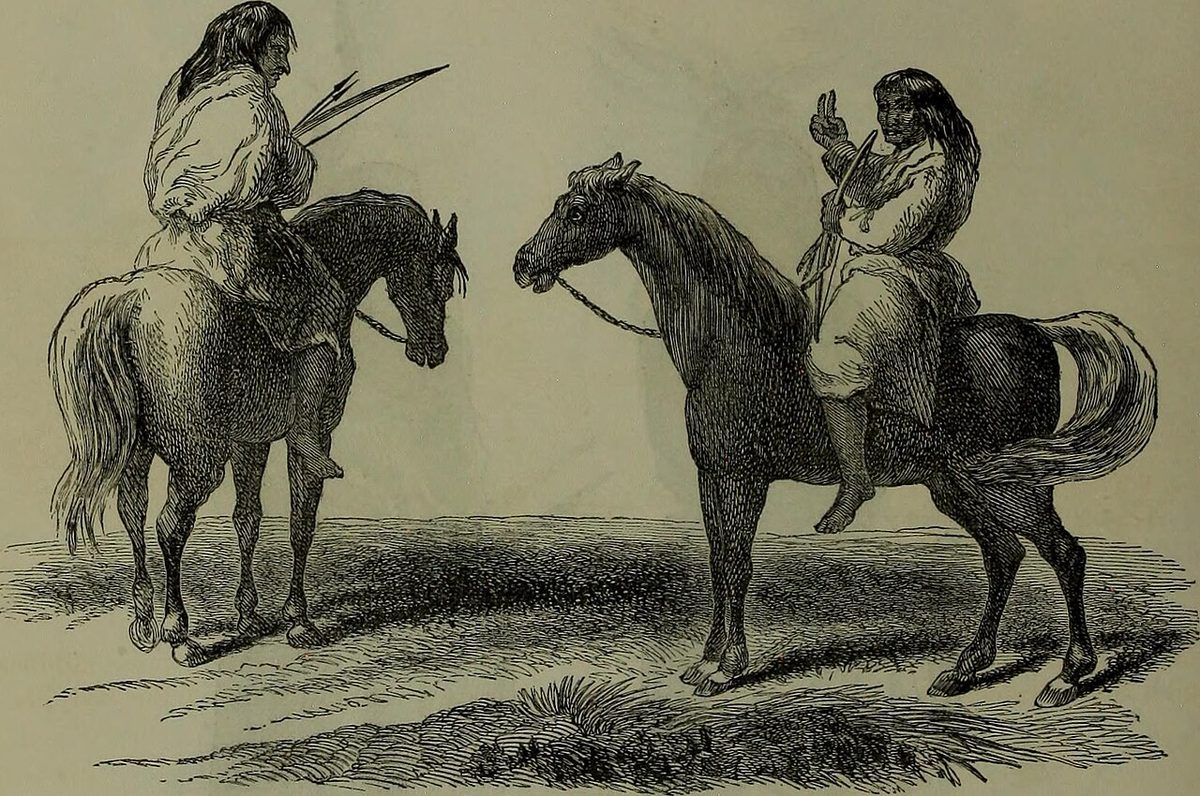
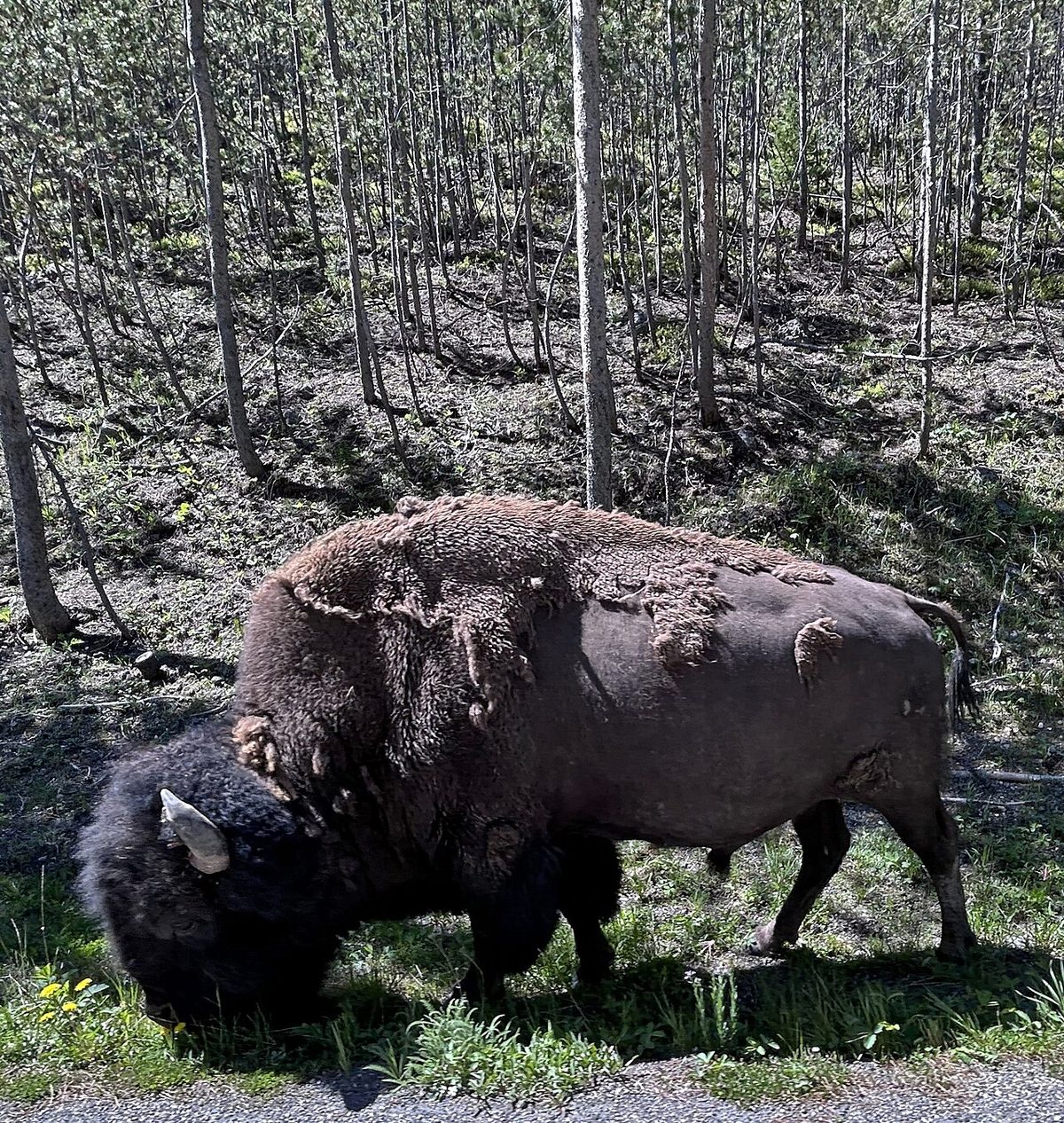
In North America, "buffalo" usually means the American bison. Its dried dung, a big flat pat, was called a buffalo chip or a meadow muffin, and it was burned as fuel on the prairie by Plains Indians, settlers, pioneers and homesteaders. American bison bulls are also crossed with domestic cattle. So if you read about "buffalo" on the prairie, that is not the animal giving milk in Italy or India.
And the cow itself
Across much of Asia the common domestic cow is the zebu (Bos taurus indicus), interbred with other domestic cattle over thousands of years and widely crossed with European cattle. Brazil's Chanchim breed, for example, is 5/8 Charolais and 3/8 Zebu, putting Charolais meat quality and yield together with the zebu's heat resistance. Indian dairying goes back roughly 8,000 years to the first domestication of zebu cattle, thought to have started in India. The point worth holding on to is that the cow and the water buffalo of the subcontinent have separate origins. One is not a version of the other.
Can you cross a cow with a buffalo?
Cattle cross with several relatives among the 143 living bovid species. Cattle and bison give beefalo or cattalo, and the żubroń, first bred in Poland in 1847 as a hardy, disease-resistant alternative to domestic cattle; that breeding stopped in the 1980s and the few remaining animals are at Bialowieski National Park. Cattle and yak give the dzo, kept in India, Nepal, Tibet and Mongolia, where the infertile males work as oxen and the fertile females can be bred back into cattle breeds and milked. Zebu also cross with yak, gaur (Bos gaurus) and banteng (Bos javanicus). Fertility is patchy and depends on the direction of the mating: first-generation wisent × cattle males are sterile, male żubroń are infertile while females are fertile, and modern beefalo include fertile bulls. Bison bull to domestic cow is the usual direction, but domestic bull to bison cow gives lower infant mortality, because cow immune systems can reject hybrid calves. A cross between domestic cattle and water buffalo appears nowhere in this record, in either direction.
Milk: buffalo looks richer, but the comparison is half-finished
This is where most people want a straight table, and this is where you should be careful about what you are being told.
- Buffalo milk (Italian Mediterranean breed): 8% fat and 4.63% protein, from a mean production of 2,356 kg milk in 270 days of lactation.
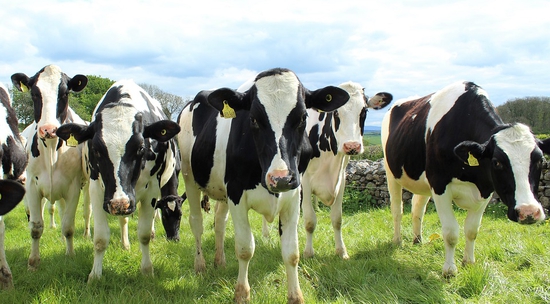
- Cow milk: about 87 percent water and 13 percent solids, those solids being fat, carbohydrate in the form of lactose, minerals and protein. About 30 to 35 percent of the casein is beta-casein, roughly two teaspoons per quart of milk.
- Not on record: a fat or protein percentage for cow milk to sit beside 8% and 4.63%, and any cow yield figure to sit beside 2,356 kg in 270 days.
So buffalo milk has a rich-sounding number attached to it and cow milk does not have a matching one here. A true like-for-like comparison cannot be finished from this. If you need it for your own animals, a milk-testing lab or your dairy society can test your bulk milk and tell you exactly what you are producing.
That Italian figure rests on 34,990 recorded females of the Italian Mediterranean breed, which make up roughly 30% of the total dairy buffalo population — a share no other country reaches.
A1, A2 and the beta-casein argument
Buffalo milk is naturally mostly A2 beta-casein. So is the milk of humans, sheep, goats, donkeys, yaks and camels, which is why the term "A2 milk" gets applied to them too. Cattle are split. African and Asian cattle still produce only A2 beta-casein, while A1 is common in western herds and is the most common type in cow's milk in Europe (excluding France), the United States, Australia and New Zealand. By breed, more than 70 percent of Guernsey cows give milk that is predominantly A2, while between 46 and 70 percent of Holsteins and Ayrshires give milk containing both A1 and A2.
The physical difference is tiny. Beta-casein is 209 amino acids long, and A2 has a proline at position 67 where A1 has a histidine. Digestive enzymes can cut a seven-amino-acid piece called beta-casomorphin-7 (BCM-7) away from A1 at that spot, but cannot cut A2 there. Studies in people have not consistently found that BCM-7 is actually formed in the human digestive system.
Opinion on what that means is genuinely divided. Some sellers, including The a2 Milk Company and some goat's milk producers, say milk containing A1 protein is harmful; in 2003 the company's website linked A1 to heart disease and insulin-dependent diabetes, and its chief executive linked A1 to schizophrenia and autism. Others point out that no widely accepted scientific work has identified a link between A1 protein and any adverse health effect. A2 Corporation was founded in New Zealand in 2000 and renamed The a2 Milk Company Limited in April 2014, when it held about 8% of the Australian milk products market. A2 milk is sold mainly in Australia, New Zealand, China and the United States, and was sold in the United Kingdom between 2012 and 2019.
Where buffalo out-milk cows
India has the world's largest dairy herd, with over 300 million bovines producing over 190 million tonnes of milk, and it ranks first among all countries in both production and consumption. Within that, most of the milk comes from buffalo, cow milk is a close second, and goat milk a distant third. Buffaloes there supply a wide range of products: paneer, butter, ghee and yogurt, with paneer common in North Indian cooking and yoghurt and milk in South Indian. Cows hold their own place too, referred to over 700 times in the Vedas as aghnya, not to be killed. Almost all the milk is consumed at home, dairy imports are negligible and carry tariffs, and the industry is regulated by the Ministry of Animal Husbandry, Dairying and Fisheries, the National Dairy Development Board and the Food Safety and Standards Authority of India.
One caution: there is no split of that 190 million tonnes into buffalo and cow shares, and no buffalo-versus-cattle balance for any other country. Do not assume the Indian pattern holds where you farm.
Price: what the two fetch per tonne
Our own price records hold 5,188 rows across all countries. Both milks appear side by side in only two currencies:
- In BGN: buffalo milk averages BGN1371 per tonne (BGN1153–BGN1576, 49 rows) against cow milk at BGN880 per tonne (BGN700–BGN1121, 49 rows). Both were last updated 2025-01-31.
- In LKR: buffalo milk averages LKR140227 per tonne (LKR14626–LKR183892, 49 rows) against cow milk at LKR127839 per tonne (LKR13768–LKR172472, 49 rows).
Buffalo carries the higher average in both. But look at the Sri Lankan ranges: they overlap almost completely, so a buffalo premium is not something you can bank on. Coverage is also very uneven. Cow milk shows up in more than twenty currencies, averaging EUR464 per tonne (EUR35–EUR3795, 705 rows) and USD486 per tonne (USD381–USD627, 102 rows). Buffalo milk shows up in only the two above.
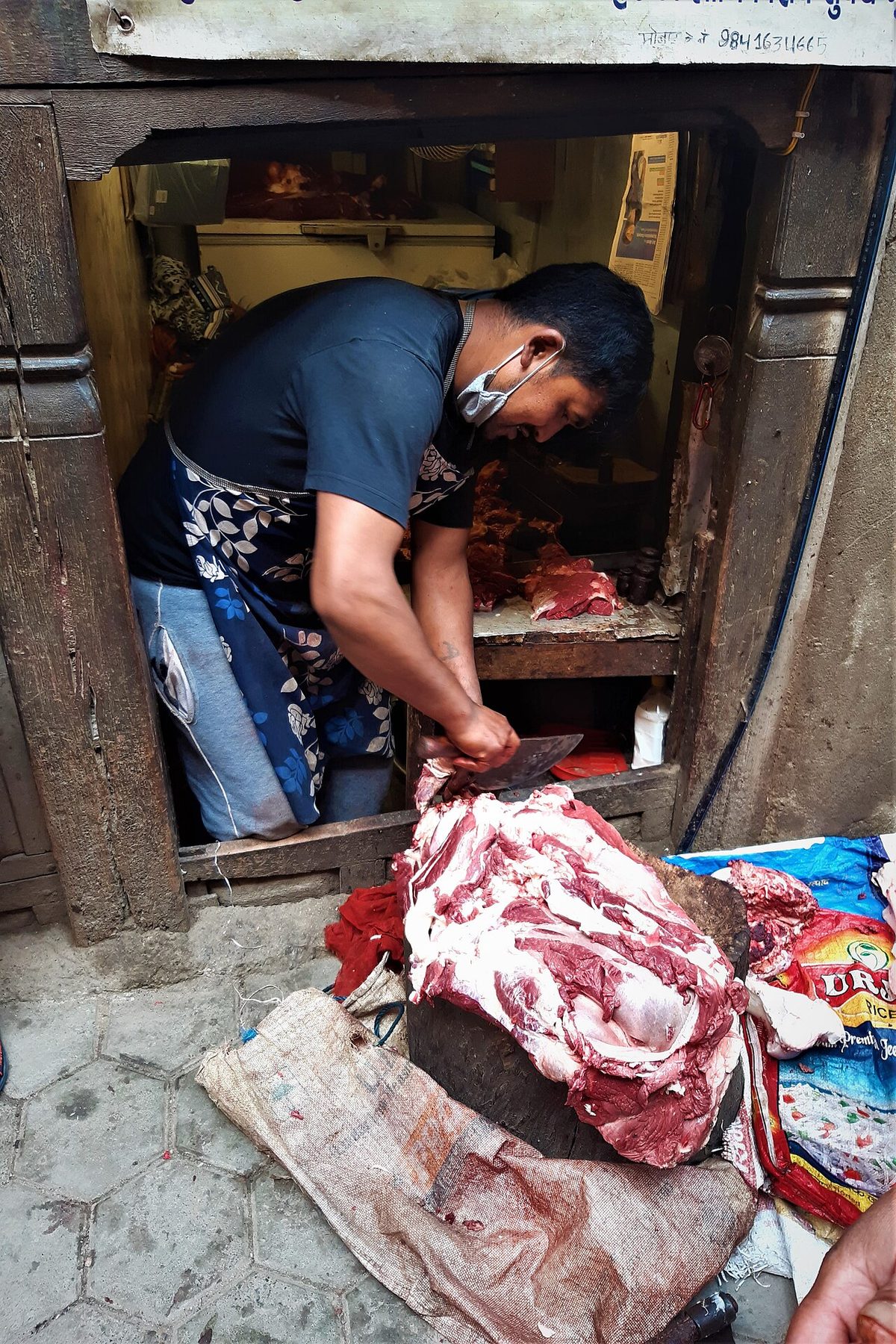
Meat is thinner still. Buffalo meat appears in one currency, PHP, at an average of PHP145946 per tonne (PHP118610–PHP180463, 49 rows), with no cow-meat average to set against it. The live-animal line for "Cows" averages €5 per kg (€2–€8, 1,956 rows, most recent 2026-08-30), and there is no buffalo live-animal price at all to compare it with. We also cannot tell you from that line whether it is liveweight or carcase weight. For what a cow or a buffalo actually costs to buy near you, your local market, dealer or cooperative is the only reliable source.
Cheese: buffalo milk's protected name
Mozzarella di bufala campana is a fresh, soft pasta filata cheese made from Italian Mediterranean buffalo milk, traditionally produced in Campania and especially in the provinces of Caserta and Salerno. Since 1996 it has been a registered EU and UK protected designation of origin (PDO) product. The name can only be used for cheese made to the traditional recipe inside a defined area: all of Caserta and Salerno provinces, parts of Benevento and Naples, parts of Frosinone, Latina and Rome in Lazio, part of the comune of Venafro in Molise, and part of Foggia in Puglia. Italian buffalo are kept in every region of Italy, so the same cheese is made nationwide under the plainer name mozzarella di latte di bufala.
How big is the trade? The figures do not agree
One count comes from the producers' consortium of about 200 producers, which certified 55,718 tonnes of the PDO cheese in 2024, roughly 40% of it exported with France the leading foreign market, and a turnover of more than half a billion euros. That would make it the fourth Italian PDO product by production value, after Grana Padano, Parmigiano Reggiano and prosciutto di Parma. Another count describes Italian buffalo mozzarella as a €300m ($330m) per year industry producing around 33,000 tonnes every year, with 16 percent sold abroad. The year and the scope behind the smaller set are not clear, so treat both as indications rather than settled fact.
Buffalo dairying is not only Italian
Buffalo mozzarella is also made from local water buffalo herds in Switzerland, the United States, Australia, Mexico, Brazil, Canada, China, Japan, Venezuela, Argentina, the United Kingdom, Ireland, Spain, Sweden, Colombia, Thailand, Israel, Egypt, India and South Africa.
How the water buffalo reached Europe is still argued over. There are four accounts: brought by Goths during the early medieval migrations; brought by Normans from Sicily in 1000, after Arabs had introduced them to Sicily, which the consortium calls the most likely; a prehistoric European water buffalo (Bubalus murrensis) known from fossils, suggesting an Italian origin; or a route out of Mesopotamia into the Near East with Arabs, then into Europe with pilgrims and returning crusaders. Cheese made from buffalo milk is first mentioned at the beginning of the 12th century, and buffalo mozzarella only became widespread across southern Italy from the second half of the 18th century. Production around Naples stopped briefly in World War II, when retreating German troops slaughtered the local herds, and resumed a few years after the armistice. The trade has had modern shocks too: in a 2008 dioxin scare, at least 14% of samples taken in the provinces of Naples, Caserta and Avellino were over normal dioxin levels.
Draught power: built for wet, heavy ground
Before machinery, the buffalo was the familiar working animal in the Italian countryside, used to plough compact, watery ground. Two things made it suited to that: raw strength, and hooves broad enough that they do not sink far into moist soil. The same working role turns up much earlier and further east, where the water buffalo was ploughing and giving milk in South Asia by Indus Valley times.
For cattle there is no matching description here, beyond cattle × yak crosses, whose infertile males are often used as oxen. So if you are deciding between a pair of bullocks and a pair of buffalo for your own fields, that comes down to your soil, your season and what is already worked locally. Ask the people ploughing near you.
Dung: the one output nobody separates
"Cow dung" is not only from cows. The name covers the faeces of domestic cattle, bison, yak and water buffalo alike. It is undigested plant residue plus water, gut bacteria, old red blood cells and digestive enzymes, rich in minerals, greenish to blackish, and it darkens soon after it meets the air. The uses are the same whichever animal dropped it:
- Fuel: dried in India into cakes called upla or kanda, used in place of firewood in the chulah.
- Biogas: rich in methane, used for electricity and heat in rural India and Pakistan.
- Manure and vermicompost: from 20 July 2020, the State Government of Chhattisgarh began buying cow dung under the Godhan Nyay Yojana scheme to make vermicompost.
- Building and household work: floor and wall coating, known as ukusinda in Xhosa and gwaya in Ruruuli-Lunyala, plus thermal insulation and an optional ingredient in adobe mud bricks.
- Insect control: as an insect and mosquito repellent; Maasai villages burn dung indoors against mosquitos.
- Other products: plastic-free biodegradable plant pots, imigongo art in Rwanda, and Khadi Prakritik paint, launched in 2021 by India's Khadi and Village Industries Commission with cow dung as its main ingredient.
On pasture, dung matters in a different way. Earthworms and dung beetles break it down; where they do not, it dries on the grass and makes that patch unpalatable to grazing animals. In places where cattle are not native and no local species breaks the pats open, you can get infestations of flies and parasitic worms. Australia imported dung beetles to deal with exactly that. The names change from place to place, too: cowpat in British English, cow pie or cow chip in American English, nik-nik for bison dung in Sioux.
So which one is worth keeping?
On the evidence above, buffalo milk is the richer and higher-priced product wherever both are traded, and it has a protected-origin cheese built entirely on it. Buffalo are the traditional choice for working wet, heavy ground. Cows are the far more widely traded animal, with prices recorded in many more markets. On dung, it is a draw.
What none of this can tell you is the answer for your own shed, because the deciding factors vary from district to district. Before you buy, get these five answers locally:
- What each animal costs to buy near you, and which breeds suit your climate — ask a dealer or livestock market.
- Feed intake and feed cost, and what your land can realistically carry.
- Disease risk, vaccination and veterinary care for each species in your area — your vet will know.
- Breeding realities: age at first calving, calving intervals, and what bulls or AI services you can actually reach.
- Milk collection prices, plus any hygiene and labelling rules where you sell.
Get those five right for your own place, and everything above tells you what to expect from the animal once it is standing in your yard.
 Menu
Menu
💬 Comments
Login to comment
No comments yet. Be the first to share your experience!