Vet body-condition method
Is my dog overweight?
Score your dog's body condition the way a vet does — from what you can feel and see — then get a healthy target-weight range and a safe pace to reach it. It takes about a minute and needs no scale for the score itself.
That's about 12.5–17.3 lb to lose.
At a safe 1–2% of body weight a week, that's roughly 10–20 weeks — slow and steady is safest; your vet should confirm the target and the pace, especially if your dog has any health condition.
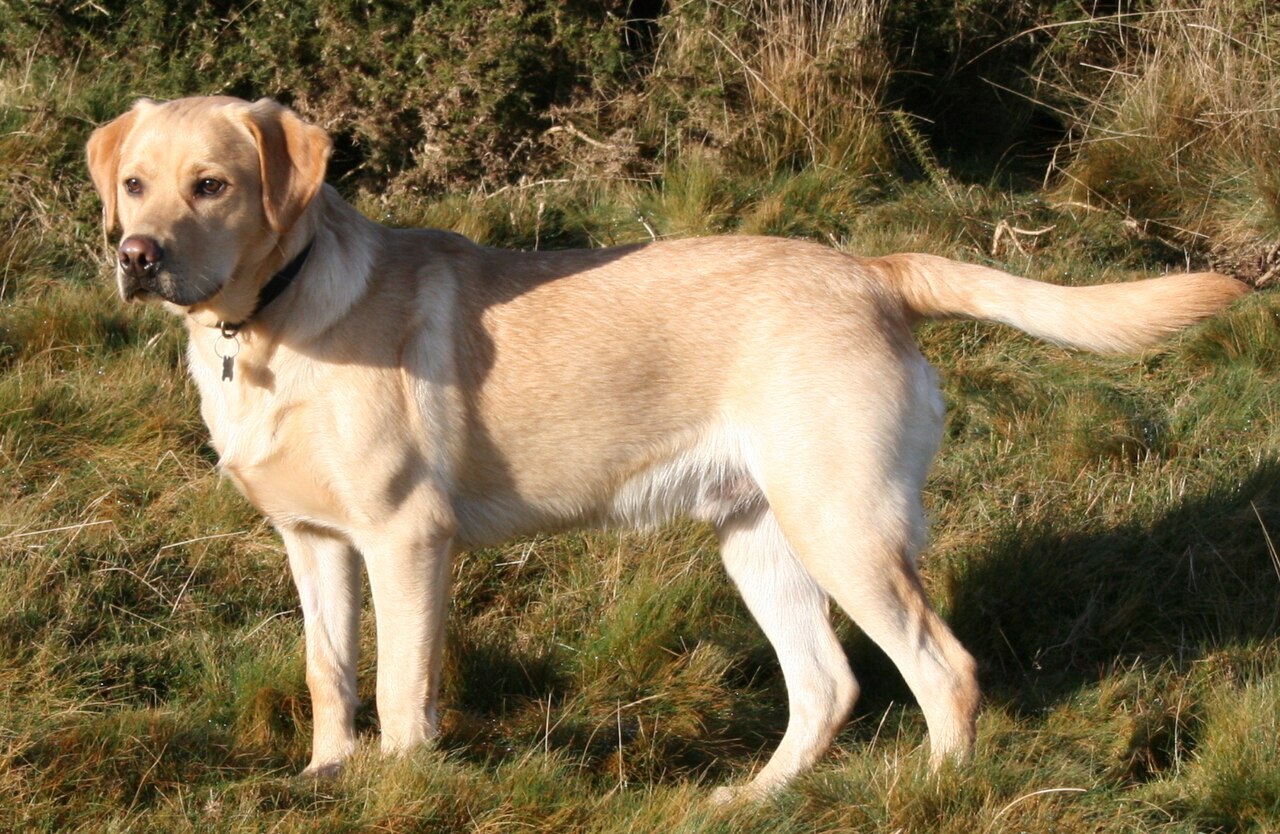
Your dog looks to be in good shape. Keep feeding for this weight and keep up the hands-on check every few weeks — weight creeps up slowly.
Your dog looks thinner than ideal. Being underweight can point to a health problem or simple underfeeding, so check with your vet rather than just adding food — they'll rule out a cause first.
This is an estimate to start the conversation, not a diagnosis. Your vet can confirm the body-condition score, set the real target weight, and check for anything medical behind the weight.
Next: feed for the target weight with the dog feeding calculator →How this works
How it works: extra weight is scored on the 9-point Body Condition Score (BCS), where 4–5 is ideal. Vets estimate that each point above 5 is about 10–15% over ideal weight, so the healthy target below is your dog's current weight divided by that — shown as a range, never one false-exact number. A safe loss is 1–2% of body weight a week.
The 9-point body condition score
What each score feels and looks like — the scale vets use, so you and your vet speak the same language.
| Score | Condition | What you feel & see |
|---|---|---|
| BCS 3 | Below ideal | Ribs, spine and hip bones are easy to see with little fat over them; an obvious waist and a sharply tucked-up belly. |
| BCS 5 | Ideal | You feel the ribs easily under a thin layer of fat, see a clear waist behind the ribs from above, and the belly tucks up when viewed from the side. |
| BCS 6 | A little overweight | Ribs are there but under a slight extra layer; the waist is softening and harder to see; a little fat is starting over the lower back. |
| BCS 7 | Overweight | You have to press to feel the ribs; the waist is hard to see from above; the belly barely tucks; noticeable fat over the back and tail base. |
| BCS 8 | Obese | Ribs are very hard to feel under thick fat; no waist at all; no belly tuck; fat deposits along the back and around the tail base. |
| BCS 9 | Severely obese | Ribs can't be felt through the fat; heavy fat over the chest, spine, tail base and limbs; a distended, hanging belly. |
Pick your breed to pre-fill a typical weight
A starting point only — score the body condition of your own animal, since two dogs of a breed can differ a lot.
Common questions
How do I know if my dog is overweight without a scale?
Feel and look. You should be able to feel the ribs easily under a thin layer of fat, see a waist behind the ribs from above, and see the belly tuck up from the side. If the ribs are hard to feel and the waist has gone, your dog is likely overweight — that's what the body-condition score above measures.
What should my dog weigh?
There's no single number for a breed — the right weight is the one where the body condition is ideal (BCS 4–5 of 9). For an overweight dog, vets estimate the healthy target as roughly current weight divided by 1.10 to 1.15 for each BCS point above 5, which is the range this tool shows. Your vet confirms the real number.
How fast can a dog safely lose weight?
About 1–2% of body weight a week. Faster than that usually means losing muscle, not just fat, and can hide a health problem. Reaching a healthy weight often takes a few months — that's normal and safe.
My dog is overweight — what do I actually do?
Confirm the target with your vet, then feed for that target weight, not the current one. The dog feeding calculator here works out the daily calories for a weight-loss target; measure meals, cut treats to under 10% of daily calories, and add gentle activity.
The gear that makes portioning exact
Most weight gain hides in eyeballed portions and uncounted treats. A cheap kitchen scale or a measuring cup makes feeding the target amount exact, and a slow-feeder bowl paces a fast eater. None of it replaces the vet's plan — it just makes sticking to the numbers easy.
See portion scales & slow feeders on Amazon →Some links here are affiliate links: buy through one and Animalsss may earn a small commission, at no extra cost to you. It never changes the body-condition method or the target weight on this page.
Where these figures come from
- WSAVA — Body Condition Score charts (dog & cat, 9-point) — The clinical 9-point scale the ribs/waist/tuck descriptions follow.
- AAHA — 2021 Nutrition & Weight Management Guidelines — BCS method and the vet approach to weight management.
- Association for Pet Obesity Prevention (APOP) — 2022 survey — Prevalence: ~59% of dogs and ~61% of cats overweight or obese.
- Cornell Riney Canine Health Center — healthy weight — Ideal-weight estimate (~10% per BCS point) and safe 1–2%/week loss.
- Tufts Petfoodology — weight loss done safely — Safe loss rates and why cats must slim slowly (hepatic lipidosis).
- VCA Animal Hospitals — body condition scores — Per-band descriptions cross-checked for the feel guide.
Educational tool, not veterinary advice. Body condition and target weight are estimates from the standard 9-point BCS method; your vet should confirm them and rule out any medical cause before you change your dog's diet or exercise. Never crash-diet a dog.
- Dog feeding calculatorHow much to feed for the target weight.
- Dog water calculatorHow much water your dog should drink a day.
- Dog age calculatorYour dog's age in human years, on the vet curve.
- Puppy weight calculatorEstimate a puppy's adult weight.
- What can dogs eat?Safe and toxic human foods, A–Z.
- Dog breeds A–ZTypical weights and traits by breed.
 Menu
Menu