🍪 Cookie Consent
We use cookies to improve your experience, analyse how the site is used, and show relevant content. By choosing Accept you agree to that. See our
Privacy Policy.
Why Do Goats Spray Themselves with Urine? Rut Behaviour Explained
Understand why intact male goats deliberately spray urine on themselves during the breeding season, the science behind the 'buck effect,' and when urine-drinking behaviour may signal a problem in your herd.
If you see a goat spraying itself with urine, the short answer is: it is almost always an intact male goat — called a buck — performing a mating ritual called rut, not an animal with a health problem. This deliberate self-urination is driven by the hormone testosterone and is a completely normal part of breeding behavior in male goats. Wethers — castrated males — and does — females — do not display this behavior, according to most sources. Some sources note that does may urinate on themselves to signal reproductive readiness to attract males, but this is disputed by other sources that say only intact males self-urinate. Either way, the behavior you are most likely observing is a buck's rut display — a natural mating strategy that has evolved over thousands of years of goat domestication.
What Self-Urination Actually Is
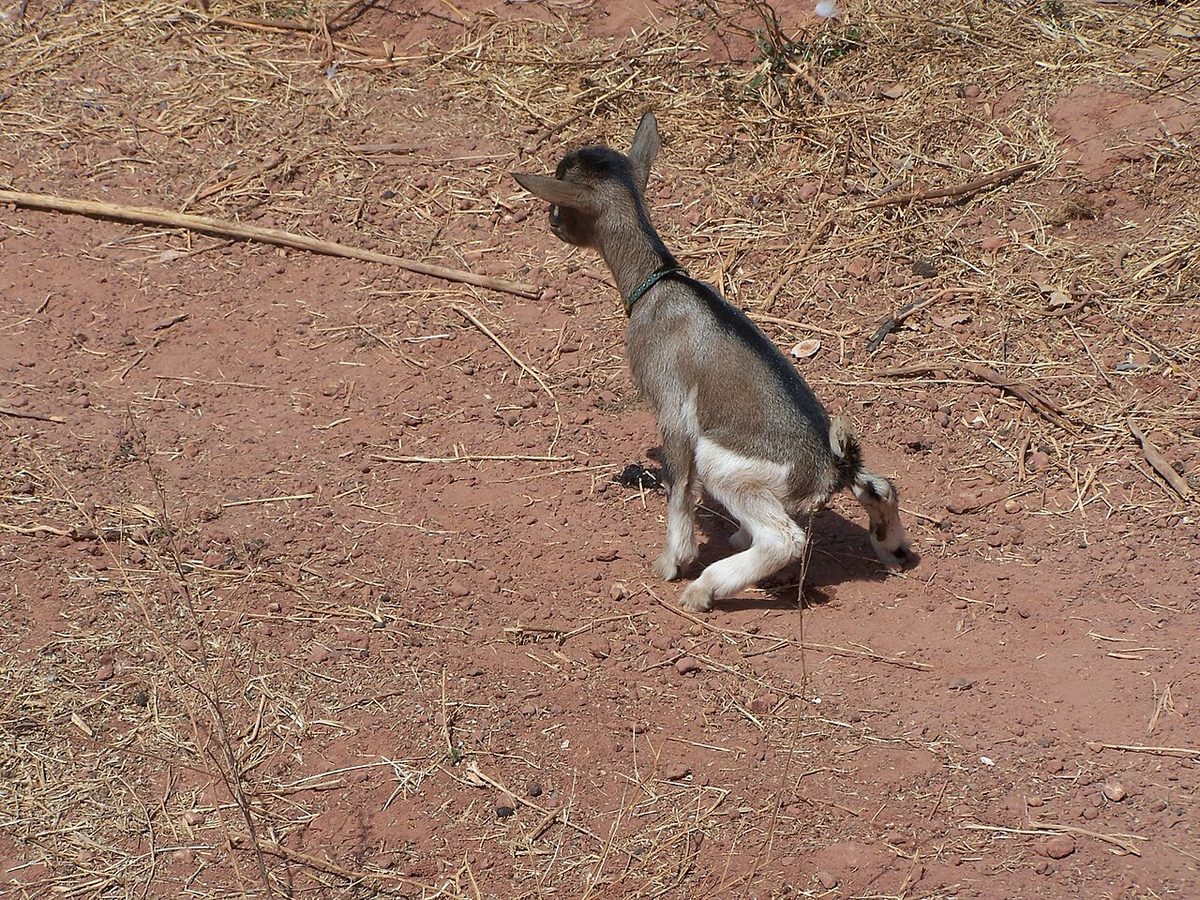
104 1977PeeingGoat by Niels Elgaard Larsen (CC BY-SA 3.0) · source
Self-urination in goats is not a hygiene failure or a sign that something is wrong with your animal. It is a deliberate, testosterone-driven behavior in which a buck sprays urine onto his face, beard, chest, and front legs. The behavior — commonly called rut or self-urination — begins once a buck's testosterone rises, typically between 3–5 months and 3–6 months of age. It then intensifies during the breeding season, sometimes becoming much more frequent and vigorous as the rut peaks. Even if the smell is strong and the display seems unusual from a human perspective, the goat is doing exactly what his body is designed to do. You may also notice other rut behaviors alongside self-urination, such as increased vocalization, restlessness, and a stronger overall body odor.
The Specialised Anatomy Behind the Spray
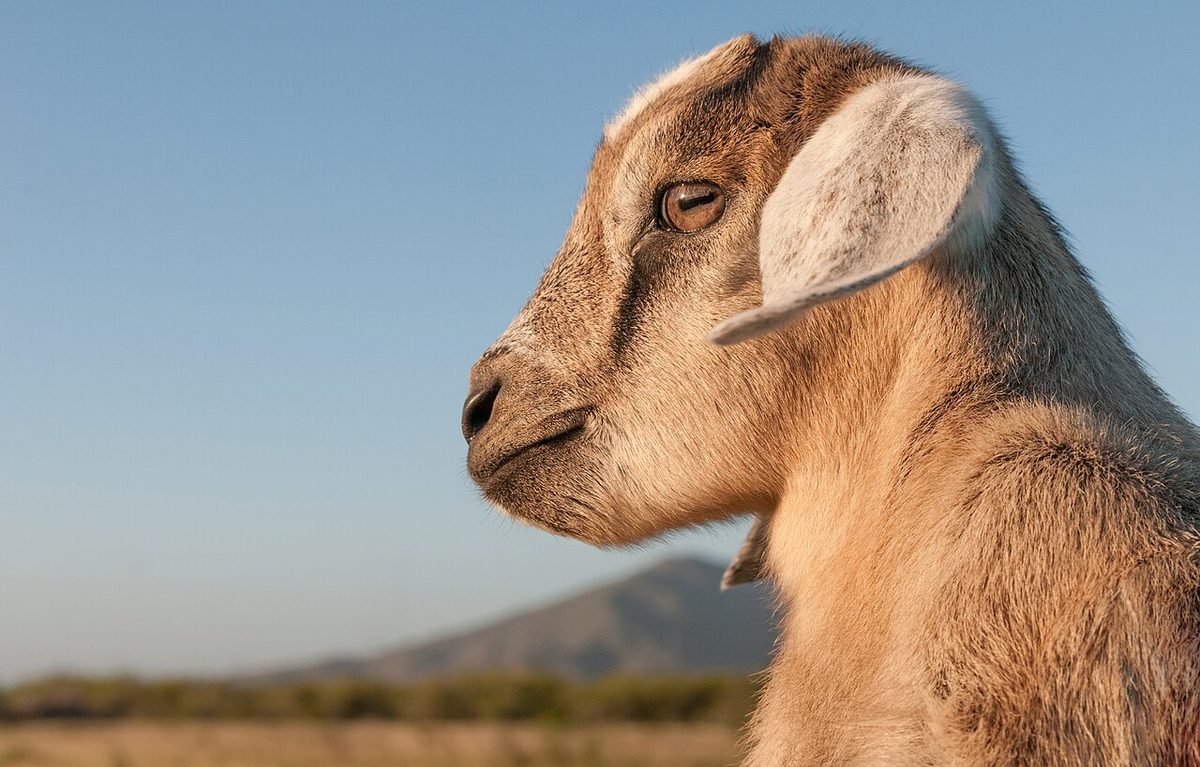
Baby Goat in Margarita Island, Venezuela by Béria Lima de Rodríguez (CC BY-SA 3.0) · source
Bucks possess a physical feature that makes precise urine spraying possible: a worm-like extension at the tip of the penis called a urethral process. This unusual structure allows them to direct a stream of urine upward and forward with surprising accuracy — not just away from themselves, but onto their own faces, beards, and chests. No other goat — wether or doe — has this anatomy, which is one reason the behavior is exclusive to intact males. The urethral process essentially turns the buck into a living spray device, coating his own body in his own scent from head to chest.
The Vomeronasal Organ and Lip Curling
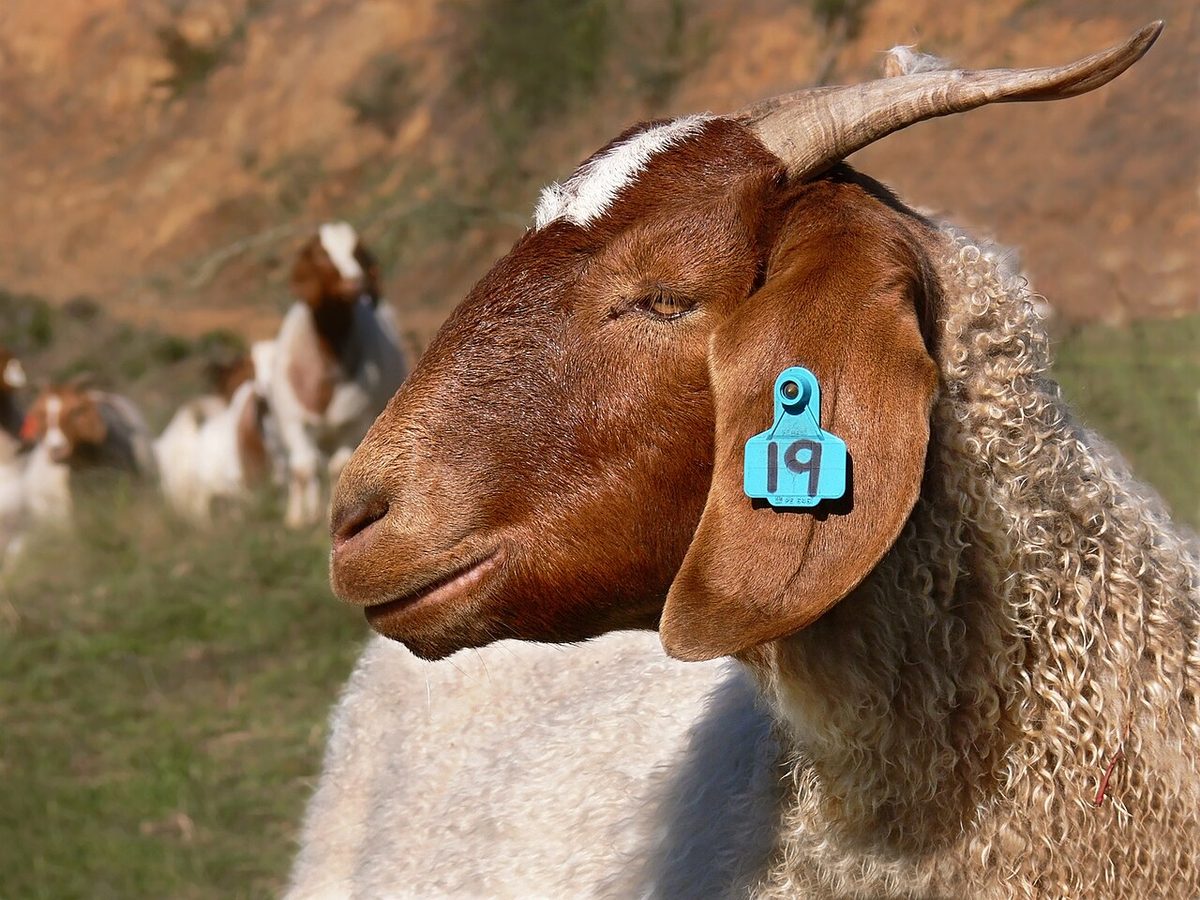
Boer goat444 by Benjamint444 (CC BY-SA 3.0) · source
While urinating, a rutting buck will often curl his upper lip. This lip curl is not a random movement — it is a deliberate act that exposes the vomeronasal organ, also known as Jacobson's organ, located at the roof of the mouth. By curling his lip and exposing this organ, the buck can detect pheromones carried on the wind from nearby does in estrus. The buck is essentially sampling the air for the scent of a receptive female while simultaneously broadcasting his own presence. The entire display — targeted spraying, lip curling, and scent detection — is a carefully coordinated performance designed to advertise sexual readiness and draw in potential mates from a distance.
The Chemistry of Attraction
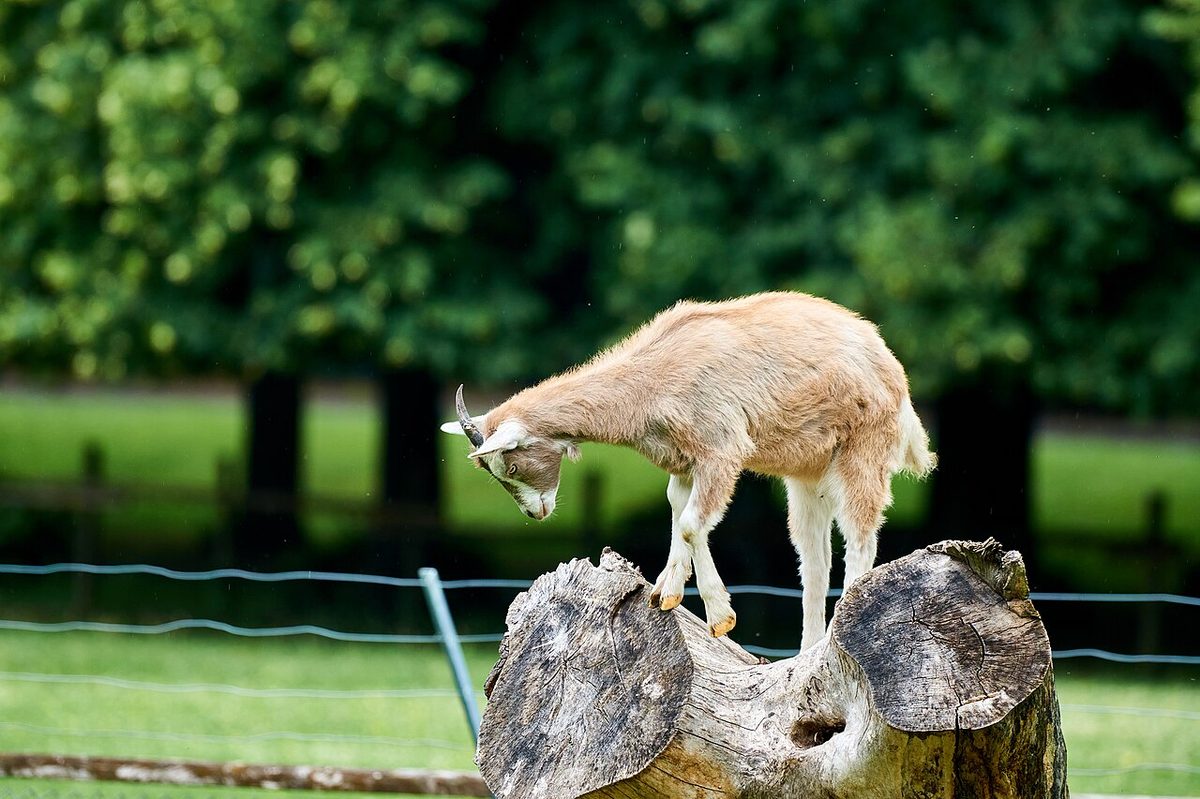
Capra aegagrus hircus, Neuss (DE) -- 2022 -- 0174 by Anil Öztas (CC BY-SA 4.0) · source
The urine itself carries a real chemical signal, not just an unpleasant smell. A 2013 study published in Current Biology identified a specific pheromone called 4-ethyloctanal that is produced in buck sebaceous (oil) glands. This compound triggers a surge of luteinizing hormone in does — confirming the scent is biologically functional rather than incidental or accidental. In practical terms, this means the powerful odor you are smelling from a rutting buck serves a genuine reproductive purpose that actively affects the biology of the does around him. A rutting buck's odor can be detected by a human nose from 50–100 feet away, so you will almost certainly notice the behavior — and the smell — before you even see the goat in the middle of his display.
When Rut Season Peaks
Citadel Peaks rising above Goat Haunt, Waterton Lake by Roy Luck (CC BY 2.0) · source
In the Northern Hemisphere, rut season runs from August through January. Testosterone levels, odor intensity, and self-urination behavior all spike during September–October in most US climates. As breeding season winds down and testosterone drops during November–December, the behavior naturally subsides. However, it may continue at a lower intensity year-round once a buck has reached full sexual maturity. The exact timing can vary depending on where you live, your local climate, and the individual goat's genetics and nutrition, so it is worth observing your own herd to understand its particular patterns.
Breed Differences in Rut Behavior
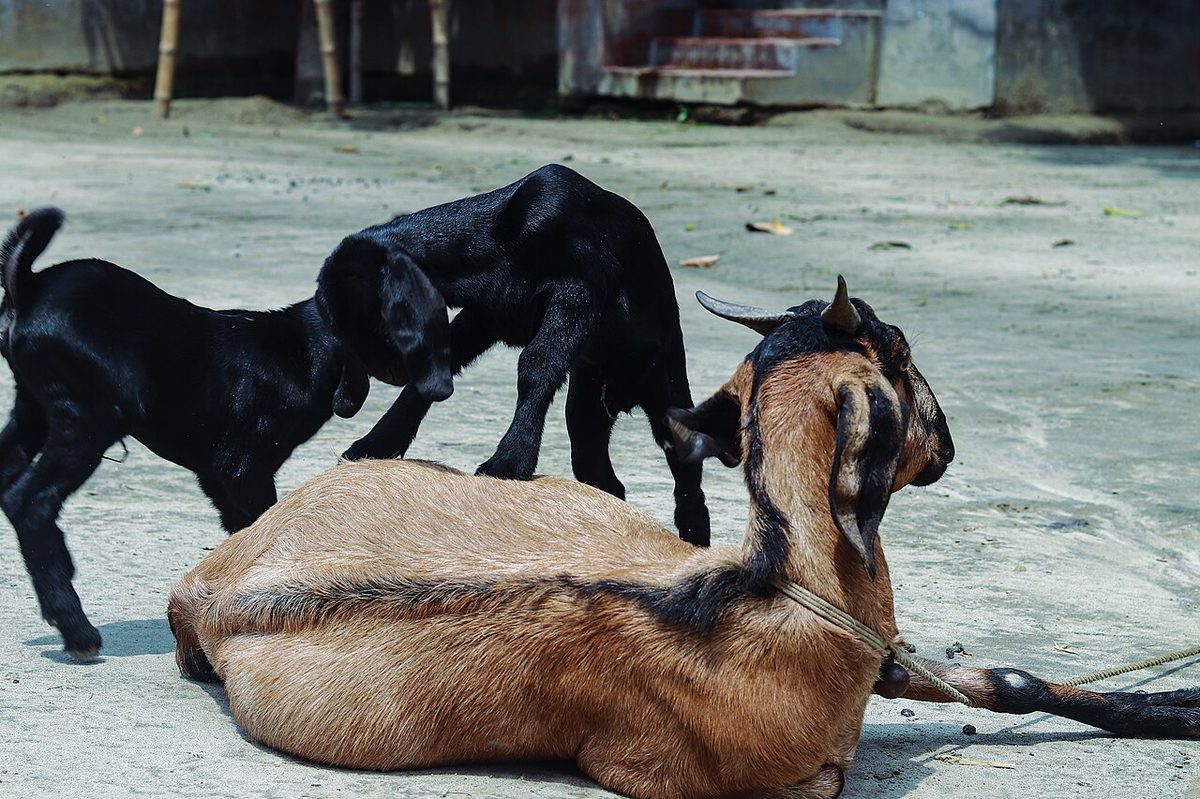
Black Bengal kids playing with their mother 01 by A S M Jobaer (CC BY-SA 4.0) · source
Some breeds are especially vigorous about self-urination. Nigerian Dwarf and Pygmy bucks are known for enthusiastic self-urination relative to their small size. Boer and Nubian bucks produce a heavier overall smell because of their larger body mass. However, the scent intensity per gram of fur is roughly equal across breeds.
Breed
Rut Behavior Notes
Nigerian Dwarf, Pygmy
Notoriously enthusiastic self-urination relative to their small size
Boer, Nubian
Heavier overall smell due to larger body mass; scent intensity per gram of fur is roughly equal across breeds
If you house two bucks together during rut, they will mutually stimulate each other's behavior, compounding the smell significantly — something worth planning for in your shelter layout.
The Buck Effect on Does and Milk
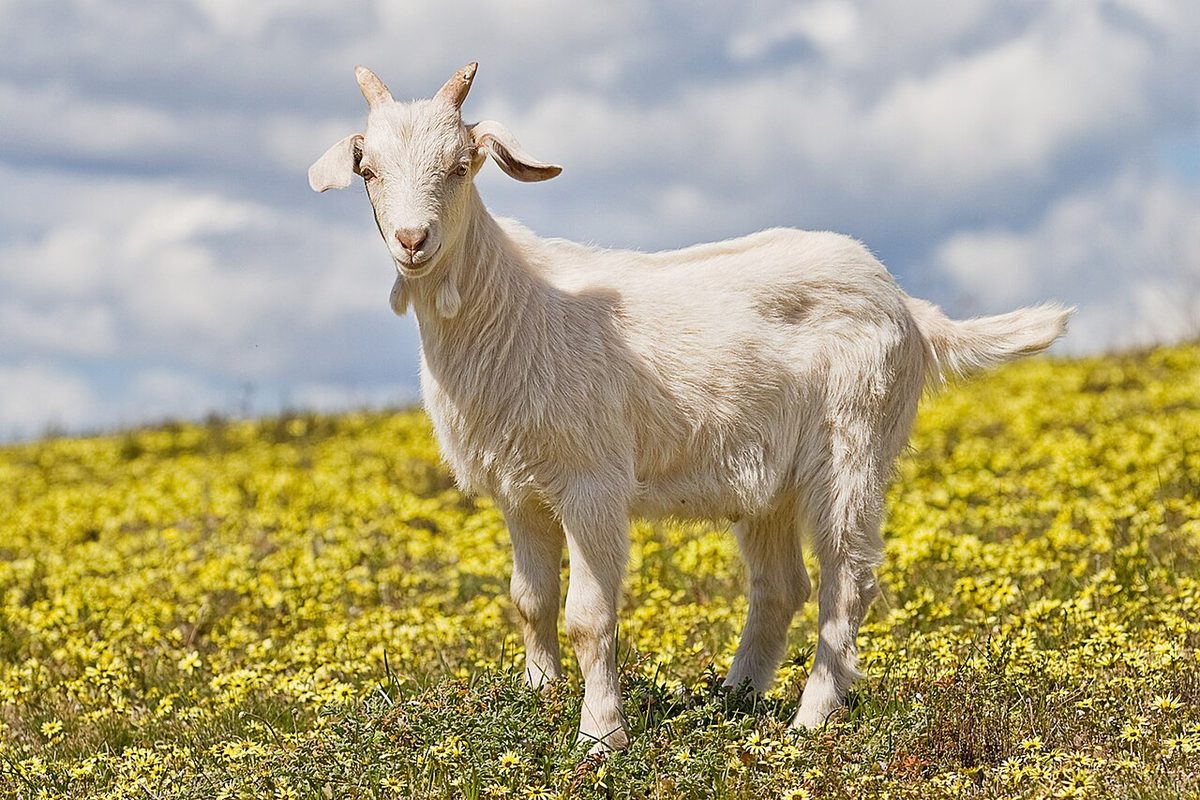
Domestic goat kid in capeweed by fir0002 flagstaffotos [at] gmail.com
Canon 20D + Canon 70-200mm f/2.8 L (GFDL 1.2) · source
The presence of a rutting buck has real consequences for the rest of your herd. Does exposed to the scent of a rutting buck begin cycling 7–10 days sooner than does kept buck-separated. This acceleration is one reason many breeders deliberately introduce a buck at the start of breeding season to synchronize their does' estrus cycles. The scent is powerful enough to reach does through the air, triggering hormonal changes even when the buck is housed separately from them.
For dairy goat keepers, there is an extra practical concern during rut season. Does housed within 30 feet of a rutting buck can absorb odor through their skin, and this can taint their milk within 24–48 hours.
Protecting Your Milk Supply During Rut
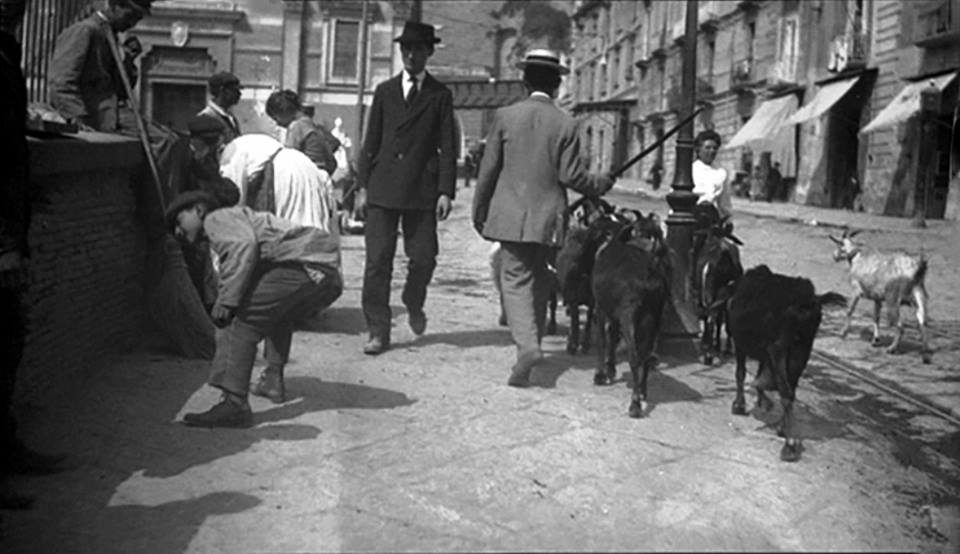
Napoli, Via Piedigrotta, capre by Unknown authorUnknown author (Public domain) · source
The recommended separation distance is at least 100 feet, and ideally the buck should be kept out of visual range of the does, as sight alone can cause stress. Handling a rutting buck and then milking a doe without thoroughly washing your hands can also transfer the buck odor to the milk supply. If you notice an off-flavour in your milk during the autumn months, the proximity of a buck is one of the first things to investigate and adjust.
Is Urine Contact Ever a Sign of Something Else?
Not every instance of urine contact with a goat's mouth is intentional rut behavior. A buck peeing on his own face during a spray may inadvertently get urine in his mouth as a by-product of self-urination, which can appear to an observer watching from a distance as deliberate drinking. In other cases, a goat licking urine off the floor or actively drinking its own urine may be pointing to a nutritional shortfall — specifically, a salt or mineral deficiency in the diet. If you provide proper mineral supplements and the behavior continues, the goat may simply dislike the particular mineral source being offered. The specific minerals most often linked to urine-drinking behavior, and the best methods for redirecting or preventing it, vary from herd to herd and depend on local soil, forage, and feed conditions, so it is worth discussing the situation with a nearby vet, livestock nutritionist, or animal feed dealer who knows the conditions in your area.
Wild mountain goats display a similar attraction to urine. Mountain goats in national parks have been observed seeking out and craving the urine of hikers who urinate on trails. The specific reason for this behavior in wild mountain goats is not yet well explained by available research, though the attraction to urine-based scents generally suggests a nutritional or mineral-related motivation, similar to what some domestic goats display. Whether you are keeping dairy goats on a smallholding or hiking through mountain goat territory, the lesson is the same: urine holds a strong and sometimes surprising pull for goats. If you do encounter mountain goats in a national park, remember they are wild animals and can be dangerous — do not approach, feed, or intentionally interact with them.
Bottom Line for Goat Keepers
Bottom Line for Goat Keepers
Urine spraying and marking are completely normal parts of goat behaviour. They are not a sign of illness or poor care. The main triggers are hormones, social hierarchy, and the natural instinct to attract mates. Understanding these drives helps you respond in the right way rather than taking the behaviour personally.
Practical Steps You Can Take
Practical Steps You Can Take
If the spraying becomes a problem around your farm, a few simple management changes can make a big difference. Here are the most effective ones:
Separate bucks from the main herd during off-breeding months. This is the single most effective step. Without does in heat nearby, the urge to spray drops sharply.
Keep housing clean and dry. Urine-soaked bedding attracts more spraying and makes the whole pen smell stronger. Scoop out soiled bedding daily and hose down concrete floors.
Give goats plenty of space. Overcrowding increases tension and competition. Each adult goat needs at least a few square metres of shelter and access to outdoor paddocks.
Use your senses. If one goat starts spraying, others may follow. Watch for the signs — tail flagging, restlessness, vocalising — and consider moving the goat to a separate area temporarily.
Wear gloves and old clothes when handling or moving affected goats. Wash your hands and change footwear before visiting other livestock.
Final Thoughts
Urine spraying in goats is not a behaviour to fight against — it is one to understand. It is driven by biology, not bad manners. Bucks, does, and even young goats will mark their territory as part of being a goat. With good management, clean housing, and a bit of planning around the breeding season, you can keep the behaviour under control without stress for you or your animals.
At the end of the day, a well-managed herd is a happy herd. Understanding why your goats do what they do is the first step toward that goal.
📚 Where the figures in this guide come from
We read what has already been published on the subject, take out the figures and rules it actually states, and write it up in plain, everyday language.
Every number and name here traces back to a source listed below — nothing in this guide is invented.
Prices, rules and animal health advice change and vary by area. Check anything important with a local vet, dealer or agriculture office before you spend money.
Spotted a mistake? Tell us in the comments and we will correct it.


 Menu
Menu
💬 Comments
Login to comment
No comments yet. Be the first to share your experience!