
Here are the headline numbers first: a Holstein cow in Canada gives an average of 10,257 kilograms (22,613 pounds) of milk a year, her dung is used as cooking fuel, fertiliser, plant pots, wall plaster and even paint, and in the price observations recorded on this marketplace cows average €5 per kg while cow milk averages EUR464 per tonne. On lifespan you will find two different answers — some put the natural life of domestic cattle at some 25–30 years, others say cows can live beyond 20 years — but very few farm cows ever get close to either figure.
That is the short version. The longer version is more interesting, because much of what a cow does happens quietly inside her stomach, or lies in the grass behind her.
Over 940 million cows, and more than 1,000 breeds
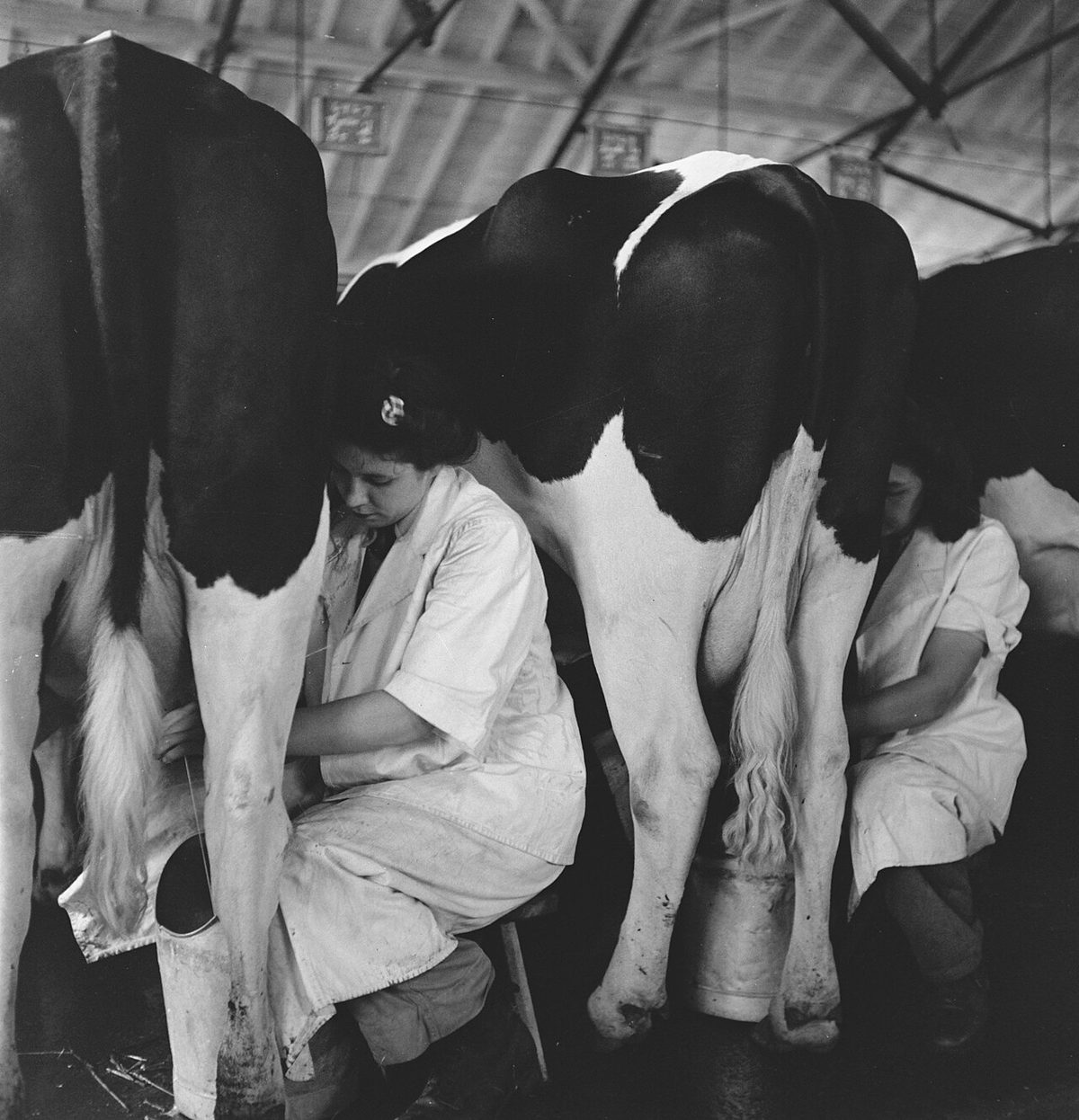
There were over 940 million cattle in the world by 2022. They are large domesticated bovid ungulates, Bos taurus, the most widespread species of their genus, and they are divided into over 1,000 recognized breeds.
Where you live decides which kind you see around you:
- Taurine cattle — widely spread across Europe and the temperate parts of Asia, the Americas and Australia.
- Zebu — mainly in India and the tropical parts of Asia, America and Australia.
- Sanga cattle — found chiefly in sub-Saharan Africa.
These types are sometimes classified as separate species or subspecies. Taurine cattle were domesticated about 10,500 years ago from wild aurochs in central Anatolia, the Levant and Western Iran, while zebu came from a separate domestication event in the Indian subcontinent. Cattle were also one of the first domesticated animals to have a fully-mapped genome.
From a 600 kg Hereford cow to a 1,280 kg bull
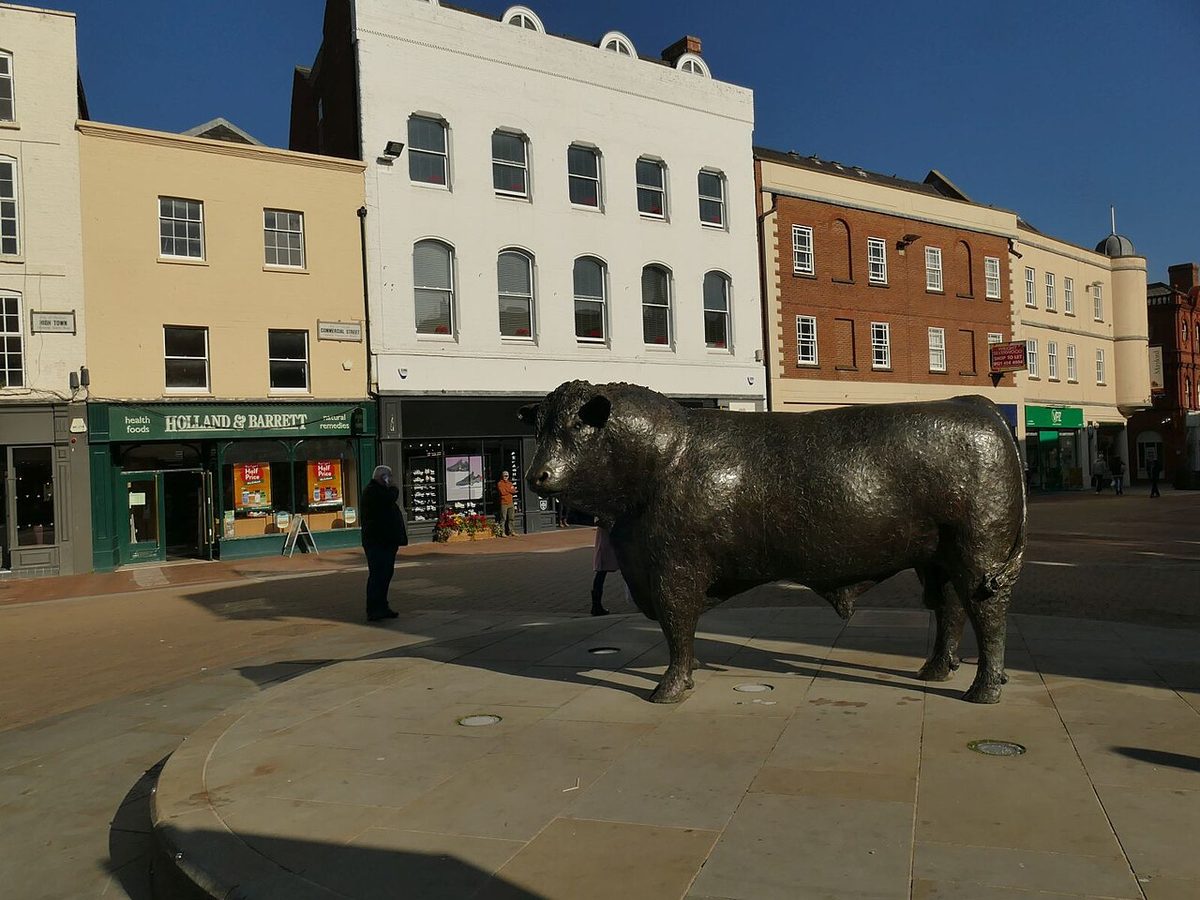
Bulls are bigger than cows of the same breed, sometimes by a few hundred kilograms. British Hereford cows weigh 600–800 kg (1,300–1,800 lb), and the bulls 1,000–1,200 kg (2,200–2,600 lb). The tallest and heaviest breed is the Chianina: a mature bull may stand up to 1.8 m (5 ft 11 in) at the shoulder and reach 1,280 kg (2,820 lb). Cattle walk on two toes — the third and fourth digits — inside cloven hooves, and like all bovids they may carry horns, which are unbranched and are not shed each year. Colour depends on breed; black, white and red or brown are common, and some breeds are spotted or mixed.
The word 'cattle' shares a root with 'capital'
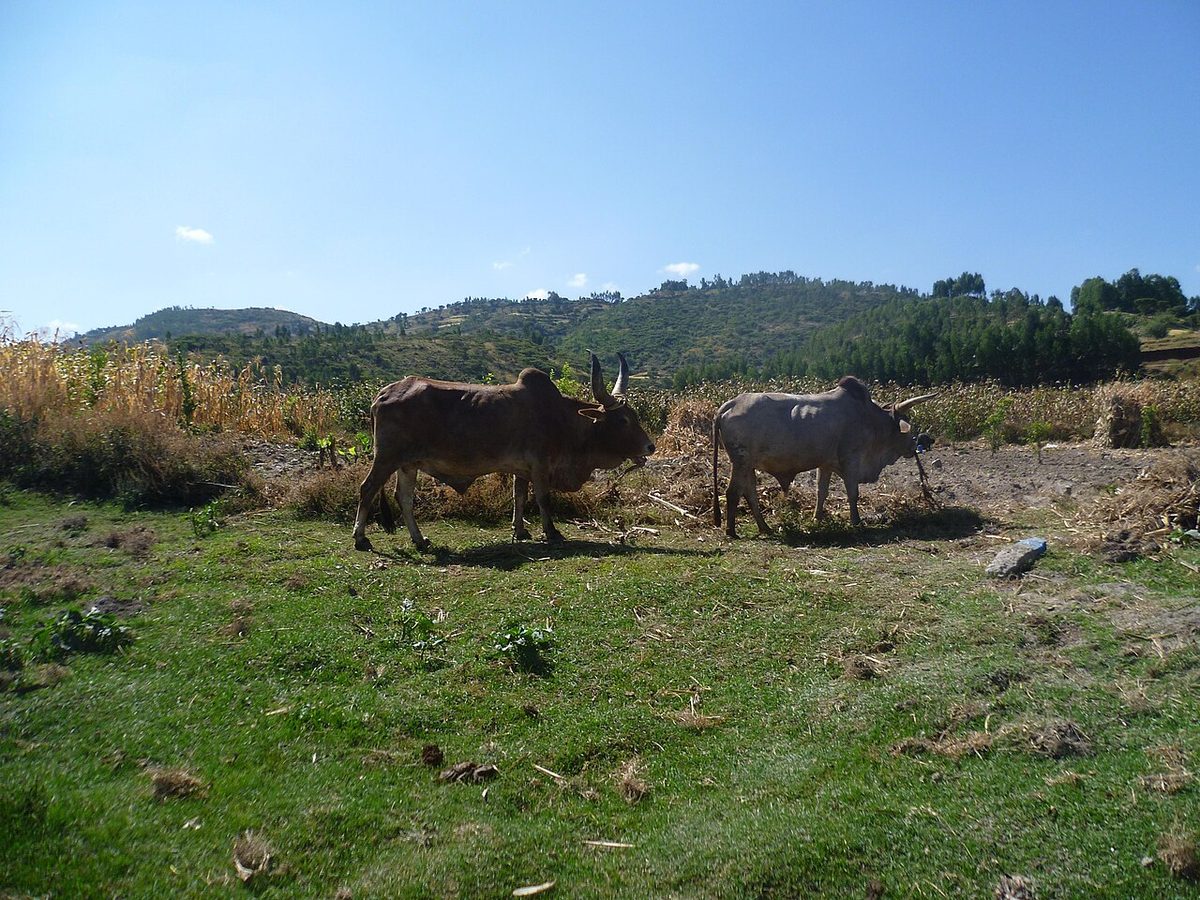
'Cattle' came from Anglo-Norman catel, from Medieval Latin capitale ('principal sum of money, capital'), which comes from Latin caput, 'head'. It first meant movable personal property, livestock especially, as opposed to land and buildings, and it is a variant of 'chattel' and a close relative of 'capital' in the economic sense. 'Cow' arrived through Old English cu (plural cy) from an ancient root for a bovine animal — compare Persian gav and Sanskrit go. Old English words such as kine now survive only in poetry and dialect. Cattle are raised for meat, dairy and leather, and as draft animals they still pull carts and farm implements. They are sacred within Hinduism and it is illegal to kill them in some parts of the Indian subcontinent, while small breeds such as the miniature Zebu are kept as pets.
One stomach with four compartments
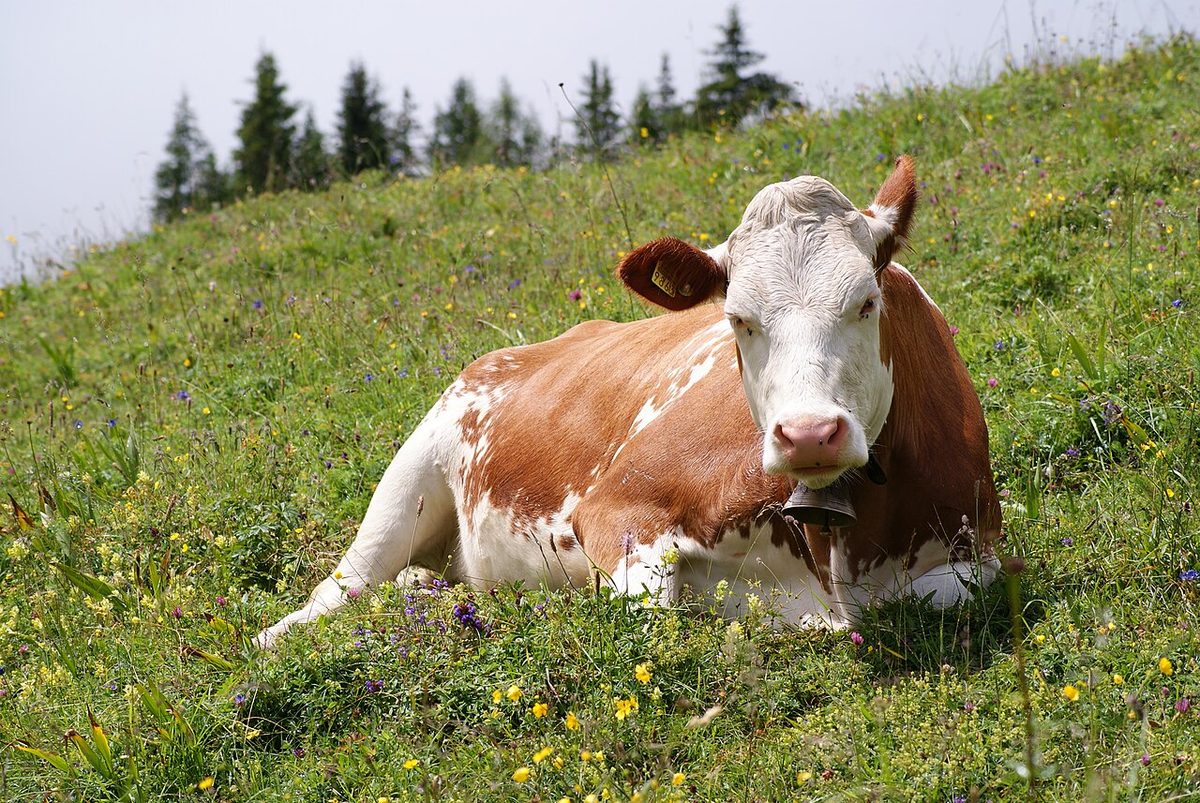
The old line about four stomachs is not quite right. A cow has one large stomach divided into four parts:
- Rumen — the largest compartment, holding the most important parts of her microbiome.
- Reticulum — the smallest, known as the 'honeycomb'.
- Omasum — mainly absorbs water and nutrients from digestible feed.
- Abomasum — does much the same job as a human stomach.
The microbes do the digesting
A cow cannot break down cellulose by herself. She works in symbiosis with bacteria — including Fibrobacter succinogenes, Ruminococcus flavefaciens and Ruminococcus albus — with cellulolytic fungi (several species of Neocallimastix) and with ciliate protozoa such as Eudiplodinium maggie and Ostracodinium album. These produce the cellulases that do the real work. Change her feed over time and the make-up of that microbiome changes too.
Chewing the cud belongs to the same system. While feeding she swallows food without chewing, straight into the rumen for storage. Later she brings it back up a mouthful at a time, grinds it with her molars, and swallows again. How much feed, forage and water she needs in a day depends on your climate, your land and what you can grow, so a nearby vet or feed adviser is the right person to ask.
How long do cows live, and why farm cows leave early
Estimates of a cow's natural life differ: some give some 25–30 years, others say domestic cows can live beyond 20 years. Either way, most cattle on farms leave long before that. Beef cattle go to slaughter at about 18 months. For dairy cows the figures also differ — some accounts say they go to slaughter at about five years, others that the average cow is removed from the dairy herd around age six and marketed for beef.
Culling is a normal part of dairy farming. In 2014, roughly 9.5% of cattle slaughtered in the U.S. were culled dairy cows, sold because of reproductive problems or common diseases of milk cows such as mastitis and lameness. How you prevent and treat those problems in your own herd is a conversation for your vet. Because of the impregnation cycle, cows are frequently slaughtered while pregnant; estimates for Europe put this at 9-27% of cows. There is also a small market for slaughter-free milk, which claims not to send cows to slaughterhouses. It significantly increases costs and has been criticised for coming with higher methane emissions and land usage.
Nine months pregnant: breeding, calving and calves
Gestation is about nine months. On farms, matings are often done by artificial insemination — semen deposited artificially in the female's tract — which lets you choose from a wide range of bulls, and estrus may be artificially induced to make the timing easier. Natural copulation, by contrast, lasts several seconds and is a single pelvic thrust.
Dairy farmers usually begin breeding or inseminating heifers around 13 months of age. Semi-wild Highland heifers first give birth at 2 or 3 years, timed to match improvements in natural food quality. The average calving interval is 391 days, the ratio of male to female calves at birth is approximately 52:48, and a cow's udder carries two pairs of mammary glands, or teats. Depending on market conditions she may be bred to a dairy bull or a beef bull — she has to be bred and produce calves to keep lactating.
What calves do when nobody interferes
Cows look for secluded places to calve. Calving mortality within the first year of life is 5%. Beef calves suckle an average of 5 times per day, spending some 46 minutes at it, with peaks at roughly 6am, 11:30am and 7pm. Left alone, calves stay with their mother until weaning at 8 to 11 months, and heifer and bull calves are equally attached to her in the first few months.
What happens on most dairy farms
Dairy practice is different, and it varies: some farms separate calves within a day of birth, others within about three days, the aim being to reduce disease transmission and simplify management of the milking herd. In studies where calves stayed 1, 4, 7 or 14 days, cows whose calves were removed later than one day after birth showed more searching, sniffing and vocalizing. Views on timing differ too — some farmers argue the bond strengthens over time, so a delayed separation causes extreme stress, while a 2019 review found the effects on behaviour were worsened with earlier separation.
Most heifer calves stay on the farm as replacements. Nearly all male calves and any surplus females are sold, usually at two weeks of age, with males fetching a slightly higher price than excess females. They become veal or one of several types of beef, depending on local crops and markets. Bull calves may be castrated if they will be turned out onto pasture, to make them less aggressive, and a tiny minority — descended from elite cows with a proven record of high lactations — go into progeny testing schemes as possible breeding sires.
Milk: what one cow really gives
Before the 1930s, cattle were generally kept for several jobs at once: the same stock gave meat and milk, and sometimes worked as well. During the 20th century the industry specialised, most notably around the Holstein Friesian, with Jersey, Brown Swiss, Guernsey and Ayrshire the other main dairy breeds. What each of those gives in your area depends on the herd, the feed and the country, so ask local breeders rather than trusting a single global figure.
Holstein is the top breed in Canada's national herd, at 93% of the dairy cow population, with an annual production rate of 10,257 kilograms (22,613 pounds) of milk per cow, containing 3.9% butter fat and 3.2% protein. Scale matters too: the United States dairy herd produced 84.2 billion kilograms (185.7 billion pounds) of milk in 2007, up from 52.9 billion kilograms (116.6 billion pounds) in 1950 — from only about 9 million cows, roughly 13 million fewer than in 1950.
Herd sizes around the world
- United States — about 9 million cows in around 75,000 dairy herds, an average of 120 cows; small herds are falling away fast, and 51% of U.S. milk in 2007 came from the 3,100 herds with over 500 cows.
- United Kingdom — nearly 1.5 million dairy cows, about 100 head on an average farm.
- New Zealand — an average herd of more than 375 cows.
- Australia — about 220 cows.
Herd size follows landholding culture and social structure. So does the system. Intensive dairying maximises production per cow with formulated diets and confinement housing — free stall or tie stall, cows indoors through lactation and possibly pastured during a 60-day dry period. Extensive systems keep cattle mainly on pasture for most of their lives, generally produce less milk per cow, and herd the animals in several times a day for milking. Which one suits you depends heavily on your region's climate and available land.
One more number belongs here: cattle farming is responsible for about 7% of global greenhouse gas emissions. That figure is not split between beef and dairy, or by system or region, and reducing it on any particular farm is a question for local advisers.
Cow dung: the most useful thing she leaves behind
Dung is the undigested residue of plant matter that has passed through the gut, plus water, gut bacteria, old red blood cells and digestive enzymes. It is rich in minerals. Descriptions of the colour vary — some say it ranges from greenish to blackish and darkens soon after it meets the air, others simply call it dark brown. The British say cowpat; Americans say cow pie or cow chip.
Fuel
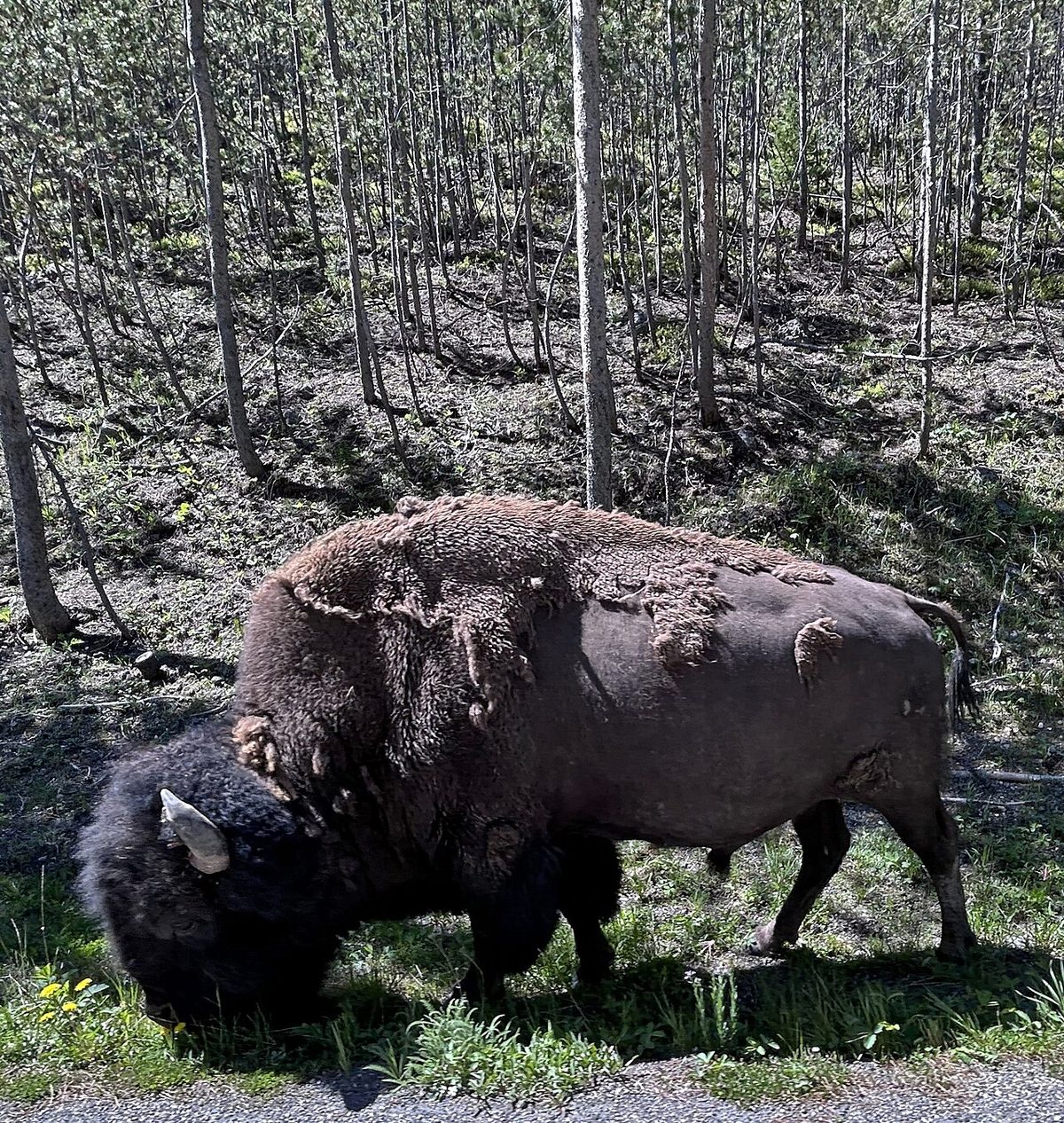
Caked dried dung is burned as fuel in parts of Eurasia, and was used in the mountain regions of Europe. In India it is dried into cakes called upla or kanda and burned instead of firewood in the traditional chulah stove. Collected dung is also digested into methane-rich biogas, used in rural areas of India and Pakistan and elsewhere for electricity and heat; what size of digester makes sense for your herd is a question for a local supplier or agency. Dried bison dung — 'buffalo chips' — was burned as prairie fuel by Plains Indians, settlers and homesteaders. And in the United States, cow chip throwing was popularised in Beaver, Oklahoma in 1970; the record throw stands at 185 feet 5 inches (56.52 m), by Robert Deevers of Elgin, Oklahoma.
Fertiliser, pots and paint
Dung is used as manure, and it is now moulded into plastic-free, biodegradable flower and plant pots that dissolve into manure themselves. From 20 July 2020 the State Government of Chhattisgarh in India began buying cow dung under the Godhan Nyay Yojana scheme for vermicompost production. In 2021, the Government of India's Khadi and Village Industries Commission launched Khadi Prakritik paint, with cow dung as its main ingredient, promoted as eco-friendly with anti-fungal and anti-bacterial properties.
Floors, walls, art and mosquitoes
Dung has long been smeared on floors and walls — ukusinda in Xhosa, gwaya in Ruruuli-Lunyala. The habit is old: it appears in the Tamil Purananuru around 150 BCE, in Pietro Della Valle's account of 1624, and in Tryambaka's 18th-century Stri-dharma-paddhati. In Maasai villages dung is burned indoors to repel mosquitos. In cold places it serves as a cheap thermal insulator on rustic house walls. It is the medium of Rwanda's imigongo art, and an optional ingredient in adobe mud brick.
Dung beetles and better pasture
Dung also feeds a whole food chain of animals and fungi that break it down and return it to the soil. If species such as earthworms and dung beetles do not recycle it, it dries out and sits on the pasture, leaving grazing that livestock will not touch. Where cattle are not native there may be no local species able to process their dung, which can bring infestations of flies and parasitic worms — in Australia, dung beetles were brought in from elsewhere for that reason, through the Australian Dung Beetle Project associated with Dr. George Bornemissza. Cows also dislike grazing near their own dung, which leaves tall, heavily fertilised patches called 'islets'. Those patches suit many grassland arthropods, including spiders (Araneae) and bugs (Hemiptera), and help keep biodiversity going in hard-worked pasture.
What a cow costs, and what her milk fetches
Across all countries, the price observations recorded here come to 4,890 rows. For cows there are 2,102 rows ranging from €2 to €8 per kg, with an average of €5, most recently recorded on 2026-08-30. For cow milk, the euro series has 705 rows from EUR35 to EUR3795 per tonne, averaging EUR464, most recent on 2025-01-31, and the US dollar series has 102 rows from USD381 to USD627 per tonne, averaging USD486. Other currency series include:
- ZAR — ZAR5300 to ZAR7780 per tonne, average ZAR6758.
- CAD — CAD745 to CAD969 per tonne, average CAD869.
- THB — THB18110 to THB21220 per tonne, average THB19572.
Notice how wide those ranges are. An average is a starting point for conversation, not a quote. What a cow or a litre of milk is worth where you are depends on your local market, and the only reliable figures are the ones you get from a nearby dealer, market or dairy before you commit.
Put it all together and the cow is a strange, quiet piece of engineering: an animal that turns grass she cannot digest alone into milk, meat, leather, work, fuel, fertiliser, paint and better soil. She has been doing it for about 10,500 years, in over 1,000 breeds, on every inhabited continent.
If you are thinking about buying one, use the facts here as background and get the local details — price, breed, feed, health, paperwork — from people standing in your own conditions. That is the one piece of advice no global figure can replace.
 Menu
Menu
💬 Comments
Login to comment
No comments yet. Be the first to share your experience!