🍪 Cookie Consent
We use cookies to improve your experience, analyse how the site is used, and show relevant content. By choosing Accept you agree to that. See our
Privacy Policy.
The LaPerm Cat: An Allergy-Friendly Farm Companion Born from Oregon Barn Cats
The LaPerm is a distinctive curly-coated breed that traces back to a spontaneous genetic mutation among farm cats in Oregon in the early 1980s. Known for an affectionate, outgoing nature and a reputation for provoking fewer allergic reactions, it has grown from a free-breeding rural colony into a recognised championship breed on both sides of the Atlantic.
The LaPerm is the cat to consider if you want an allergy-friendly companion that also has the independence and energy of a true working farm cat. This breed emerged from a spontaneous genetic mutation among free-roaming farm cats in Oregon, USA, in the early 1980s, and it still carries the practical character of its barn-cat ancestors.
Born on an Oregon Farm
The LaPerm story begins with Linda and Richard Koehl, who kept cats on a property near The Dalles, Oregon. In the early 1980s, their cat Speedy gave birth to a single kitten with a curly coat. They named her Curly. No one could have guessed at the time that this one unusual kitten would be the start of an entirely new breed. Over the next decade, the Koehls allowed their curly-coated cats to breed freely on the property. What developed was a healthy, diverse colony of curly-coated farm cats — sturdy, adaptable, and clearly different from any ordinary barn cat. The breed was named after its curly coat, which the founders thought resembled a shaggy perm. That name also follows a Chinookan-influenced tradition of adopting French words with the definite article, much like earlier local adaptations such as "lapeep" from la pipe and "lapom" from la pomme.
In 1997, the LaPerm Society of America (LPSA) was formed to protect and promote the breed. By 2000, the LPSA had affiliated with the Cat Fanciers' Association (CFA), taking the first formal step toward broader recognition.
What a LaPerm Looks Like
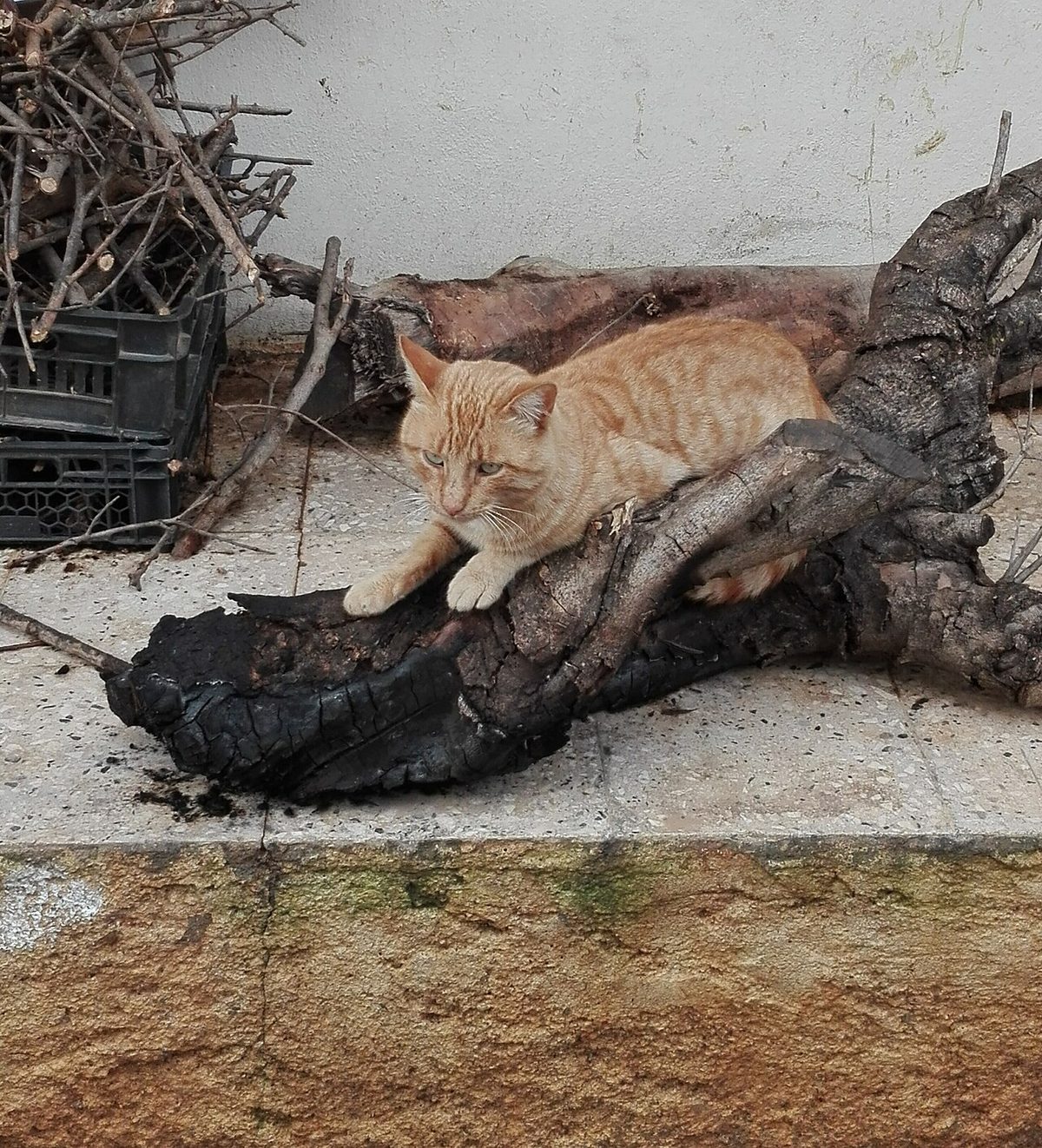
cat like tiger by Niati Redouane (CC BY-SA 4.0) · source
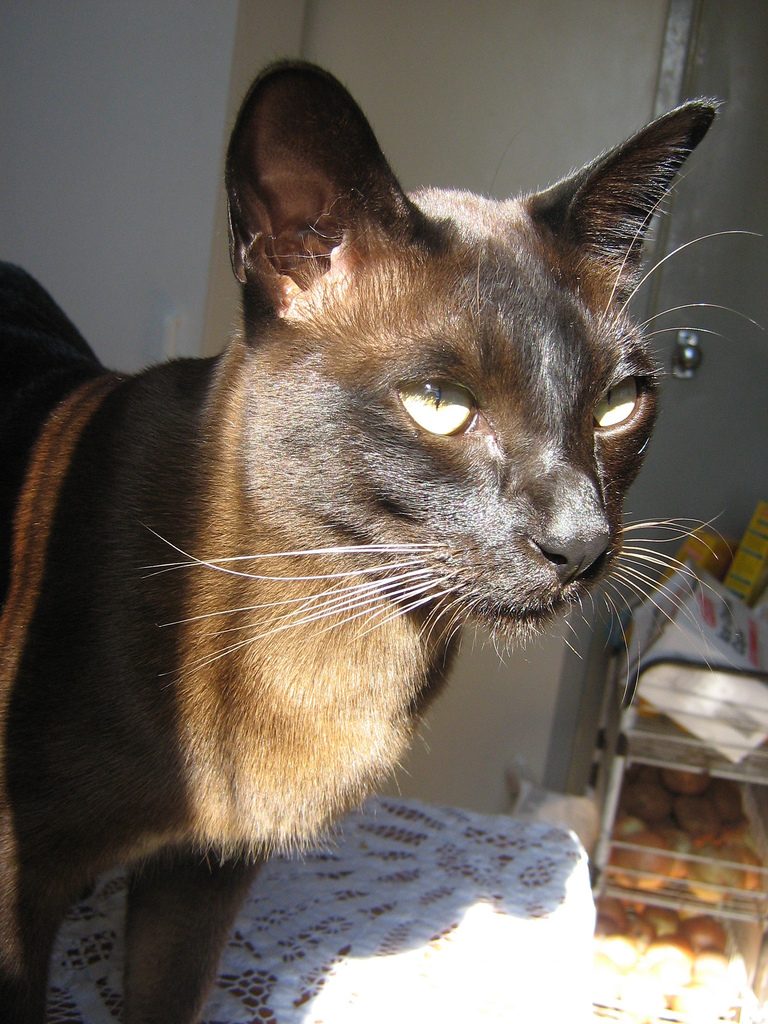
A LaPerm is a medium-sized, muscular, and athletic cat. Its body follows a foreign-type standard — slender yet well-muscled, with relatively long legs and a long neck. The head is a modified wedge with rounded contours, and the muzzle is slightly broader than the wedge. In profile the nose is straight, the nose leather is broad, and the ears are flared. The eyes are medium-to-large and almond-shaped, giving the breed an alert, interested expression that suits a cat with working roots.
The Curly Coat
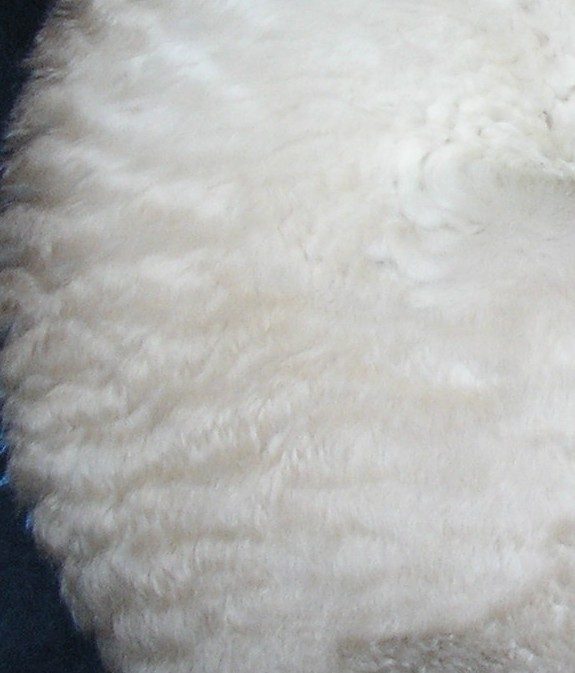
Vacht crx by Bebopscrx (CC BY-SA 3.0) · source
The coat is the feature that defines this breed. It is made up of soft waves, curls, and ringlets that stand away from the body rather than lying flat. The texture has been compared to mohair — there is a slight drag to the touch when you stroke it from tip to root. What makes this coat practical for allergy-prone households is the absence of a thick undercoat. The tightest curls usually appear on the throat and at the base of the ears, giving the face a slightly wispy, tousled look. Longhairs carry a curly, plumed tail, while shorthairs have a bottlebrush-like tail. In both coat lengths, the whiskers are long and distinctly curled.
Colours and Patterns
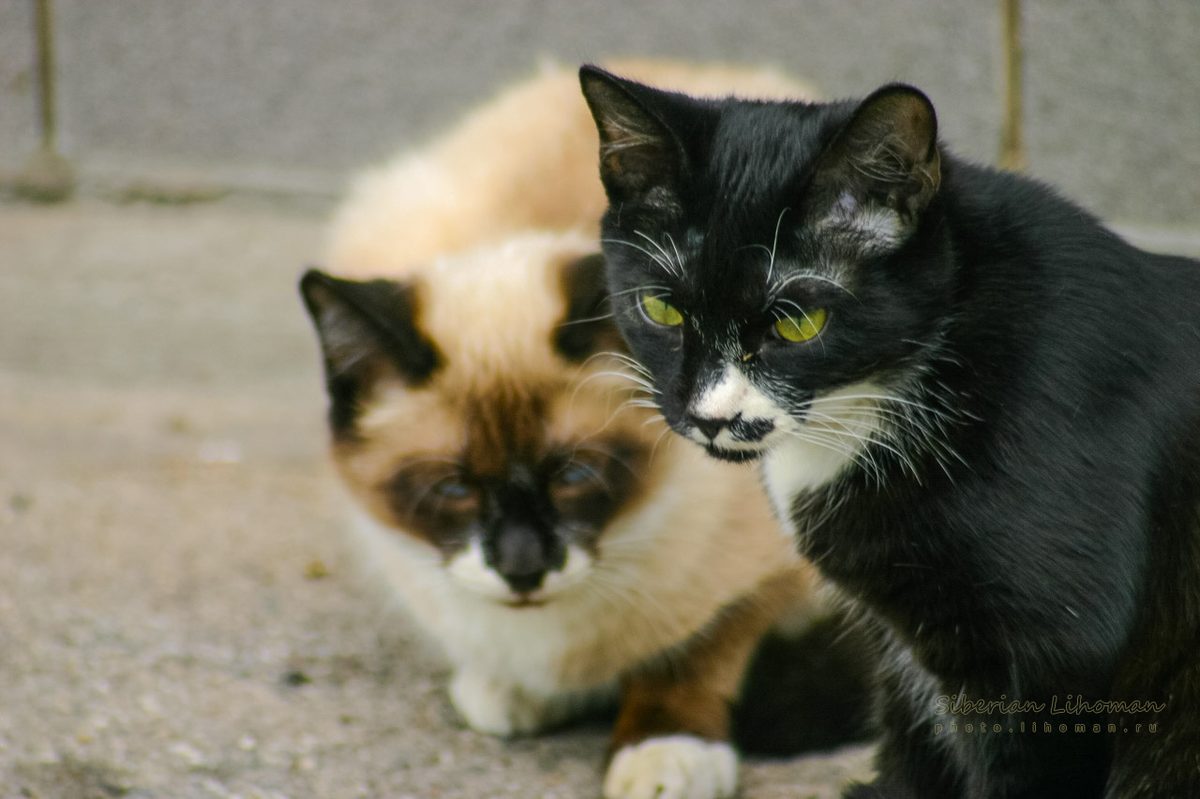
"Black Cat White Cat" by Lihoman... (CC BY 2.0) · source
Like other rex breeds, the LaPerm standard accepts every colour and pattern. Tabbies, reds, and tortoiseshells are especially common — a direct reflection of the breed's mixed farm-cat origins. Over time, breeders selected for less common colours such as lilac, chocolate, and colourpoint varieties. Recognised patterns include ticked tabby, shaded, pointed varieties, and the Karpati pattern. There is no restriction on which colour a LaPerm may carry.
Why LaPerms Are Considered Allergy-Friendly
Kururu-LaPermCat in Cat Cafe by Takashi(aes256) (CC BY-SA 2.0) · source
One of the most common reasons people seek out a LaPerm is allergies. The breed is reputed to provoke a significantly lower level of allergic response in humans than ordinary cats. This reputation is closely tied to the coat itself: the absence of a thick undercoat and the low-shedding nature of the curly fur mean less allergen-carrying dander circulates in your home. The breed is also frequently described as affectionate, active, and outgoing, which makes for a companion that stays close rather than retreating from the household.
It is worth being honest: individual reactions to cats vary considerably. What barely affects one allergy sufferer may bother another significantly. If allergies are the main reason you are considering a LaPerm, spend time with the breed in person before committing, and talk to your vet or allergist about your specific situation.
A Natural Fit for Farm Life
Maine Coon - Chimsky - Creative Commons by gnuckx by gnuckx (CC BY 2.0) · source
The LaPerm's farm origins are more than a charming story — they are a practical advantage. The breed developed through a largely free-breeding colony on working land, which means the cats are naturally tough, adaptable, and self-reliant. They are described as active and outgoing, and their athletic build suits them well to patrolling barns, outbuildings, and fields.
Because the breed spent generations living outdoors and breeding without strict human selection, LaPerms tend to be healthy and robust. If you are a farmer or a rural household looking for a cat that can double as pest controller and family companion, the LaPerm's combination of energy, temperament, and hardiness makes it a realistic option. Its affectionate nature also means it will fit well into a household that wants a cat close to family life, not just a working animal that lives outside.
Recognition Around the World
GoogleOCR cat 2 by Jmarchn (CC BY-SA 3.0) · source
Formal recognition of the LaPerm came gradually. The International Cat Association (TICA), a US-based registry, granted the breed championship status in 2003. The first TICA LaPerm champion was Dennigan French Maid of Shoalwater. A few years later, the CFA followed suit. Starting in May 2008, LaPerms could compete for CFA championships. The first CFA champion was Ch Sunfall's BC Kahaha Towanjila, and the first grand champion was Grand Premier Uluru BC Cloudfeet of CavalierCats, who earned that title on 11 July 2009.
The First LaPerm in the United Kingdom
Catbells Northern Ascent, Lake District - June 2009 by Diliff (CC BY-SA 3.0) · source
The First LaPerm in the United Kingdom
The breed made its way to the United Kingdom in the early 2000s. The first LaPerm cats arrived as carefully planned imports from established US lines. A small group of UK cat fanciers saw the breed's unusual look and friendly nature and decided to bring it across the Atlantic. They worked with the Governing Council of the Cat Fancy (GCCF), the UK's main cat registry, to establish the breed properly. The GCCF awarded the LaPerm full championship status in 2014. UK breeders have since built a small but dedicated LaPerm community, holding their own cat shows and breeding to the GCCF standard.
Is a LaPerm Right for Your Farm?
LaPerms do well on a farm for several reasons. They are tough and adaptable — originally working barn cats remember. They love people and will follow you around the yard, into the barn, and onto the porch. Their curly coat catches less loose fur than a regular cat's, which is good news for anyone with mild allergies. They still need brushing once or twice a week to keep the curls in good shape. They are not high-maintenance animals. They get along with dogs, other cats, and children. The breed is still rare outside North America, so finding a LaPerm kitten may take a little patience. Ask breeders about health testing and make sure the cat comes from a responsible line.
Conclusion
The Black Cat 1934 by Unknown authorUnknown author (Universal Pictures) (Public domain) · source
Where to Find a LaPerm
If you decide a LaPerm is right for your farm, start with the LaPerm Cat Club or a reputable breeder listed with a cat registry such as the CFA or TICA. Kitten prices in the United States typically range from \$800 to \$2,000 depending on lineage and location. Because the breed is uncommon in other countries, importing from the US may be an option worth exploring. Always visit the cattery first, meet the kittens, and ask to see health records for the parents.
Rescue groups occasionally have LaPerms or LaPerm mixes available. A barn cat from a shelter with a curly coat may surprise you — mixed-breed cats with that distinctive wavy fur sometimes turn out to carry LaPerm genes. Either way, you will be giving a good farm cat a loving home.
FAQ
Are LaPerm cats really hypoallergenic?
No cat is completely hypoallergenic. But LaPerms shed less loose fur than most breeds, so many people with mild allergies find they can live comfortably with one. If allergies are severe, spend time with a LaPerm before bringing one home.
Do LaPerm cats need a lot of grooming?
Not at all. A quick brush once or twice a week keeps their curls healthy. Their coat does not mat easily.
Can LaPerms live outdoors on a farm?
Yes. They are sturdy, curious, and were originally barn cats. A safe outdoor environment with shelter suits them very well.
Conclusion
The LaPerm is a genuinely unusual cat — curly-coated, people-loving, and tough enough for farm life. If you want a cat that will keep you company in the barn, get along with your family, and cause fewer allergy problems than most, the LaPerm is well worth considering. They may take time to find, but for the right farm home, they are a truly rewarding companion.
❓ Frequently asked questions
Are there any hypoallergenic cat breeds suitable for people with allergies?
The LaPerm is reputed to provoke a significantly lower level of allergic response in humans than typical cats, and it is also frequently described as low-shedding. Its curly coat lacks a thick undercoat and is made up of soft waves, curls, and ringlets with a textured, mohair-like feel. However, individual reactions vary, so anyone with allergies should spend time with a LaPerm before committing. No other hypoallergenic breeds are covered in the available sources.
What kind of cat would be suitable as a farm cat?
The LaPerm originated in the early 1980s from a spontaneous mutation among free-roaming farm cats on a property in The Dalles, Oregon, USA. A breeding colony developed naturally over roughly a decade before a formal program began. The breed is described as active, outgoing, affectionate, and athletic, with a medium-sized, muscular build and relatively long legs — practical qualities for an active rural setting. Its origins as a working farm cat make it an interesting candidate for anyone seeking a practical, companionable working cat.
What are the most popular or common cat breeds?
This source does not provide information on popularity rankings or which cat breeds are most common globally or in any specific country. Only the LaPerm breed is covered, and no comparative data on breed prevalence is available. You would need to consult a national cat registry or breed organisation for popularity statistics.
What do different cat breeds look like?
This source describes only the LaPerm. It is a medium-sized, muscular cat with a foreign-type body, a modified wedge-shaped head with rounded contours, flared ears, and medium-to-large almond-shaped eyes. Its most distinctive feature is a curly coat of soft waves, curls, and ringlets that stands away from the body and lacks a thick undercoat, with the tightest curls on the throat and at the base of the ears. Longhairs have a curly, plumed tail, while shorthairs have a bottlebrush-like tail, and both varieties have long, curled whiskers. All colours and patterns are accepted under the breed standard, including tabby, red, tortoiseshell, lilac, chocolate, and colourpoint varieties. No other breeds are described or illustrated in the available sources.
When did the LaPerm breed gain formal recognition?
The LaPerm received championship status from The International Cat Association (TICA) in 2003, with Dennigan French Maid of Shoalwater named as the first TICA LaPerm champion. The Cat Fanciers' Association (CFA) granted championship status beginning in May 2008; the first CFA champion was Ch Sunfall's BC Kahaha Towanjila, and the first grand champion was Grand Premier Uluru BC Cloudfeet of CavalierCats on 11 July 2009. The LaPerm Society of America (LPSA) was formed in 1997 and affiliated with CFA in 2000, laying groundwork for formal recognition.
How did the LaPerm breed spread beyond the United States?
The first LaPerm imported to the United Kingdom was a female named Champion Uluru BC Omaste Po of Quincunx, a lilac tortie and white longhair bred in the United States. She arrived on 23 May 2002, routed through the Netherlands because the UK Pet Travel Scheme had not yet expanded to include the United States. While in the Netherlands, Dutch breeder Corine Judkins arranged a mating, and Omaste arrived in the UK already pregnant. Her litter of five kittens, born on 2 June 2002, became the foundation stock for the UK LaPerm breeding program.
📚 Where the figures in this guide come from
We read what has already been published on the subject, take out the figures and rules it actually states, and write it up in plain, everyday language.
Every number and name here traces back to a source listed below — nothing in this guide is invented.
Our own records
Price observations recorded by this site (worldwide)
Prices, rules and animal health advice change and vary by area. Check anything important with a local vet, dealer or agriculture office before you spend money.
Spotted a mistake? Tell us in the comments and we will correct it.



 Menu
Menu
💬 Comments
Login to comment
No comments yet. Be the first to share your experience!